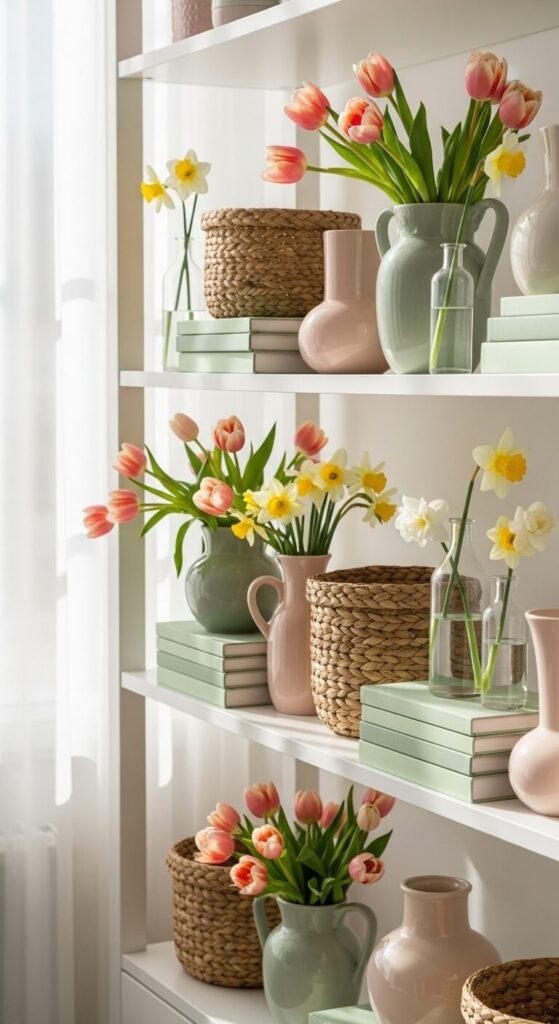
Spring is the perfect time to rethink how you use your shelf space. Whether you’re working with floating shelves, bookcases, or built-ins, smart styling can make rooms feel bigger and brighter. This season offers a chance to declutter, add cheerful touches, and create displays that work hard without looking crowded. The secret is balancing function with beauty while keeping things light and airy. These tips will help you make the most of every inch, turning shelves into spaces that feel organized and seasonally fresh.
Stack Books Horizontally for Multi-Level Displays
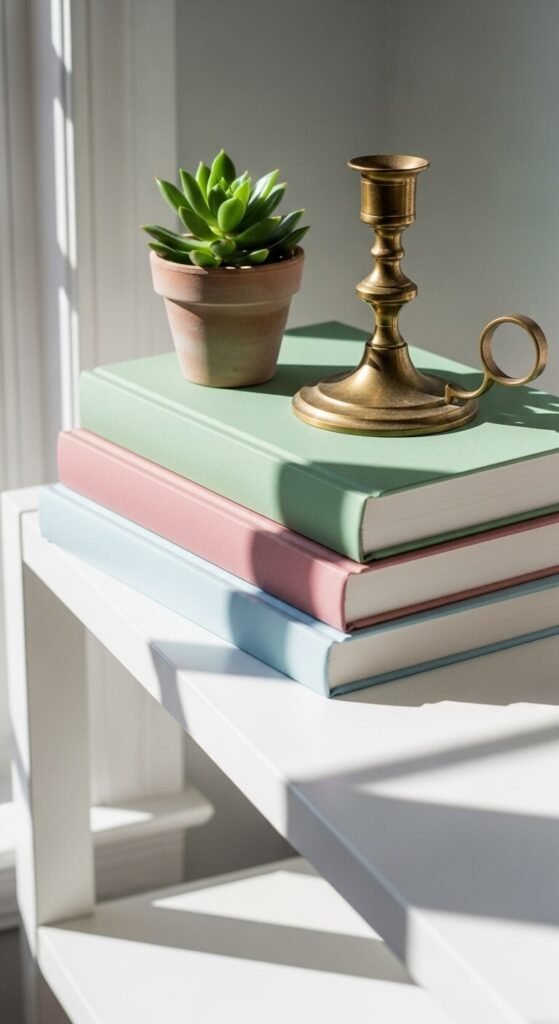
Laying books flat instead of upright creates platforms for smaller items. Stack three to five books, then place a small vase or candle on top. This adds height variation and uses vertical space you’d otherwise waste.
Mix hardcovers and paperbacks to create different stack heights. Put your prettiest book covers facing out. This trick works great for renters who can’t install extra shelving. You’ll fit more decorative pieces without buying new furniture.
Use Clear Acrylic Risers to Create Depth
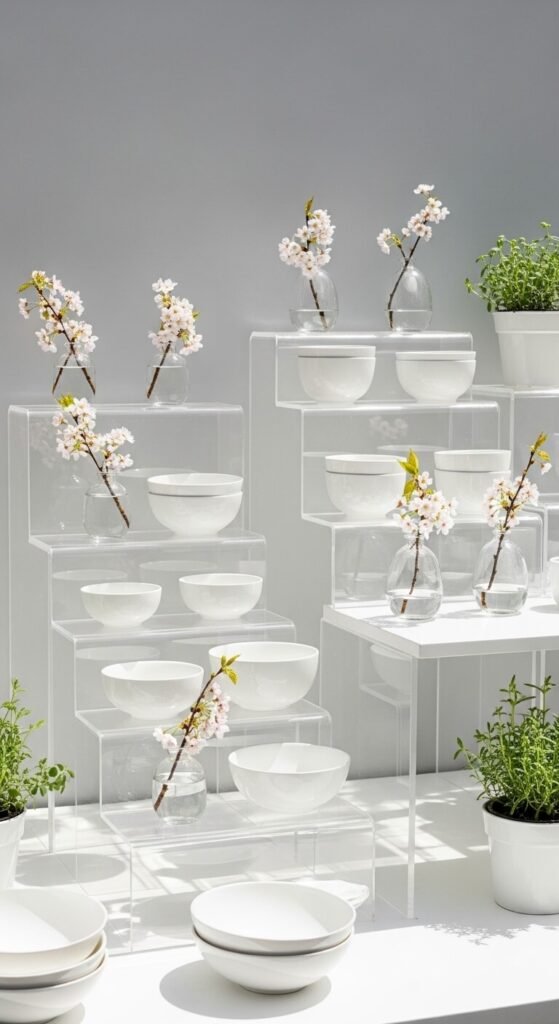
Acrylic risers let you see through them, so they don’t eat up visual space. Place shorter items in front and taller ones behind on risers. This creates a department store display effect at home.
Dollar stores sell these for under $5. Use them for plants, photo frames, or small sculptures. The clear material keeps things feeling open. You can stack items without blocking what’s behind them, doubling your display area.
Group Items in Odd Numbers for Visual Balance
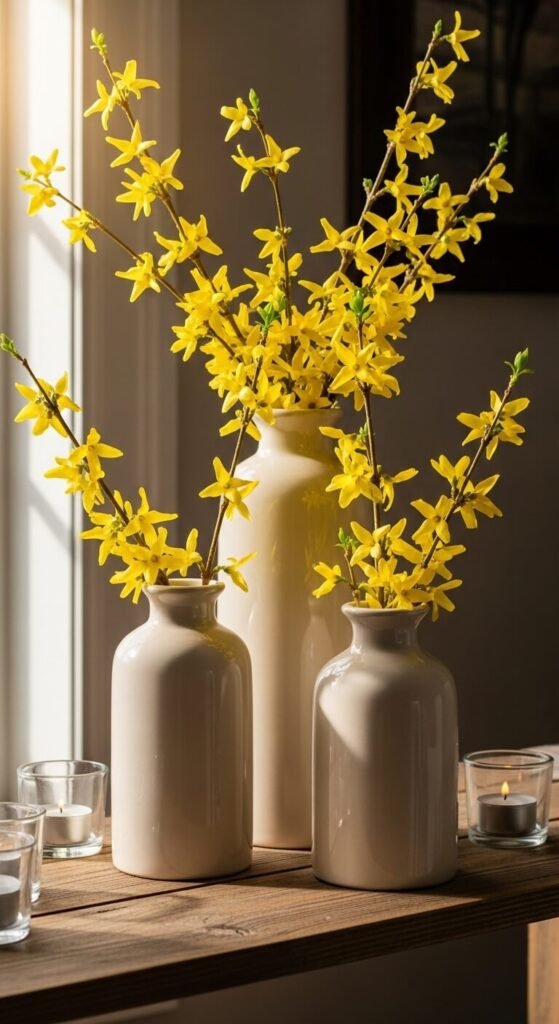
Your eye naturally likes groups of three, five, or seven objects. Place items in clusters rather than spacing them evenly across the shelf. This creates pleasing focal points.
Try a tall vase, medium bowl, and short candle together. Leave empty space between groups to avoid clutter. This styling rule works for any season but feels especially good with light spring colors. The negative space makes your shelves breathe.
Install Narrow Ledge Shelves for Small Objects
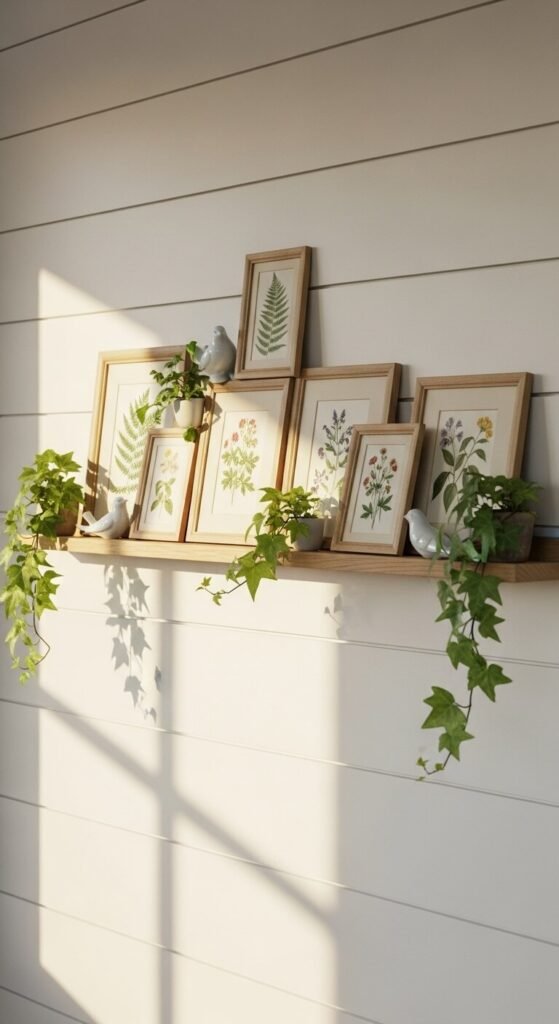
Shallow ledges (4-6 inches deep) work perfectly for frames, small plants, and collectibles. They take up less room than standard shelves while adding storage. Install them in hallways or above doorframes.
Home improvement stores sell ready-made picture ledges for $10-20. Paint them to match your walls or leave them natural. These are ideal for renters since they need only two screws. You can switch out items easily without rearranging entire shelves.
Incorporate Woven Baskets for Hidden Storage
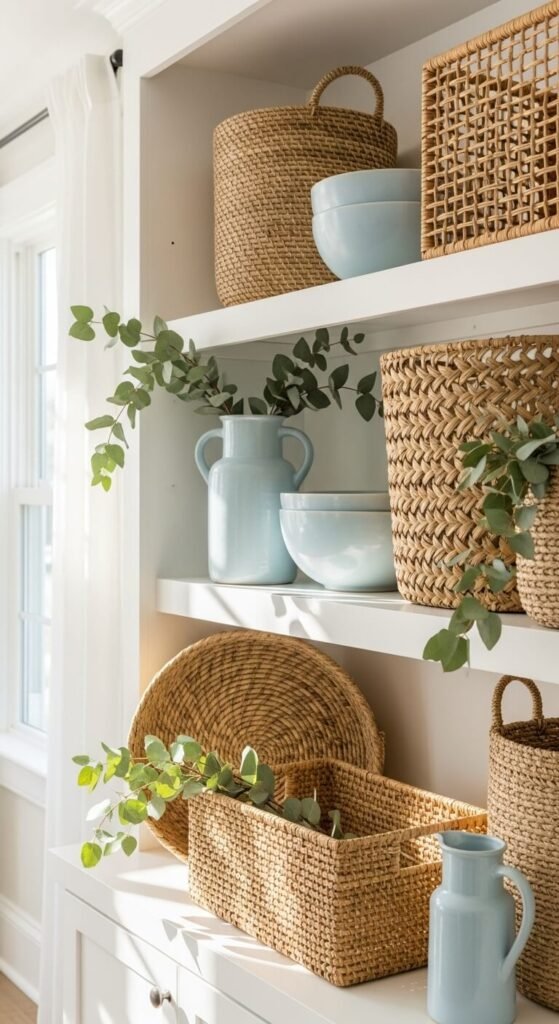
Baskets hide clutter while adding texture. Tuck away mail, remotes, or extra supplies in labeled baskets. The woven material feels seasonal without being overly themed.
Thrift stores have great vintage baskets for $3-8. Mix different weave patterns and natural tones. Measure your shelf depth before shopping so baskets fit properly. Pull them out like drawers when you need what’s inside. This keeps surfaces looking tidy year-round.
Add Greenery at Different Heights
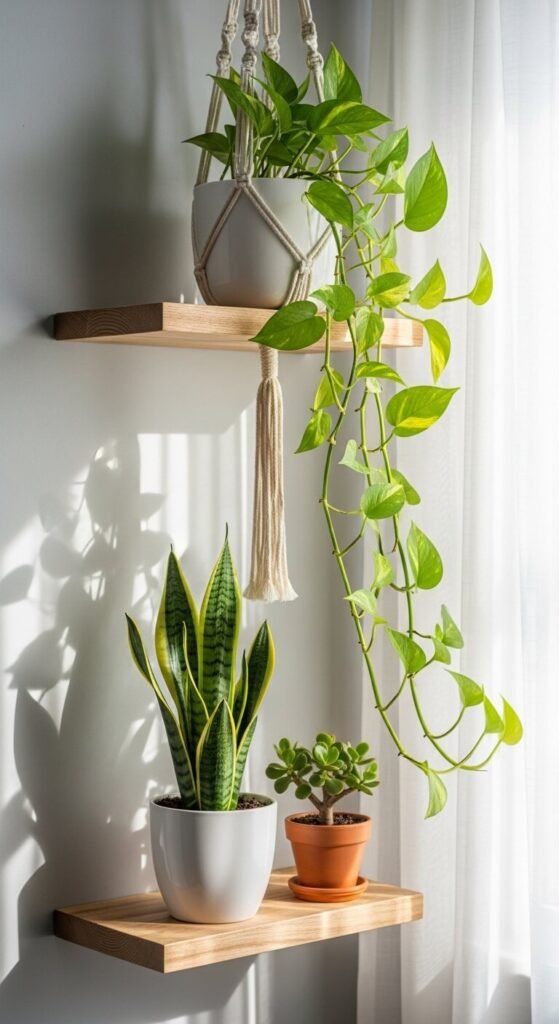
Plants make shelves feel alive. Use trailing vines on top shelves, medium plants at eye level, and small succulents on lower spots. Vary the pot colors and shapes for interest.
Start with low-maintenance options like pothos or snake plants. They survive if you forget to water them. Plastic pots inside pretty ceramic covers save money and prevent water damage. Rotate plants between shelves and windowsills to keep them healthy.
Style Bottom Shelves with Larger Statement Pieces
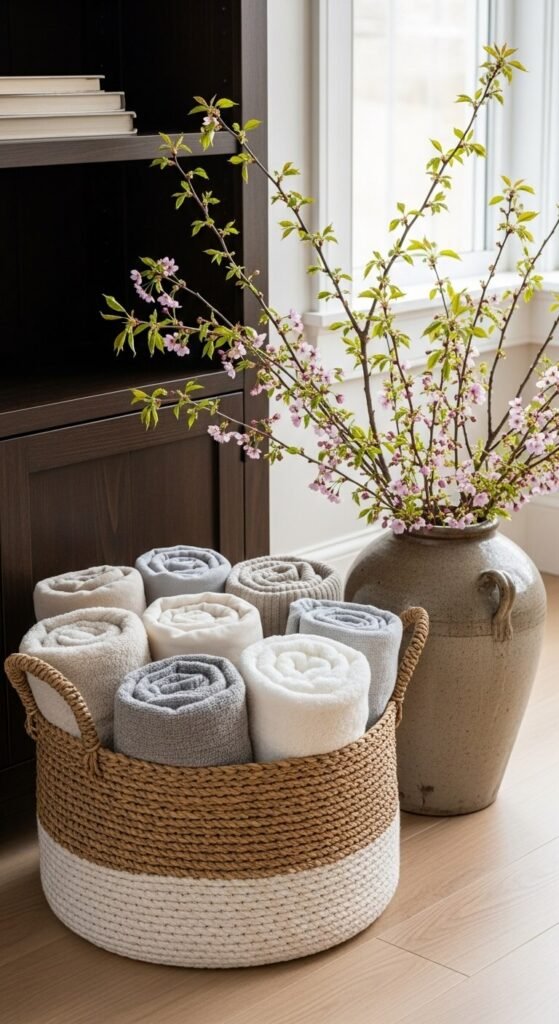
Heavy or oversized items belong on bottom shelves for safety and visual weight. Large baskets, thick coffee table books, or substantial vases anchor the display. This draws the eye downward and balances lighter items above.
Check garage sales for big ceramic pieces under $15. Bottom shelves are also smart spots for items you use daily, like reading materials or pet supplies. The lower placement makes grabbing things easier while keeping tall objects from looking top-heavy.
Mix Matte and Glossy Finishes for Dimension
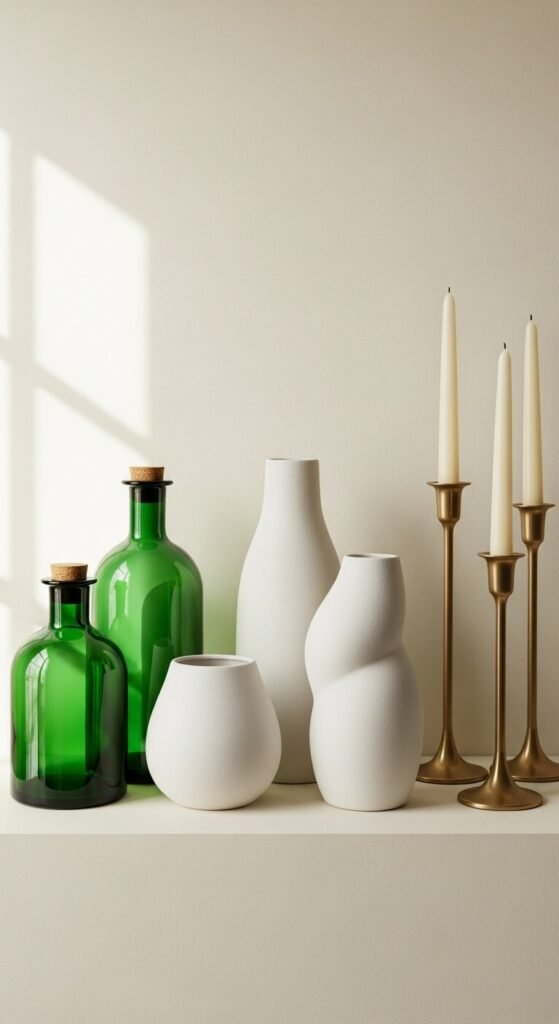
Combining different surface textures makes displays more interesting to look at. Pair rough pottery with smooth glass or shiny metal with soft fabric. Light hits each material differently, creating depth.
Spray paint old containers with matte or glossy finishes. Metallic accents catch light and feel springy without being cutesy. This costs about $5 per can. Mix thrift store finds with new items by matching finish types rather than exact colors. The variety keeps eyes moving across the shelf.
Create Zones with Matching Color Palettes
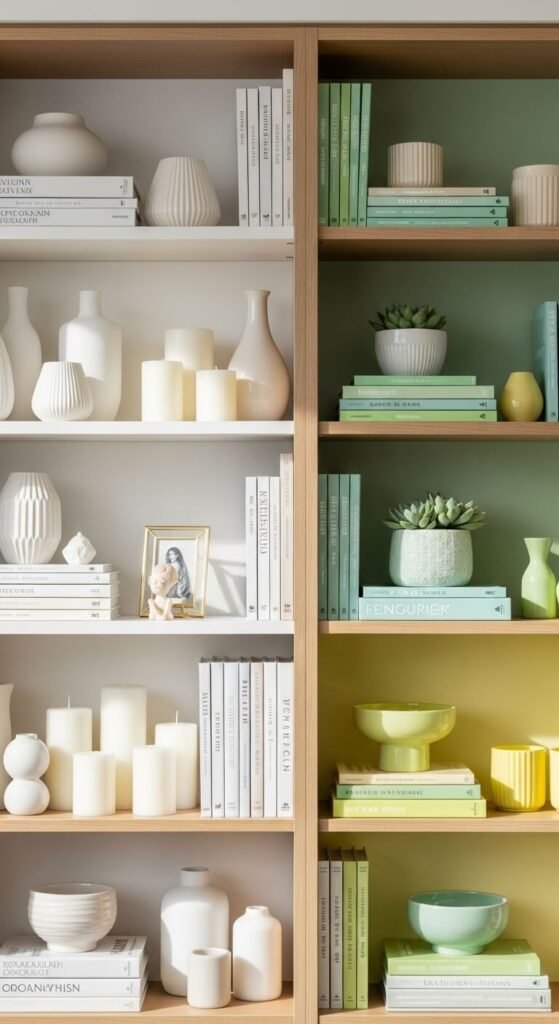
Dedicate each shelf or section to a color family. All whites and creams on one level, pastels on another, or earthy tones together. This organization system looks planned and calm.
Pull items you already own and group them by color first. Fill gaps with inexpensive pieces from dollar stores. Rearrange seasonally by swapping color zones. Spring works well with soft yellows, mint greens, and blush pinks. The organized look makes small spaces feel larger.
Leave 30% of Shelf Space Empty
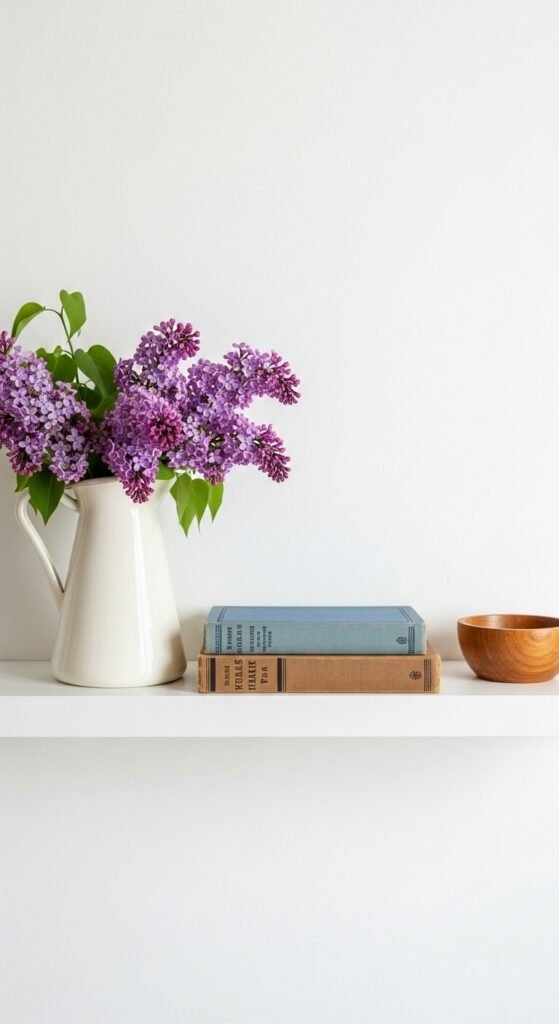
Empty space is just as important as what you display. Aim to leave about one-third of each shelf bare. This prevents the crowded look and lets special items shine.
If shelves feel packed, remove half of what’s there and put items back one at a time. Stop when it feels right, not when it’s full. Store extras in a closet to rotate seasonally. Less really does look better and makes dusting much faster.
Use Bookends as Decorative Elements
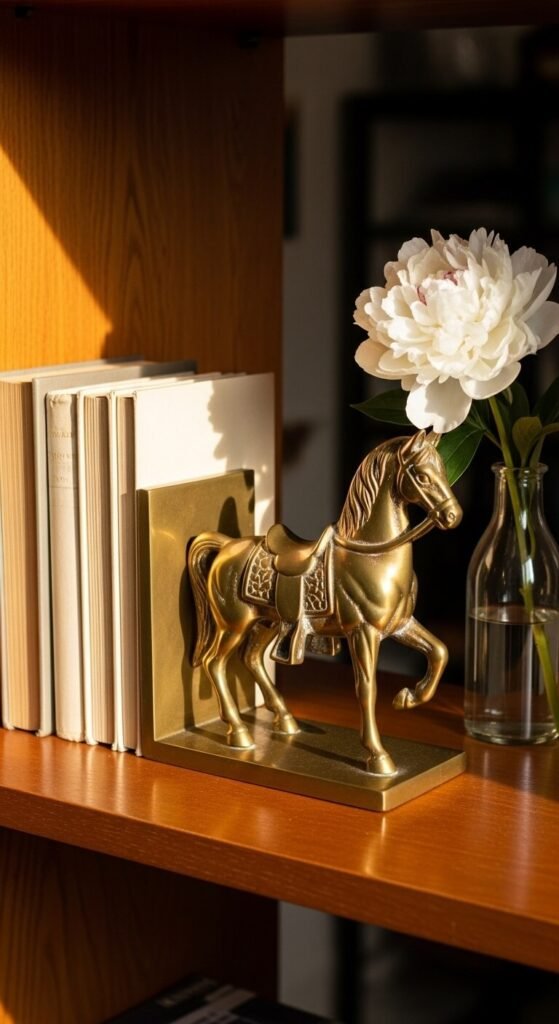
Bookends don’t have to hide at the edges. Choose sculptural or colorful ones that add to your design. They hold books while serving as decor themselves.
Thrift stores often have interesting bookends for under $5. Heavy vintage pieces work best. Match bookends to your room’s style—modern, farmhouse, or traditional. This prevents books from flopping over while adding personality. Paint old bookends to refresh them for spring.
Incorporate Seasonal Branches in Tall Vases
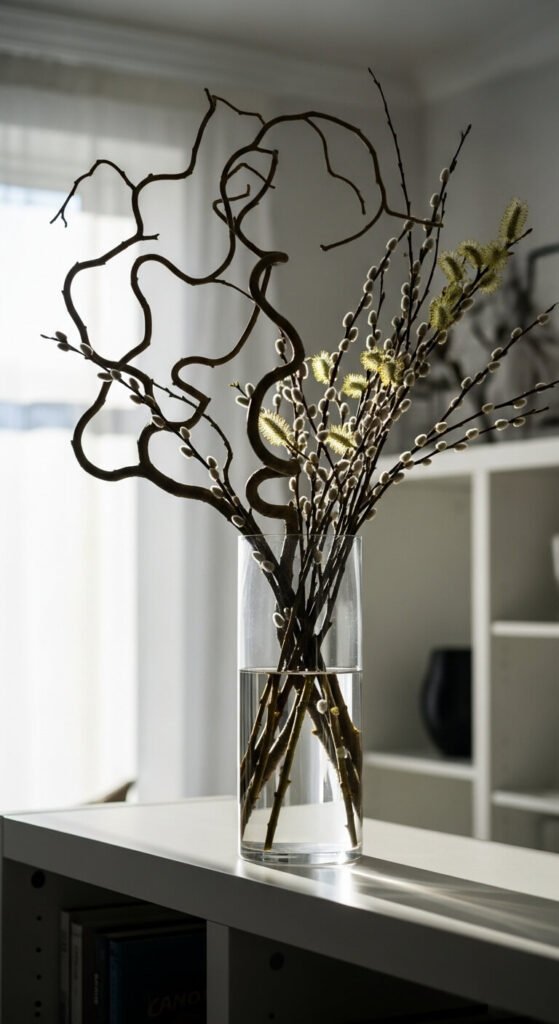
Fresh or dried branches fill vertical space affordably. Forsythia, pussy willow, or flowering quince work well for spring. Tall vessels make eye-catching focal points on higher shelves.
Prune branches from your yard or buy them for $5-10 at grocery stores. Cut them to different heights for interest. The vertical lines draw eyes upward, making ceilings feel higher. Replace water weekly or let them dry naturally for zero-maintenance decor.
Display Collections in Uniform Containers
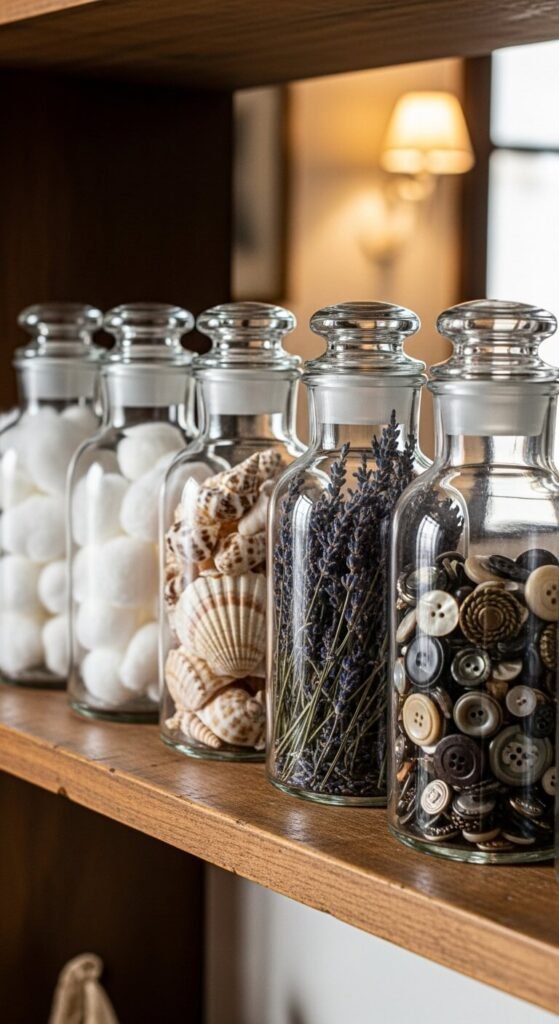
If you collect small items, put them in matching jars or boxes. The uniform containers create order while showing off your treasures. This works for shells, buttons, craft supplies, or keepsakes.
Buy sets of jars at dollar stores for $1 each. Label them with small tags if needed. The repetition looks intentional rather than messy. Group containers by size or arrange them in a row. You can see everything while keeping it contained and dust-free.
Install Shelf Lighting to Highlight Displays
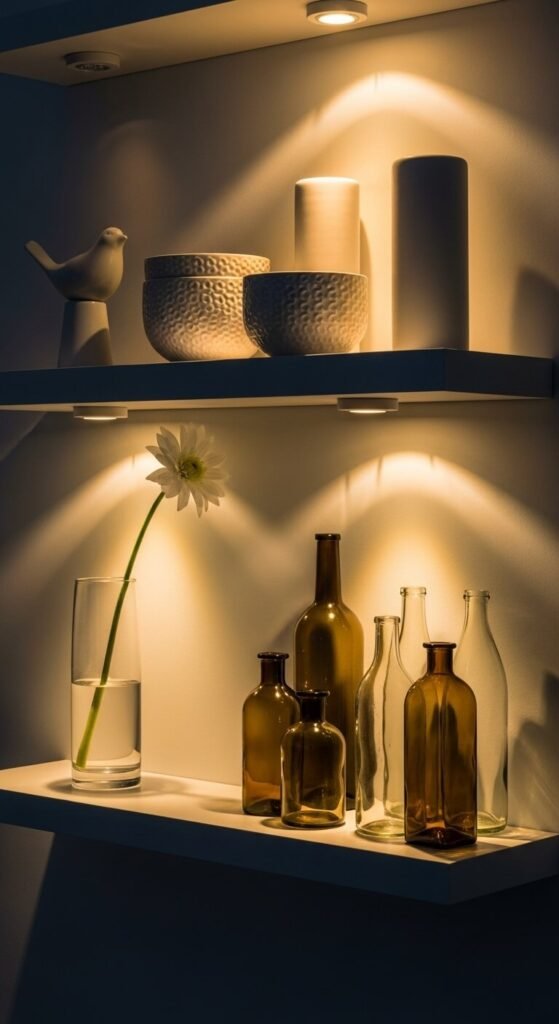
Small LED lights make shelves pop, especially in darker rooms. Stick-on battery pucks or plug-in strip lights are easy for renters. Position them under shelves to light items below.
Battery lights cost $10-15 for a pack of three. No electrician required. The focused lighting makes displays look gallery-quality. Change batteries twice yearly. This trick works especially well for glass items that sparkle when lit from above.
Arrange Items by Height from Tall to Short
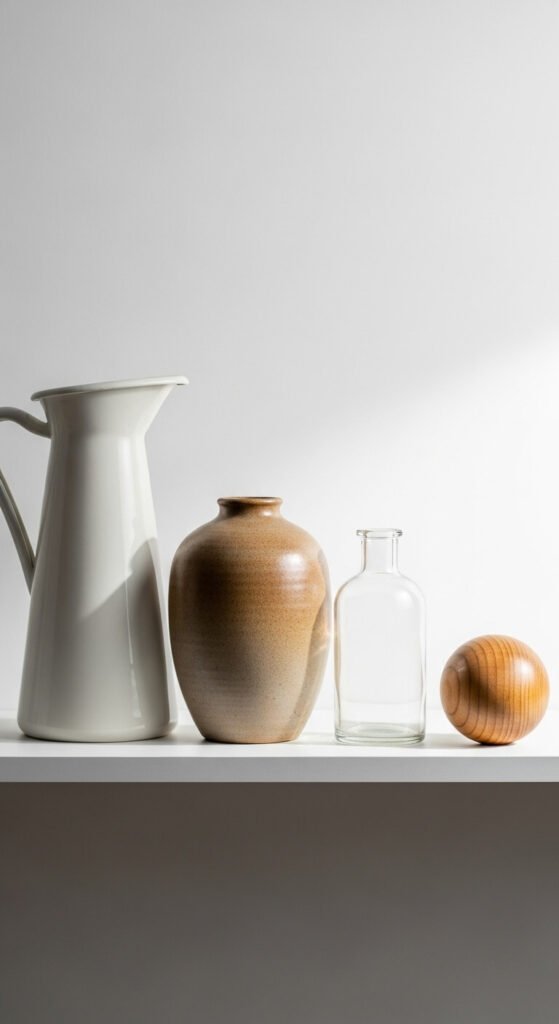
Create a visual flow by placing tallest items on one side and shortest on the other. This gentle slope guides the eye naturally across the shelf. It feels organized without being rigid.
Stand back and adjust until the progression looks smooth. Break the pattern occasionally with one contrasting piece to add interest. This method works whether you arrange left to right or right to left. The graduated heights make everything easy to see.
Store Items Inside Decorative Boxes
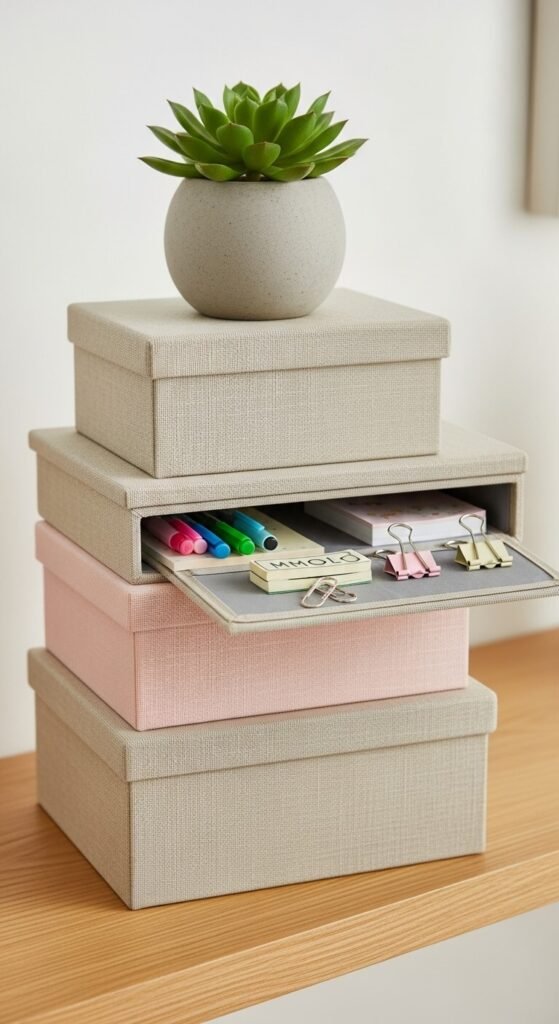
Pretty boxes hide stuff you need but don’t want visible. Cover cardboard boxes with wrapping paper or fabric for custom storage. Stack them for extra height.
Use wrapping paper remnants and spray adhesive from craft stores. Total cost: $3-5 per box. Label the ends so you know what’s inside. These work great for paperwork, cables, or seasonal decorations. They look like decor while doing real work.
Lean Artwork Against the Back Wall
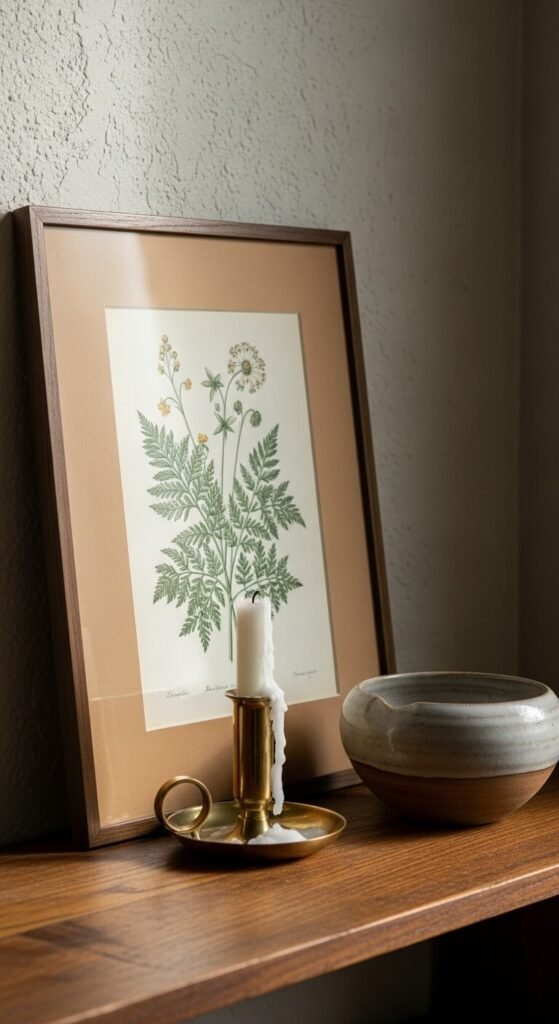
Instead of hanging frames, lean them on shelves. This casual approach feels relaxed and lets you change things easily. Layer smaller objects in front for depth.
Mix frame sizes and switch them out monthly. No nail holes needed. Place heavier frames on lower shelves for stability. Use small museum putty dots underneath to keep them from sliding. This gives you the art gallery look without commitment.
Utilize Corner Shelves for Awkward Spaces
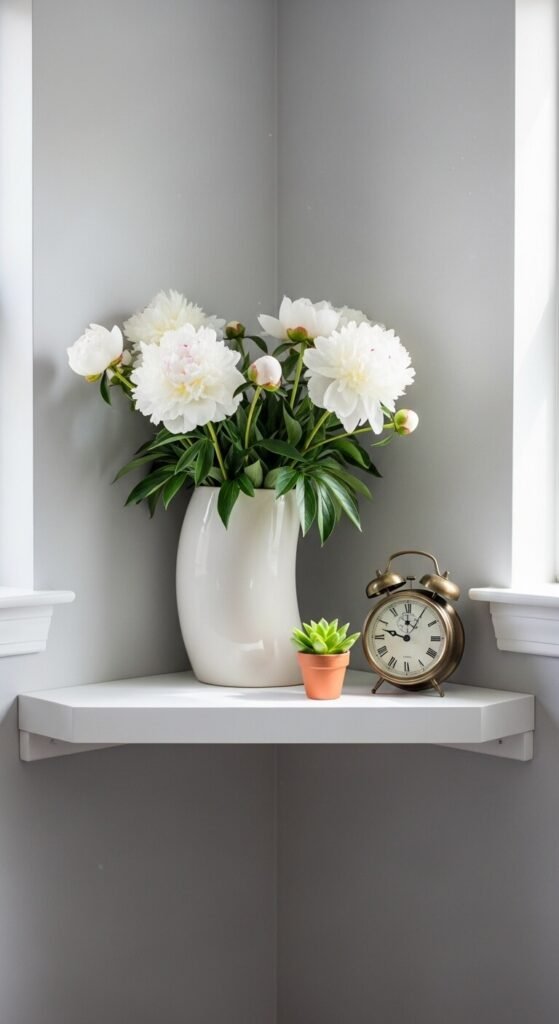
Corner shelves capture wasted space in room angles. Install triangular shelves or rotate regular shelves diagonally. These spots are perfect for plants or small collections.
Pre-made corner shelves cost $12-20 at home stores. They install with two brackets. The angled space naturally draws attention. Use them in bathrooms, offices, or bedrooms where every inch counts. Fill them with items you want to see daily.
Vary Shelf Depths for Different Item Sizes
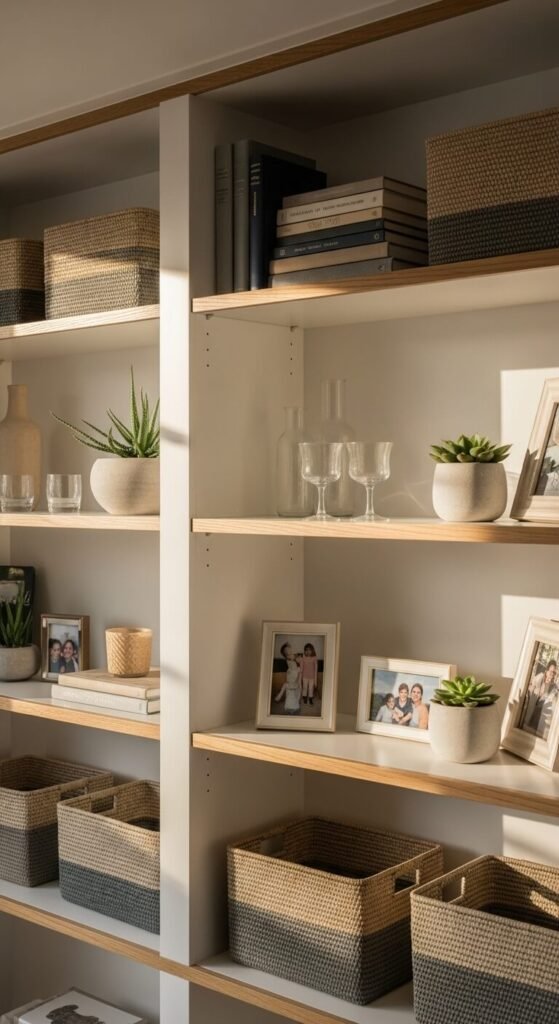
If building or buying shelves, choose different depths for different purposes. Shallow shelves (6 inches) for frames and small decor. Deep shelves (12+ inches) for books and storage boxes. This customization maximizes every shelf.
Measure your items before selecting shelving units. Many retailers offer modular systems you can configure. The varied depths prevent wasting space behind small items on deep shelves. This planning step saves money and frustration later.
Add Texture with Natural Materials
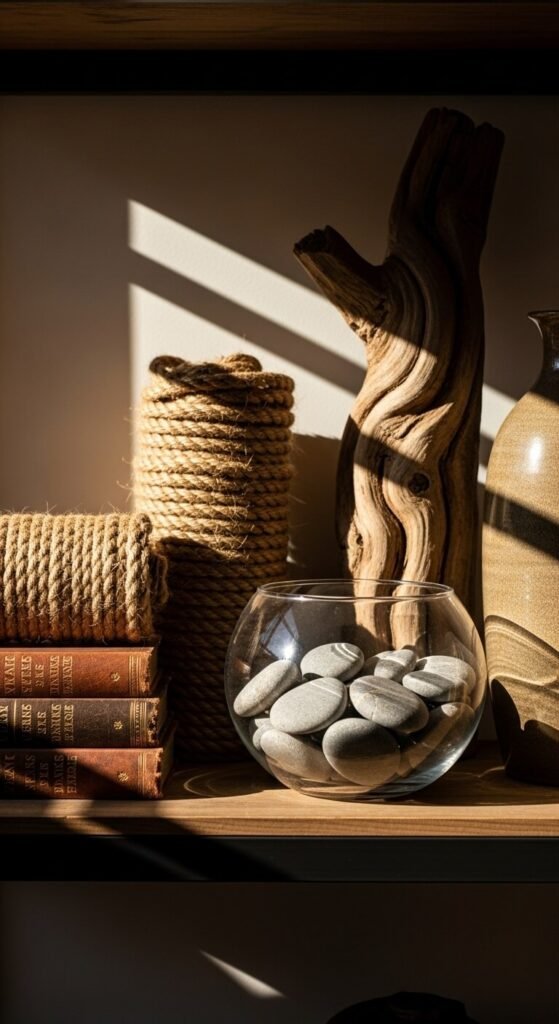
Combine wood, stone, metal, and ceramic for tactile interest. Each material has different grain, weight, and finish. The variety makes displays feel collected over time rather than bought all at once.
Hit nature trails for free driftwood, stones, or pinecones. Clean and dry them before displaying. Mix these natural finds with purchased items. The organic elements ground spring displays and connect indoor spaces to the outdoors. They work year-round but feel especially right in spring.
Style with Symmetry for Formal Spaces
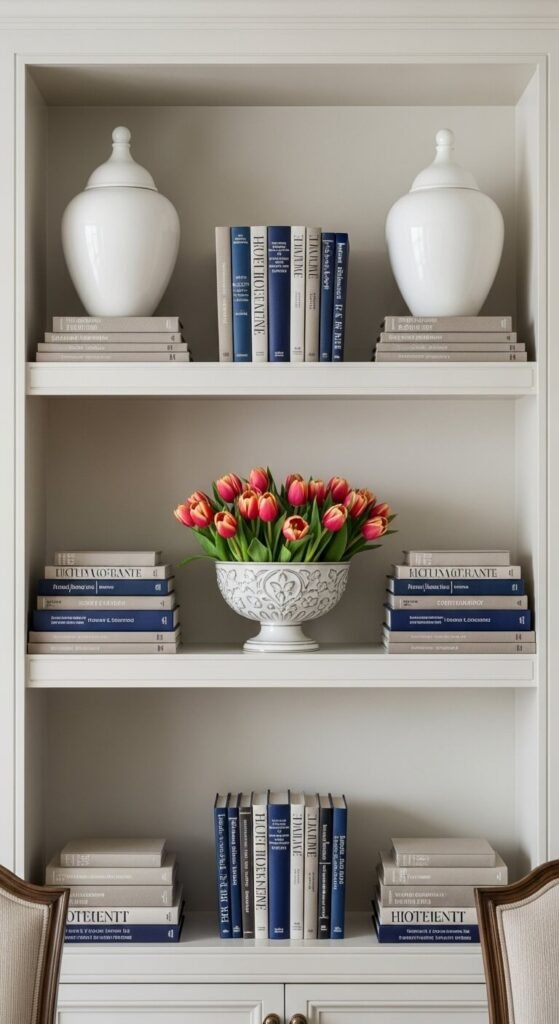
Create mirror-image arrangements for dining rooms or formal areas. Place identical items on both shelf ends with a centerpiece in the middle. This classical approach feels calm and elegant.
Buy matching pairs of vases or candlesticks. Symmetry works well with traditional decor styles. The balanced look suits rooms where you entertain. It’s easy to maintain since you’re just repeating the same arrangement on both sides. Change only the center item seasonally.
Rotate Displays Monthly to Keep Spaces Fresh
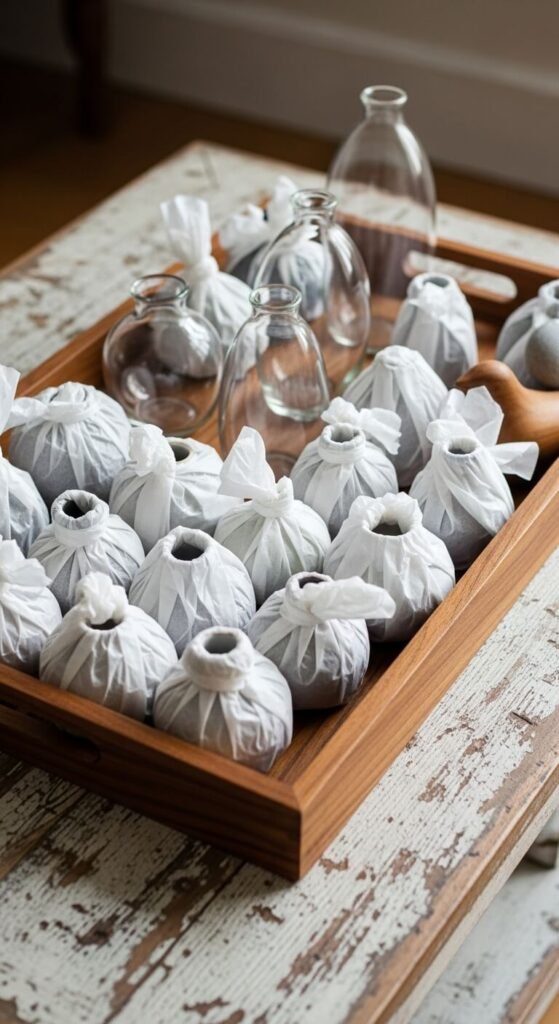
Store extra shelf items in bins and swap them out monthly. This keeps your space feeling new without buying anything. Each rotation is like redecorating for free.
Label bins by season or color theme. Spend 15 minutes monthly switching items. This prevents shelf blindness where you stop seeing your own decor. It also protects items from dust and sun damage by rotating them into storage. Your favorite pieces feel special again when you see them with fresh eyes.
Conclusion
These spring shelf styling tips help you create displays that work harder without looking cluttered. The key is mixing function with beauty—using baskets for storage, leaving breathing room, and choosing pieces that reflect the season’s lighter mood. Start with one shelf and apply a few techniques. Rearrange as you go until it feels right. Remember that empty space matters just as much as what you display. Your shelves can change with you, holding what you need while looking like something from a magazine. Spring is about renewal, so refresh those shelves and enjoy the brighter, more organized spaces you create.