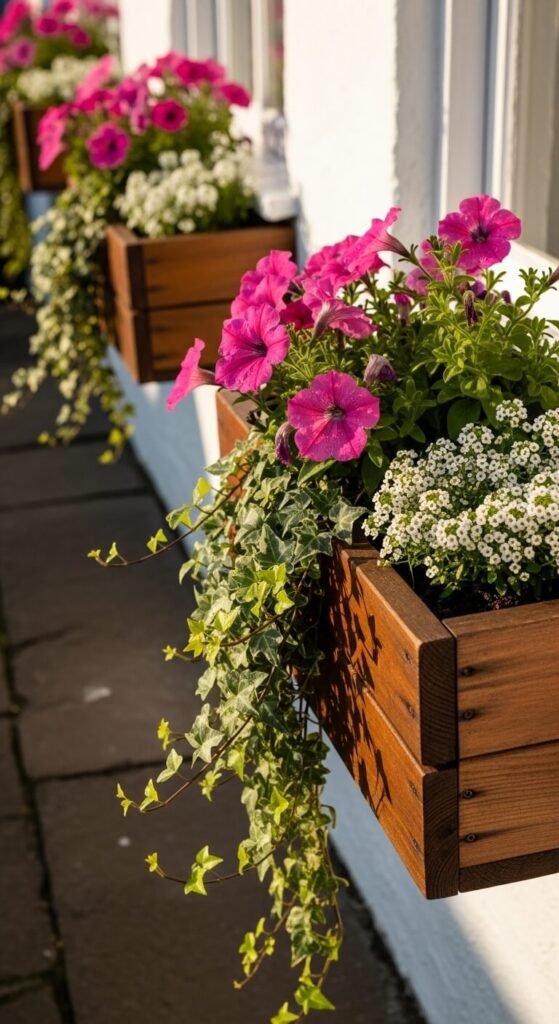
Spring is the perfect time to dress up your windows with living color. A well-planted window box can completely change how your home looks from the street. You don’t need a big yard or a big budget. Just a box, some soil, and the right plants. Whether your home is a brick colonial, a cozy cottage, or a modern townhouse, there’s a window box style that fits. This guide walks you through 24 stunning ideas — from classic flower combos to trailing greenery and bold foliage — so you can pick what works for your space, your light, and your wallet.
1. Classic Petunia and Trailing Ivy Combo
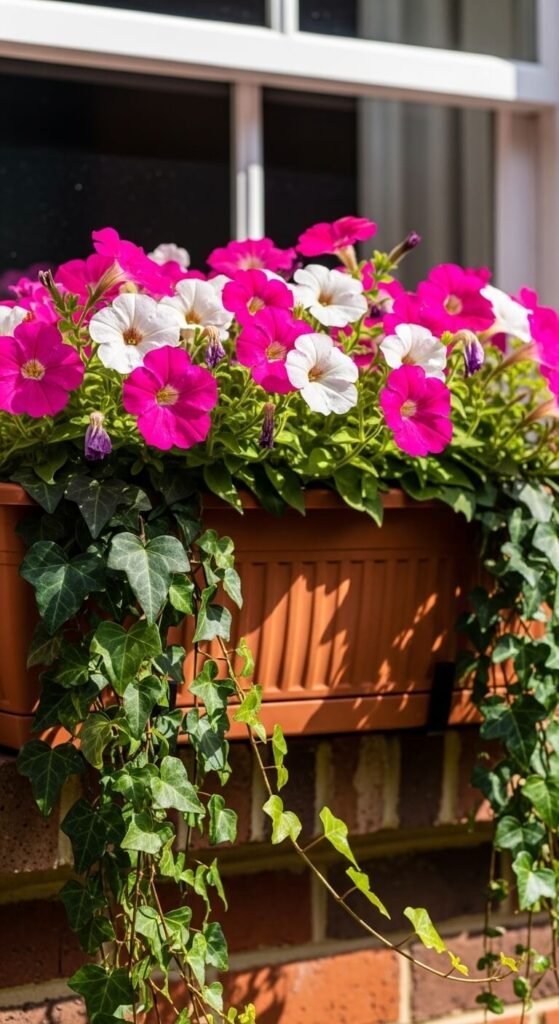
This pairing never goes out of style. Petunias bring the color. Ivy brings the drama. Plant petunias in the center and tuck ivy cuttings along the edges. They’ll spill over quickly. Choose a petunia variety in pink, purple, or white. Ivy is cheap — you can often root cuttings from a neighbor’s garden for free. Both plants tolerate heat and sun well. Water every day in warm weather. Deadhead the petunias weekly to keep blooms coming all season long.
2. All-White Cottage Garden Look
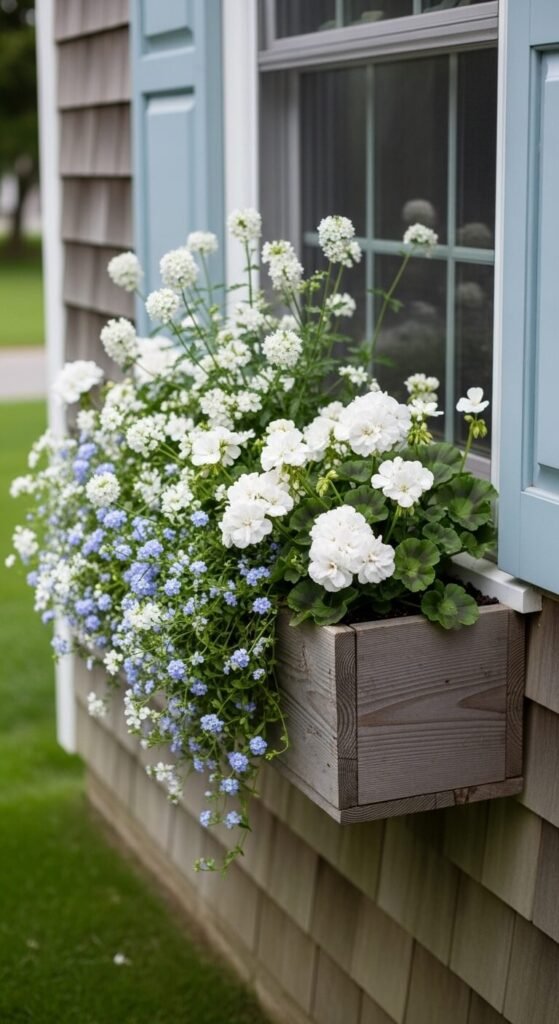
White window boxes feel calm and polished. They work on almost any house color. Try white geraniums, white bacopa, and sweet alyssum together. The textures vary — which keeps it interesting. This look is especially striking against a navy, gray, or sage green exterior. Buy a six-pack of each from a garden center for under $15 total. White flowers also reflect light well, so they look beautiful in both sun and partial shade. Keep soil moist and trim back leggy stems every two weeks.
3. Spiller-Thriller-Filler Method
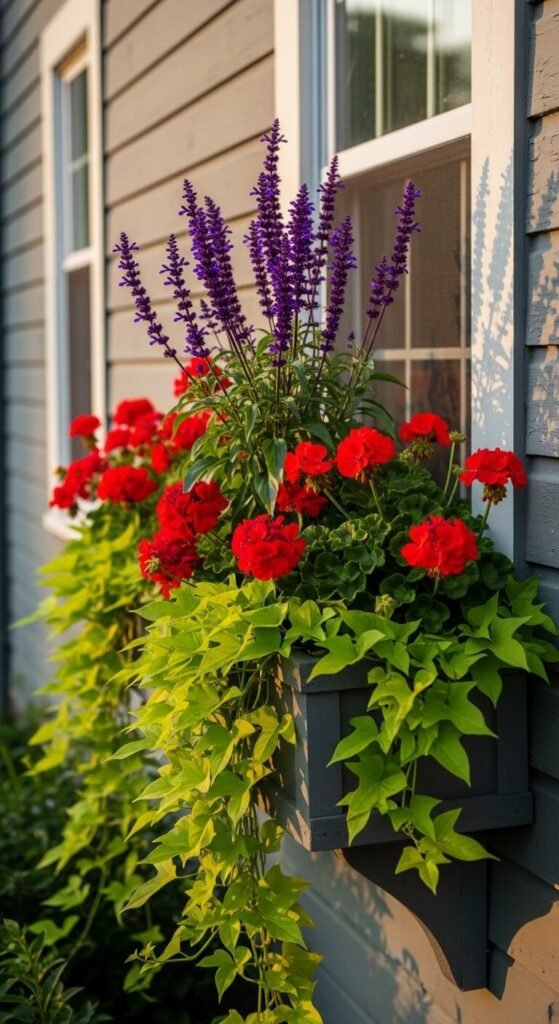
This three-part planting formula works every time. A “thriller” stands tall in the center. “Fillers” pack the middle. “Spillers” drape over the edges. For spring, try purple salvia as the thriller, geraniums as the filler, and sweet potato vine as the spiller. The contrast in height and texture makes the box look full and intentional. Most garden centers sell these in packs. Total cost can be under $20. This method works in any size box and any light condition with the right plant swaps.
4. Herb Window Box That’s Actually Useful
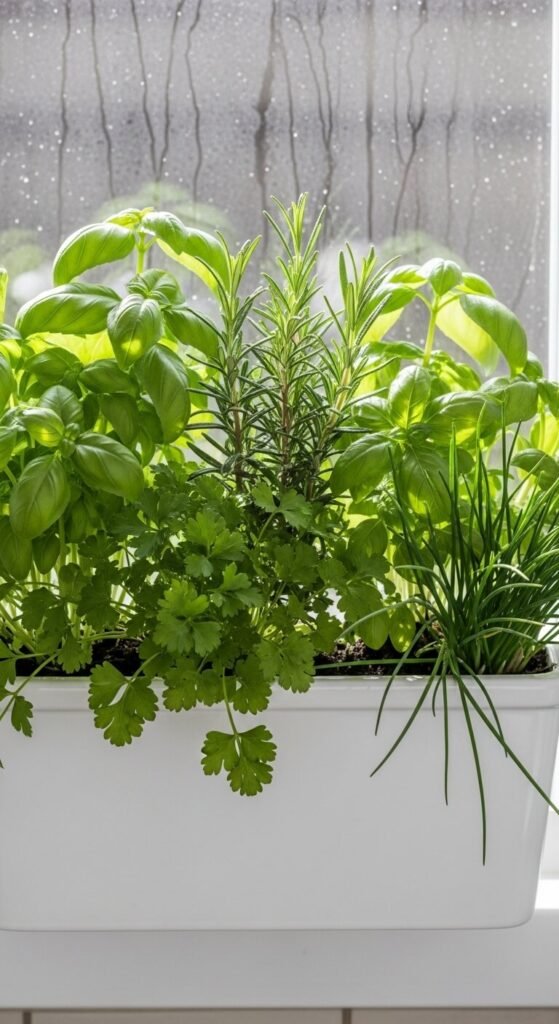
Why not grow something you can eat? Herbs look beautiful and save money on groceries. Plant basil, rosemary, thyme, and parsley together. They all enjoy full sun and dry out quickly, so plant them in well-draining soil. A simple terracotta box works perfectly. Drill extra drainage holes if needed. Snip regularly — harvesting actually encourages bushier growth. This is a great starter project for beginners. The whole setup costs about $10–$15 in plants and materials if you already have a basic box.
5. Bold Tropical Statement with Coleus
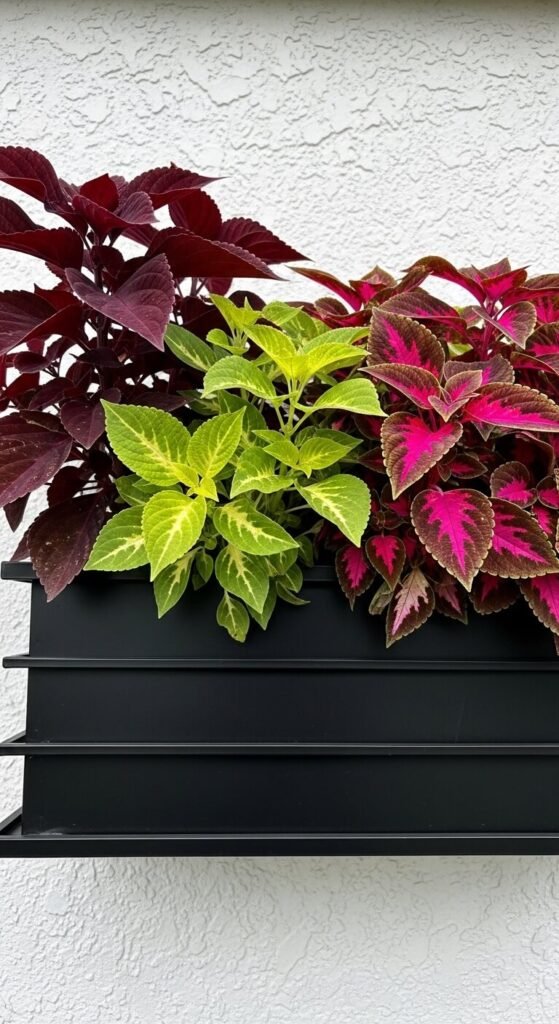
Coleus is one of the most underrated spring plants. The leaves — not the flowers — are the showpiece. You get bold patterns in red, burgundy, lime, and orange without needing full sun. Coleus thrives in partial shade, which makes it perfect for north-facing windows. Mix three or four different varieties in one box for a mosaic effect. Plants cost around $2–$4 each. They grow quickly and stay full all season. Pinch off any flower buds that appear — this keeps the foliage looking its best.
6. Pastel English Garden Style
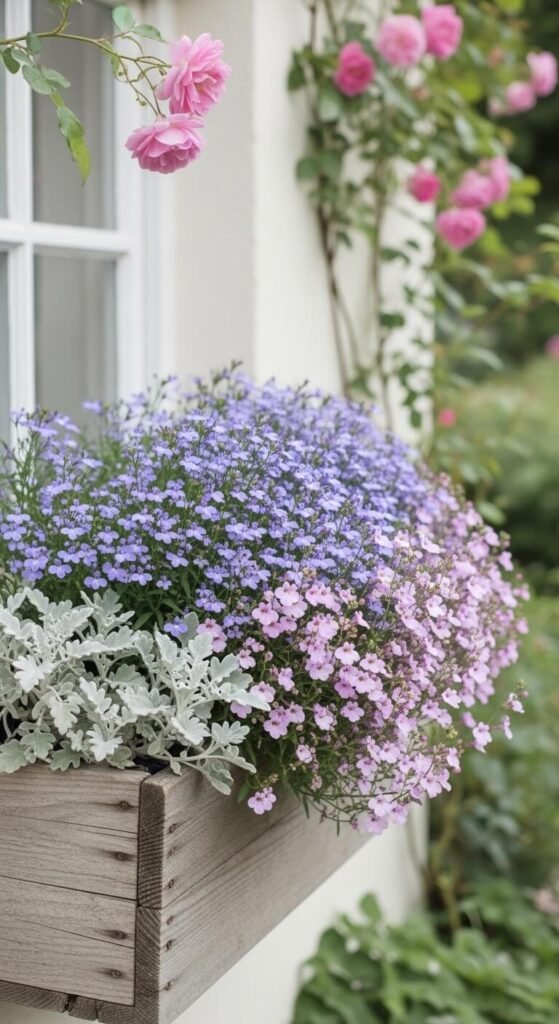
Pastel window boxes feel romantic and timeless. Think soft pinks, lilacs, blush whites, and muted silvers together. Combine pale pink diascia, lavender lobelia, and silvery dusty miller for a dreamy mix. Dusty miller adds a soft texture that makes the colors pop. This combination works especially well on white or cream-colored homes. All three plants are easy to find in spring at hardware stores and garden centers. They prefer full sun but tolerate morning shade. Water at the base to prevent leaf spotting.
7. Monochromatic Purple Theme
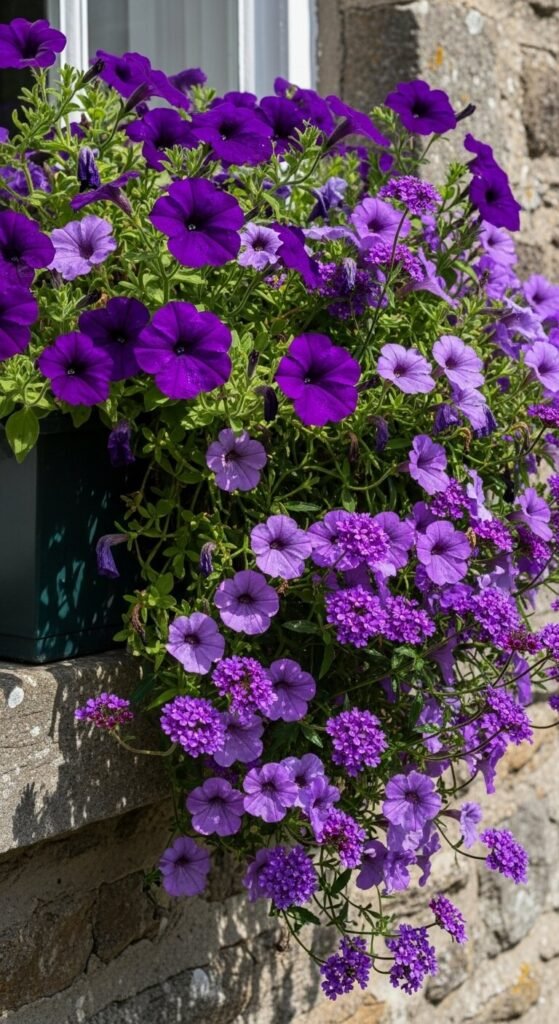
Sticking to one color family creates a sophisticated, gallery-worthy look. Purple comes in so many shades — violet, lavender, plum, lilac — you can layer them without it feeling repetitive. Try deep purple petunias at the back, calibrachoa in the middle, and trailing verbena over the front. The varying heights and textures keep it dynamic. This look works beautifully on gray, white, or tan-colored siding. Calibrachoa is sometimes called “million bells” — it self-cleans, so less deadheading is needed.
8. Sunshine Yellow and Orange Box
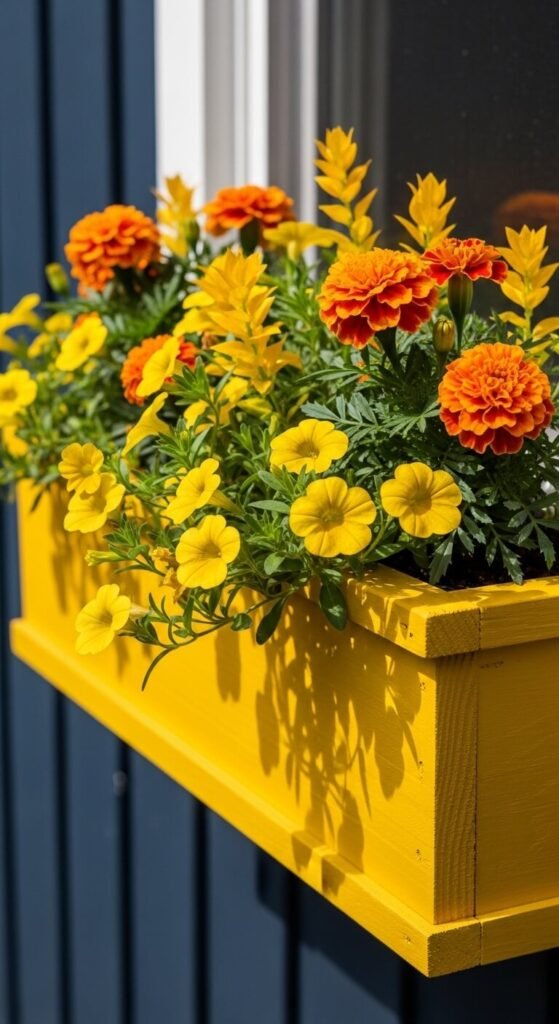
Yellow and orange window boxes feel energetic and sunny. This combo works especially well on dark-colored houses — navy, charcoal, or forest green. The contrast is electric. Use marigolds, yellow calibrachoa, and golden bidens. Marigolds are incredibly cheap — often $1–$2 per plant — and they naturally repel pests. Bidens trail beautifully over the edge of the box. Water consistently and fertilize every two weeks with a liquid bloom fertilizer. This is one of the cheeriest combinations you can put together for under $20.
9. Lush Green Fern and Foliage Box
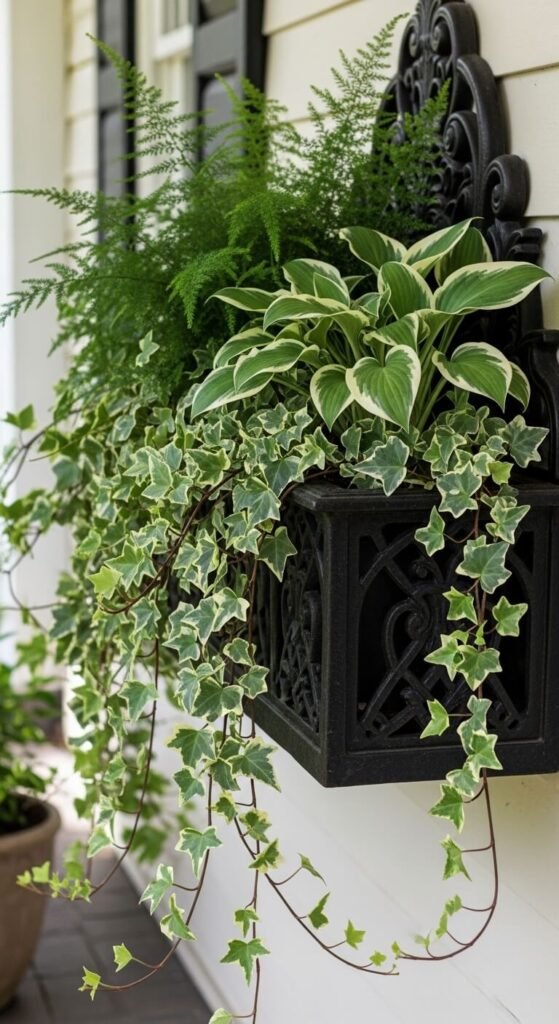
Not every window gets sun. For shady spots, go full foliage. A mix of Boston fern, asparagus fern, and trailing English ivy creates a lush, layered look. Add a variegated hosta in the center for height and contrast. This box requires no flowers at all — the varied leaf textures do all the work. Water frequently since ferns dry out fast. Mist the leaves on hot days. This is one of the most low-maintenance setups for a porch or north-facing window and costs very little to assemble.
10. Cottage Core Wildflower Mix
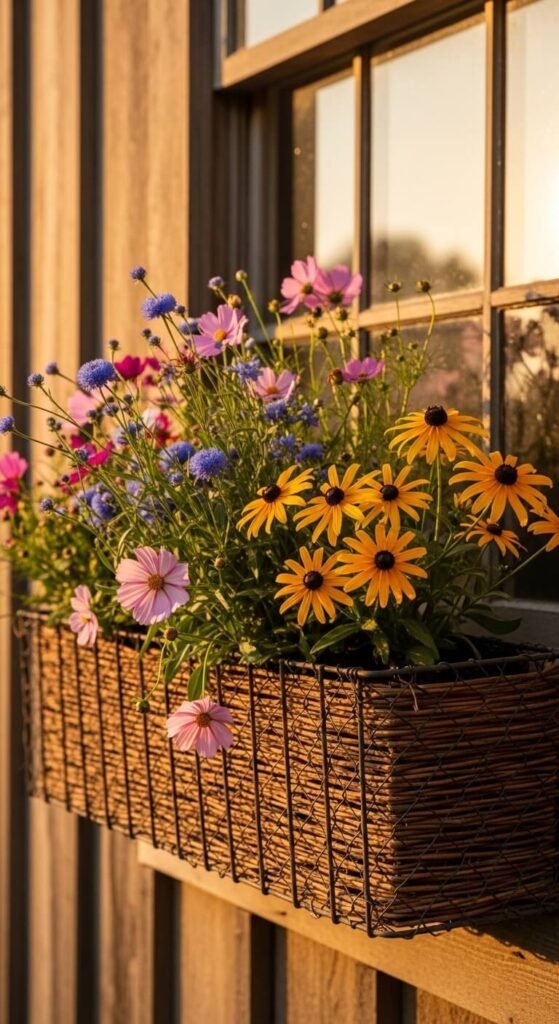
This style looks like a wildflower meadow captured in a box. It’s intentionally loose and slightly overgrown — and that’s the whole point. Plant bachelor’s buttons, cosmos, and black-eyed Susans together. These are all easily grown from seed, which keeps costs near zero. Sow seeds directly in the box in early spring. Thin seedlings once they’re 3 inches tall. They self-seed lightly, so you may get a bonus crop next year. This look suits farmhouse, craftsman, and cottage-style homes especially well.
11. Strawberry and Flower Mixed Box
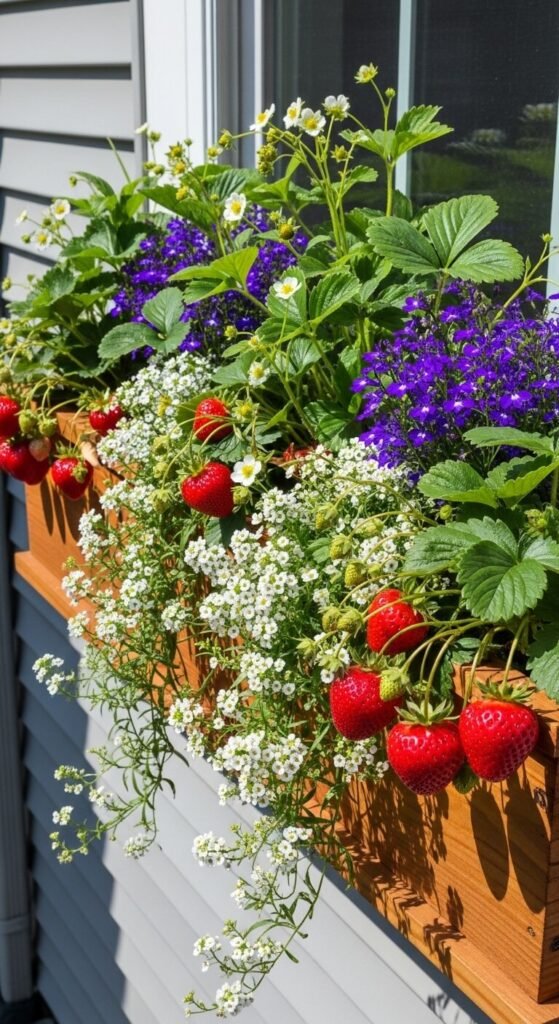
Yes, you can grow strawberries in a window box. Everbearing varieties are compact, decorative, and produce berries all season. Mix them with white alyssum or trailing lobelia for a look that’s pretty and productive. The red berries add a pop of color that no flower can replicate. Kids love watching them grow. Use a deep box — at least 8 inches — so roots have room. Strawberry plants cost around $3–$5 each. Pick berries as they ripen to keep the plant producing through summer.
12. Dusty Miller and Snapdragon Duo
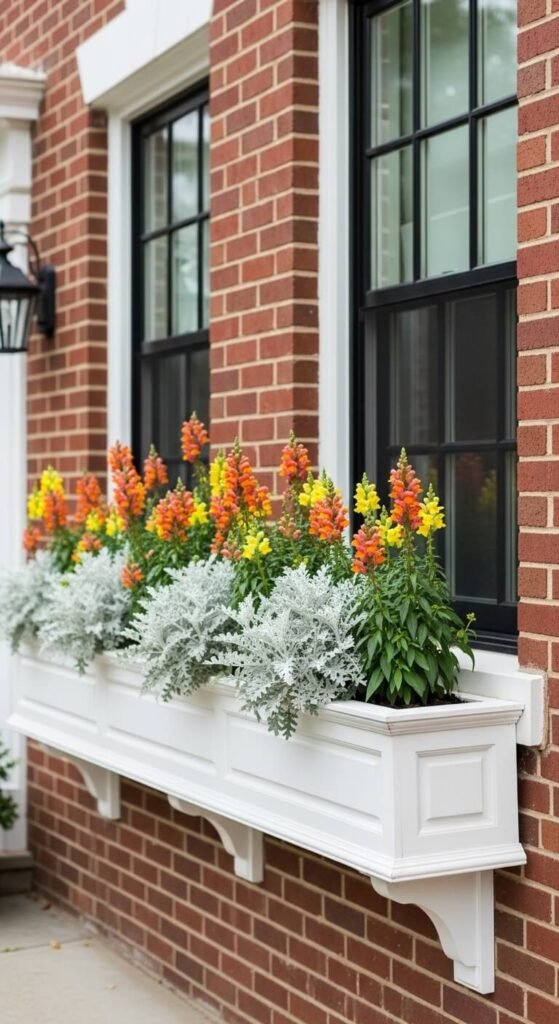
This is a classic pairing with real staying power. Snapdragons add vertical interest and come in nearly every color. Dusty miller adds a silvery base that makes every color around it pop. Plant snapdragons upright in the back and let dusty miller fill the front and sides. Snapdragons prefer cooler spring weather, so plant them early. They’ll look great through June before the heat sets in. Replant with summer annuals when they fade. Both plants are budget-friendly and widely available at any garden center or big-box store.
13. Rustic Wooden Box with Wildgrass Accents
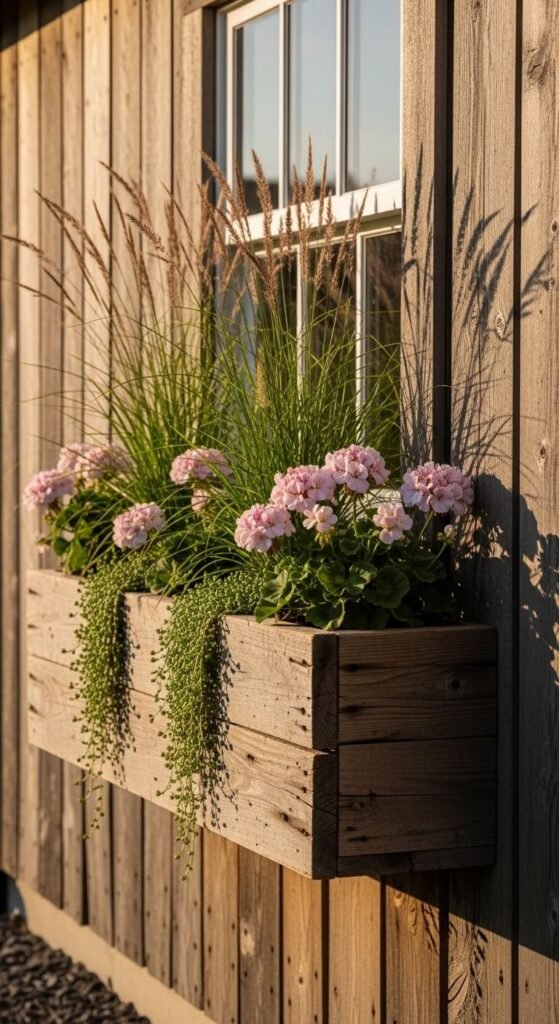
Ornamental grasses add movement and a natural, organic feel. Even a single clump of purple fountain grass in the center of a box changes everything. Pair it with sedum for trailing texture and soft pink geraniums for color. The grass moves in the breeze, which gives the box a living, dynamic quality. Choose a dwarf grass variety so it stays proportional. This style suits farmhouse, craftsman, and industrial-style homes well. It’s also very low-maintenance — grasses don’t need much water once established.
14. Polka-Dot Begonia Box for Shade
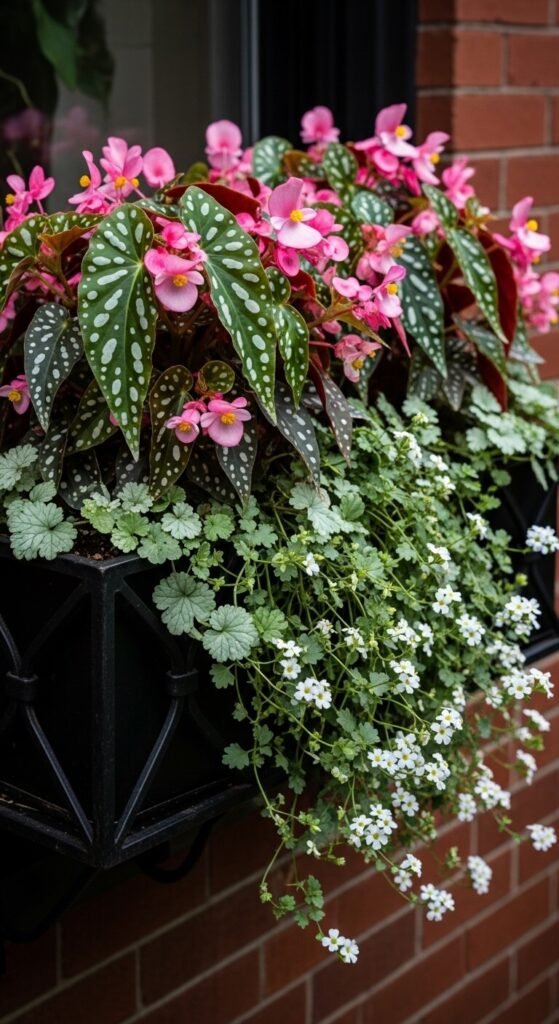
Polka-dot begonias are a shade garden secret. Their leaves are spotted in silver or white, and they produce small pink blooms most of the spring and summer. Pair them with lamium — another shade-lover with silvery leaves — and white bacopa for soft trailing texture. This combination thrives in spots that get morning sun and afternoon shade. No full sun needed. Water consistently and avoid getting leaves wet to prevent spotting. These plants are widely available online or at specialty nurseries for about $4–$6 each.
15. Blue and White Nautical Theme
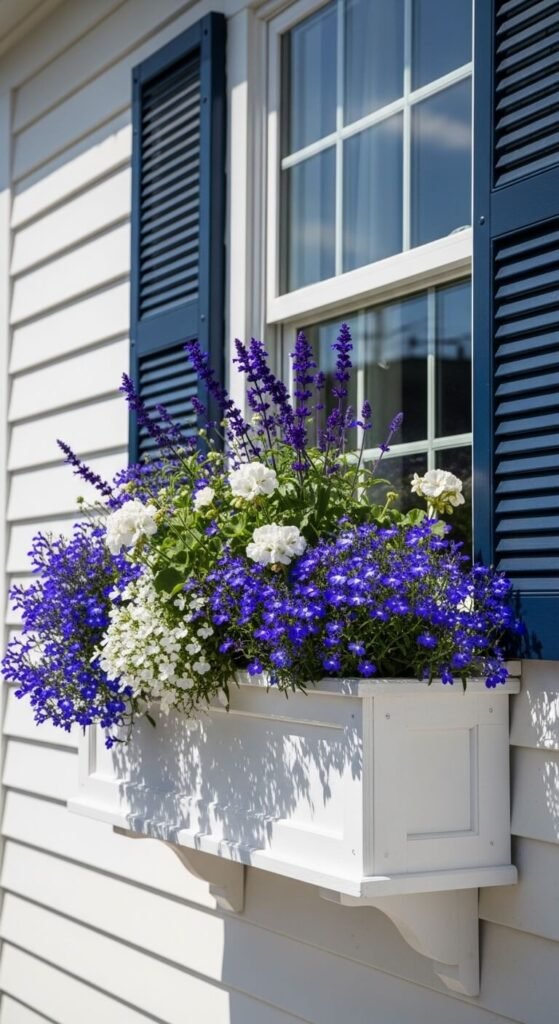
This palette feels clean, coastal, and polished. It works especially well on white, gray, or navy exteriors. Use blue salvia for height, white geraniums for structure, and trailing blue-and-white lobelia to cascade over the edge. Lobelia is one of the few plants that comes in true blue, which is rare in the plant world. It prefers cooler weather, so it’s perfect for spring. Plant early and enjoy it through June. Pair with a white wooden box for the cleanest look. Total plant cost: around $12–$18 for a standard 24-inch box.
16. Succulents and Sedums for Dry Climates
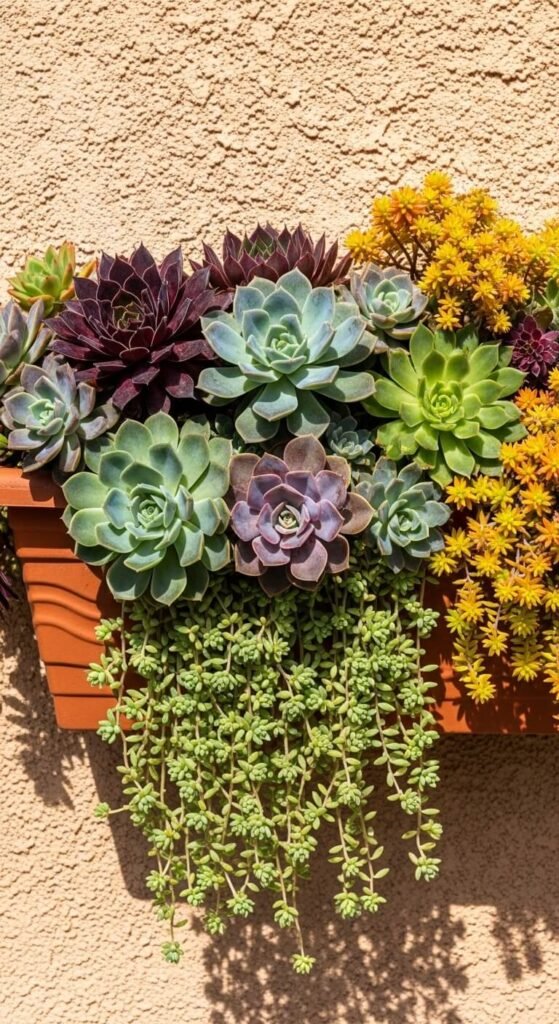
Live in a dry or hot climate? Succulents and sedums are your window box answer. They need almost no water, store moisture in their leaves, and look architectural and striking. Mix rosette-shaped echeveria with trailing sedum and a few sempervivum for color contrast. Use a sandy, fast-draining mix — regular potting soil will rot the roots. These plants ask very little and give a lot in return. You can often buy a six-pack of mixed succulents for $8–$12. They also survive light neglect, which is a bonus for busy homeowners.
17. Rustic Galvanized Metal Box with Wildflowers
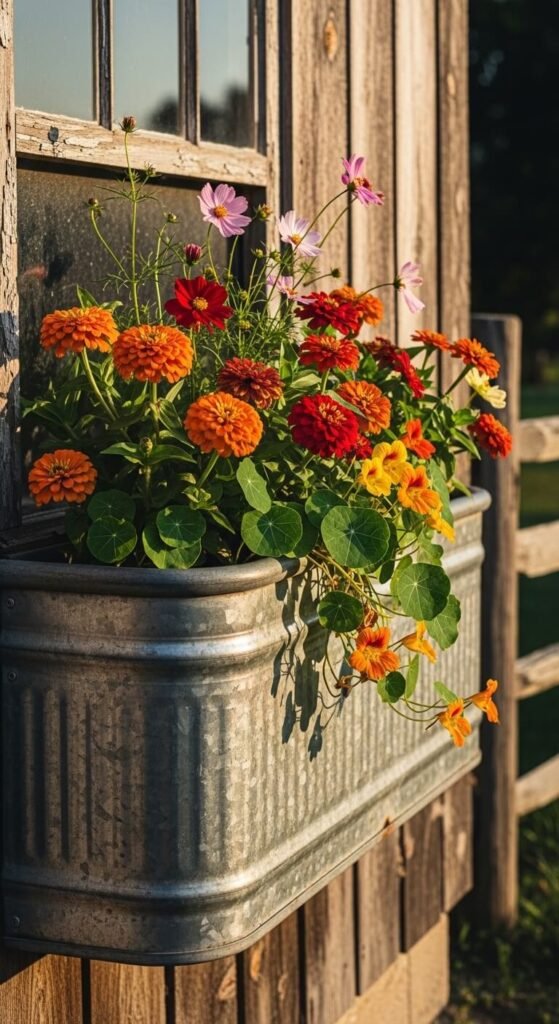
Galvanized metal boxes add a farmhouse edge. They’re affordable, weather-resistant, and age beautifully. Fill them with zinnias, cosmos, and nasturtiums for a wildflower-style look. Nasturtiums are especially great — they’re edible, grow fast from seed, and cost almost nothing. Sow seeds directly in the box after the last frost. These plants prefer lean soil, so don’t over-fertilize. The more you ignore them, the better they often bloom. A galvanized trough from a hardware store runs $10–$20 and lasts for years.
18. Spring Bulb Forced Window Box
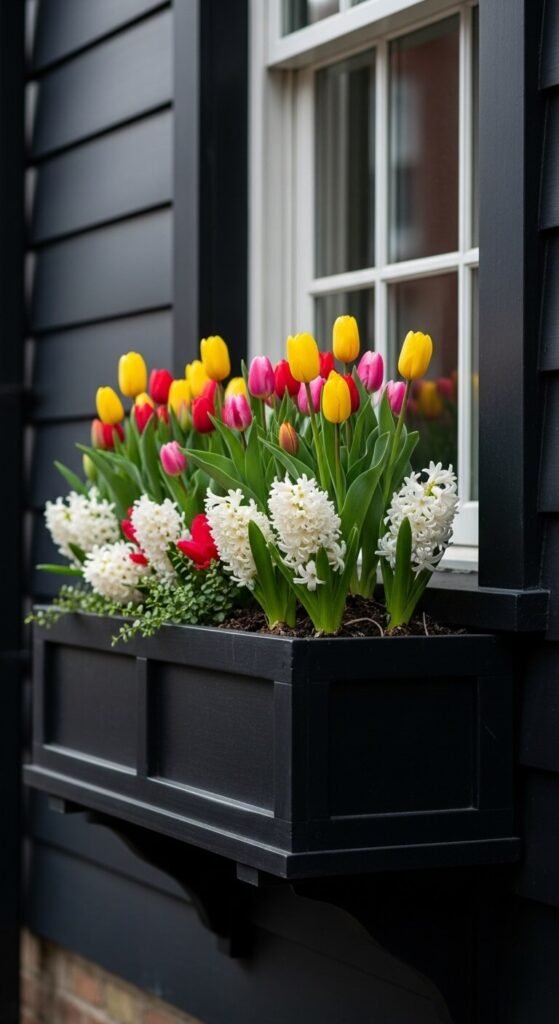
Forced spring bulbs make a showstopping early-season display. Tulips and hyacinths pre-chilled in the fridge can be planted in late winter for early spring blooms. Choose a mix of colors — pink tulips, yellow daffodils, and white hyacinths work beautifully together. Plant them closely packed for a full, lush look. Once they finish blooming, compost the bulbs or transfer to the garden. This is a temporary display, but it’s one of the most dramatic ways to welcome spring. Pre-chilled bulbs are available at most garden centers in late winter.
19. Fuchsia for Shaded Porches
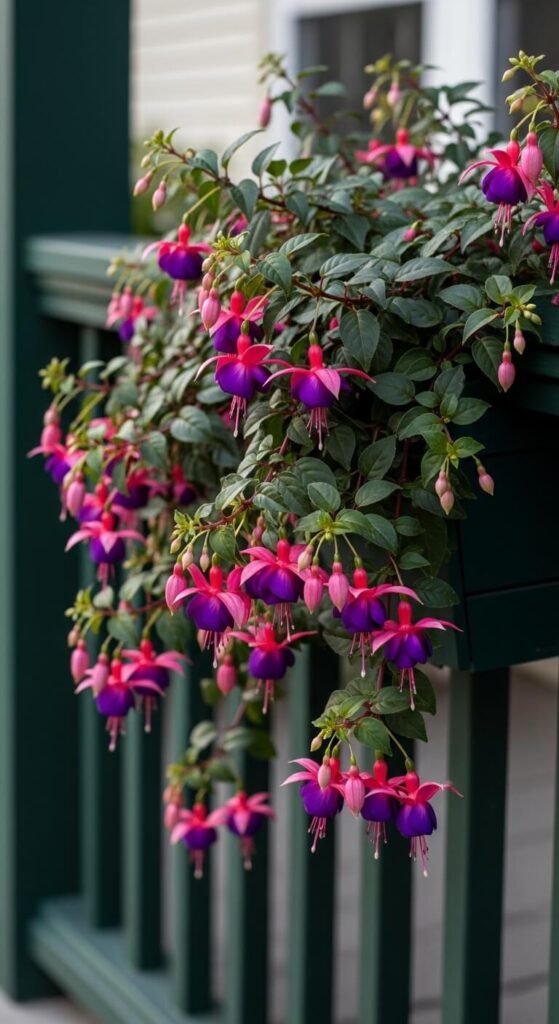
Fuchsia is one of the most dramatic shade plants available. The pendant blooms look like dangling jewels — deep pink outer petals with purple inner tubes. They thrive in cool, moist, shaded spots. Perfect for a covered porch or north-facing window. Water frequently — fuchsia dries out fast. Fertilize every two weeks for continuous blooms. You can find hanging fuchsia baskets in spring at grocery stores and garden centers for $8–$15. Trim them back by one-third in midsummer if they get leggy, and they’ll rebound with new growth.
20. Edible Flower Box for Beauty and Cooking
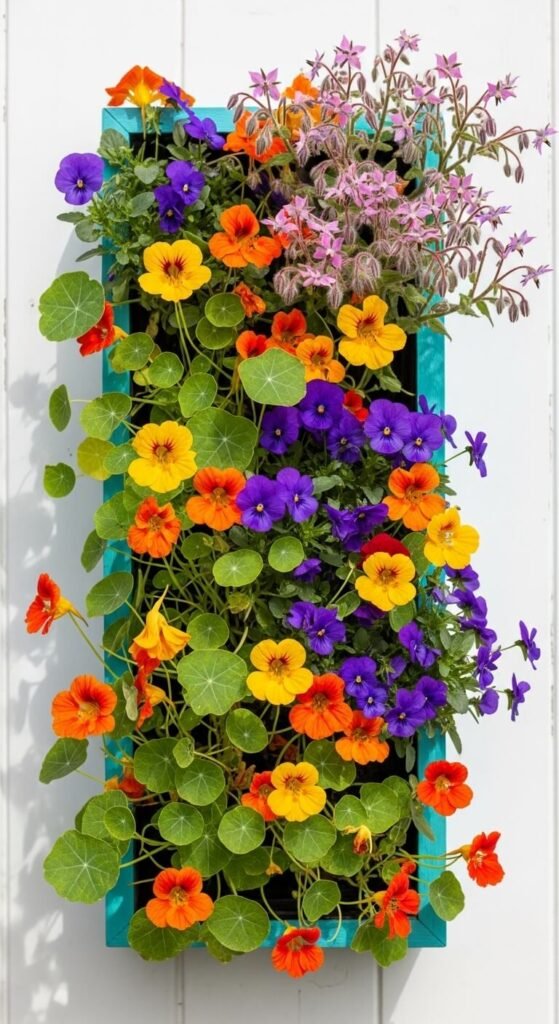
Edible flowers are both beautiful and practical. Nasturtiums, pansies, violas, and borage all have edible blooms you can toss into salads or use as cake decorations. They’re as pretty as any ornamental plant. Mix several types together for a wildly colorful box. These plants are typically inexpensive — nasturtiums grow easily from seed for almost nothing. Borage blooms in a striking starflower shape in blue and pink. Pansies are available in every color imaginable. This is a great project to do with kids, who love picking flowers they can actually eat.
21. Black-Eyed Susan and Coneflower Native Mix
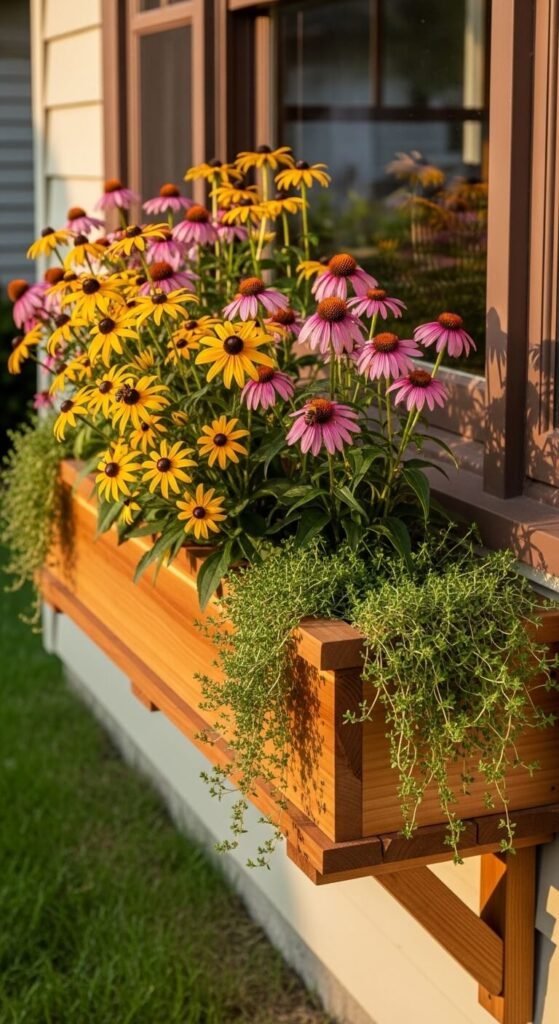
Native plants are low-maintenance, pollinator-friendly, and increasingly popular. Black-eyed Susans and coneflowers add height and color while supporting local bees and butterflies. Add creeping thyme along the edges for texture and fragrance. These plants prefer full sun and well-drained soil. Once established, they need very little supplemental watering. Native plants are often sold at local plant sales, native nurseries, or community garden swaps for much less than typical annuals. This setup suits craftsman, prairie-style, and natural-aesthetic homes particularly well.
22. Windowsill Lettuce and Kale Garden
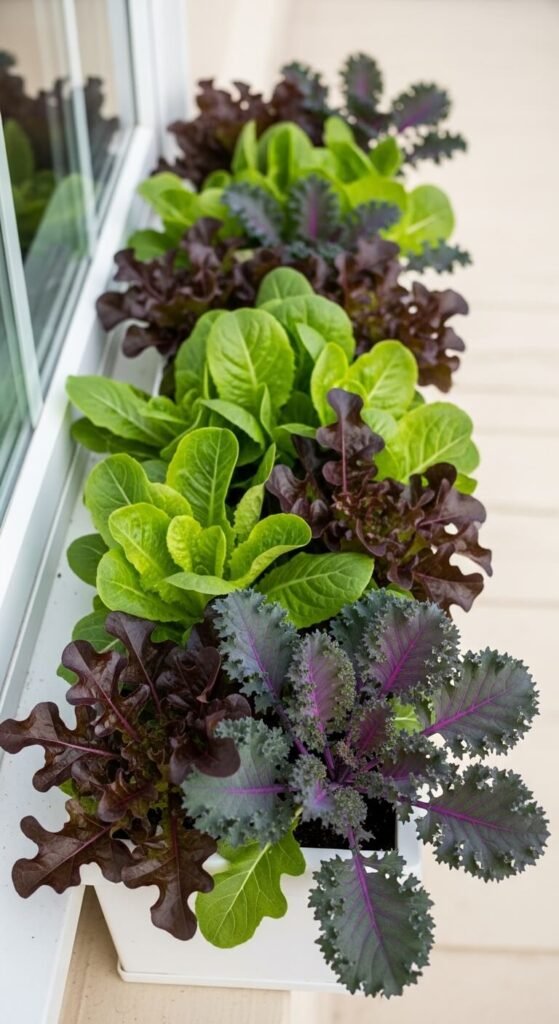
Lettuce and kale are beautiful — and people don’t use them in window boxes nearly enough. The ruffled leaves of red oak leaf lettuce and purple kale look just as good as any flower. They thrive in cool spring weather and partial sun. Use a standard window box with good drainage. Sow seeds thickly, then thin to 4 inches apart. Harvest outer leaves as needed. The box will keep producing for weeks. This is one of the most affordable setups possible — a seed packet costs $2–$4 and fills an entire box.
23. Bi-Color Combination with Red and Lime Green
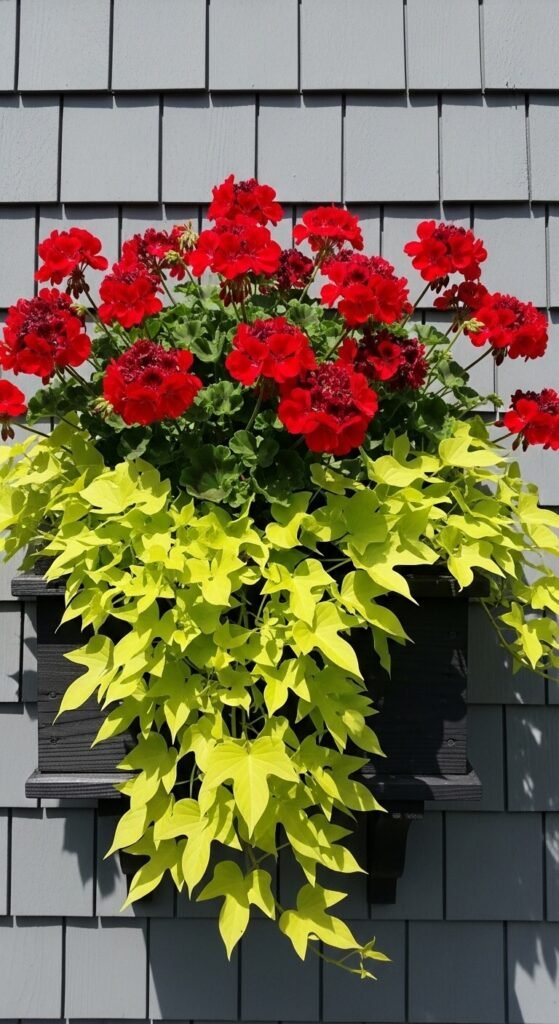
This high-contrast combination is one of the most visually striking you can plant. Red geraniums against lime green sweet potato vine create an electric pop of color. The darker the house siding, the better this combo reads from the street. Sweet potato vine grows fast and trails generously — it’ll hang 12–18 inches by midsummer. Geraniums are reliable performers in sun and heat. Water regularly and fertilize every two weeks. A single vine plant costs $3–$5 and fills the front of any box within a few weeks of planting.
24. Long Season Osteospermum and Calibrachoa Box
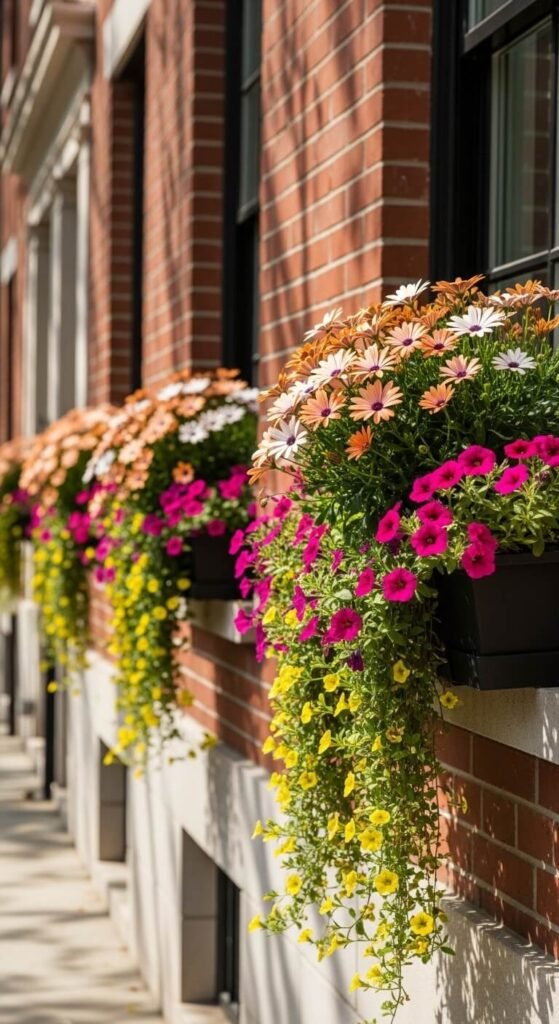
This pairing stretches your color display across the entire season. Osteospermum (African daisy) blooms from early spring through the first frost. Calibrachoa keeps going just as long. Together, they give you months of color with minimal effort. Osteospermum comes in apricot, white, purple, and yellow — all cheerful and daisy-like. Calibrachoa spills over beautifully and self-cleans, meaning no deadheading needed. Both plants tolerate light drought once established. Fertilize every 10–14 days for the best performance. This is the combo to choose if you want one planting that lasts all the way through fall.
Conclusion
Spring window boxes are one of the most affordable ways to completely change the feel of your home’s exterior. You don’t need a large garden, professional help, or a big budget. A box, some good soil, and a handful of plants can do the job. The 24 ideas here range from full sun to deep shade, edible to ornamental, simple to statement-making. Start with one window. Pick a style that fits your home’s colors and your available light. Plant it this weekend. Then stand back and see how much a few blooms can change the way your home looks and feels from the outside.