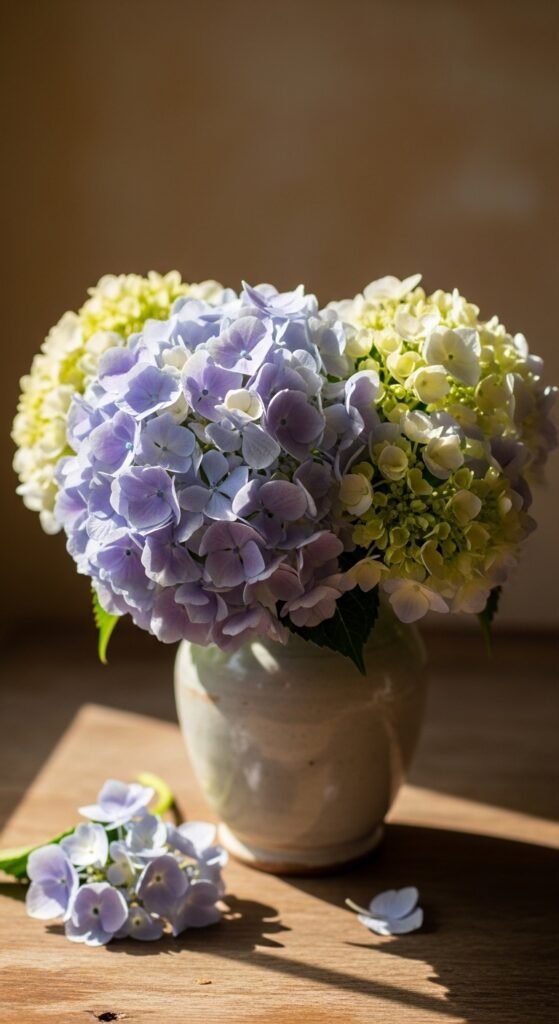
Hydrangeas are one of the most dramatic flowers you can bring into your home — but they’re also infamous for wilting fast. The good news? With the right techniques and a little planning, your arrangements can stay lush and full for days, sometimes even weeks. Whether you’re working with garden-fresh blooms or grocery store bundles, there are real, simple ways to make them last. This guide walks you through 28 practical arrangement ideas, each with tips to keep your hydrangeas looking their best from day one.
1. The Classic White Vase Cluster
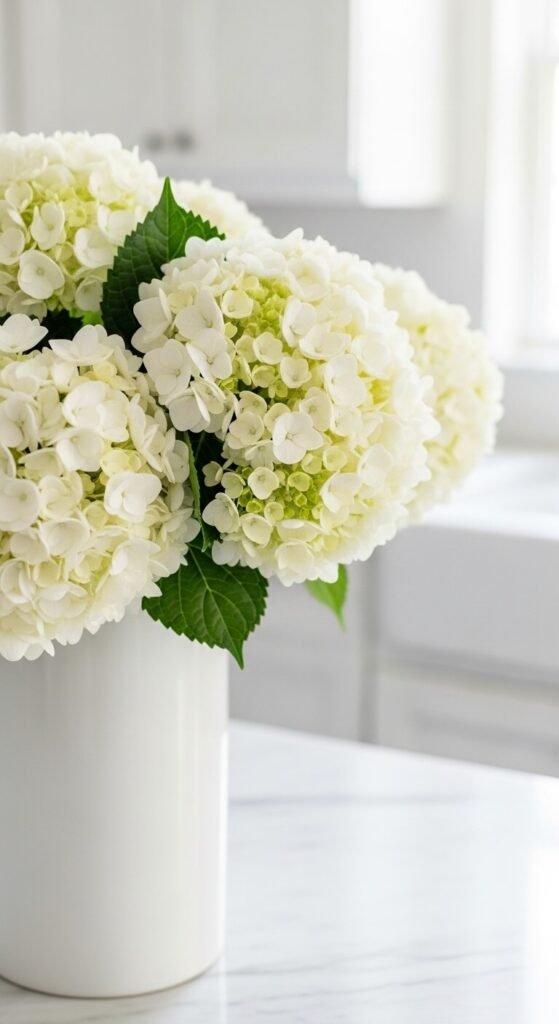
Keep it simple with a cluster of all-white hydrangeas in a clean white vase. Cut stems at a 45-degree angle before placing them in water. This increases water absorption and slows wilting. Fill the vase with cool water mixed with a small pinch of sugar and a drop of bleach. Change the water every two days. White hydrangeas look stunning on a dining table or entryway console. They’re easy to find at most grocery stores for under $10 a bunch.
2. The Submerged Stem Revival Trick
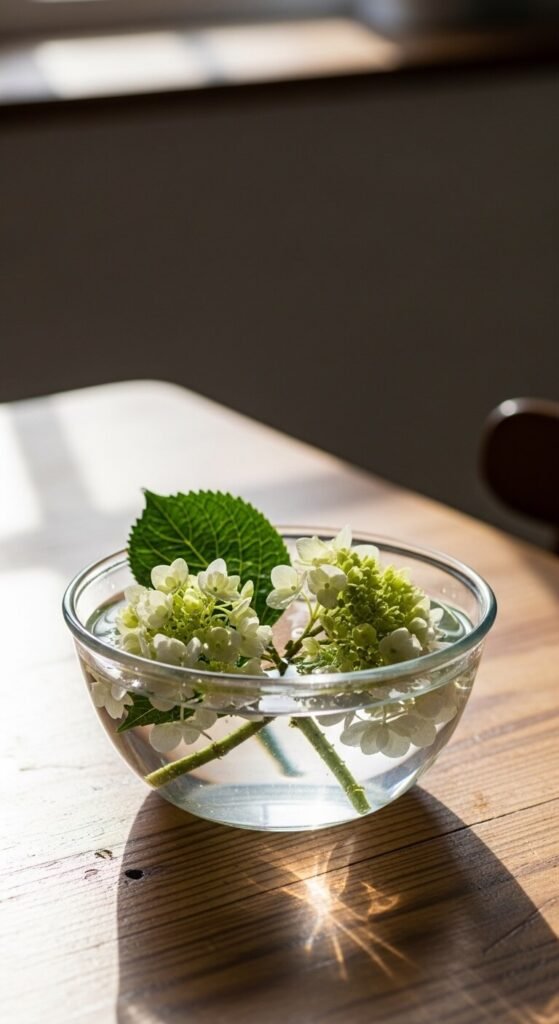
Hydrangeas drink through their petals, not just their stems. Submerge wilting blooms completely in cool water for 30 minutes. Lay the whole flower head under the surface in a sink or large bowl. This rehydrates the petals directly and can revive a droopy arrangement almost instantly. Pat the blooms dry gently before placing them back in the vase. This trick works especially well on blooms that have been out of water during transport or arranging.
3. The Farmers Market Bundle Look
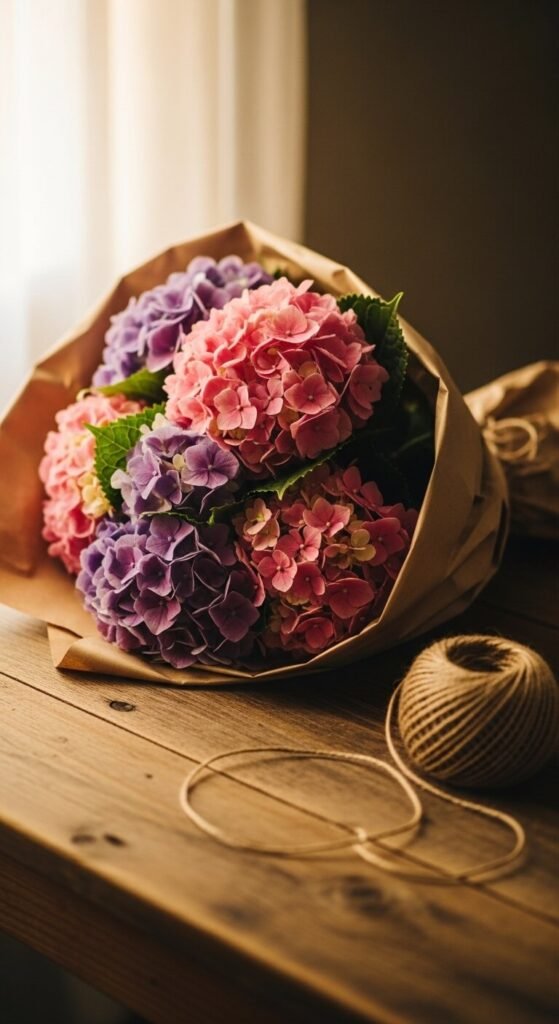
Recreate that farmers market feel at home with an oversized, loosely wrapped bundle. Mix two or three hydrangea colors — blush pink, soft lavender, and cream work beautifully together. Wrap the lower stems in kraft paper tied with twine and place them in a wide-mouth mason jar. Trim the stems under running water before arranging. This style looks intentionally casual and costs very little to pull off. It’s perfect for kitchen counters or a mudroom shelf.
4. Single-Stem Statement in a Bud Vase
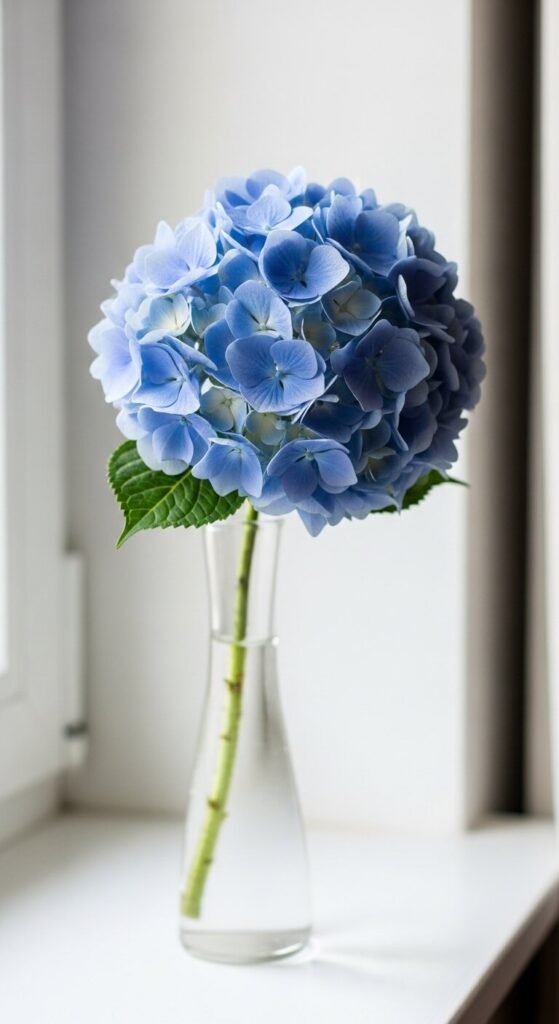
One stem can be just as powerful as a whole bouquet. Place a single large hydrangea bloom in a slim bud vase or even a wine bottle. Cut the stem short so the bloom rests just at the vase mouth — this supports the heavy head and reduces drooping. Single stems work well on bathroom vanities, bedside tables, or window ledges. They’re also a great way to stretch a small bunch across multiple small vases throughout your home.
5. The Low Bowl Centerpiece
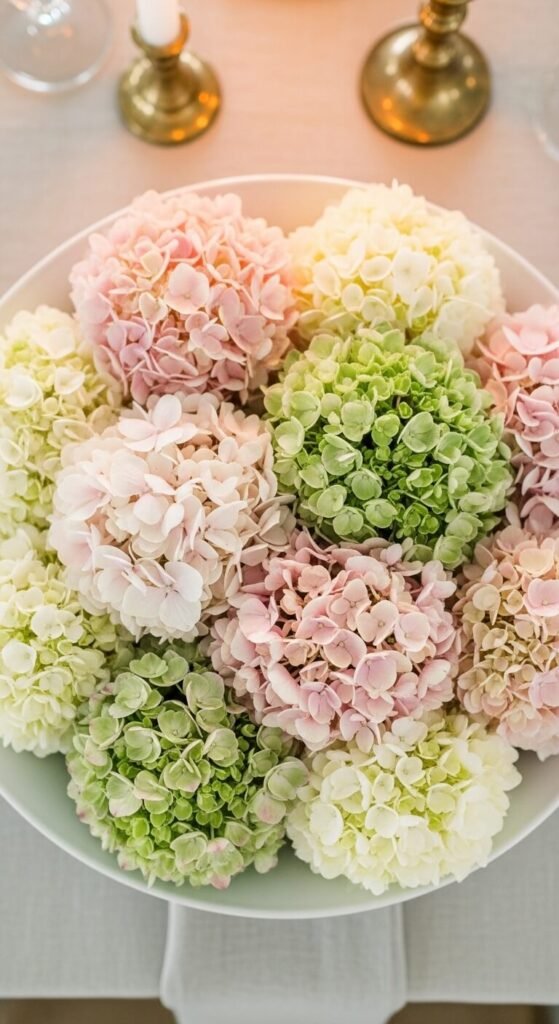
A low bowl arrangement is a showstopper on any dining table. Use a wide, shallow bowl filled with floral foam soaked in water to anchor stems at different heights. Pack blooms tightly so the foam stays hidden. Mist the blooms daily with a spray bottle to extend their life. You can find floral foam at craft stores for about $2. If you prefer no foam, pack the bowl tightly with crumpled chicken wire to hold stems in place instead.
6. Hydrangeas with Eucalyptus Filler
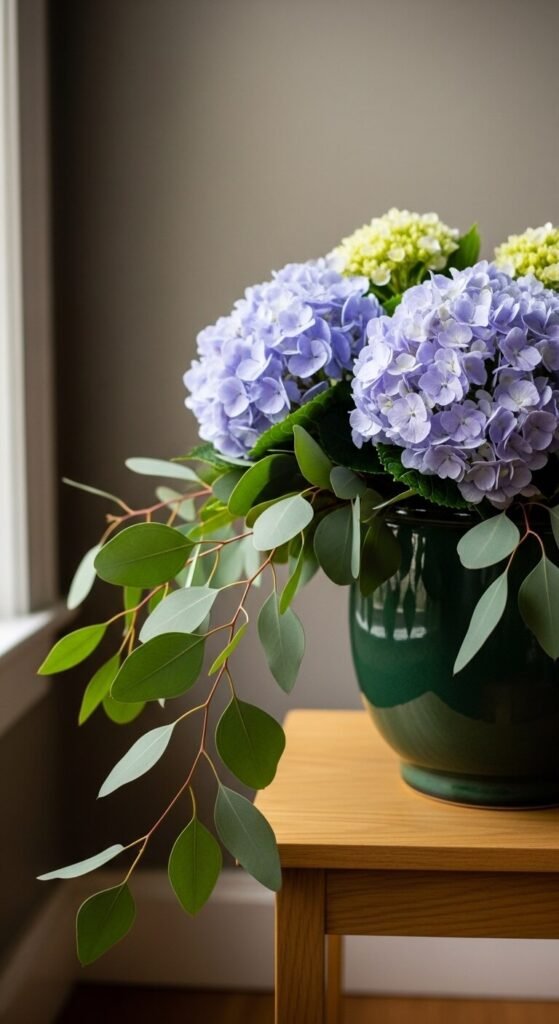
Pairing hydrangeas with eucalyptus is one of the easiest ways to make an arrangement look expensive. Eucalyptus releases natural antibacterial compounds that actually help keep your water cleaner and your blooms fresher. Add three or four eucalyptus stems around the outer edge of your arrangement. Silver dollar and seeded eucalyptus both work well. You can find eucalyptus bundles at Trader Joe’s or Whole Foods for around $3–$5. This combo smells incredible and photographs beautifully.
7. The Mason Jar Farmhouse Arrangement
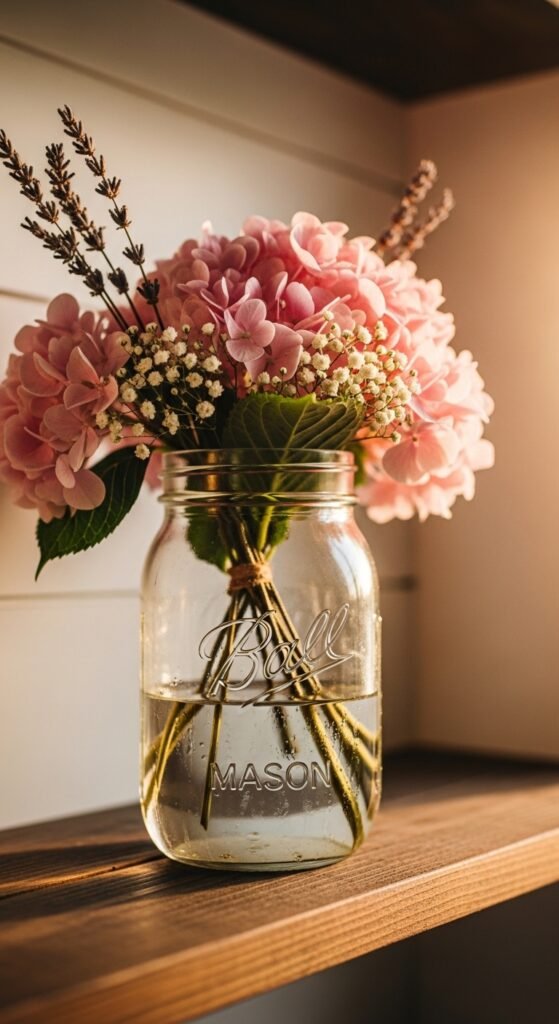
Mason jars make excellent hydrangea vases and cost almost nothing. The wide mouth supports large bloom heads without letting them flop over. Fill the jar about halfway with cool water and a tiny splash of apple cider vinegar to keep bacteria at bay. Arrange three to five stems with varied heights. Tuck in a few sprigs of baby’s breath or dried lavender for texture. This is a great DIY option for wedding centerpieces on a tight budget — one jar costs less than $1.
8. Dried Hydrangea Wreath Display
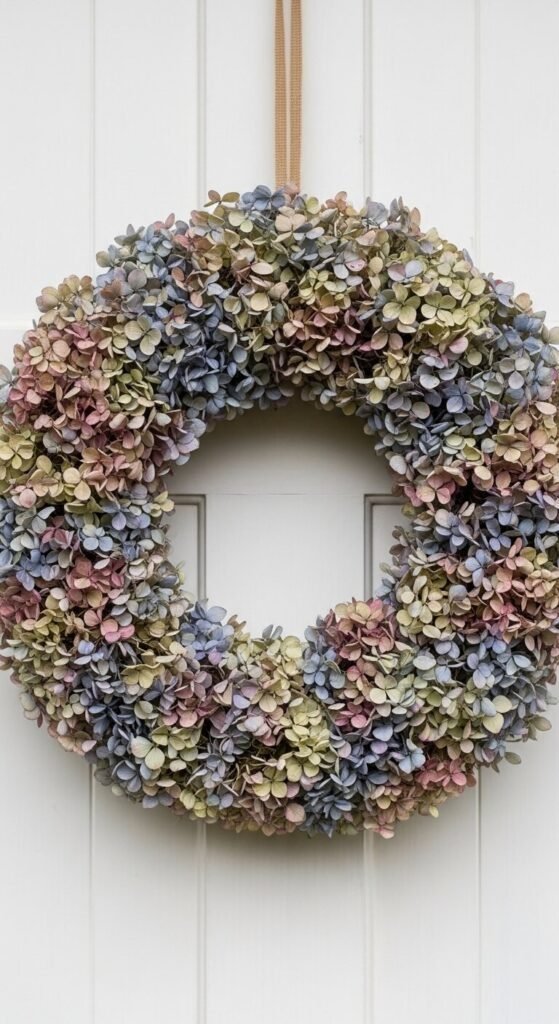
Dried hydrangeas last for months and require zero maintenance. Hang fresh stems upside-down in a cool, dark room for two to three weeks. The slower they dry, the better the color retention. Once dry, wire the blooms onto a plain grapevine wreath base from a craft store. Dusty blue, antique pink, and cream hydrangeas look especially beautiful dried. A finished DIY wreath like this costs around $15–$20 total and can last an entire season without wilting.
9. The Ombre Color Gradient Vase
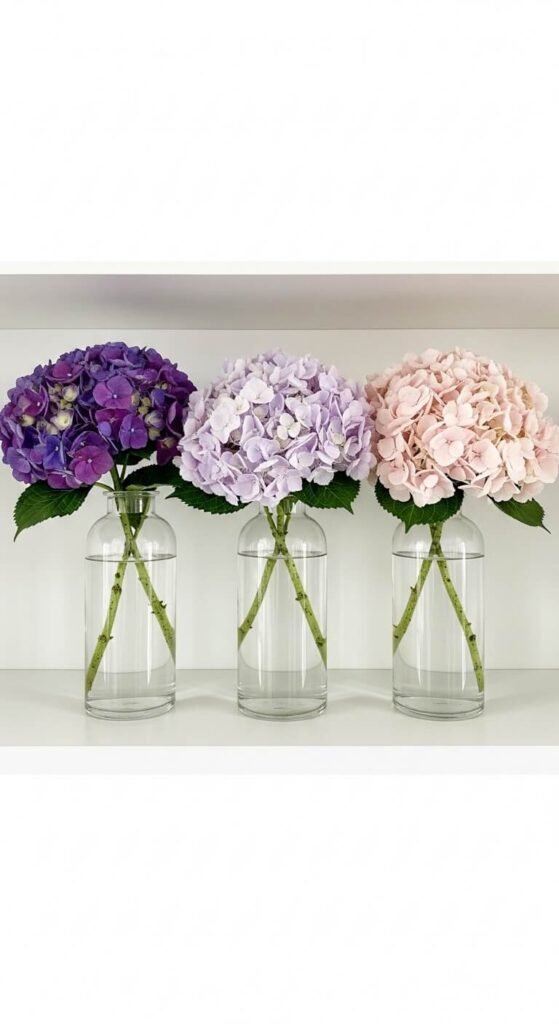
Arrange hydrangeas in an ombre color flow across a group of three vases. Start with the deepest purple on one end and work toward the palest blush on the other. Use the same vase style in all three to keep the look cohesive. Line them up on a mantel, shelf, or windowsill. This is a smart trick for using leftover stems from a larger bunch. Each mini arrangement only needs two or three stems. The total cost of the flowers can be under $15 for the whole display.
10. Hydrangeas in a Pitcher Vase
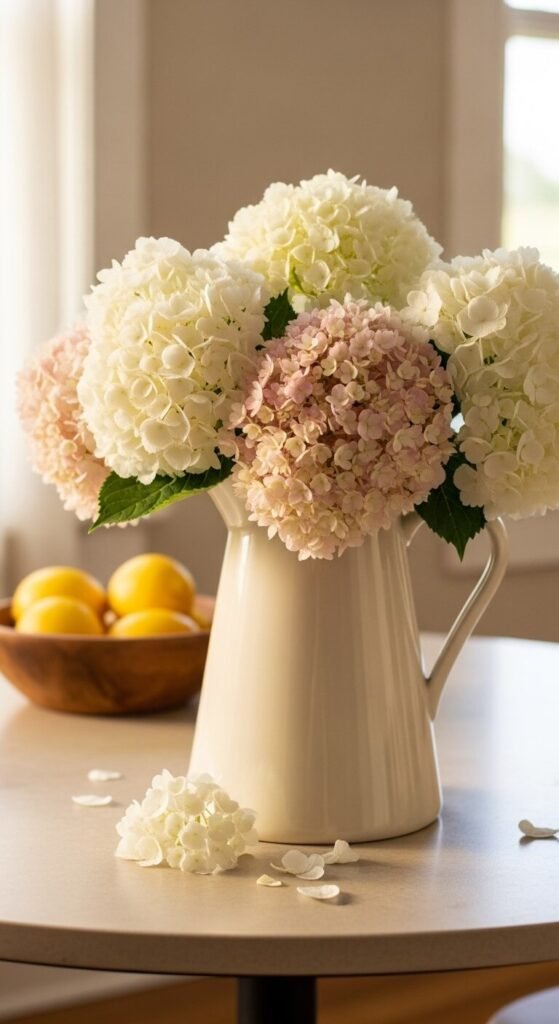
An old ceramic or enamel pitcher is one of the best vases for hydrangeas. The wide opening supports multiple heavy-headed stems without needing foam or frogs. Fill the pitcher with cold water and a few drops of lemon juice to slow bacteria growth. Trim the stems at an angle right before arranging. This look works especially well in a kitchen or breakfast nook. Check thrift stores for vintage pitchers — they often cost $3–$8 and look far more interesting than standard vases.
11. The Tall Cylinder Vase Arrangement
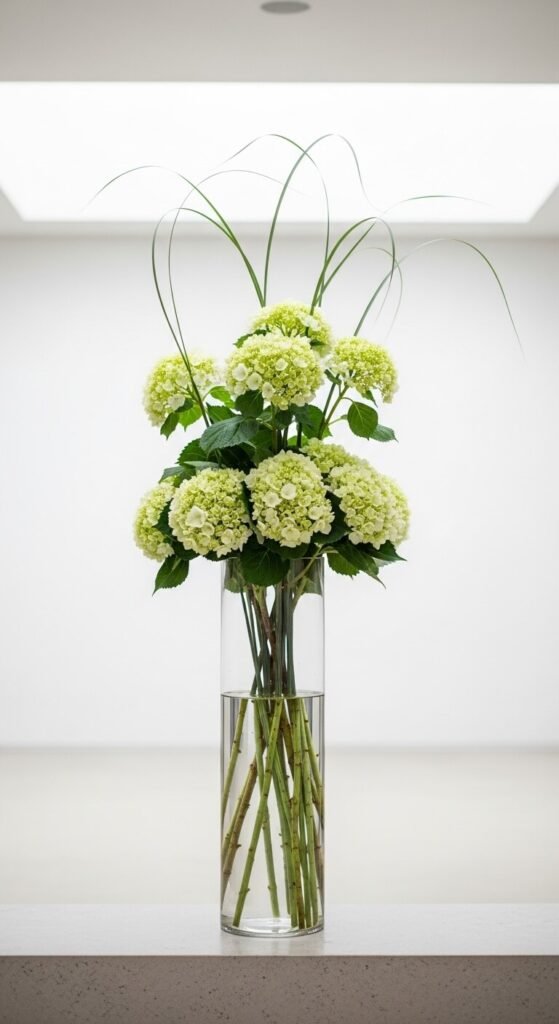
Tall cylinder vases work well for hydrangeas when you want a more architectural look. Cut stems longer than you normally would — around 12 to 16 inches — so the blooms sit high above the vase rim. Add long decorative grass or willow branches to fill vertical space. The glass vase lets you see the stems, so keep the water clean and clear. Change it every other day and re-cut stems each time. This style suits modern or minimalist interiors perfectly.
12. The Wicker Basket Garden Style
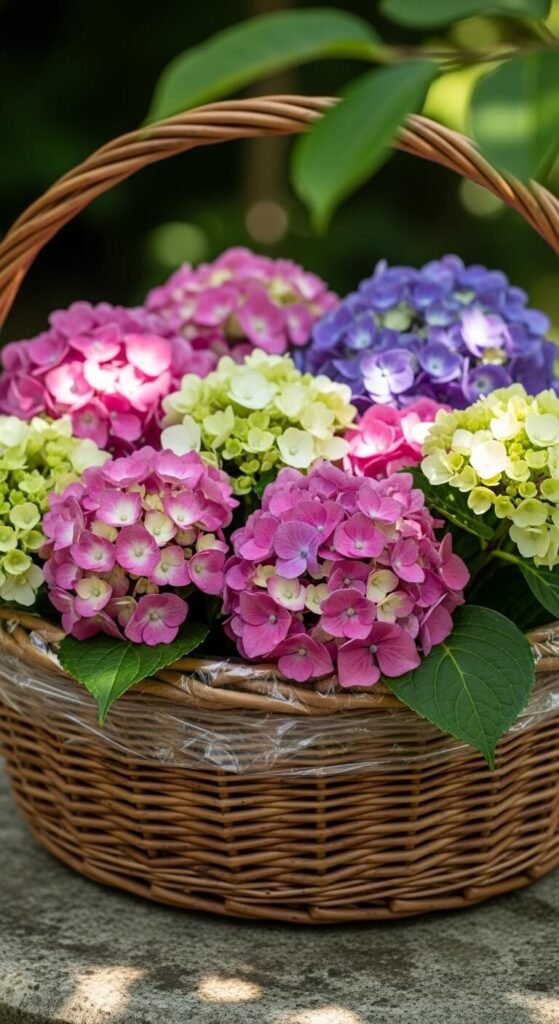
Line a wicker basket with a plastic bag or small pot, then fill it with water and hydrangea stems. This trick makes a lined basket look like a planted arrangement without the hassle or mess of soil. Use a mix of bloom colors for that loose garden-gathered feel. Place the basket on an outdoor table for a patio gathering, then bring it inside afterward. A basic wicker basket from a dollar store costs $1–$3 and instantly adds texture and warmth to any display.
13. The Windowsill Row of Bud Vases
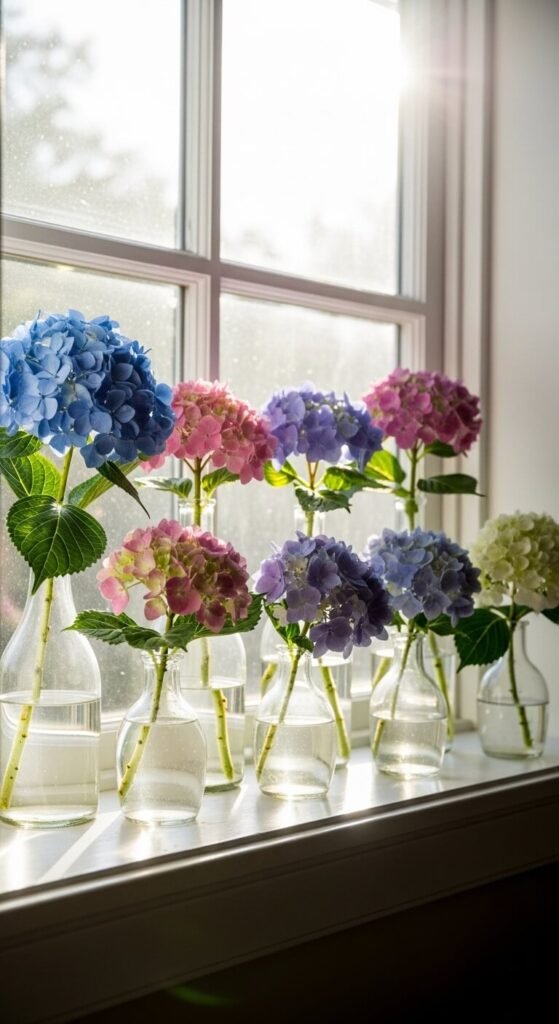
Line up a row of small bud vases along a windowsill, each holding one or two hydrangea stems. Vary the heights by cutting stems at different lengths. Use mismatched glass bottles, test tubes, or small jars for a collected, relaxed feel. This is a perfect way to use the last few stems from a dying bunch — trim them short and give them new life. The backlit window light makes hydrangea petals glow beautifully. Refill water daily since smaller vessels dry out fast.
14. Floating Hydrangea Blooms in a Bowl
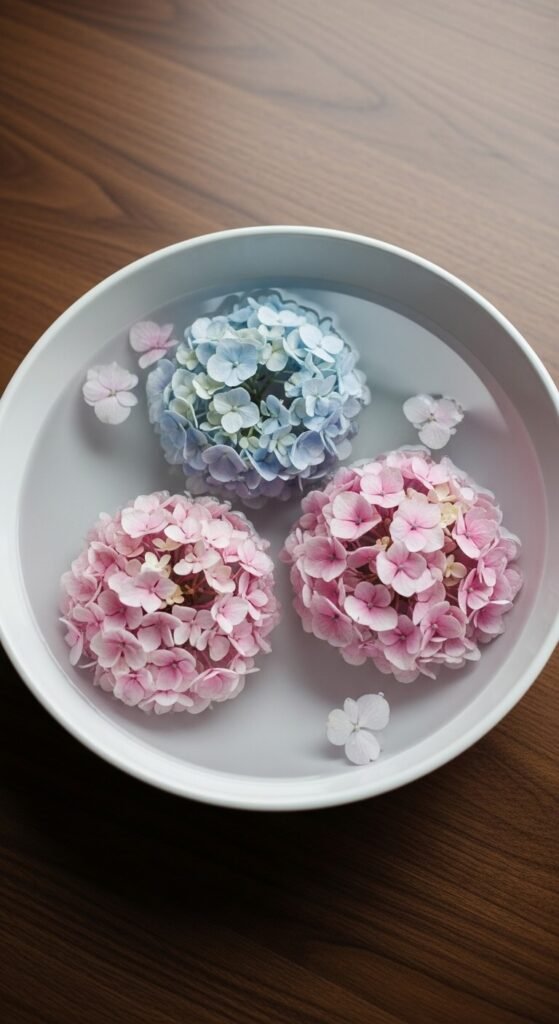
Cut hydrangea heads short — almost no stem — and float them in a wide, shallow bowl filled with water. This is one of the longest-lasting display methods because the petals absorb water directly. A ceramic salad bowl, a glass serving dish, or a vintage enamel pan all work well. Scatter a few loose petals around the floating blooms for a finished look. This style is perfect as a coffee table display or bathroom accent. Blooms can stay fresh this way for up to four or five days.
15. Hydrangeas Paired with Greenery Only
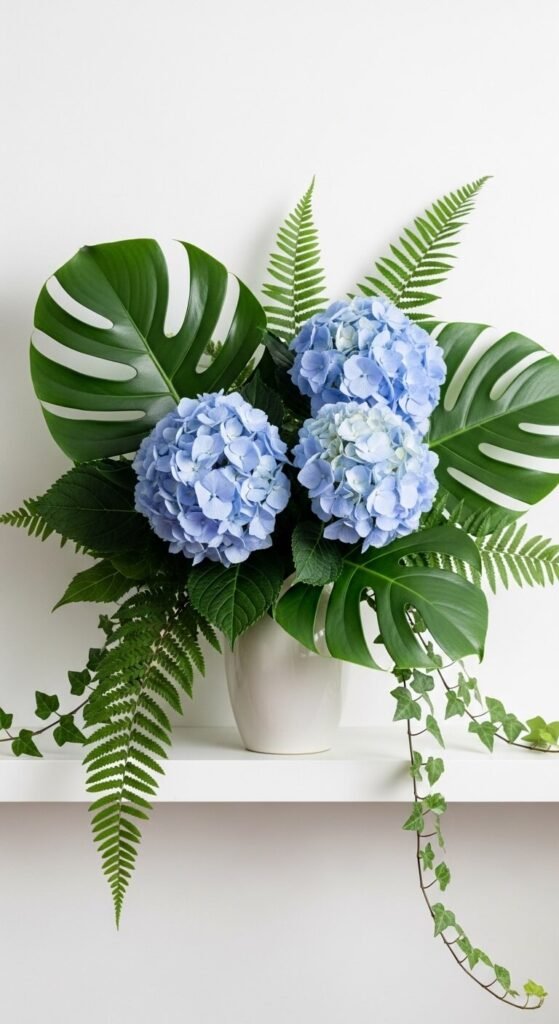
Strip back the extras and let hydrangeas shine against bold greenery alone. No filler flowers needed — just a few large leaves like monstera, magnolia, or ferns. Green foliage from your own yard or garden works perfectly here. The contrast between lush green and a large hydrangea bloom is visually striking and very easy to achieve. This approach is also budget-smart — the hydrangeas are the only purchase, and everything else comes from outside. Trim any submerged leaves below the waterline to prevent rot.
16. The Alum Stem Prep Method
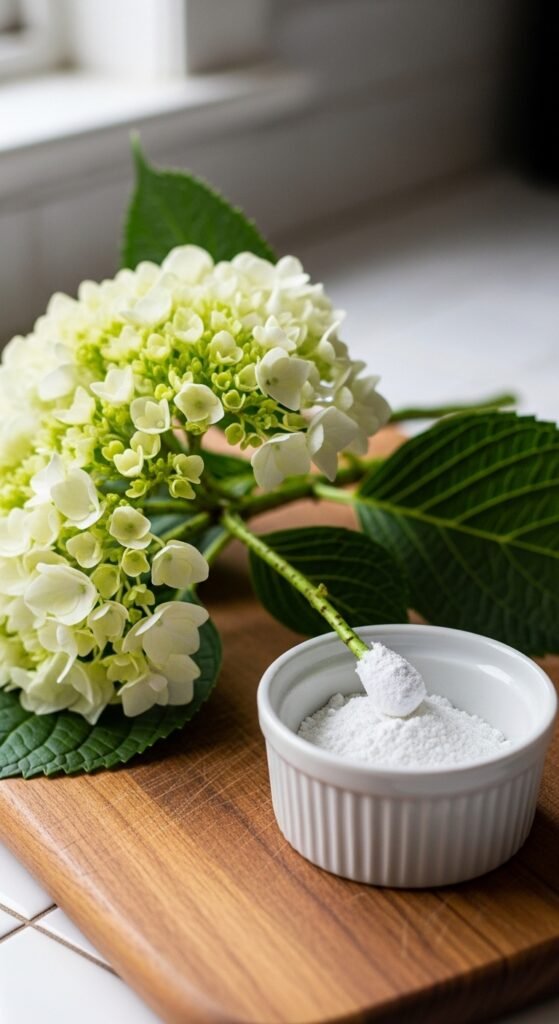
Before placing hydrangeas in water, dip the freshly cut stem end in alum powder — a common kitchen spice found in the baking aisle. Alum acts as an astringent that tightens the stem tissue and helps water travel upward more efficiently. Dip just the tip, then place the stem immediately in cool water. This simple prep step can add two to three extra days of vase life. A small jar of alum costs about $3 and lasts for dozens of arrangements. It’s one of the best-kept florist secrets.
17. Boiling Water Stem Conditioning
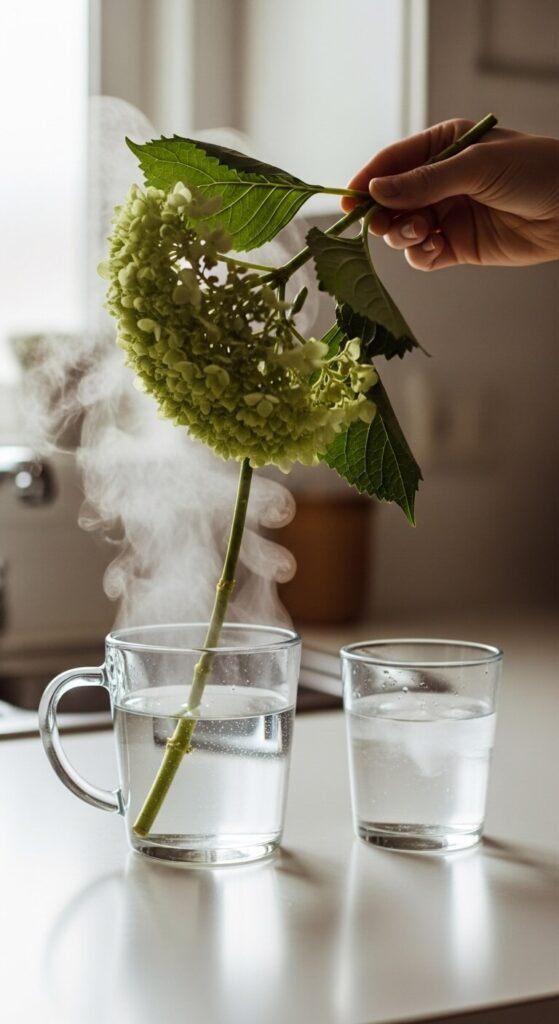
Hydrangeas have woody stems that can block water flow over time. Conditioning them with boiling water at the start helps seal the stem ends and forces air bubbles out. Cut stems at an angle, then hold them in boiling water for 30 seconds before placing them in a cool water vase. Do this each time you re-cut stems. It sounds counterintuitive, but the brief heat treatment actually opens the vascular tissue. Florists use this trick with nearly every woody-stemmed flower, not just hydrangeas.
18. The Mirrored Tray Tablescape
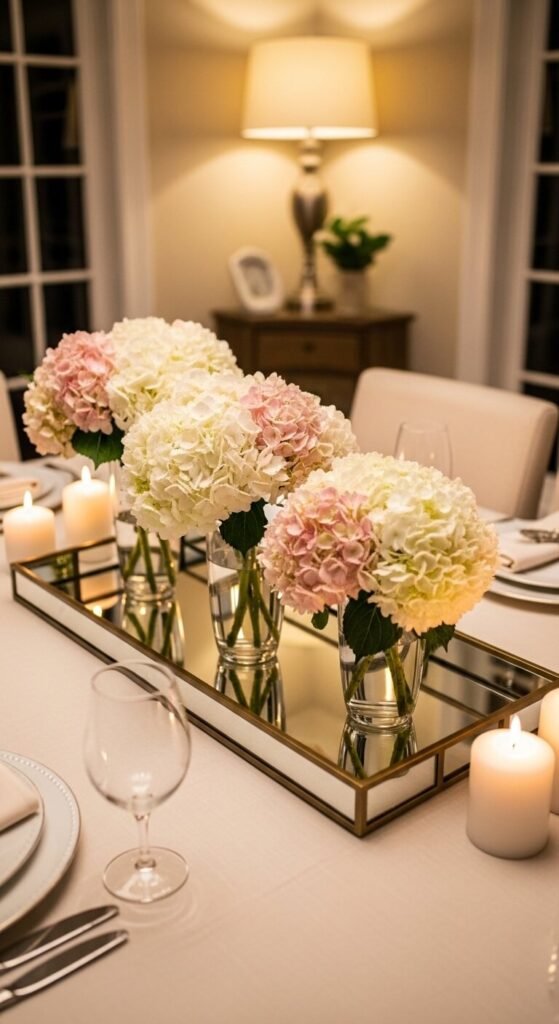
Place your hydrangea vases on a mirrored tray to double the visual impact instantly. The reflection underneath makes a small arrangement look twice as full. Use two or three different vase heights for dimension. Add a few pillar candles on either side to create a complete tablescape. Mirrored trays are available at home goods stores for $10–$20, or check thrift stores for ornate vintage versions. This setup is perfect for dinner parties or holiday tables and requires minimal flowers to look impressive.
19. Color-Changing Blue Hydrangeas with Acidic Water
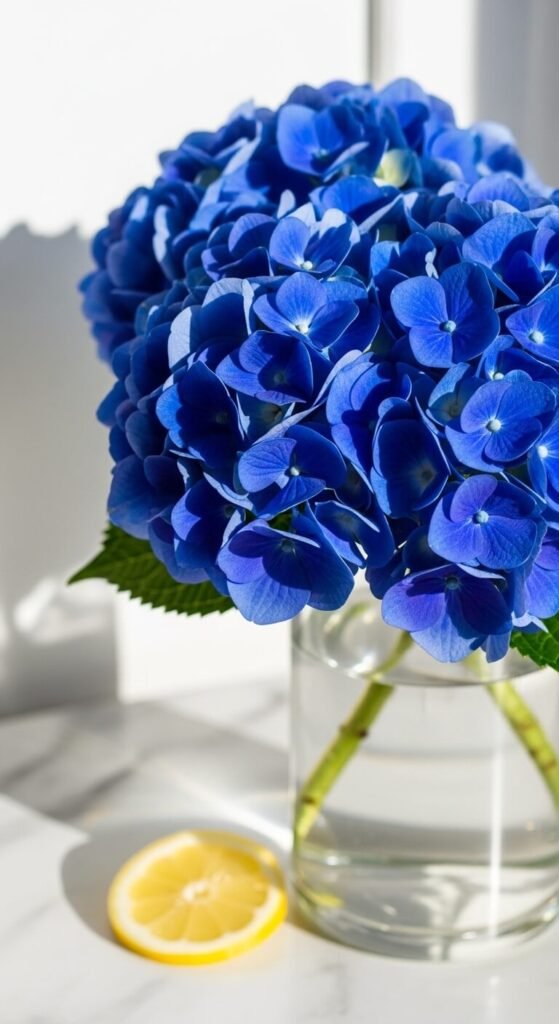
Blue hydrangeas are pH-sensitive — they can shift or fade in the wrong water. Adding a small squeeze of lemon juice or a splash of white vinegar to the vase water keeps the pH slightly acidic, which helps maintain deep blue and purple tones. This won’t change white flowers, but it makes a real difference with blue and purple varieties. Change the acidic water every two days and re-cut the stems. It’s a zero-cost hack that works every single time using things you already have at home.
20. The Grocery Store Bouquet Upgrade
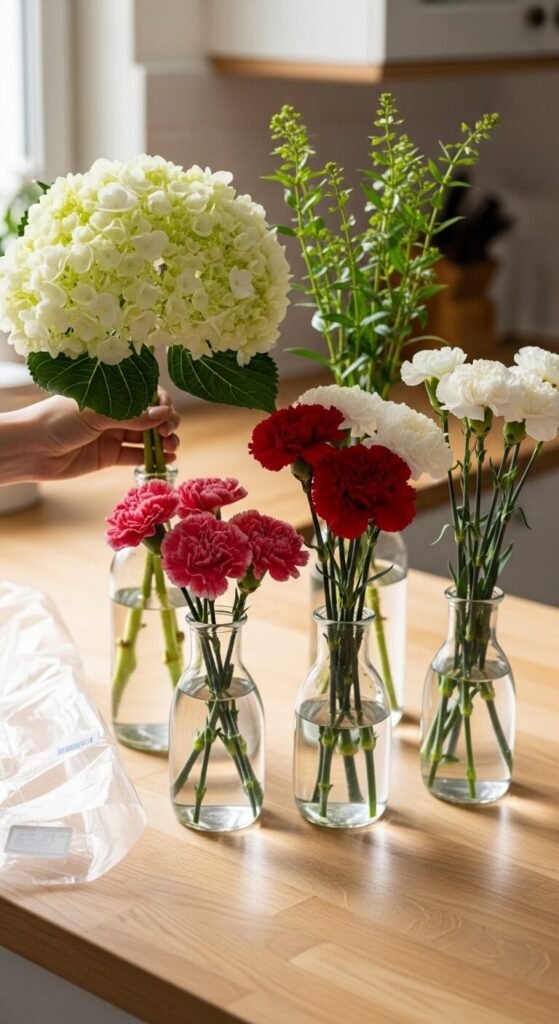
Most grocery store bouquets mix hydrangeas with carnations or lilies. The problem? Different flowers prefer different water conditions, and mixing them can shorten hydrangea life significantly. As soon as you get home, separate your hydrangeas into their own vase. Rearrange the other flowers in a separate container. This one step can add three to four extra days of life to your hydrangeas. You end up with two distinct arrangements from one $10 bouquet — a smart way to stretch your flower budget.
21. Hanging Hydrangea Bundles for Drying
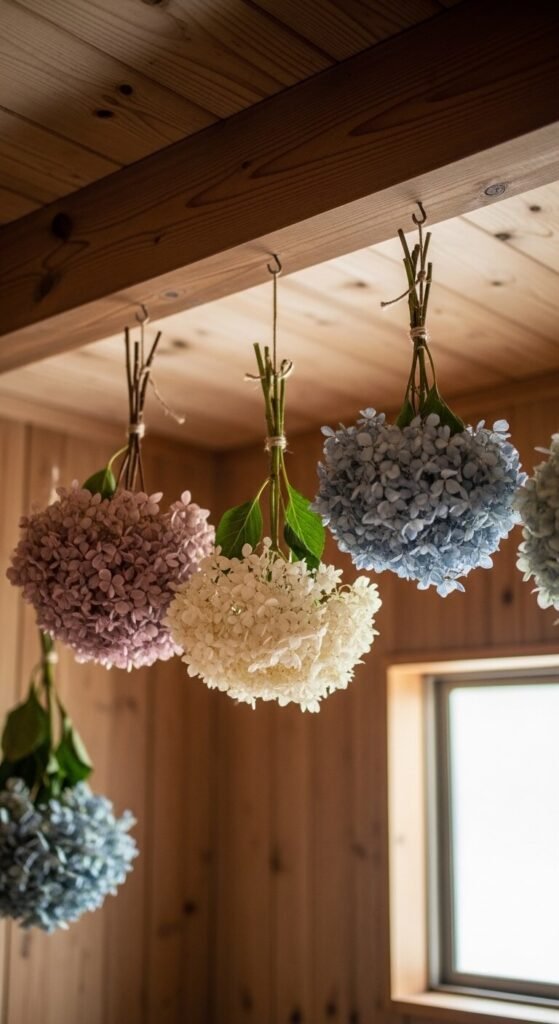
Hanging hydrangeas upside-down turns a fresh arrangement into a long-lasting dried display. Rubber-band three to five stems together and hang them in a dark, airy space — a closet, pantry, or spare room works well. Avoid direct sunlight during drying, which fades the colors quickly. After two to three weeks, the blooms are paper-dry and fully preserved. Move them to a vase, wreath, or frame. A bundle of dried hydrangeas lasts a year or more and costs nothing extra beyond the original flowers.
22. The Herb and Hydrangea Mix
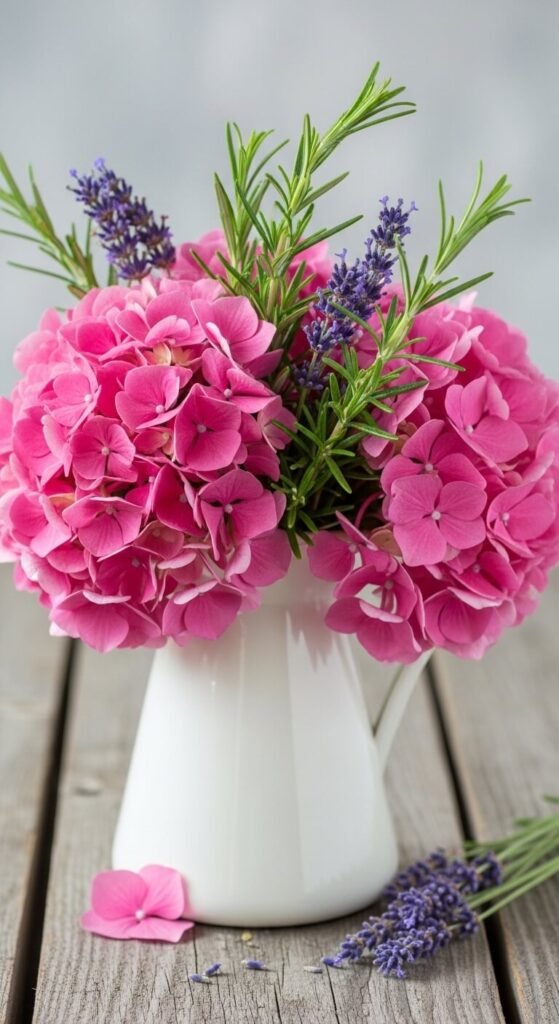
Mixing hydrangeas with fresh herbs like rosemary, lavender, or mint creates a multi-sensory arrangement. The herbs release natural antimicrobial oils into the water, which actually helps keep bacteria down and extends the life of your blooms. Lavender and hydrangeas together smell extraordinary. Add three or four herb stems around the outside of your arrangement. If you grow herbs in your garden or on a windowsill, this addition is completely free. It also makes your kitchen or dining room smell wonderful.
23. The Low-Water Stress Method
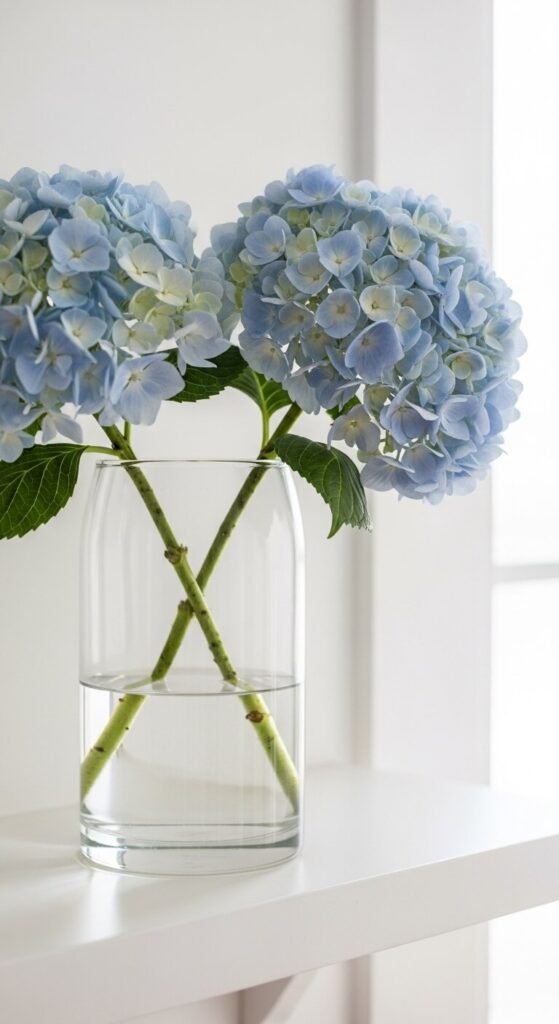
Counter-intuitively, keeping the water level low — about 1 to 2 inches — can actually help hydrangeas last longer in some cases. With less water, the stem ends don’t sit in deep water and rot as quickly. The stems take up water more actively when the supply is limited. This method works best in cool rooms. Check the water level daily and top it up before it runs dry. Re-cut stems every two days at a sharp angle to maintain good water absorption.
24. Terracotta Pot Faux Garden Style
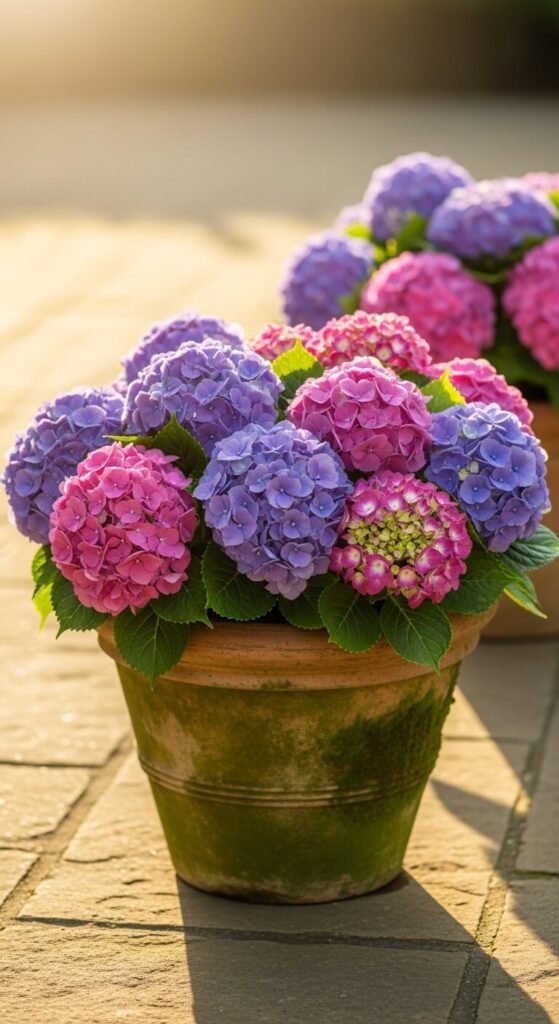
Line a small terracotta pot with a plastic bag, fill it with water, and arrange hydrangeas inside to mimic a potted garden plant. Pack the stems tightly so they hold each other upright. Add a few leafy stems or fern fronds around the edges to fill gaps and reinforce the planted look. This style works beautifully on a front porch or outdoor table. Terracotta pots cost $1–$5 at garden centers. The faux-planted look is far more impressive than it sounds and takes about five minutes to put together.
25. The Compote Vase Centerpiece
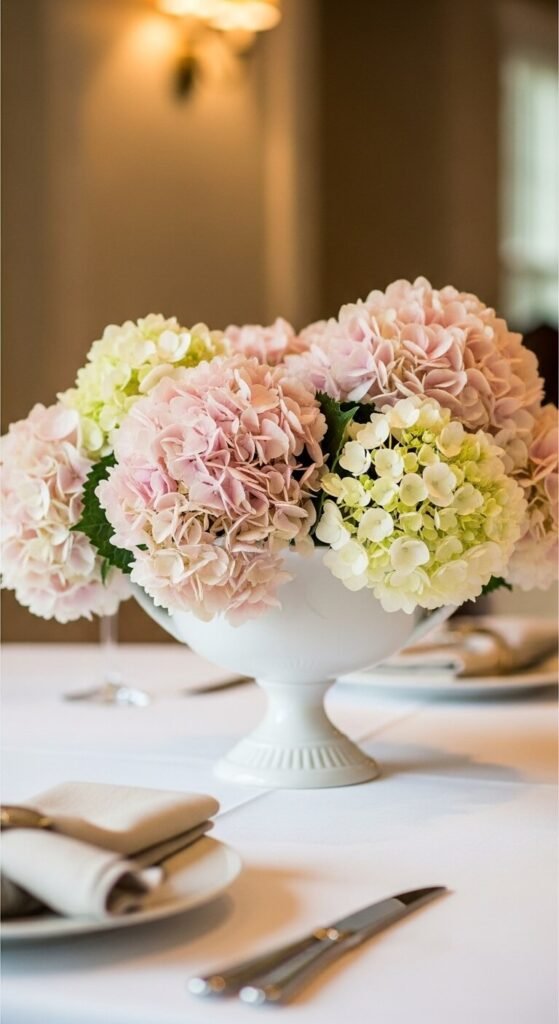
A footed compote vase gives hydrangeas an elevated, formal look that’s perfect for special occasions. The raised base adds height without needing tall stems. Pack blooms tightly into the bowl so they form a round, dome-shaped arrangement. This style suits wedding tables, bridal showers, and holiday dinners. Footed compotes are available at thrift stores for $5–$15. If you don’t have one, invert a bowl and place a smaller vase on top — a budget-friendly DIY version that achieves the same elevated effect.
26. The Bedroom Nightstand Mini Vase
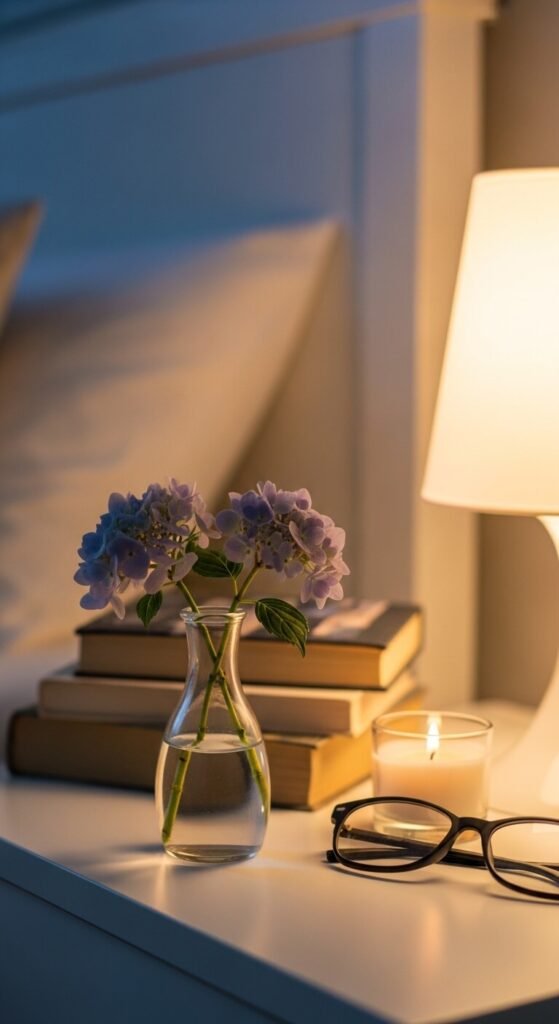
A small hydrangea arrangement on a nightstand is one of the most calming and affordable bedroom upgrades. Use just two or three stems in a tiny vase or glass to keep the scale right for a small surface. Lavender or blush hydrangeas are especially soothing in a bedroom setting. Keep the vase away from direct heat sources like a lamp or radiator — heat wilts hydrangeas fast. Change the water every other day without fail in small vessels. The entire setup costs under $5 if you have a spare glass.
27. The Repurposed Wine Bottle Vase
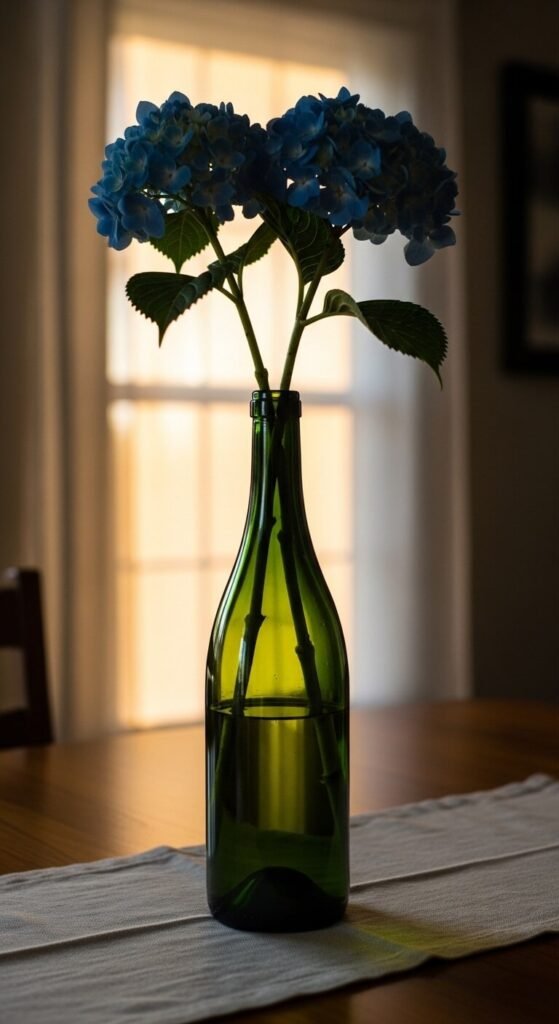
An empty wine bottle is actually a great hydrangea vase. The narrow neck supports one or two stems perfectly without any foam or wire. Peel off the label, fill with cool water, and place long-stemmed hydrangeas inside. The dark glass helps protect the water from light, which slows algae and bacteria growth. A deep green or cobalt blue bottle makes a particularly striking display. This is a completely free upcycle that produces a genuinely stylish result. Add a second bottle at a different height for a paired look.
28. The Seasonal Color Swap Strategy
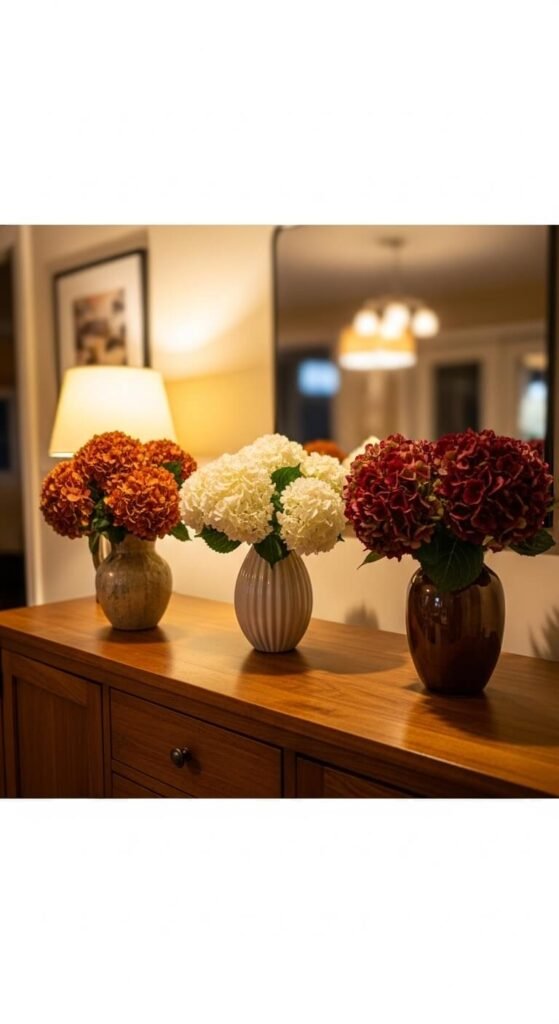
Plan your hydrangea displays around seasonal colors to keep your home feeling current all year. Spring and summer call for blush, lavender, and sky blue. Fall is the perfect time for rust, burgundy, and antique cream. Winter works beautifully with white, silver-touched stems, and dried neutral tones. Matching your arrangement to the season makes a simple display feel intentional and styled. Many florists discount hydrangeas at the end of the week — ask at your local flower shop or market. Seasonal buying also means better quality at lower prices.
Conclusion
Keeping hydrangeas lush and long-lasting is far easier than most people think. The difference between a two-day bloom and a two-week bloom almost always comes down to stem prep, clean water, and the right vessel. Whether you’re floating blooms in a bowl, hanging bundles to dry, or repurposing a wine bottle on your table, there are arrangements here for every budget and skill level. Start with one or two of these ideas and build your confidence from there. Your home deserves flowers — and now you have everything you need to make them stay.