There’s something magical about those first warm days of spring—when you can finally throw open the windows, let fresh air fill your home, and swap out heavy winter décor for something lighter and brighter. But here’s the thing: a spring vignette isn’t just about placing random flowers and pastel accents on a table. The best vignettes tell a story, evoke emotion, and make your space feel intentionally curated rather than cluttered.
So how do you create a spring vignette that actually means something? One that makes guests pause and smile? Let’s walk through it together.
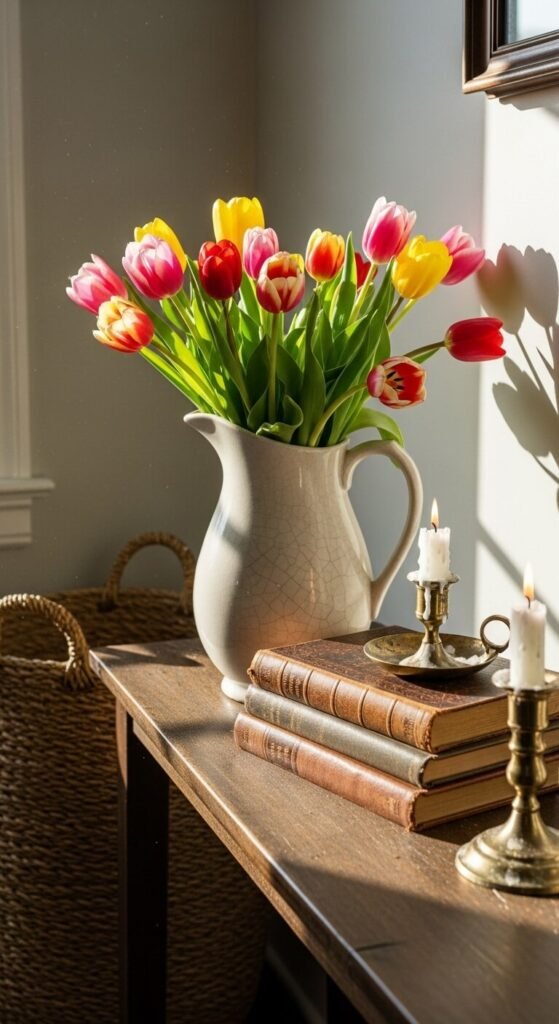
Start With Your Story
Before you grab that vase or hunt down the perfect candlestick, ask yourself: What story am I trying to tell?
Maybe it’s about lazy Sunday mornings with coffee and fresh flowers. Or perhaps it’s a nod to your grandmother’s garden that always bloomed first in the neighborhood. Your story could even be as simple as “new beginnings” or “fresh starts.”
Here’s why this matters: when you have a clear narrative in mind, every item you choose has purpose. You’re not just decorating—you’re storytelling.
Try this: Write down 3-5 words that capture the feeling you want your vignette to convey. Think “peaceful,” “nostalgic,” “cheerful,” or “romantic.” Keep this list nearby as you shop and style.
Choose a Focal Point That Commands Attention
Every great story needs a protagonist, and every great vignette needs a focal point. This is the item that draws the eye first—the hero of your arrangement.
For spring, this could be:
- A statement floral arrangement in an unexpected vessel
- A vintage garden tool propped artfully against the wall
- A beautiful framed print or botanical illustration
- An heirloom piece with sentimental value
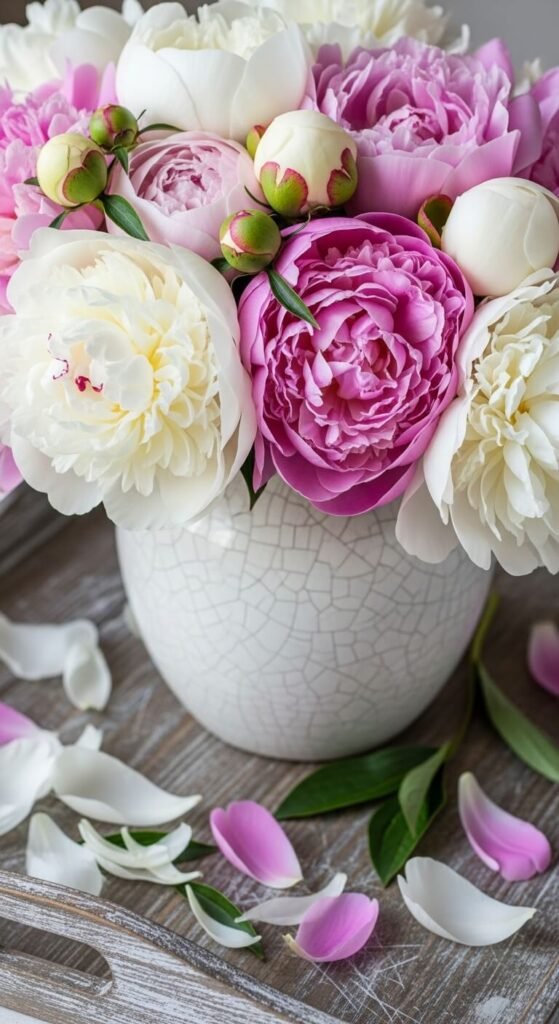
Your focal point should be the largest or most visually interesting piece. Everything else will support it, not compete with it.
Layer in Supporting Characters
Now comes the fun part—building around your focal point with complementary pieces that add depth and interest.
Think in odd numbers (groups of 3, 5, or 7 work beautifully) and vary your heights. You want visual movement, not a flat lineup.
Layer these elements:
- Books or vintage crates for elevation
- Natural textures like woven baskets, linen napkins, or raw wood
- Smaller floral accents in bud vases or scattered stems
- Personal touches like vintage postcards, small photographs, or collected treasures
- Candlesticks for vertical interest and warmth

The key is balance without symmetry. You want it to look effortlessly collected, not rigidly arranged.
Add Layers and Texture
Flat surfaces are boring. Stories have dimension, and so should your vignette.
Create depth by:
- Placing items at different distances from the edge
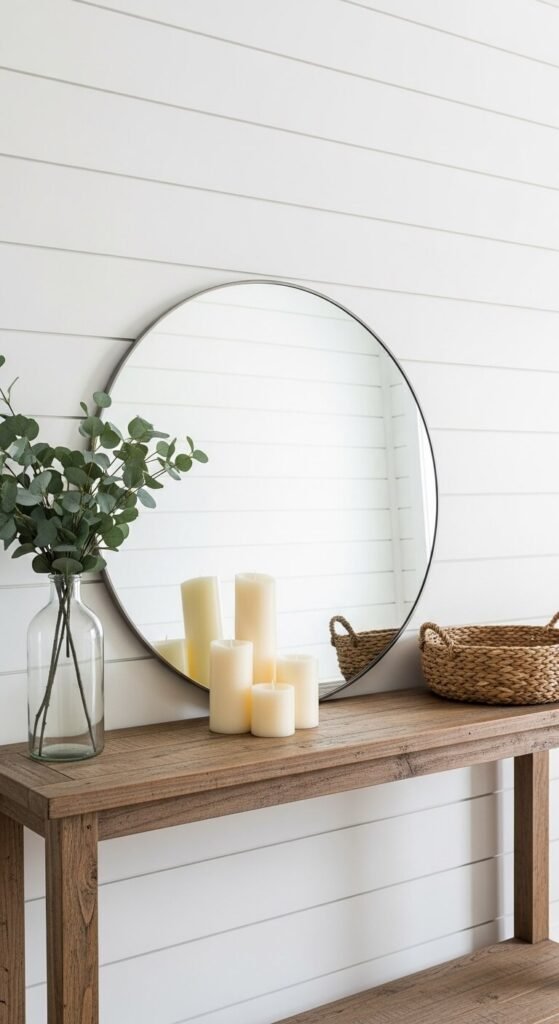
- Leaning artwork or mirrors against the wall behind your arrangement
- Draping a soft linen runner or vintage tablecloth underneath
- Incorporating different materials (glass, ceramic, metal, wood, fabric)
Spring is the perfect time to introduce fresh textures—think gauzy fabrics, natural fibers, weathered finishes, and organic elements like moss, branches, or smooth river stones.
Let Nature Take Center Stage
Spring vignettes practically beg for fresh, living elements. Don’t be afraid to let nature be the star.
Visit your local farmer’s market or even your own backyard for:
- Freshly cut branches (flowering quince, forsythia, or cherry blossoms are stunning)
- Wildflowers in unexpected color combinations
- Potted herbs like lavender or rosemary
- Spring bulbs still in their grow pots
- Found natural objects like interesting stones, feathers, or bird nests
The imperfection of natural elements adds authenticity to your story. A slightly bent tulip stem or leaves with character beats artificial perfection every time.
Edit Ruthlessly
Here’s where most people go wrong: they add too much. A vignette that tells a clear story knows when to stop talking.
Step back and ask yourself:
- Does every item earn its place?
- Can I still see the surface underneath?
- Does my eye know where to land first?
If something doesn’t support your story or feels like clutter, remove it. The most powerful vignettes have breathing room—space that lets each element shine.

Your Spring Story Awaits
Creating a spring vignette that tells a story isn’t about following rigid rules or copying someone else’s style. It’s about choosing pieces that speak to you, arranging them with intention, and letting your personality shine through.
Start with your narrative, build around a strong focal point, layer thoughtfully, and know when to stop. Most importantly, have fun with it. Your home should tell your story, not someone else’s.