Spring is the perfect time to refresh your home’s décor and create little pockets of beauty that capture the season’s magic. But here’s the thing: the best vignettes don’t just look pretty—they tell a story. Whether it’s a tale of garden mornings, cozy teatimes, or fresh beginnings, a well-styled vignette draws you in and makes you feel something.
Ready to create a spring display that’s more than just a random collection of cute things? Let’s dive into the art of storytelling through styling.
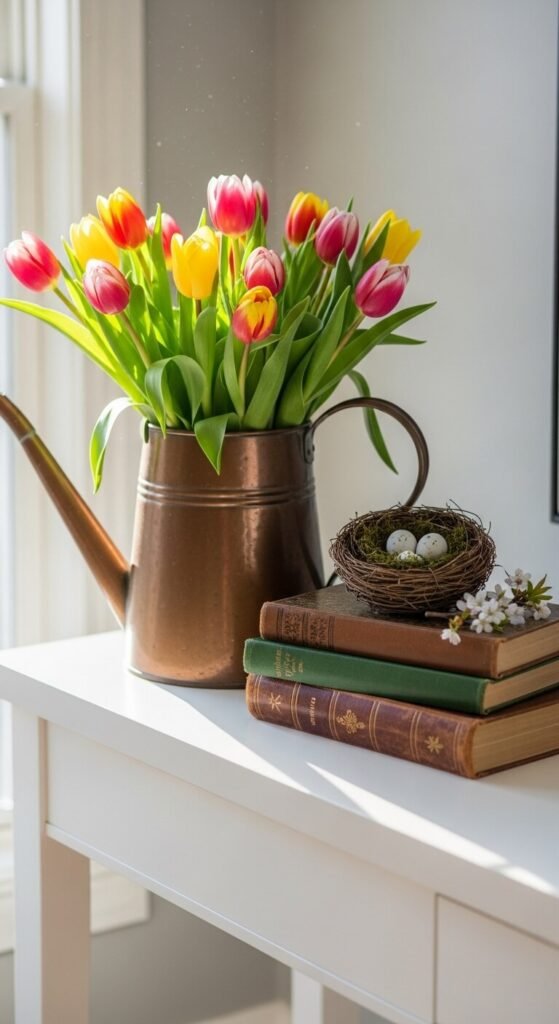
Choose Your Story Theme
Before you start gathering items, ask yourself: What story do I want to tell?
Your spring vignette should have a clear narrative that guides your styling choices. Here are some story ideas to inspire you:
- The Garden Enthusiast: Featuring seed packets, gardening gloves, terracotta pots, and fresh-cut flowers
- Morning Ritual: A cozy coffee corner with a vintage mug, your favorite spring blooms, and a well-loved book
- Easter Gathering: Soft pastels, decorative eggs, fresh greenery, and vintage serving pieces
- Fresh Start: Clean lines, white vessels, single-stem flowers, and minimal accessories
Once you’ve chosen your theme, every element you add should support that narrative. This keeps your vignette from feeling cluttered or chaotic.
Select a Focal Point
Every great story has a main character, and so does every great vignette. Your focal point is the largest or most eye-catching element that anchors the entire display.
For spring vignettes, popular focal points include:
- A statement floral arrangement
- A vintage pitcher or decorative bowl
- A piece of artwork or framed print
- An architectural element like a vintage window frame
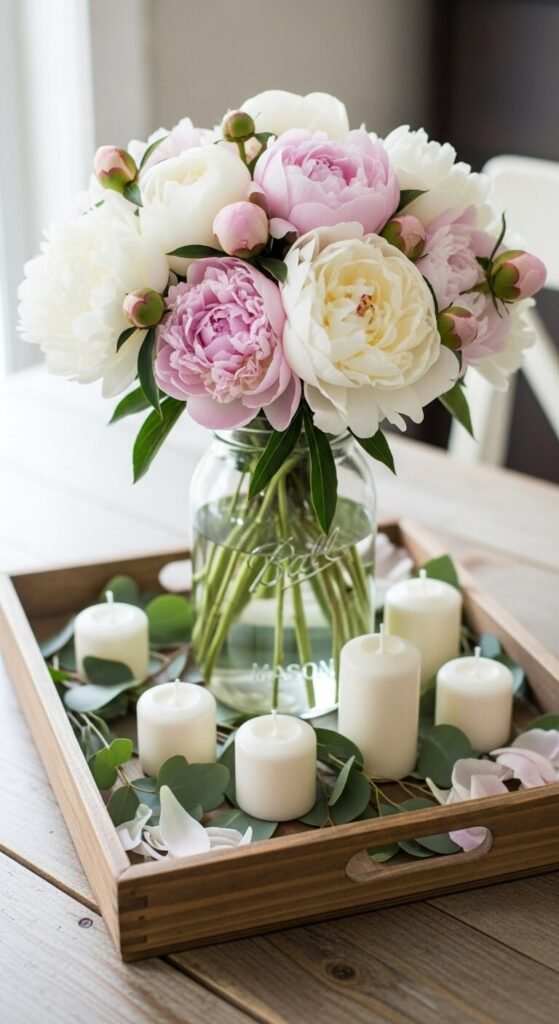
Place your focal point slightly off-center rather than dead-center—this creates visual interest and gives you room to build around it. The “rule of thirds” works beautifully here!
Layer in Supporting Elements
Now it’s time to bring in the supporting cast. These are the smaller items that complement your focal point and add depth to your story.
Think of layering in three heights:
- Tall: Candlesticks, vases, or bottles
- Medium: Books, decorative boxes, or small planters
- Low: Scattered items like shells, decorative eggs, or small figurines
The key is variety without chaos. Stick to your color palette (soft pastels, fresh whites, natural greens) and your chosen theme.
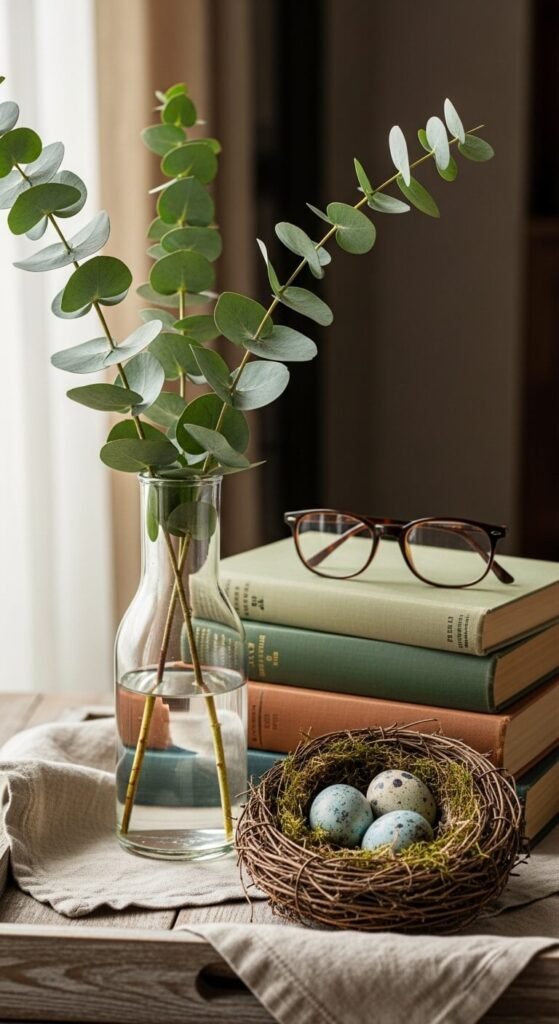
Don’t be afraid to overlap items slightly—this creates cohesion and makes the vignette feel intentional rather than staged. Let a book peek out from behind a vase, or rest a small wreath against your focal point.
Add Natural Textures
Spring is all about renewal and connection to nature, so incorporating natural textures is essential for authenticity.
Mix and match these texture ideas:
- Wood: Cutting boards, beads, or rustic boxes
- Woven elements: Baskets, wicker, or jute ribbon
- Natural fibers: Linen napkins, burlap, or cotton stems
- Organic touches: Moss, branches, feathers, or river stones
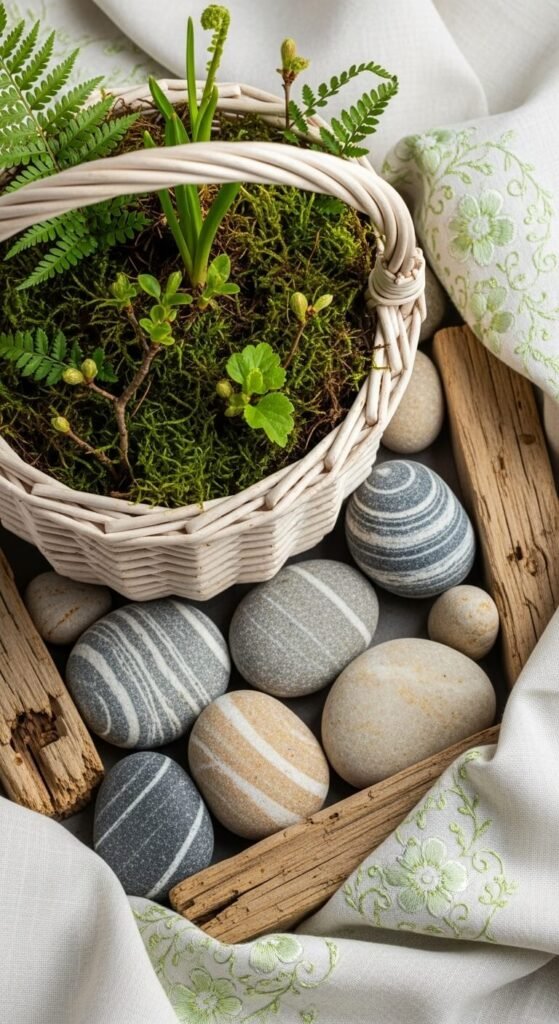
These textures add warmth and prevent your vignette from feeling too polished or sterile. They’re the details that make people want to reach out and touch your display.
Create Depth and Balance
The final step is stepping back and making sure your vignette has visual balance. Here’s what to look for:
Depth: Arrange items at different distances from the edge of your surface. Some items should sit closer to the front, others pushed toward the back. This creates dimension.
Triangle principle: Imagine drawing lines between your tallest points—they should form a triangle. This naturally guides the eye around your display.
Negative space: Don’t fill every inch! Leave some breathing room. Empty space actually makes your carefully chosen items stand out more.
Color distribution: If you have a pop of color (like yellow tulips), repeat that color elsewhere in smaller doses—maybe a yellow book spine or a hint of yellow in your artwork.
Your Story, Your Style
Creating a spring vignette that tells a story is all about intentionality. Every piece should have a reason for being there, whether it supports your theme, adds texture, or creates visual balance.
Remember, there’s no “perfect” vignette—only one that feels authentic to your story. So grab your favorite spring finds, play around with arrangements, and don’t be afraid to edit as you go. Sometimes removing one item makes everything else shine.