Winter’s cozy blankets and dark hues have served you well, but there’s something about those first warm rays of sunshine that makes you crave lighter, brighter spaces. The good news? You don’t need to pack away everything and start from scratch. Transitioning from winter to spring decor is all about subtle swaps and refreshing touches that breathe new life into your home without breaking the bank or overwhelming your schedule.
Start With a Clean Slate
Before you bring in any spring elements, take a weekend to declutter and deep clean. Winter tends to accumulate layers—literally and figuratively. Remove heavy throws, extra pillows, and any decor that feels bulky or dark. This creates breathing room for your space and makes the transition feel intentional rather than chaotic.
Open your windows (weather permitting!) and let fresh air circulate. You’d be amazed how much this simple act can shift the energy of a room. While you’re at it, wash your curtains, dust those overlooked corners, and vacuum under furniture. A clean canvas makes every spring accent shine brighter.
Lighten Your Textiles Layer by Layer
You don’t have to banish every cozy element overnight. Think of this transition as gradually peeling back layers:
- Swap heavy velvet or wool throws for lightweight linen or cotton versions in cream, soft blue, or pale green
- Replace dark pillowcases with crisp white or pastel covers that instantly brighten your sofa and bed
- Switch out thick curtains for sheer panels that filter sunlight beautifully while maintaining privacy
- Trade flannel sheets for percale or sateen in lighter colors that feel fresh against your skin

The beauty of this gradual approach? You can still reach for that chunky knit blanket on chilly spring evenings without feeling like your decor is confused.
Embrace Fresh Florals and Greenery
Nothing says spring quite like bringing the outdoors in. Fresh flowers are the easiest and most impactful way to signal seasonal change:
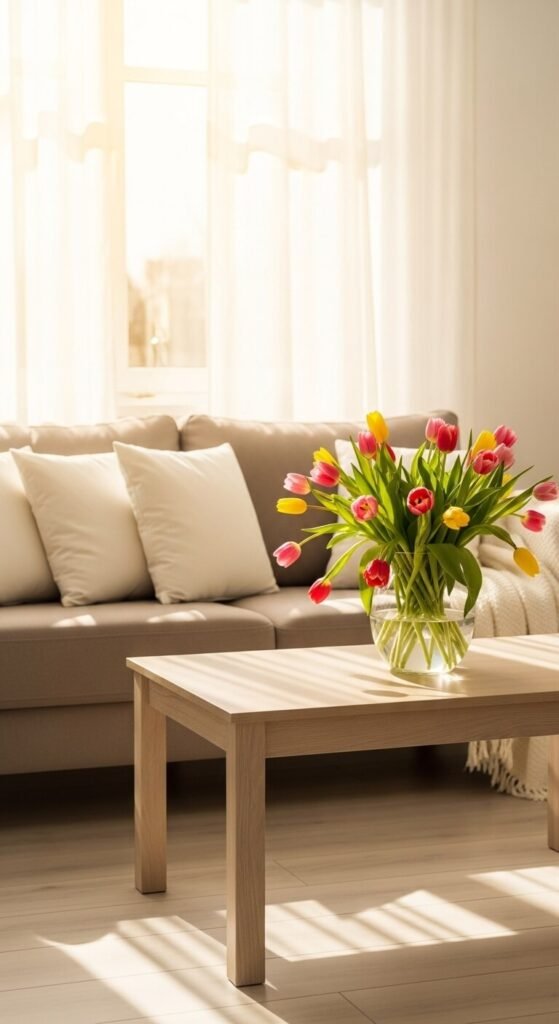
- Start with grocery store bouquets like tulips, daffodils, or ranunculus in simple glass vases
- Distribute smaller arrangements throughout your home rather than one large centerpiece—think bathroom counters, nightstands, and kitchen windowsills
- Mix in branches with budding leaves or pussy willows for height and texture
- Consider potted plants like lavender, herbs, or small ferns that continue growing long after cut flowers fade
Pro tip: White and yellow flowers feel universally spring-like and complement any color scheme you’re working with.

Adjust Your Color Palette Strategically
You don’t need to repaint walls or buy new furniture. Small color shifts create big impact:
Keep your neutrals (grays, whites, beiges) as your foundation—they work year-round. Then introduce spring through accessories: swap out dark picture frames for light wood or white ones, replace burgundy candles with soft coral or sage green versions, and trade heavy decorative objects for lighter materials like ceramic, glass, or woven baskets.
If you’re feeling bold, add one statement piece in a spring color—maybe a cheerful throw pillow in butter yellow or a lightweight area rug with soft blue undertones. This gives your space personality without overwhelming the transition.
Let in the Light
Spring is all about brightness, so maximize natural light wherever possible:
- Clean your windows inside and out—you’ll be shocked at the difference
- Rearrange furniture to avoid blocking light sources
- Add mirrors opposite windows to bounce light around the room
- Switch to lighter lampshades or simply use higher-wattage bulbs in your existing fixtures

Edit Your Accessories Thoughtfully
Go room by room and remove about 30% of your winter accessories. This might include:
- Dark, heavy candleholders
- Thick wooden bowls and trays
- Metallic accents in bronze or antique gold
- Seasonal items like pinecones or winter-themed art
Replace them selectively with lighter alternatives: woven baskets, ceramic vases, brass or silver metallics, and art featuring botanicals or landscapes. Remember, less is more during this transition—embrace some empty space.

Create a Seamless Flow
The key to a successful seasonal transition is consistency. Once you’ve established your spring palette and style in one room, carry similar elements throughout your home. This doesn’t mean everything matches perfectly, but there should be a cohesive thread—whether that’s fresh flowers in every room, the same shade of soft blue appearing in different spaces, or consistent use of natural textures like linen and rattan.
Ready to welcome spring into your home? Start with just one room this weekend, and you’ll feel motivated to transform the rest. The beauty of seasonal decorating is that it keeps your space feeling fresh and current without requiring a complete overhaul. Save this guide and revisit it each year when those first crocuses push through the soil—your future self will thank you!