You bring home a gorgeous bunch of daffodils, pop them in a vase, and by the next morning they’re hanging their heads like they’ve given up on life. Sound familiar? The good news: droopy daffodils aren’t inevitable. With a few simple tricks, you can keep those cheerful yellow blooms standing tall and proud for days. Here’s everything you need to know.
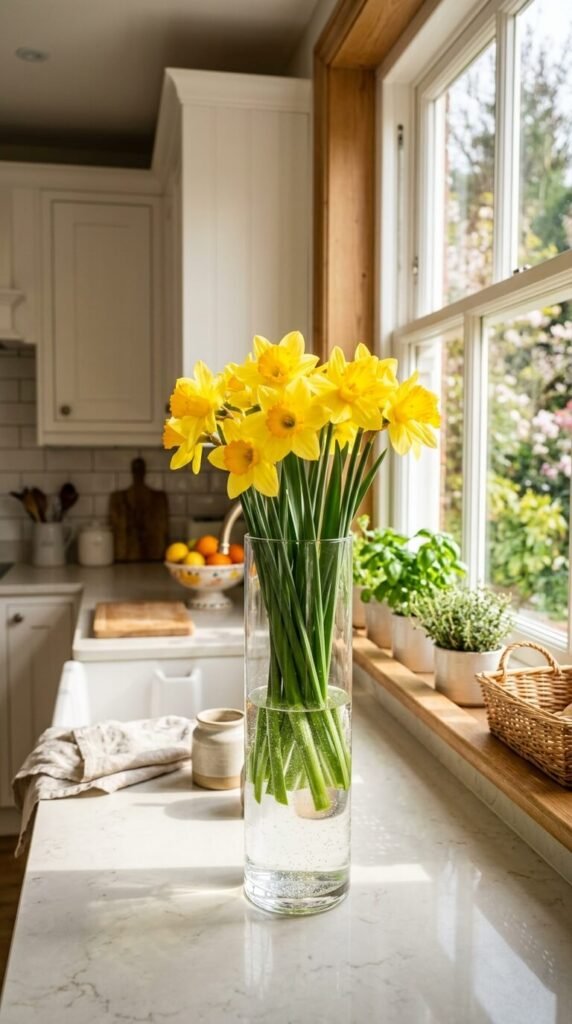
Why Daffodils Droop in the First Place
Before fixing the problem, it helps to understand it. Daffodils droop for a few key reasons:
- Sap leakage. Freshly cut daffodil stems release a sticky, toxic sap that clogs the water uptake of other flowers — and even their own stems over time.
- Soft stem syndrome. Daffodil stems are hollow and surprisingly delicate. Too much warmth or not enough water causes them to go limp fast.
- Wrong vase height. A vase that’s too short gives the stems nowhere to go. They buckle under the weight of the bloom.
Understanding these quirks makes every step below make perfect sense.
Step 1: Condition Your Daffodils Before Arranging
This is the single most important step most people skip.
After cutting daffodils (or bringing them home from the store), place them in a bucket of cool water on their own for at least 4–6 hours — or overnight. This allows them to fully hydrate and lets the sap run out and dissipate before they go near any other flowers.
- Use cool, not cold water
- Don’t mix with other flowers during this stage
- Keep them in a cool, dim spot — not on a sunny windowsill
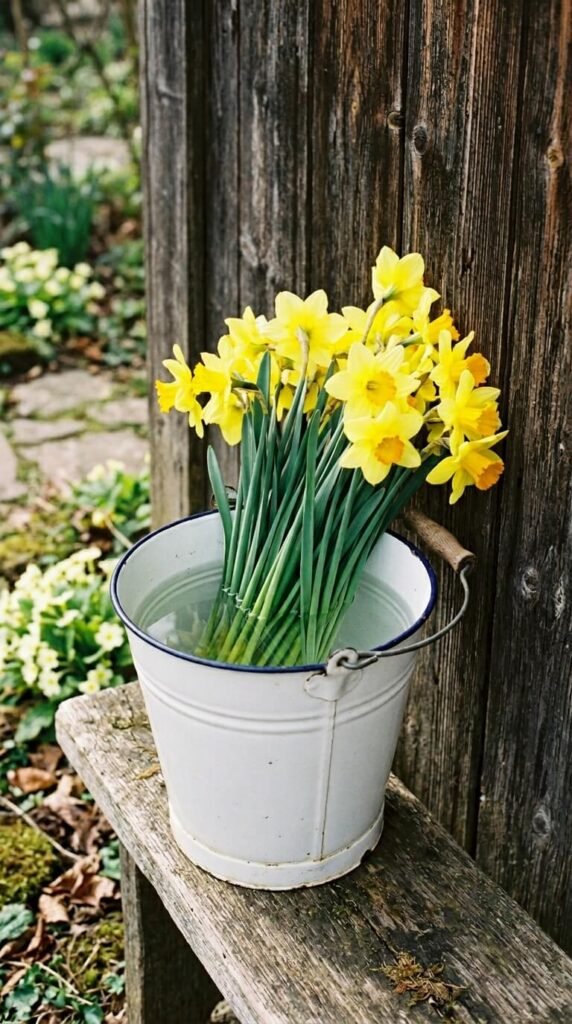
Once they’ve conditioned, you’re ready to arrange.
Step 2: Cut the Stems Correctly
When you’re ready to place them in your display vase, re-cut each stem at a 45-degree angle under running water or while submerged in a bowl. This creates more surface area for water absorption and removes any air bubbles that have formed in the stem.
Cut tips:
- Use sharp scissors or floral shears — a dull blade crushes the stem
- Cut off at least half an inch
- Don’t cut on a flat surface; do it directly in water
Avoid cutting daffodils alongside roses or tulips. Their sap is still mildly present even after conditioning, and it can shorten the life of neighboring blooms.
Step 3: Choose the Right Vase and Water Depth
Vase choice matters more than most people think.
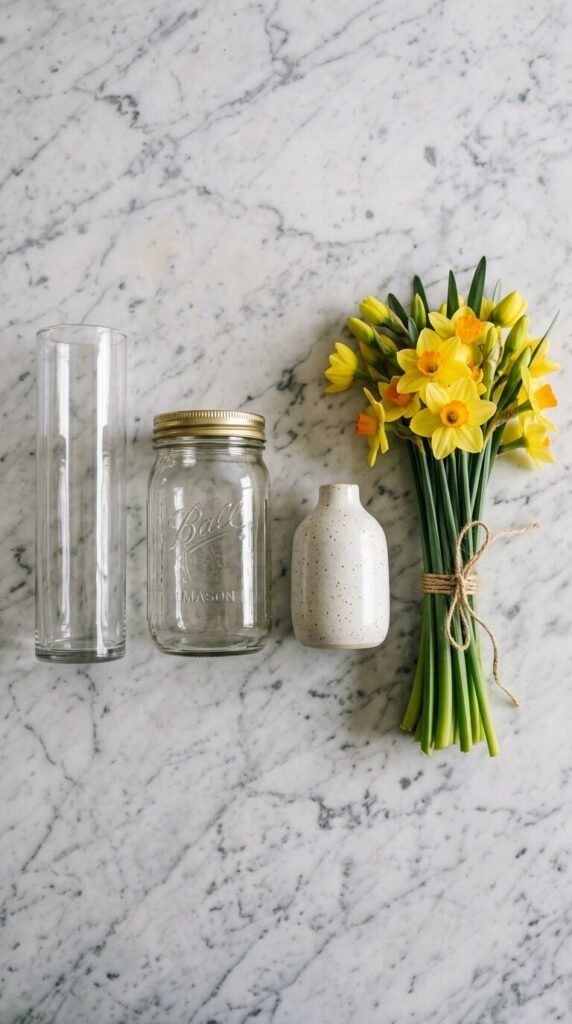
Go tall. Daffodil stems need support along their length to stay upright. A vase that cradles at least two-thirds of the stem keeps them from flopping outward.
Keep the water level low. Only fill the vase about 3–4 inches deep. Daffodils don’t love being submerged too high — it softens the lower stem and speeds up rot.
Skip the flower food packets for daffodils. Unlike roses, they don’t benefit much from the added sugars — and those sugars can actually encourage bacterial growth in the water faster.
Step 4: Find the Right Spot in Your Home
Where you place your arrangement makes a big difference in how long it lasts.
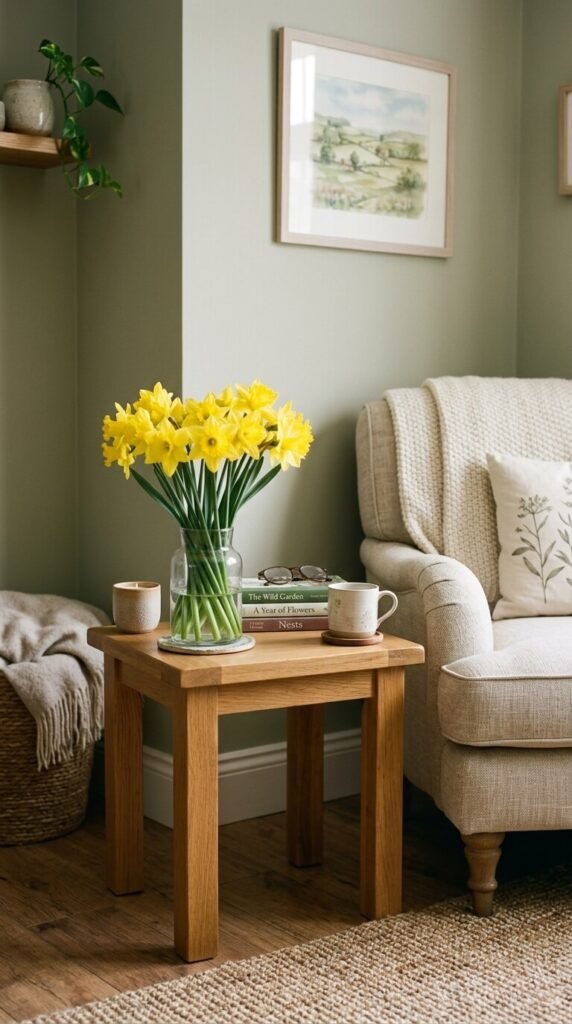
- Cool is best. Keep daffodils away from heat vents, sunny windowsills, and appliances that radiate warmth.
- No fruit bowls nearby. Ripening fruit releases ethylene gas, which speeds up wilting in cut flowers.
- Night trick: Move your vase to a cool room or even a garage overnight. The drop in temperature dramatically extends vase life.
Step 5: Refresh the Water Every Two Days
Stagnant water is the enemy of any cut flower. With daffodils, it’s especially important because their sap continues to break down in the water over time.
Every two days:
- Empty the vase completely
- Rinse with cool water
- Re-trim the stems by a quarter inch
- Refill with fresh cool water
This simple habit alone can add 3–5 extra days to your arrangement’s life.
Can You Mix Daffodils with Other Flowers?
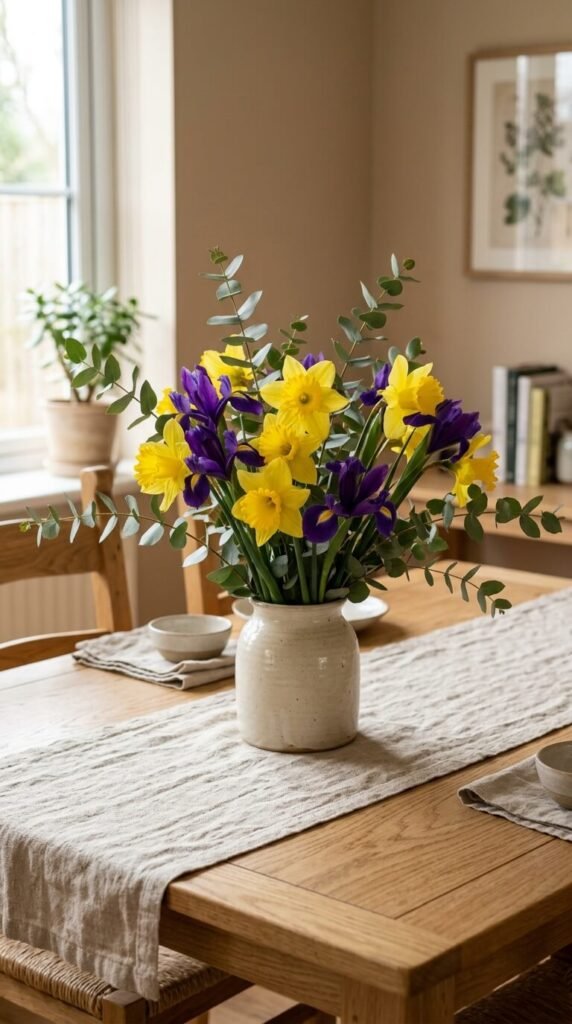
Yes — but with caution. After the initial conditioning period, daffodils are generally safe to mix with hardy flowers like sunflowers, irises, or greenery. Avoid pairing them with tulips, roses, or lilies, which are more sensitive to the residual sap.
Final Thoughts
Arranging daffodils that stay upright isn’t complicated — it just takes a little patience and the right setup. Condition them first, cut the stems properly, use a tall vase with shallow water, and keep them somewhere cool. That’s really it.
Spring’s most cheerful flower deserves to look its best for as long as possible. Save this guide for your next daffodil haul — and share it with anyone who’s ever woken up to a sad, droopy vase!