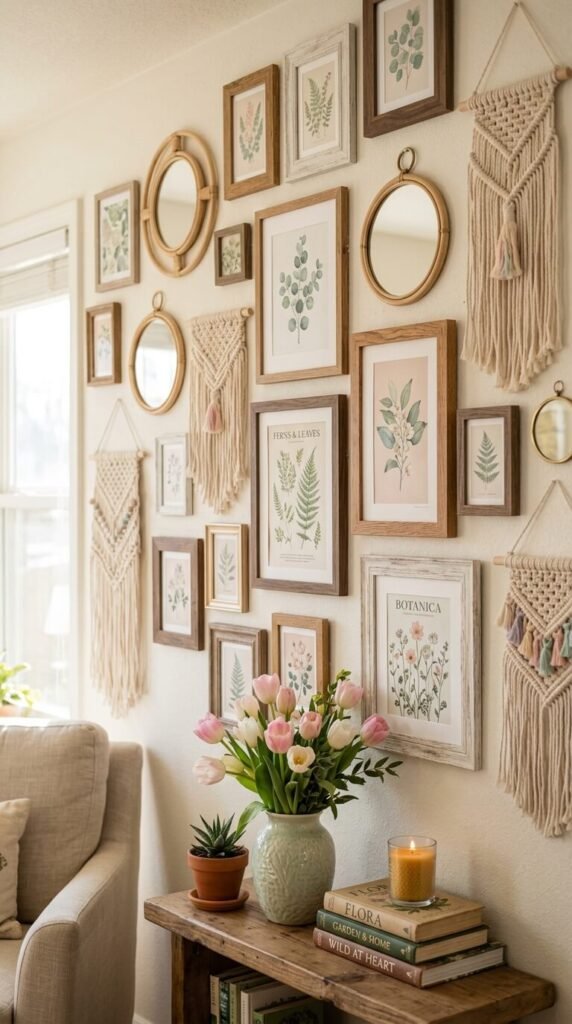
Spring calls for a change of scenery, and your walls deserve the same attention as your closet. A gallery wall is one of the easiest ways to bring color, texture, and personal history into a room without spending a fortune. Whether you’re working with a rental-friendly setup or a permanent feature wall, the right mix of frames, art, and spacing can turn a blank space into the first thing guests notice. This list walks through layout ideas that fit every budget, skill level, and home style, so you can start hanging with confidence this season.
1. The Classic Grid Layout
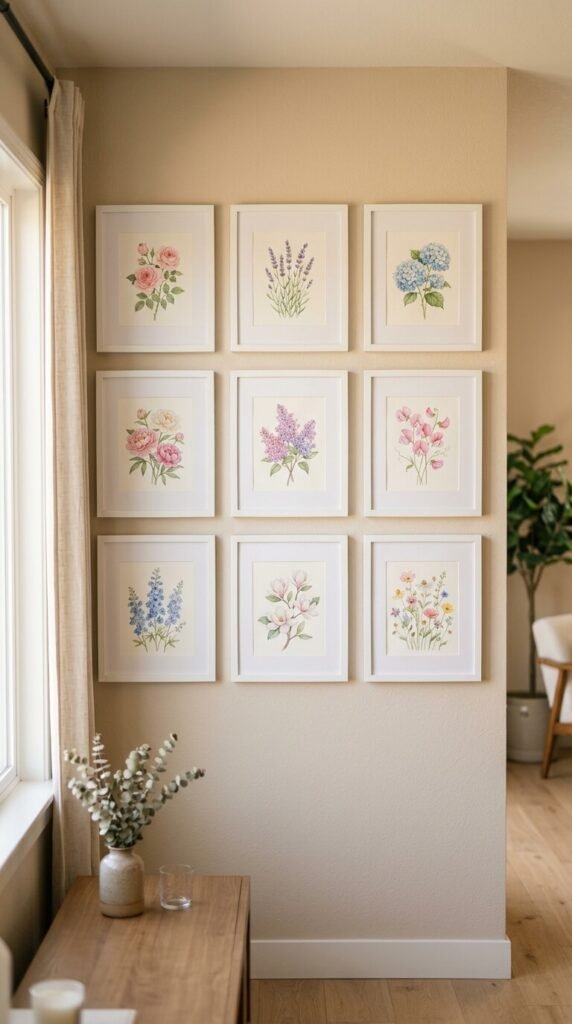
A grid layout is the safest bet if you’re nervous about hanging art. Even spacing and matching frames make the whole thing look pulled-together, even if your prints don’t match perfectly. Grab a pack of same-size frames from a discount store. Use painter’s tape to mark your grid before you commit to nails. Three rows of three works great above a couch or bed. Keep spacing at two to three inches between frames for a tidy look. This layout hides small hanging mistakes since the pattern does the work for you.
2. Asymmetrical Cluster Design
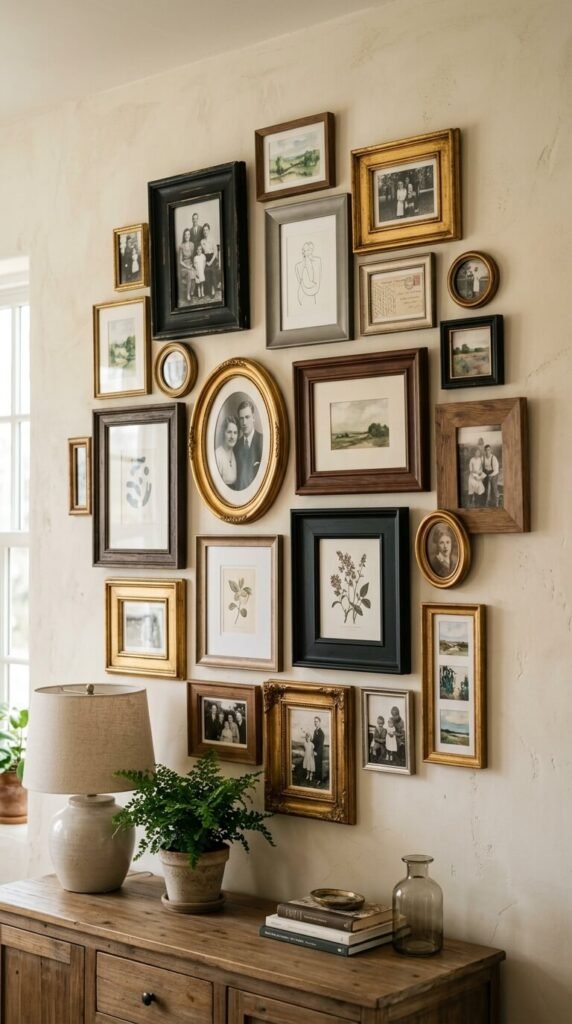
Asymmetrical clusters feel relaxed and collected over time. Mix different frame sizes and shapes. Don’t worry about perfect lines. Start with your biggest piece and build around it. Leave uneven gaps between frames for visual movement. This style works well for renters since a few nail holes go unnoticed. Thrift stores are great for cheap frames in odd shapes. Spray paint them the same color for a unified look even when the shapes differ. This layout rewards a loose hand and forgives small measuring errors.
3. Floating Shelf Display
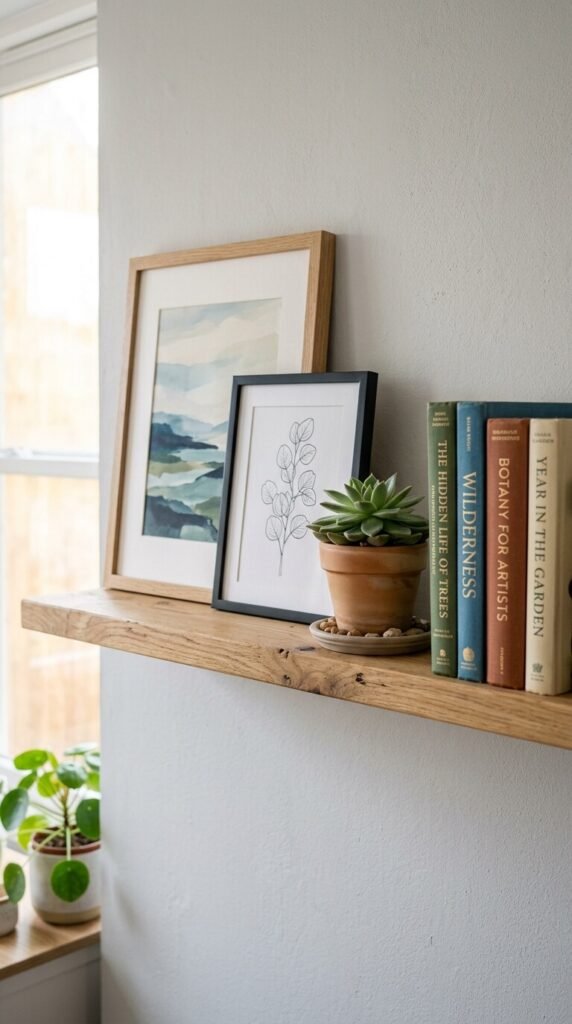
Floating shelves let you skip the hammer entirely. Lean frames instead of hanging them. This makes swapping art for the season simple. Add small plants or candles between frames for texture. A single long shelf above a desk or bed works well. Home improvement stores sell affordable shelf kits that install in minutes. Layer two or three frames per section, overlapping slightly. This setup is perfect if you like to switch things up often without patching walls.
4. Botanical Print Theme
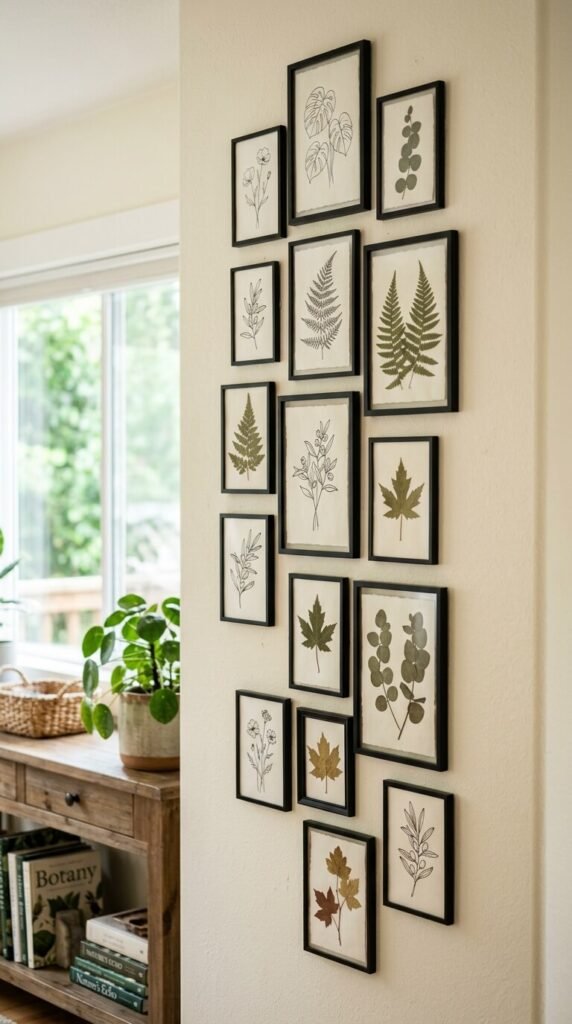
Botanical prints bring spring indoors year-round. Stick to one color family, like sage and cream, for cohesion. Print free botanical images from public domain sites at home. Frame them in matching slim black or wood frames. Arrange in a single column for a narrow hallway. This theme pairs well with real plants nearby for a layered garden feel. Budget tip: print on cardstock instead of photo paper to save on cost. Rotate prints seasonally for a wall that always feels current.
5. Circular Mirror Mix
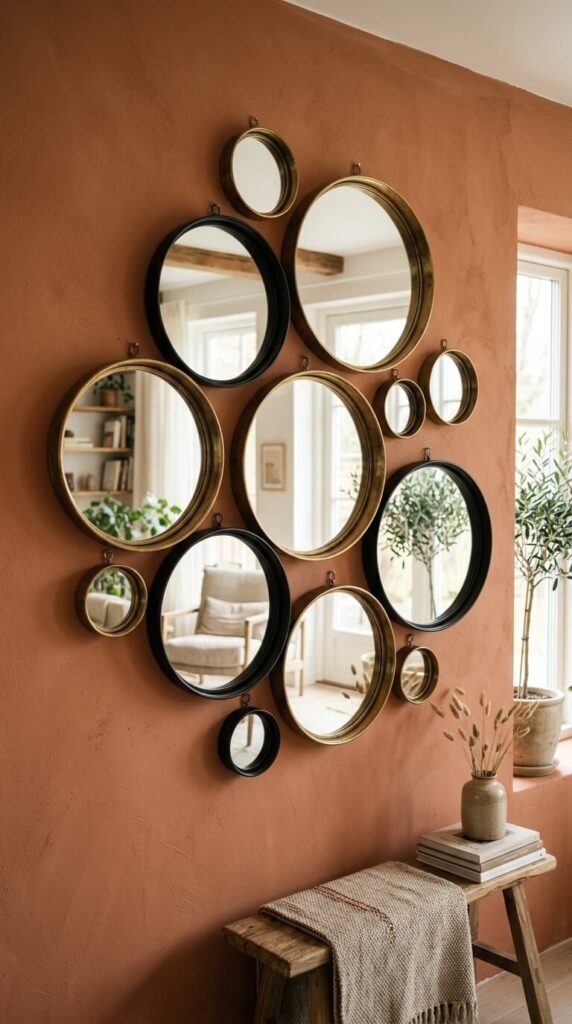
Mirrors add light and depth to any gallery wall. Mix round mirrors of different sizes for interest. Pair with one or two framed prints to break up the reflections. This works especially well in small rooms where light is limited. Discount home stores often carry affordable round mirrors in bulk. Group three mirrors in a triangle shape for a simple starting layout. Avoid placing mirrors directly across from windows to prevent glare. This mix feels bright, airy, and easy to expand later.
6. Vintage Postcard Wall
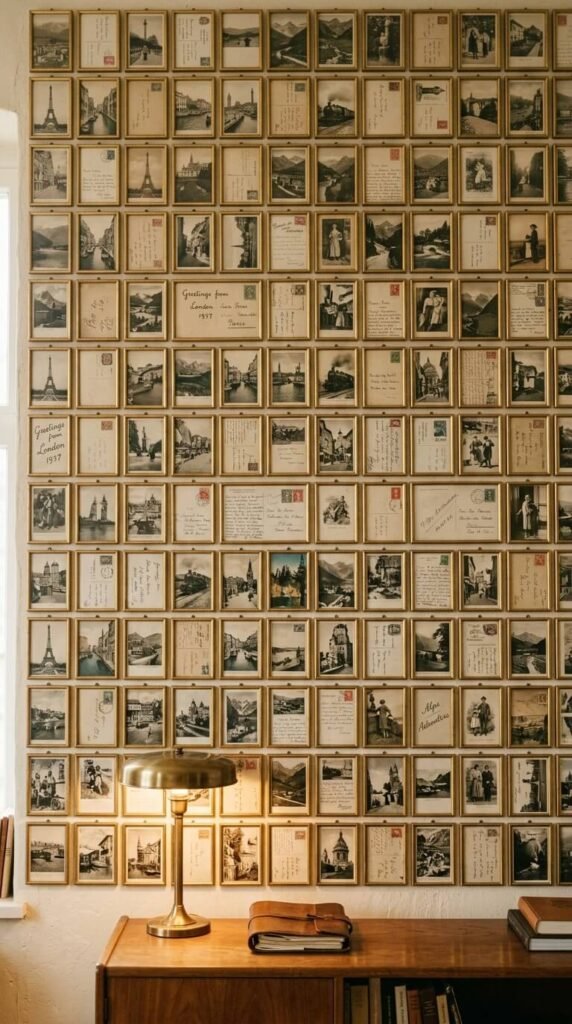
Small-format art keeps this layout budget-friendly. Vintage postcards, ticket stubs, or travel photos work well here. Use thin frames sized to match, found cheap at craft stores. Arrange in tight rows with almost no gap for a busy, personal feel. This layout is great for a stairwell or narrow hallway. Add handwritten labels beneath a few pieces for a scrapbook feel. Rotate cards seasonally since they’re inexpensive to swap. This wall grows more meaningful the longer you collect for it.
7. Black and White Photography Focus
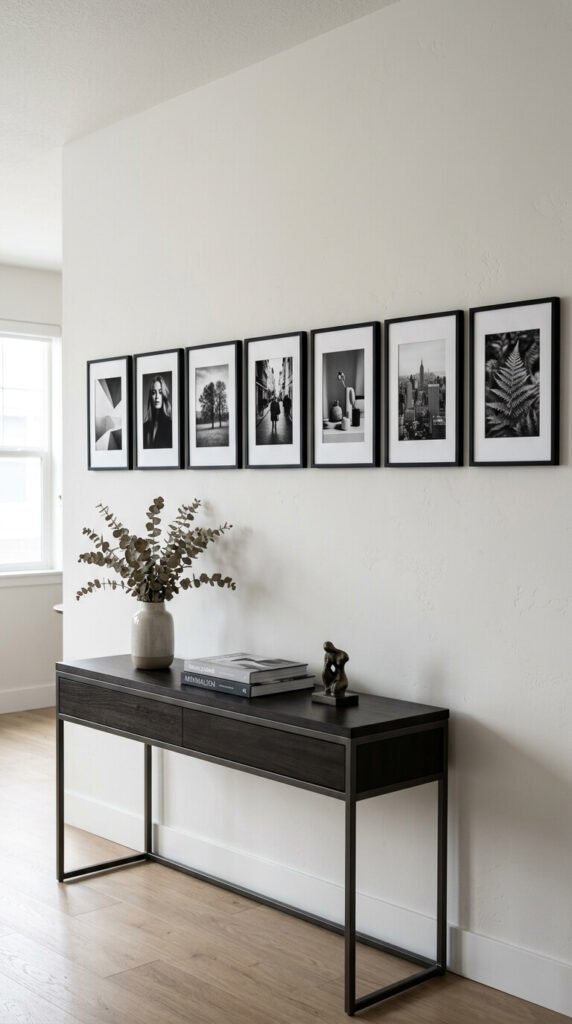
Black and white photos never clash with your decor. Print your own phone photos at a local shop for cheap. Choose one frame style throughout for consistency. A horizontal line above furniture keeps this layout simple to plan. Space frames evenly, about three inches apart. This works in nearly any room since the palette stays neutral. Swap in new photos whenever you like without changing the frames. This is one of the easiest layouts for beginners to execute well.
8. Layered Leaning Ladder
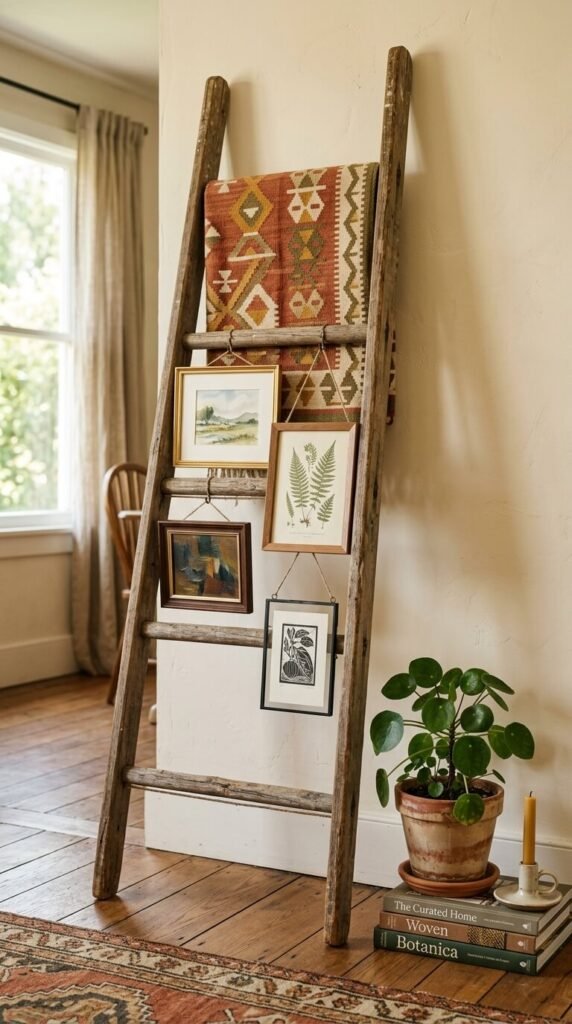
A ladder display skips wall damage completely. Lean a wooden ladder against your wall. Hang small frames from the rungs using ribbon or twine. Drape a textile or scarf across one rung for texture. This works great in a bedroom corner or reading nook. Secondhand ladders are cheap and easy to find. Rotate art pieces without any tools required. This layout suits renters and anyone who likes rearranging often.
9. Color-Blocked Frame Wall
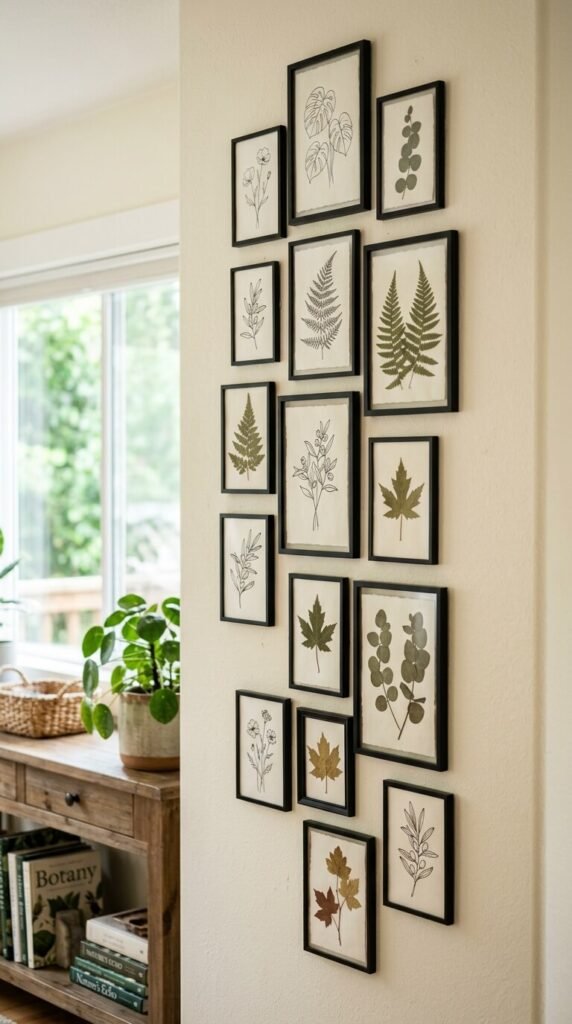
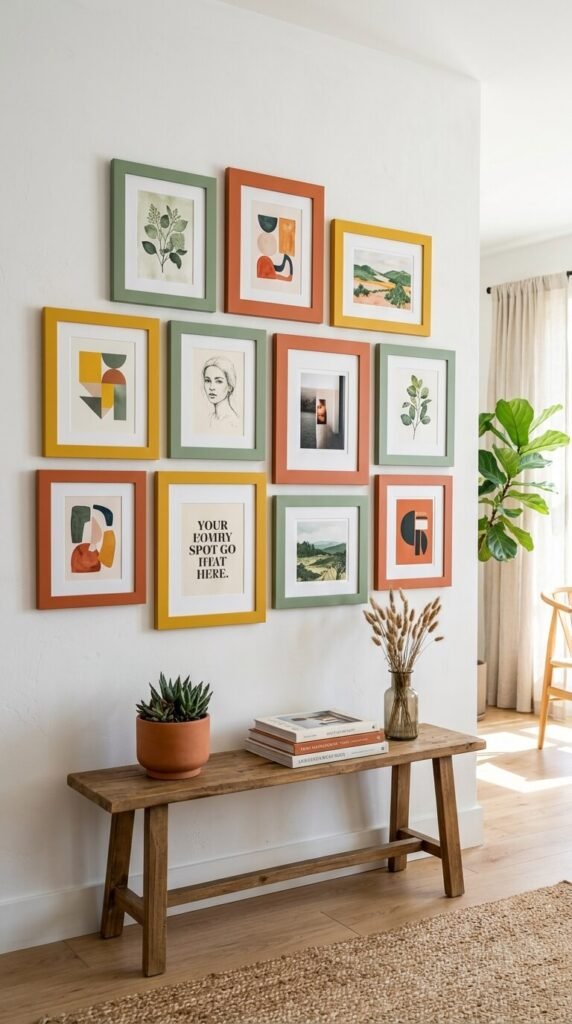
Color-blocked frames add personality fast. Pick three coordinating colors and paint thrifted frames to match. Keep the art inside simple, like solid shapes or plain prints. This lets the frame color do the heavy lifting. Arrange in a loose grid for a playful look. Spray paint is the cheapest way to update old frames. This layout suits kids’ rooms, offices, or any space that needs personality. Repaint frames anytime to refresh the whole wall for free.
10. Nature Photography Collage
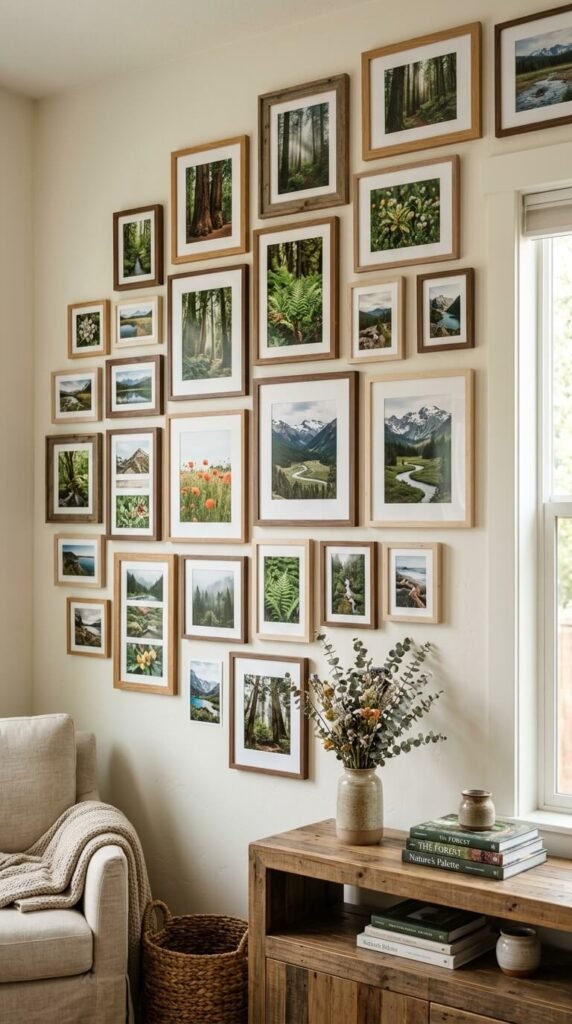
Nature photos bring calm to a busy home. Print your own hiking or garden photos at home. Use wood frames for an earthy, grounded feel. Arrange loosely, following a flowing diagonal line rather than a strict grid. This layout works well in living rooms or bedrooms. Local print shops often offer bulk discounts on standard sizes. Group similar tones together, like all greens or all blues. This wall feels personal since the photos come from your own life.
11. Kids’ Art Display Wall
Kids’ art deserves real wall space, not just the fridge. Clip frames let you swap drawings without buying new frames each time. Arrange in a simple row at a child’s eye level. This layout costs almost nothing since clip frames are inexpensive. Rotate art monthly to keep the wall current. Add a small shelf below for extra display space. This works well in playrooms, hallways, or bedrooms. Kids love seeing their work treated like real art.
12. Woven Textile and Art Combo
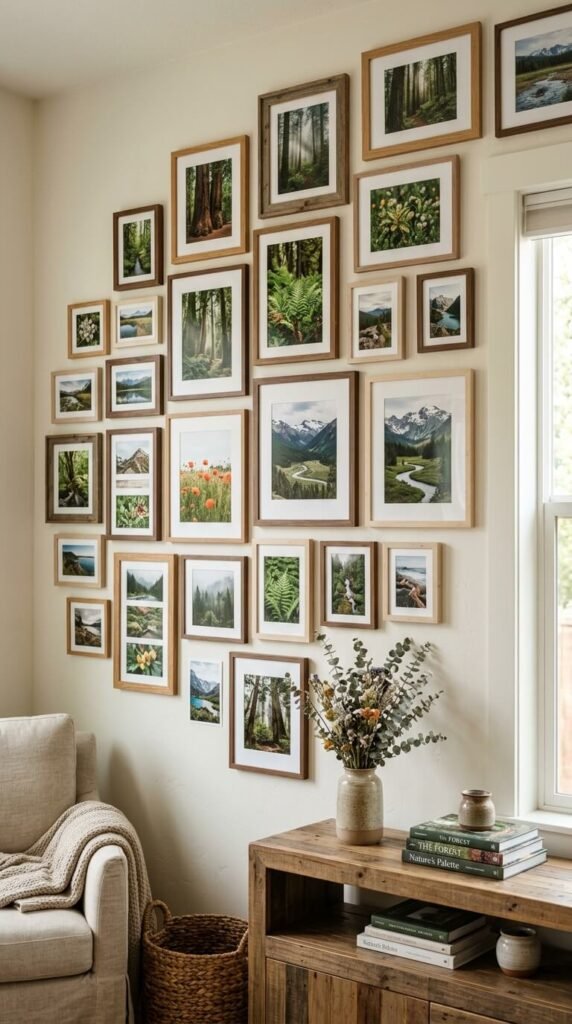
Mixing textiles with art adds texture fast. Hang a woven piece as your anchor, then build frames around it. Craft stores sell affordable macrame and woven hangings. This combo works well in bedrooms or reading corners. The soft texture balances out hard frame edges nicely. Keep colors in the same warm family for cohesion. Add one or two small plants nearby to round out the look. This layout feels cozy without much cost.
13. Symmetrical Mirror-Image Wall
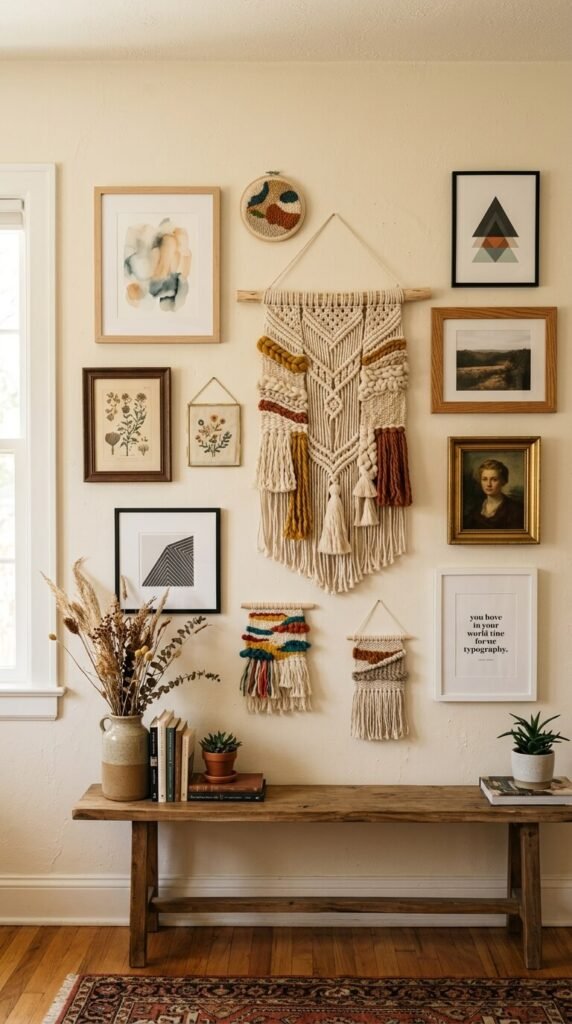
Symmetry works well on walls with a central feature, like a window or headboard. Duplicate the same frame arrangement on each side. This creates instant balance without much planning. Measure once, then repeat the exact same spacing on both sides. Discount frame multipacks make this layout budget-friendly since you need doubles anyway. This works well above a bed or on either side of a fireplace. Symmetrical layouts read as calm and organized at a glance.
14. Open Shelf Ledge Gallery
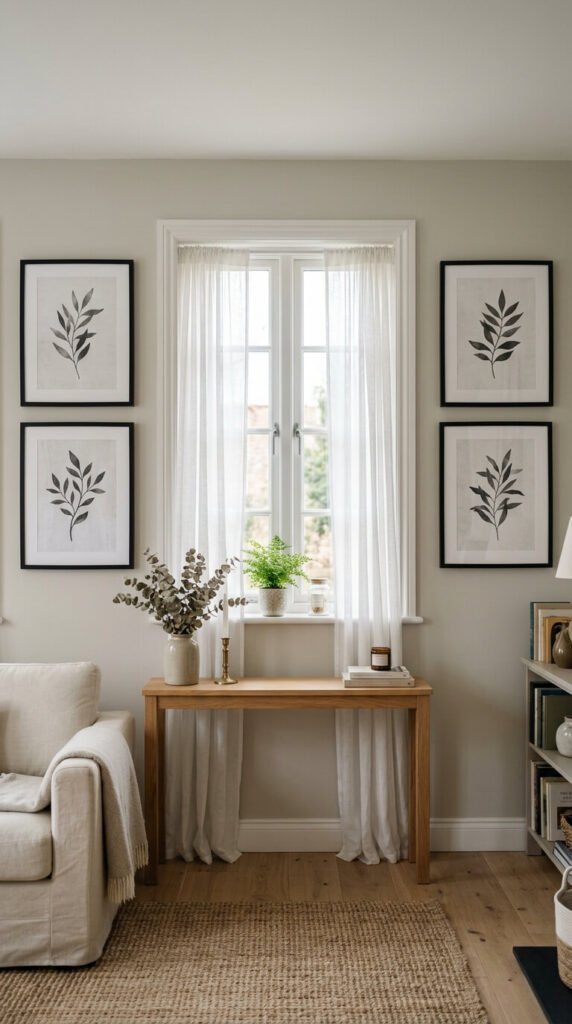
Picture ledges are a renter’s best friend. Install two or three thin shelves in a row. Lean frames so they overlap slightly for depth. This setup takes minutes and requires only a few screws. Home stores sell ledge kits for less than a full frame set would cost. Swap art seasonally without extra holes in the wall. Add a small clock or object between frames for variety. This layout stays flexible as your taste changes.
15. Monochrome Frame Family
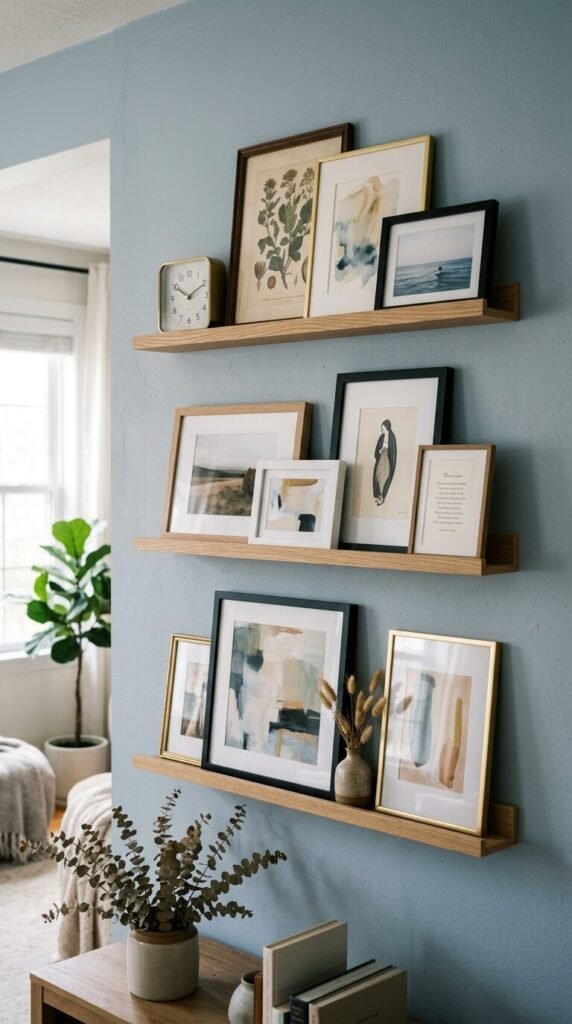
One frame color ties together mismatched art instantly. Choose black, white, or wood, then stick with it. This lets you mix photos, prints, and sketches without visual chaos. Thrifted frames repainted in one color cost very little. Arrange loosely, adjusting until spacing feels balanced. This is a good starter layout if you already own varied art. The single color acts like a common thread through the whole wall.
16. Seasonal Rotation Frame Set
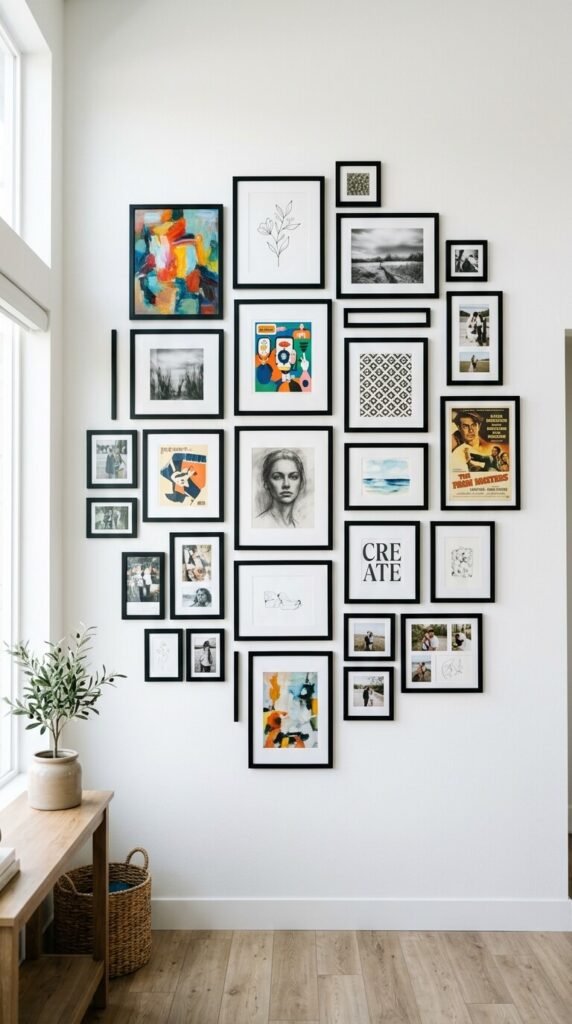
Build a wall meant to change with the seasons. Use a handful of frames sized the same throughout the year. Swap in spring florals now, then autumn leaves later. Print art at home on cardstock to keep costs low. This layout rewards planning since you’ll want a small art collection ready. Keep frame spacing consistent so swaps stay simple. A rotating wall keeps your space feeling current without new furniture or paint.
17. Oversized Statement Piece Anchor
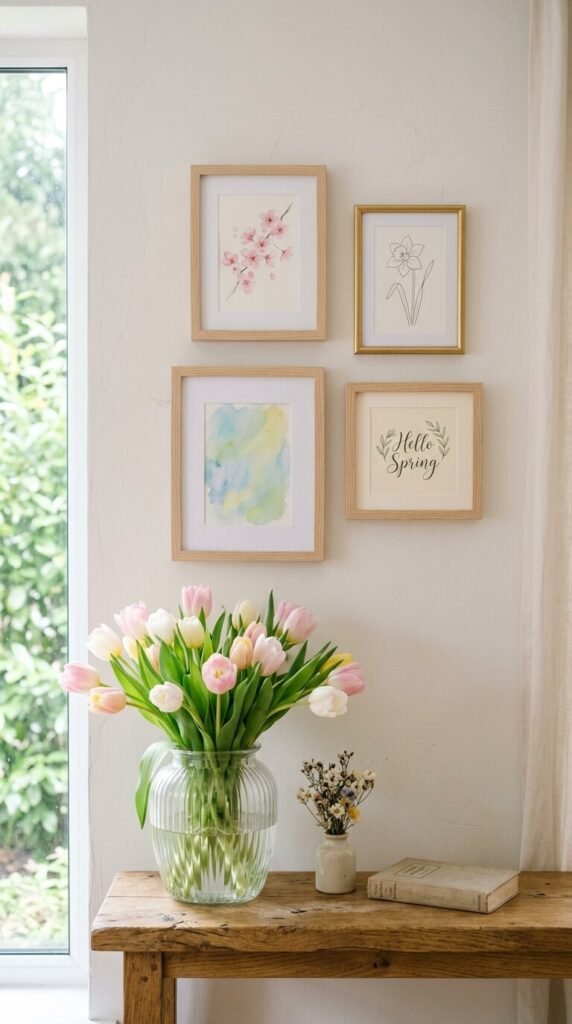
One big piece can anchor a whole wall. Start with a large print or painting as your centerpiece. Build smaller frames around it in a loose cluster. Thrift stores sometimes carry oversized art for less than new pieces. This layout works well above a couch or bed frame. Keep smaller pieces varied in size to avoid a stiff look. The large anchor does most of the visual work, so smaller pieces can be simple.
18. Diagonal Staircase Wall
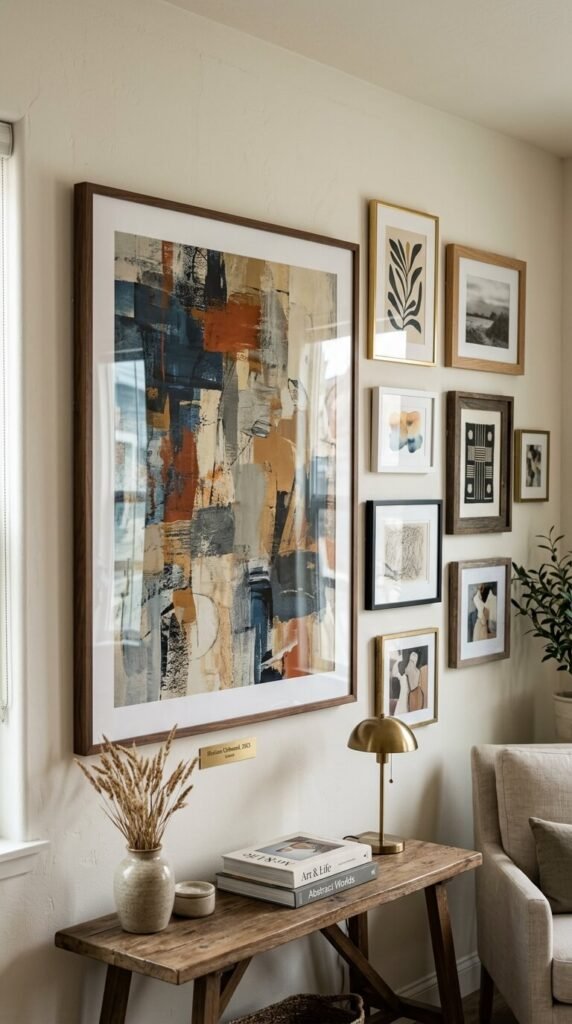
Staircases need a layout that follows the incline. Hang frames in a diagonal line, matching the angle of the steps. Keep spacing between frames consistent for a clean rhythm. This layout works with mismatched frame sizes since the diagonal line unifies them. Measure from the step nosing up, not from the floor, for accuracy. This is one of the more technical layouts, so take time marking before hanging. The payoff is a wall that feels intentional from top to bottom.
19. Plate and Art Combination
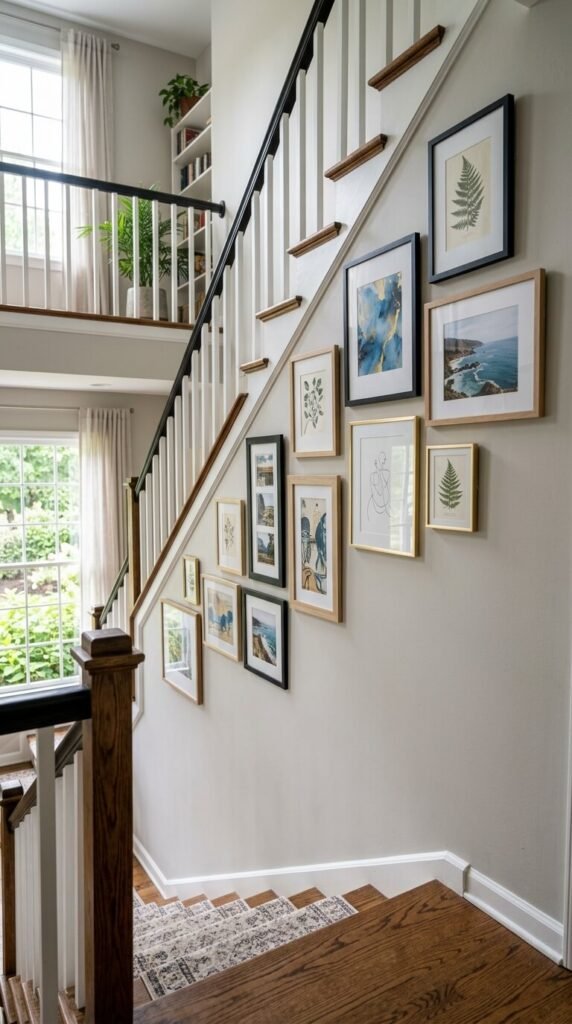
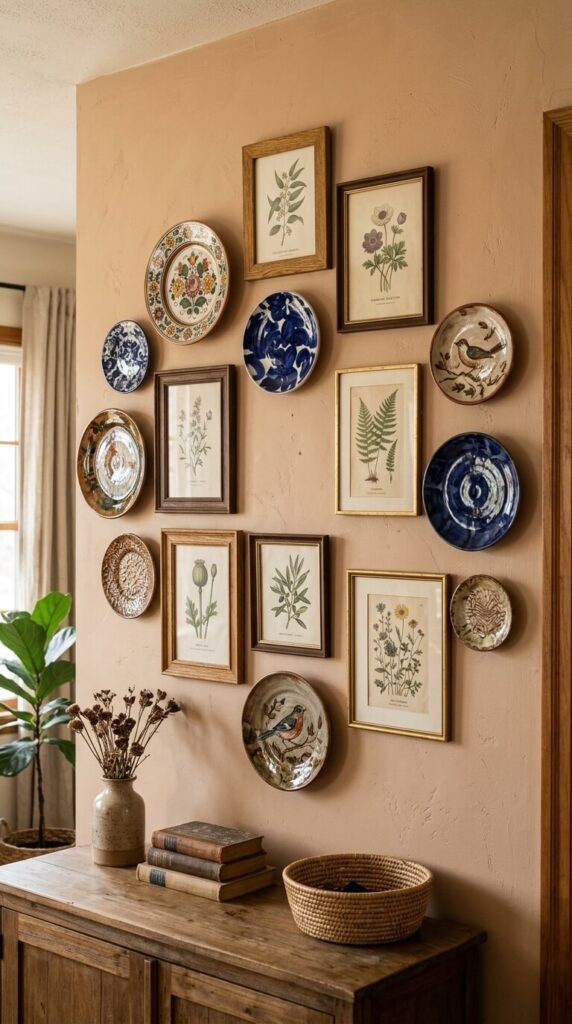
Decorative plates add unexpected texture to a gallery wall. Mix a few thrifted plates with framed prints. Use plate hangers, sold cheap at craft stores. Arrange in a loose circular pattern for a cottage feel. This combo works especially well in dining rooms or kitchens. Vary plate sizes for visual interest. Secondhand shops often sell single plates for very little. This layout feels collected and personal rather than store-bought.
20. Typography and Quote Wall
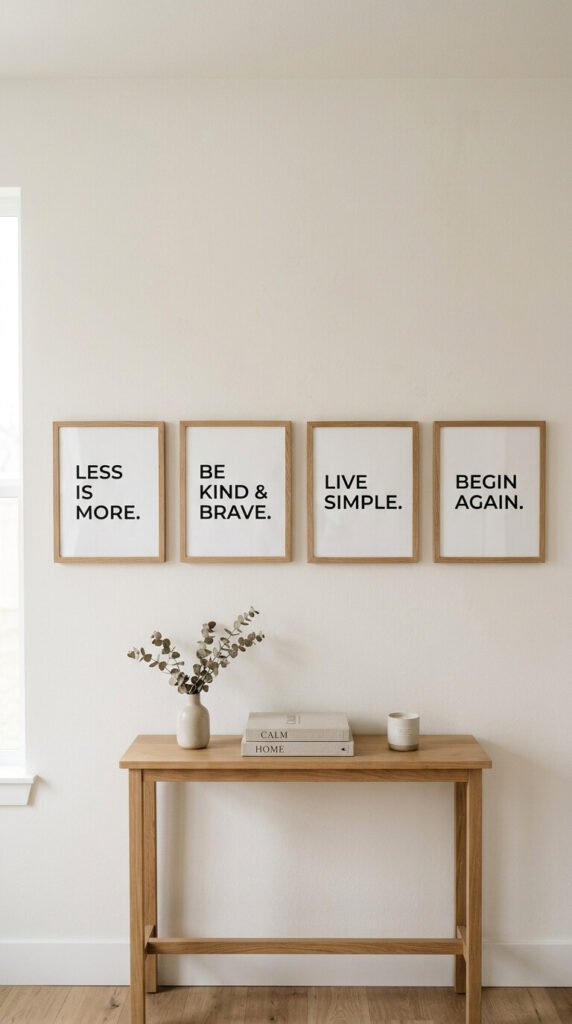
Simple word art adds personality without needing photography skills. Print short phrases or quotes at home on plain paper. Frame in matching simple frames for a clean look. Arrange in a single row for easy planning. This layout suits offices, entryways, or reading nooks. Keep fonts consistent across all pieces for cohesion. Swap phrases whenever your mood changes since printing costs almost nothing. This wall works as a low-effort, high-personality option.
21. Layered Frame-Within-Frame Look
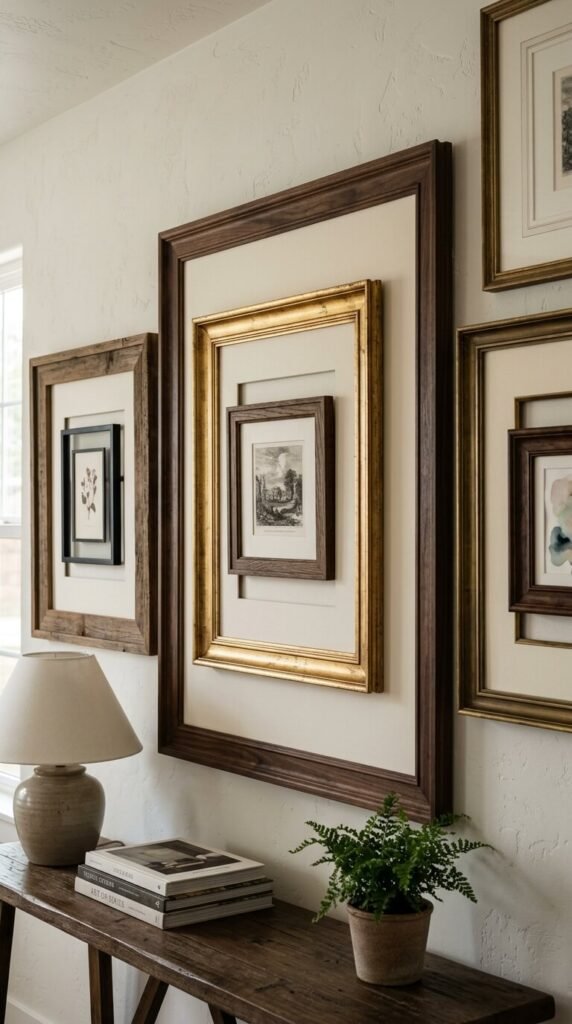
Nesting a small frame inside a larger empty one creates depth cheaply. Use an oversized frame as a border, then hang a smaller framed piece inside it. This trick makes budget art look layered and designed. Thrift stores often sell large frames missing their glass, perfect for this. Keep spacing even between nested sets if you repeat the trick across the wall. This look works well for a modern, gallery-style room. It’s an easy way to make small art feel bigger.
22. Corner Wraparound Gallery
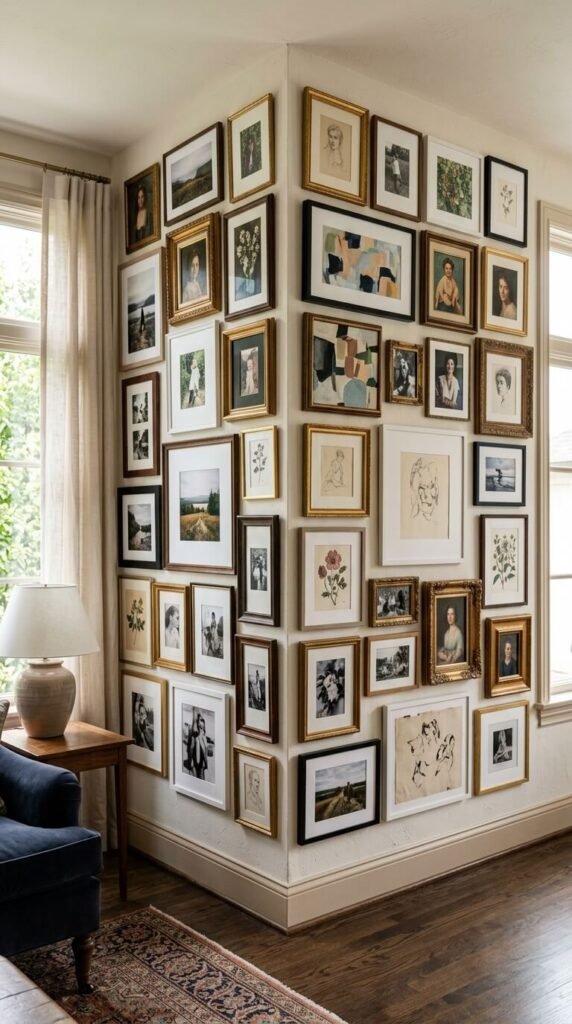
Corners are often overlooked, but they hold more art than you’d think. Let your gallery wall wrap around a corner instead of stopping at the edge. Keep frame spacing identical across both walls for continuity. This layout works well in reading nooks or small offices. It makes a small space feel fuller without needing more furniture. Measure both walls together before hanging so the transition feels natural. This is a good option once you’ve run out of flat wall space.
23. Minimalist Single-Line Wall
Sometimes less really is more. Three frames in a straight line above a bed or sofa keeps things simple. Space them evenly, using a tape measure for accuracy. This layout suits small budgets since you only need a few pieces. Choose one strong image per frame rather than several small ones. This works well in minimalist or modern-style rooms. It’s the fastest layout to plan and hang, often under an hour start to finish.
24. Family Photo Timeline
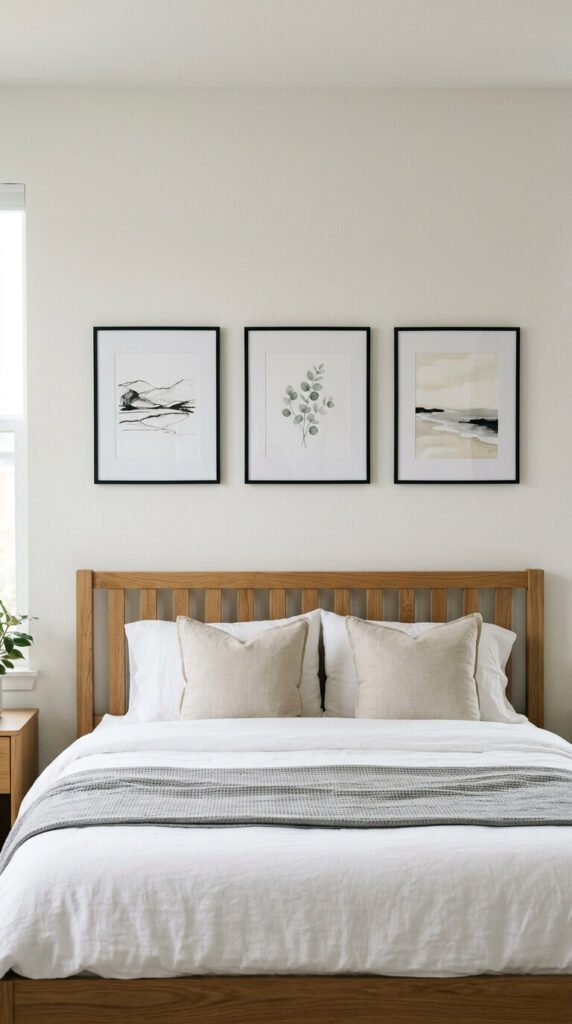
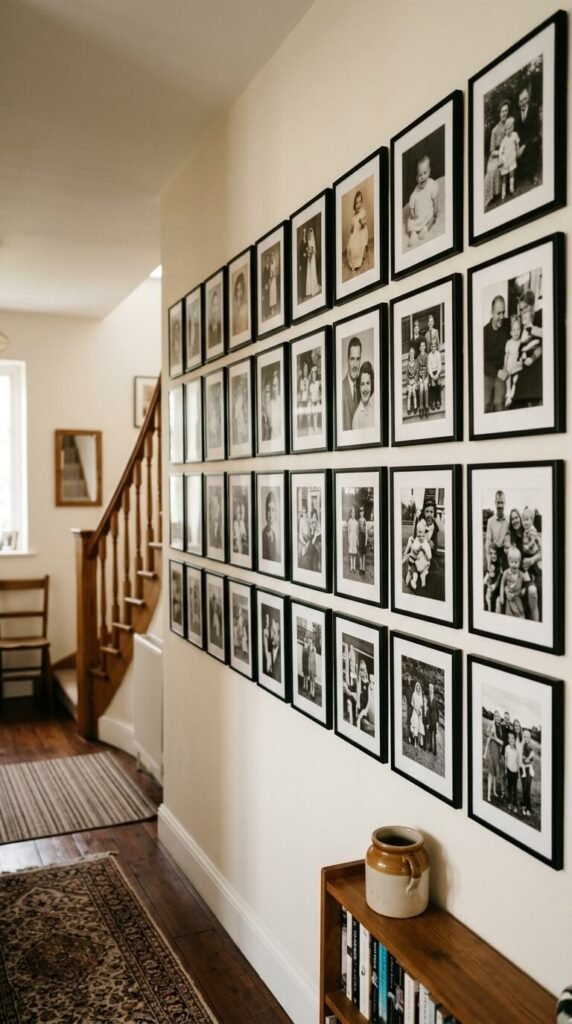
A photo timeline turns a hallway into a family story. Arrange photos in order from oldest to newest. Use matching thin frames so the focus stays on the images, not the hardware. Print photos affordably at a local shop rather than ordering custom prints. This layout works especially well in long hallways or stairwells. Label a few key photos with small handwritten tags. This wall becomes more valuable every year as new photos join the line.
25. Eclectic Object and Art Mashup
Not everything on your wall has to be flat. Mix in small baskets, dried flower bunches, or a small shelf object. This adds dimension that flat frames alone can’t provide. Arrange loosely, treating objects the same as you would a frame. Thrift stores and dollar stores are great sources for small decorative objects. This layout suits eclectic, cottage, or bohemian style rooms. It’s a good option once your frame collection feels complete and you want extra texture.
Conclusion
A gallery wall is one of the simplest, most affordable ways to make a room feel like yours. From tight grids to loose clusters, mirrors to woven textiles, there’s a layout here for every skill level and budget. Start small: pick one style that matches your space, gather a few frames, and measure before you hang. You don’t need a big budget or design background to pull this off. Choose the layout that speaks to you, grab a hammer, and give your walls the spring update they’ve been waiting for.