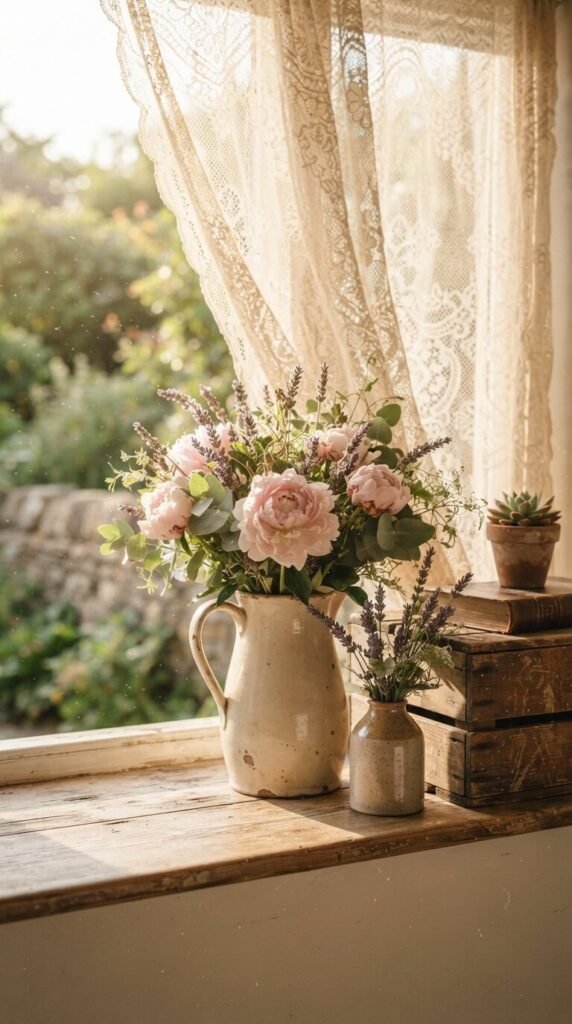
Spring cleaning used to mean opening the windows and dragging out whatever your grandmother left behind — and it turns out she had excellent taste. Vintage spring decor hits differently than anything you’d pull off a big-box store shelf. These pieces carry actual history. A chipped enamel pitcher, a faded grain sack, a pressed-flower frame from an estate sale — they make a room feel like it grew rather than got assembled. This list pulls together 29 finds that bring that slow, story-rich warmth into your home without demanding a decorator’s budget. Whether you’re thrifting on Saturdays or digging through your own attic, there’s something here for every room and every season.
1. Enamel Pitchers Stuffed with Wildflowers
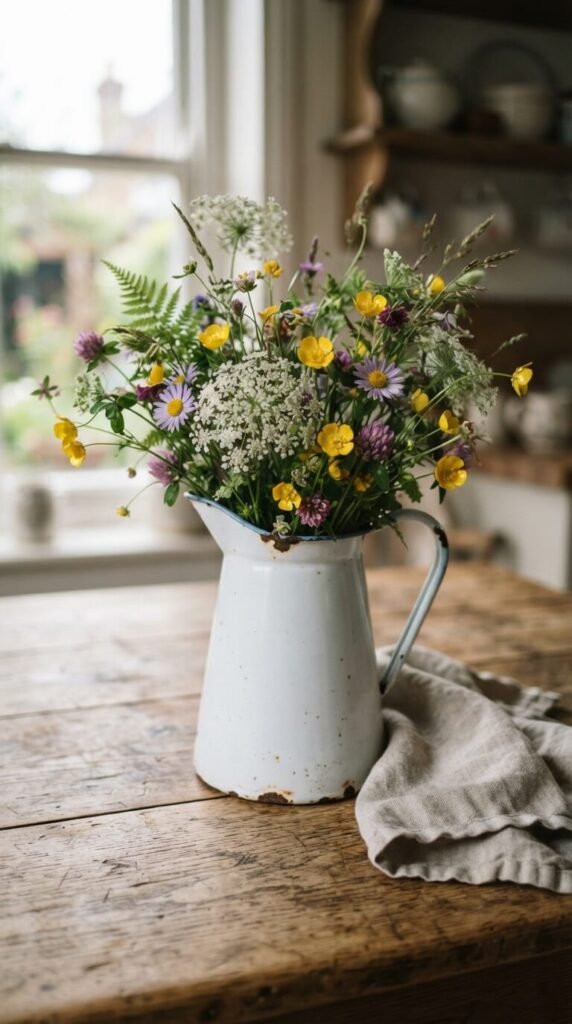
Old enamel pitchers were workhorses in the kitchen. Now they’re the best vases you’ll ever own. Look for them at flea markets, estate sales, or even thrift shops for under $10. Chips and stains are a feature, not a flaw — they tell the story. Fill yours with whatever is blooming in your yard. Dandelions, clover, and wild violets work just as well as anything fancy. Set it on a windowsill, a bathroom shelf, or the center of your kitchen table. Done. Spring arrived.
2. Grain Sack Table Runners
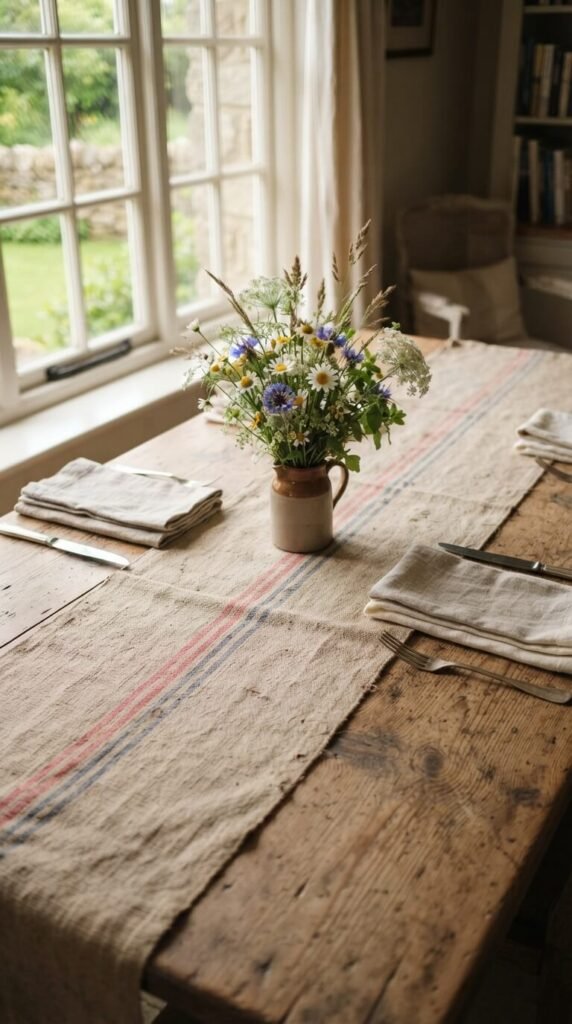
Authentic grain sacks have this rough, lived-in texture that no modern reproduction quite matches. The faded stripes — usually red, blue, or navy on off-white — look incredible as table runners. You can find originals at antique fairs or European import shops. Reproduction versions from Etsy work well too if originals are out of budget. Lay one flat down your dining table or drape it over a console. No sewing required. Just let it sit naturally and wrinkle a little. That relaxed quality is exactly the point.
3. Pressed Flower Frames from Estate Sales
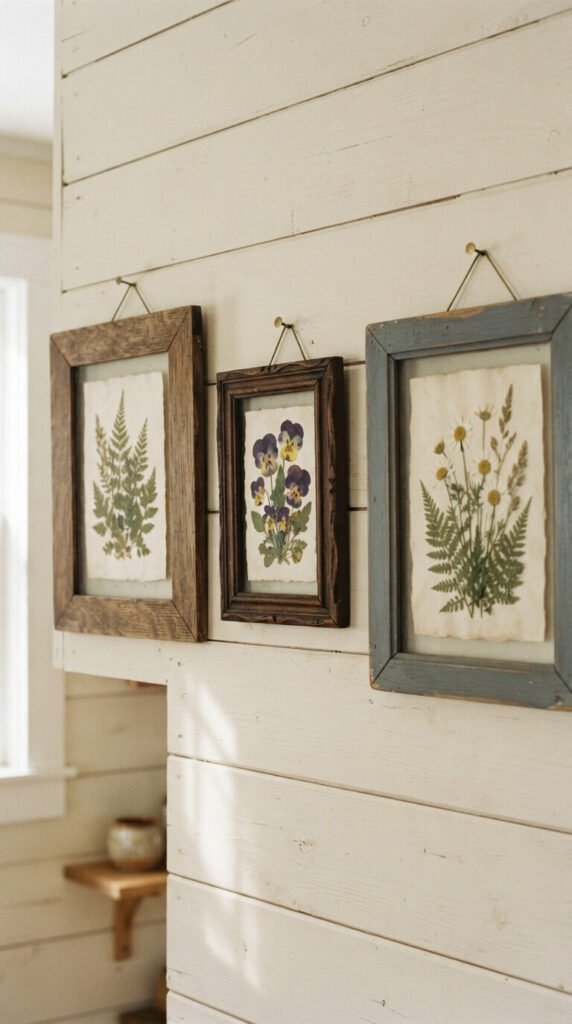
Pressed flower art has been around for centuries and it still looks timeless. Hunt estate sales for old botanical prints or actual pressed-flower frames from decades past. The older the paper, the better the sepia warmth. Can’t find them? Press your own. Lay flowers between two heavy books for two weeks, then mount them on cardstock inside any thrifted frame. Cost: nearly zero. Result: something that looks like it came from a European antique shop. Group a few together in mismatched frames for a gallery wall with real character.
4. Chippy-Paint Window Boxes
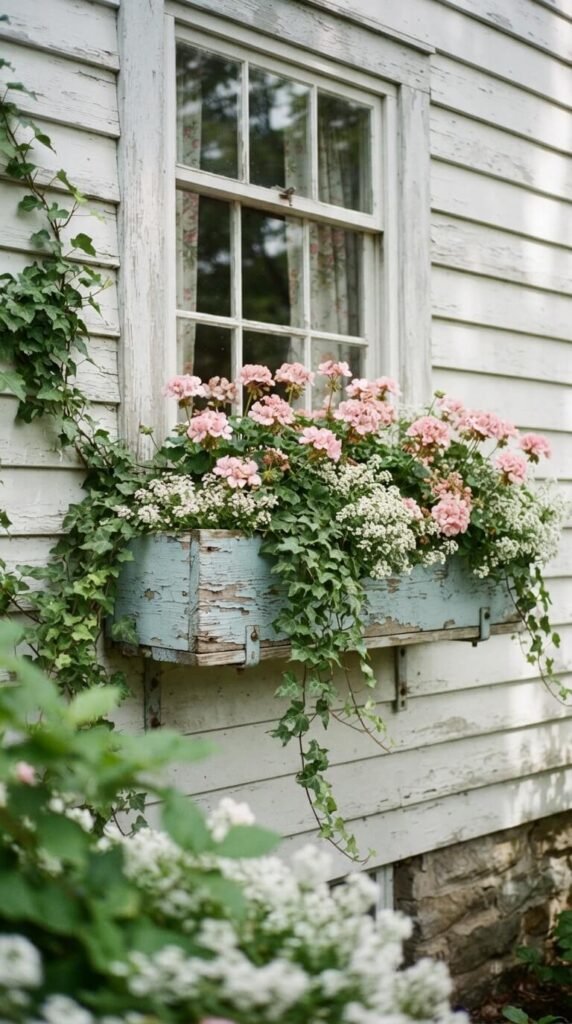
The more paint layers, the better the story. Chippy window boxes work on porches, fences, and even indoors on shelves or mantels. Look for old wooden ones at salvage yards or architectural antique stores. If you’re making your own, build a simple box from scrap wood, paint it two or three times in different colors, then lightly sand back the edges to reveal layers. Fill with herbs, trailing ivy, or spring annuals. The distressed paint against fresh green plants is a combination that never gets old.
5. Vintage Milk Glass Vases
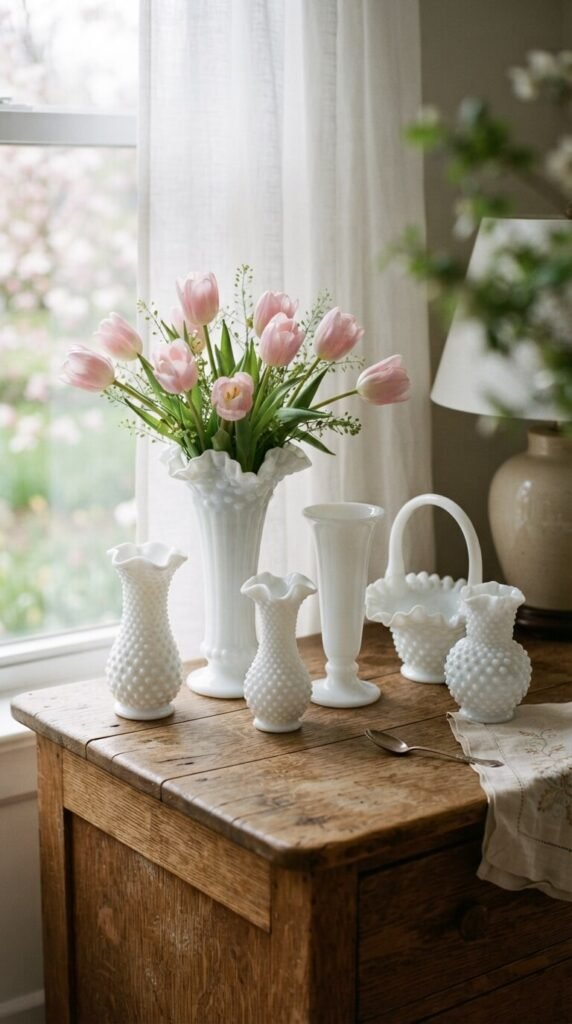
Milk glass is everywhere at thrift stores and often costs almost nothing. The white, slightly opalescent finish pairs beautifully with any spring bloom — pink tulips, yellow daffodils, even just greenery. Collect a mix of heights and shapes: hobnail pieces, pedestal vases, small bud vases. Cluster them together on a windowsill or dresser top. They look intentional as a group even when each piece is totally mismatched. This is one of the easiest ways to bring a vintage spring look together for under $20 total.
6. Lace-Trimmed Linen Curtains
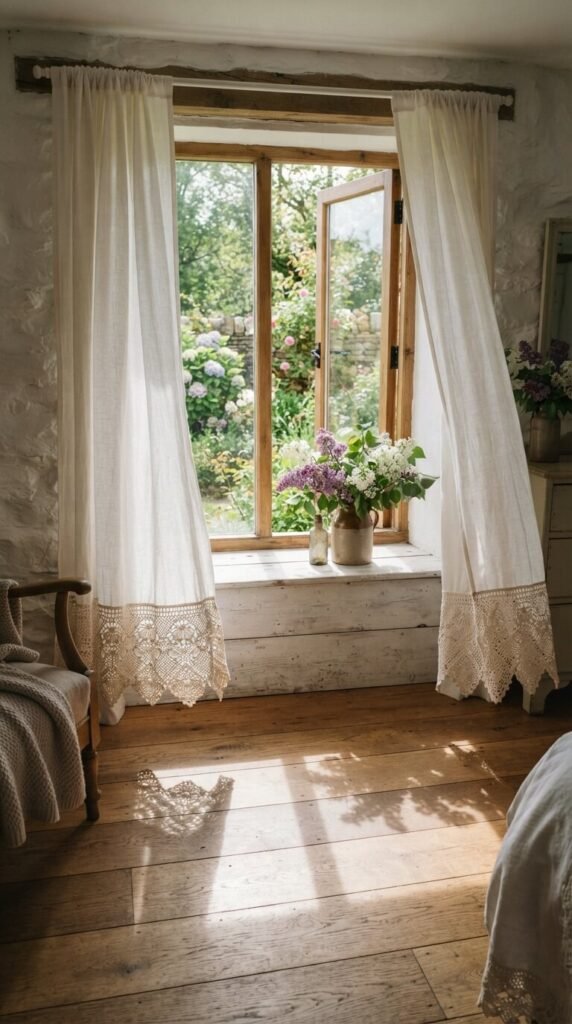
Old lace-trimmed curtains transform a room with almost no effort. Thrift stores and estate sales often have them folded in bins, sometimes still in their original packaging. The ivory and cream tones glow in spring light. Even if the panels are short, hang them high — the lace hem pooling slightly on the floor reads as intentional and romantic. Can’t find real vintage ones? Buy plain linen curtains and hand-sew a strip of vintage lace trim along the bottom. It takes about an hour and costs very little.
7. Antique Bird Cages as Planters
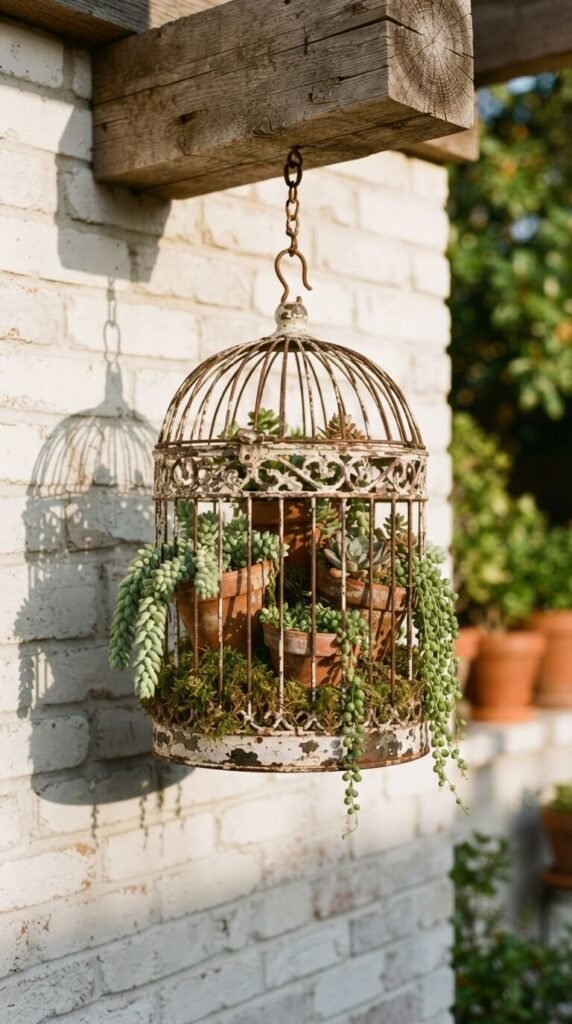
An old birdcage — especially a wrought iron one with flaking white or green paint — becomes something completely different when you put plants inside it. Small potted succulents, trailing ivy, or even a tiny herb pot fit beautifully. Hang it from a porch beam, a kitchen hook, or a shepherd’s crook in the garden. Flea markets and antique malls almost always have a few. Prices vary, but you can usually find smaller wire ones under $15. The silhouette alone adds architectural interest to any wall.
8. Transferware Plates on Open Shelves
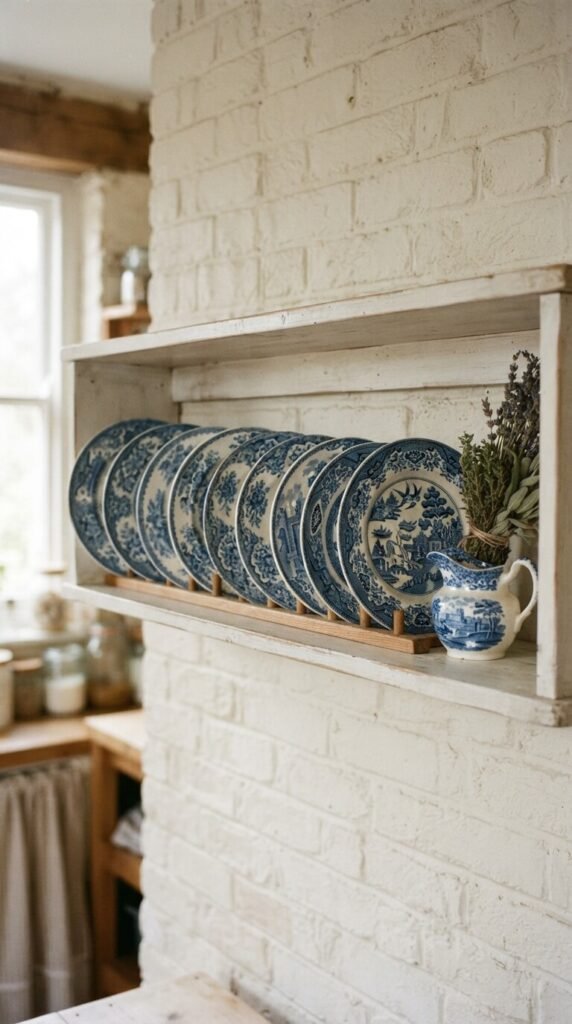
Blue and white transferware — those plates with the printed pastoral scenes — is a timeless spring staple. The floral and garden motifs are perfect for the season. Prop plates on open shelving, lean them against a backsplash, or mix them into a gallery wall. Thrift stores often have them scattered throughout dishware sections. Look specifically for the blue-on-white pattern with birds, flowers, or countryside scenes. Mismatched sets actually look better than perfectly matched ones. Mix brands, sizes, and patterns freely — that layered, collected quality is exactly right.
9. Galvanized Metal Watering Cans
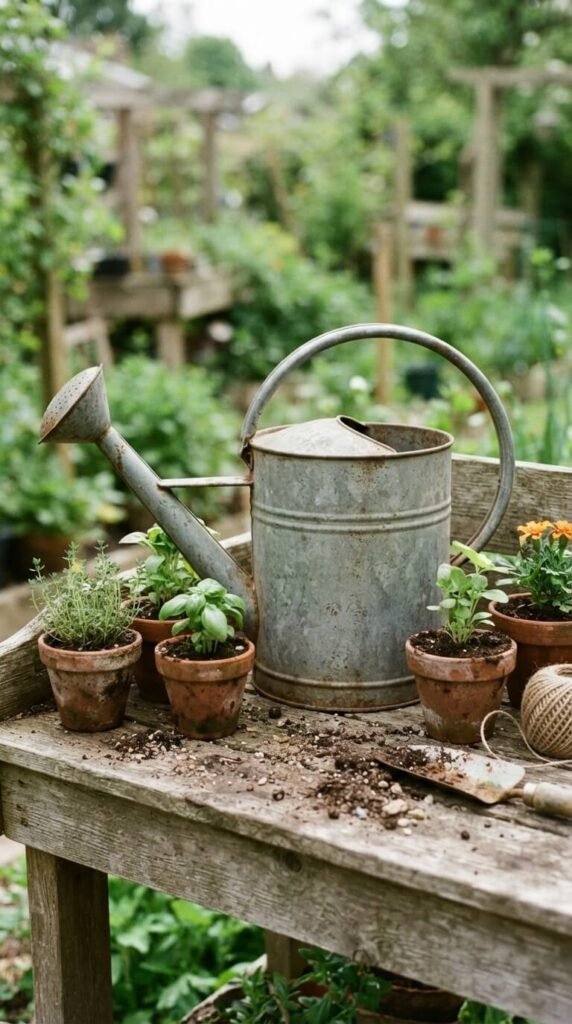
Old galvanized watering cans have a patina that plastic can never fake. Use them as actual garden tools or bring them inside as decorative vessels. Fill one with tall spring branches — forsythia, cherry blossom, or budding willow — and set it near a door or on a porch step. Look for them at farm auctions, salvage stores, or antique fairs. Surface rust only adds character. If you find a small one, it makes a great bedside vase or bathroom accent. A medium or large can near an entryway makes a strong seasonal statement.
10. Butter Molds and Wooden Stamps
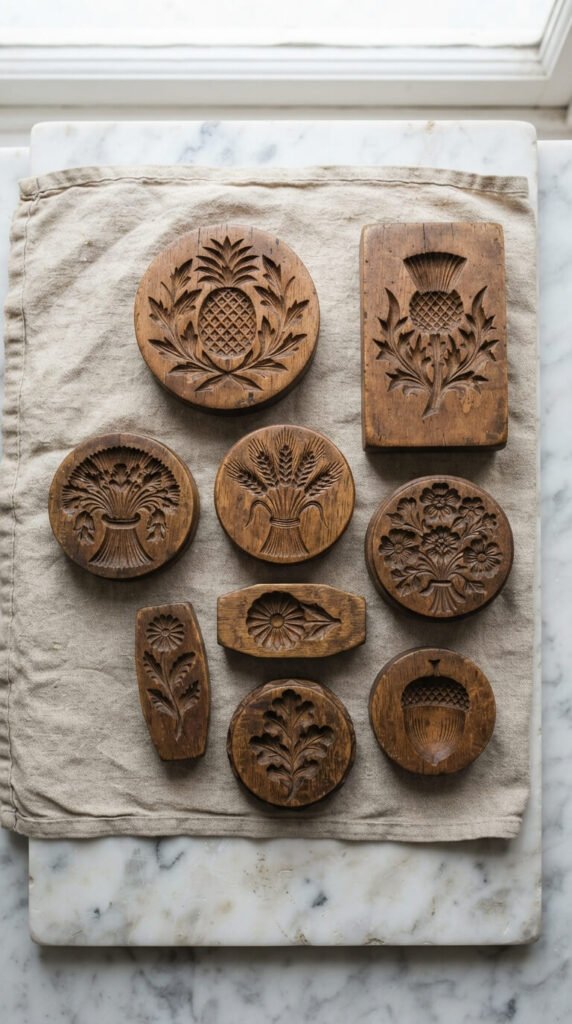
Antique butter molds — those small carved wooden blocks with botanical designs — are incredibly charming as shelf decor. They were originally used to press patterns into butter, but now they sit on coffee tables, kitchen shelves, and bathroom windowsills. Look for them at antique malls or on Etsy. The carved motifs — flowers, wheat sheaves, pineapples — feel perfectly spring-like. Arrange a few together on a small wooden board or tray. They’re tactile, interesting, and the sort of thing guests always pick up and ask about.
11. Faded Floral Tins
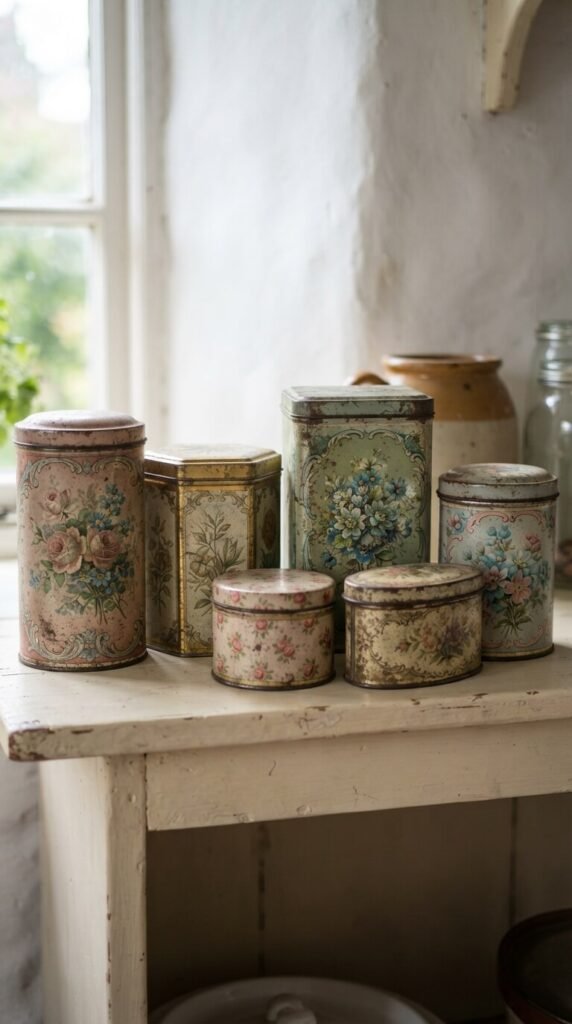
Old tins with faded floral lithograph labels are hiding in almost every thrift store. Biscuit tins, tea caddies, candy boxes — look for anything with botanical motifs in faded rose, sage, or dusty blue. They work as organizers, small planters, or purely decorative pieces. Group several on a kitchen shelf or bathroom counter. The worn label graphics have a quality that modern printing just doesn’t replicate. Fill one with cotton balls, another with small herb bundles, and one with a tiny succulent. The grouping feels curated without any real effort.
12. White Ironstone Pitchers and Bowls
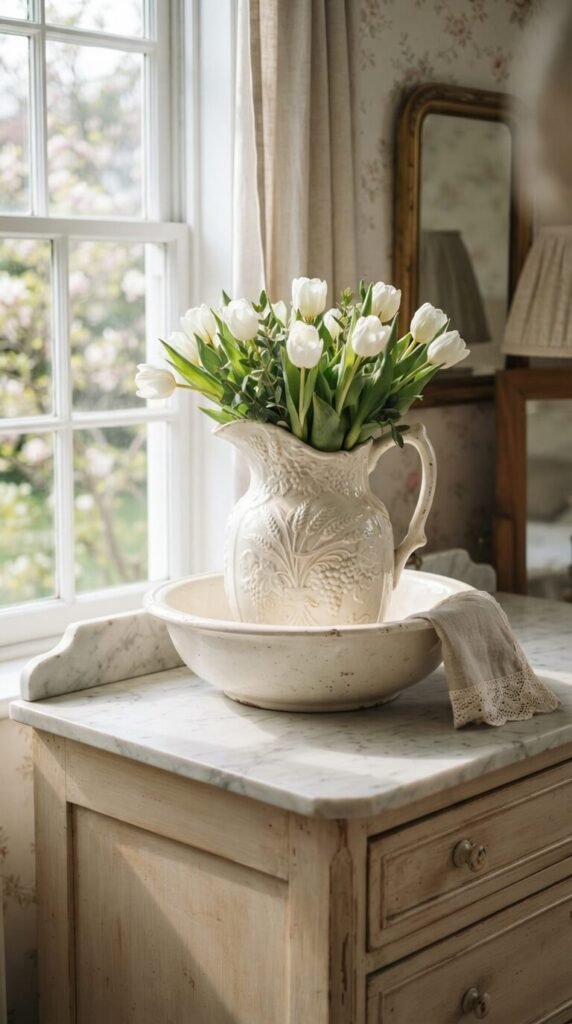
Ironstone — that thick, heavy, creamy white pottery — is one of the most versatile vintage finds you can collect. Pitchers and bowls were originally used as wash sets before indoor plumbing. Now they’re perfect spring vases, fruit bowls, or just beautiful objects on their own. Thrift stores and flea markets usually have at least a few pieces. Minor chips are totally acceptable. The slight off-white color and simple embossed patterns work with any decorating style. A pitcher filled with white tulips or pink peonies is as classic as it gets.
13. Seed Packet Art Printables
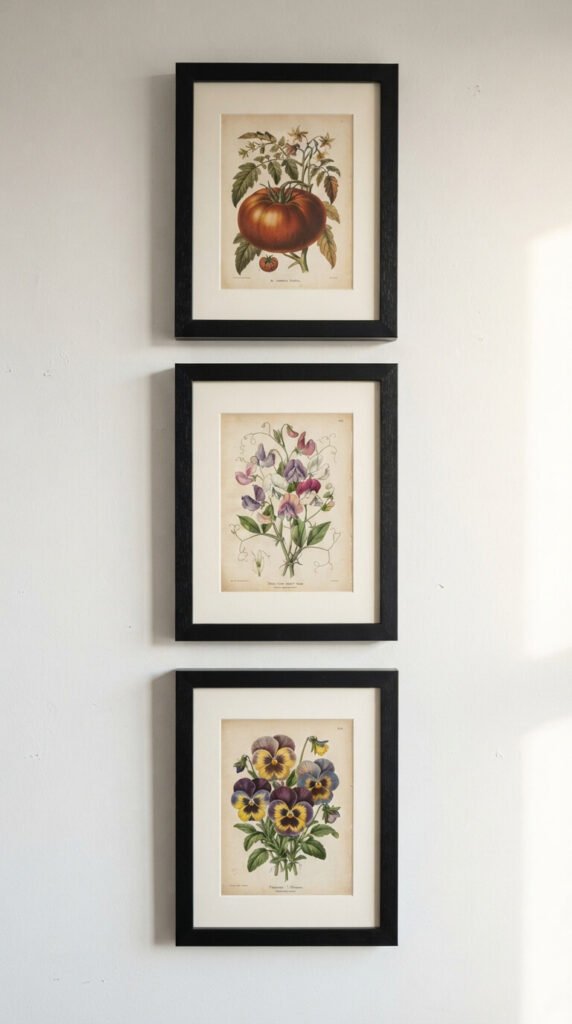
Original vintage seed packets from the early 1900s had gorgeous hand-illustrated cover art — botanically detailed and full of warm color. The originals are collectors’ items, but high-quality reproductions are available online as printables for just a few dollars. Download, print on slightly aged cardstock, and frame in simple thrifted frames. Hang them in a kitchen, bathroom, or mudroom. They’re seasonal without being too cute, and they reference gardening and spring in a way that feels genuinely timeless rather than seasonal-aisle-temporary.
14. Worn Wooden Crates as Storage
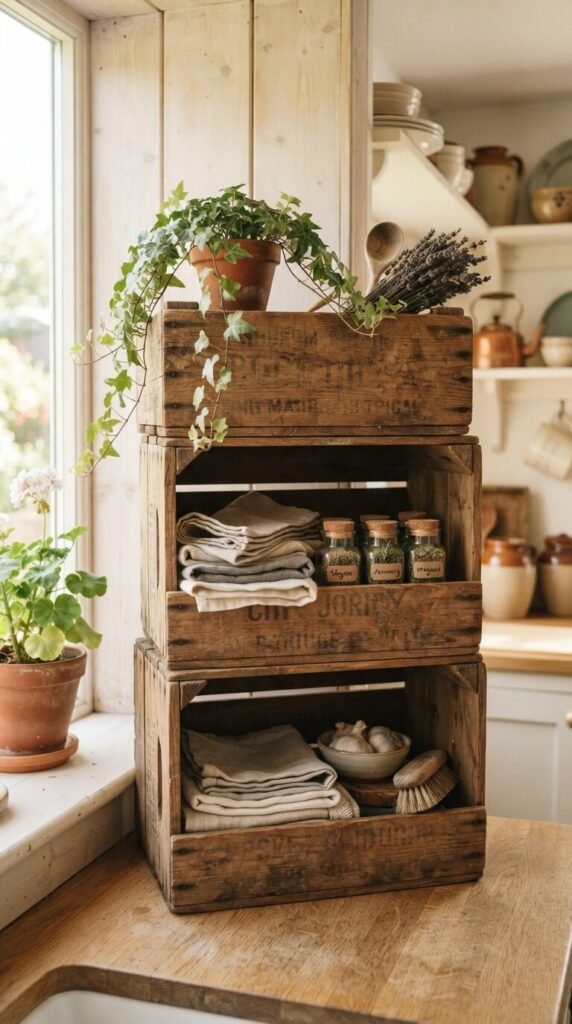
Old produce crates — the wooden kind with slatted sides and faded stencils — are one of the most useful vintage finds around. Stack them as open shelving units, use them under a console table for storage, or lay one flat as a coffee table centerpiece with books and candles inside. Antique shops and flea markets often have them in abundance. Lightly sand any rough edges for safety. The worn wood and old lettering give any room an instant farmhouse-market quality that feels organic rather than styled.
15. Apothecary Jars Filled with Spring Things
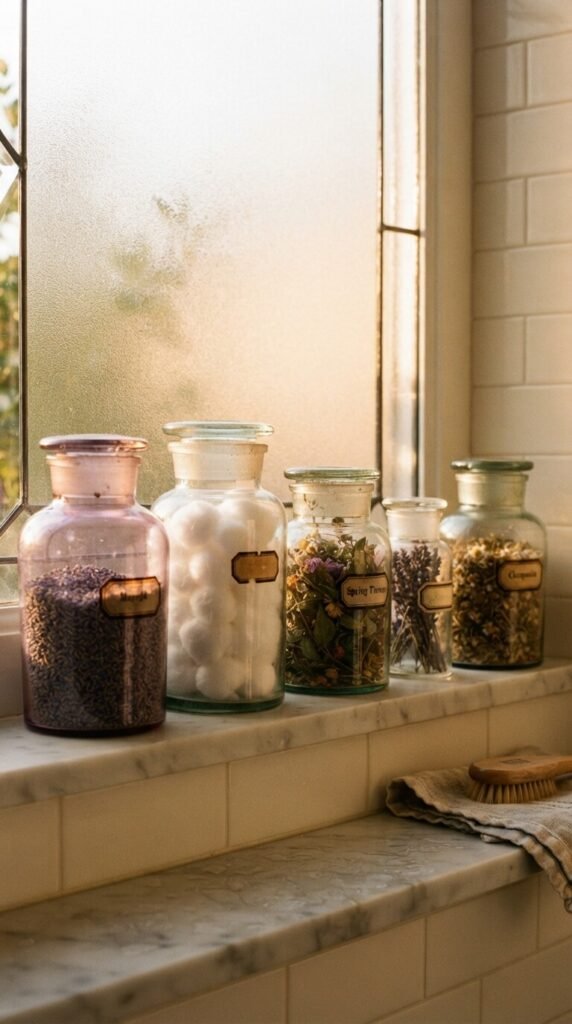
Old glass apothecary jars — the kind with ground-glass lids — show up at estate sales, antique shops, and sometimes even thrift stores. They’re originally from old drugstores and hospitals. Fill them with dried lavender, cotton rounds, fresh herb cuttings, or even small shells. Line several up on a bathroom shelf or kitchen windowsill. The clear glass lets the contents become part of the decor. A jar filled with fresh lavender sprig cuttings costs almost nothing and smells incredible for weeks.
16. Crocheted Doilies as Table Mats
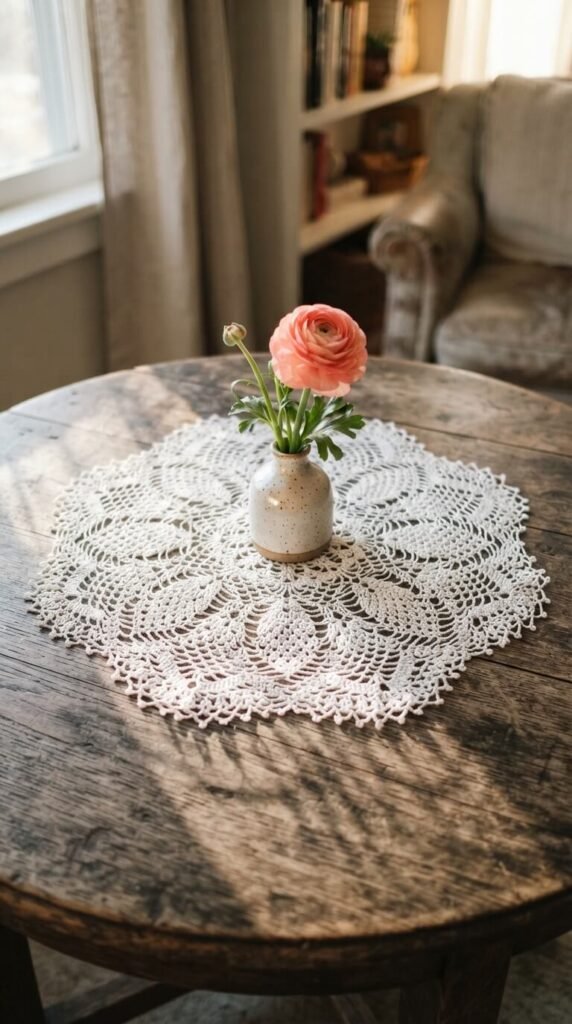
Doilies have made a full comeback and they deserve it. Handmade crocheted doilies from the mid-century are everywhere at thrift stores — often still pristine, sometimes in bags of mixed sizes. Use them as table mats, frame them under glass as wall art, or drape them over a chair back. The white or ecru cotton fiber glows under spring light. If you find a damaged one, cut out the intact center section and frame it. A stack of small doilies under a vase grouping adds texture that no mass-market product can replicate.
17. Antique Cloche Domes
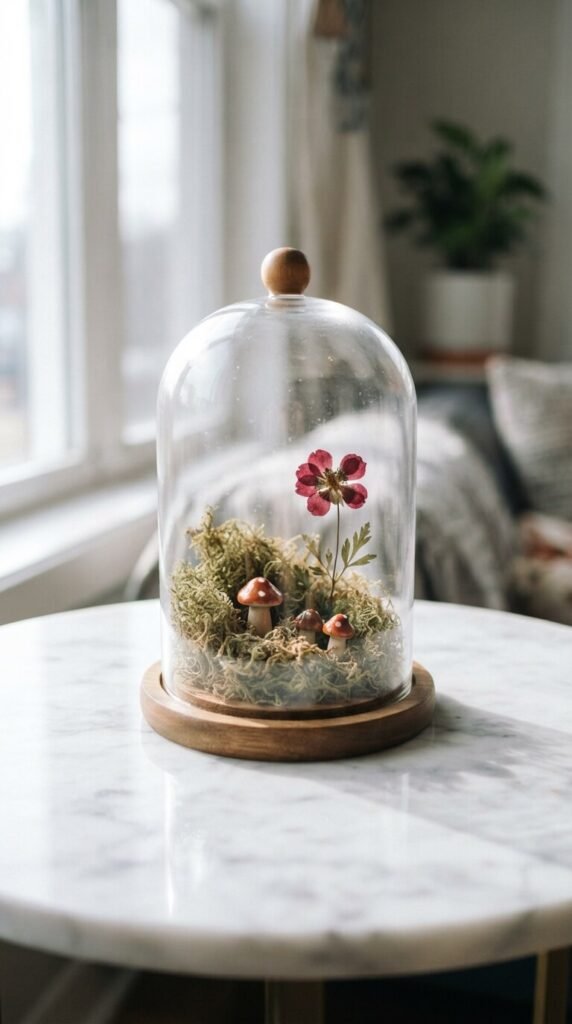
Glass cloches — those bell-jar domes — were used in Victorian kitchens and gardens to protect plants from cold. Now they’re one of the most popular ways to display tiny collections. Put a cloche over a nest of speckled eggs, a small bird figure, a cluster of moss and stones, or a single dramatic flower. Antique stores usually stock them, and modern reproductions work fine too. The dome creates its own little world — it draws the eye and gives whatever’s inside an instant sense of importance.
18. Garden Party China in Mismatched Sets
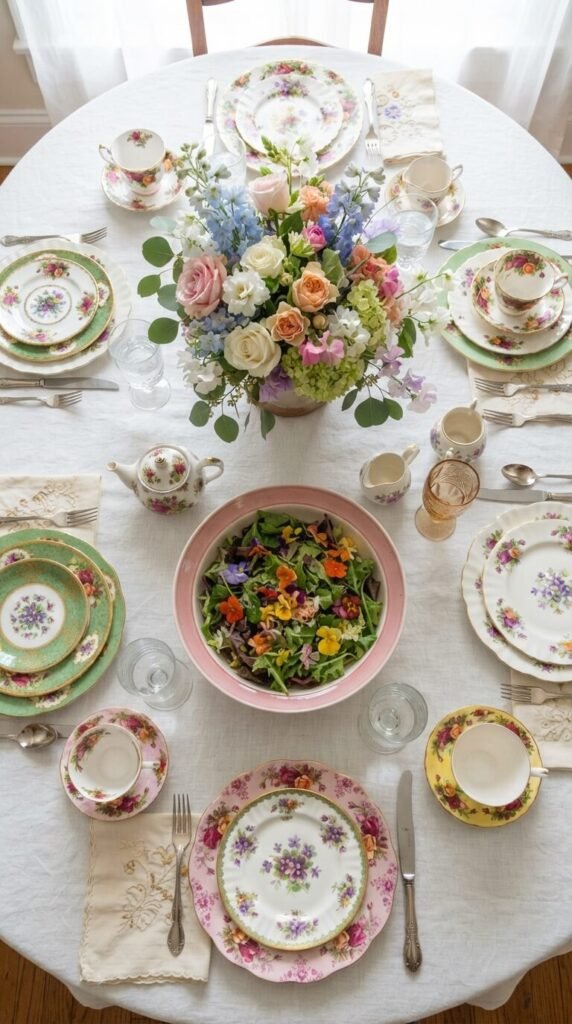
Spring is the right season to actually use the china. Hunt for mismatched floral patterns — the more varied, the better. Rose-covered teacups with transfer-print plates and gold-rimmed saucers all work together when the color palette is roughly similar. Stack them open in a hutch or cabinet for display, or actually use them for a spring lunch. Tea parties aside, mismatched vintage china on a linen cloth for a simple dinner feels genuinely celebratory. Thrift stores price them low because they’re not matched — which is exactly why they’re perfect.
19. Botanical Illustration Books as Decor
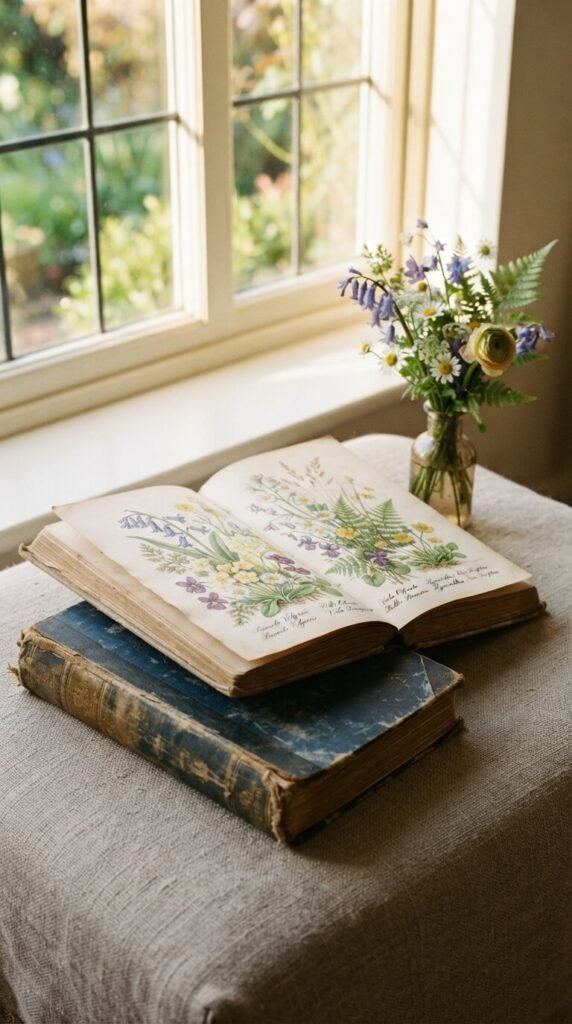
Old botanical books from the 19th and early 20th centuries have extraordinary illustration quality — detailed watercolor and engraving-style prints of flowers, plants, and leaves. Stack them on a coffee table, open one to a beautiful page, or carefully remove a single print for framing. Estate sales and used bookshops are the best sources. You can also find individual antique prints pulled from old books — these are called “book plates” and they’re usually sold for just a few dollars at antique stores or on Etsy.
20. Herb-Filled Terracotta Pots in Clusters
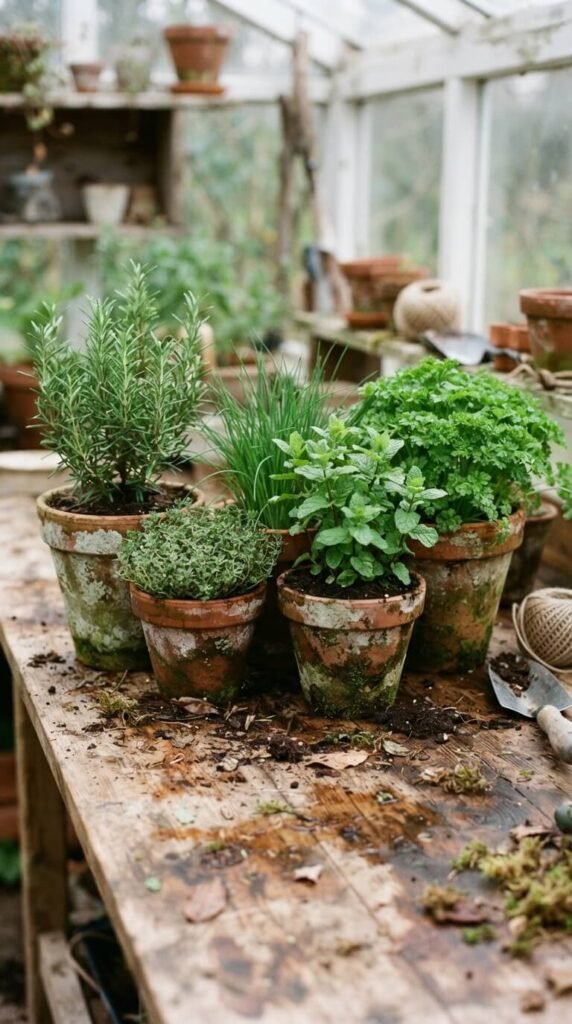
Plain terracotta pots get more beautiful the older they get. White mineral deposits, soil stains, and moss that creep up the sides over the years give them a quality that new pots simply don’t have. Collect them wherever you find them — at estate sales, thrift stores, or even curbside. Plant spring herbs in them: rosemary, thyme, chives, mint. Group five or six on a kitchen windowsill, a back step, or a porch railing. The variation in size and the natural aging differences between pots creates a collected-over-time look that feels genuinely homey.
21. Lace Tablecloths as Wall Hangings
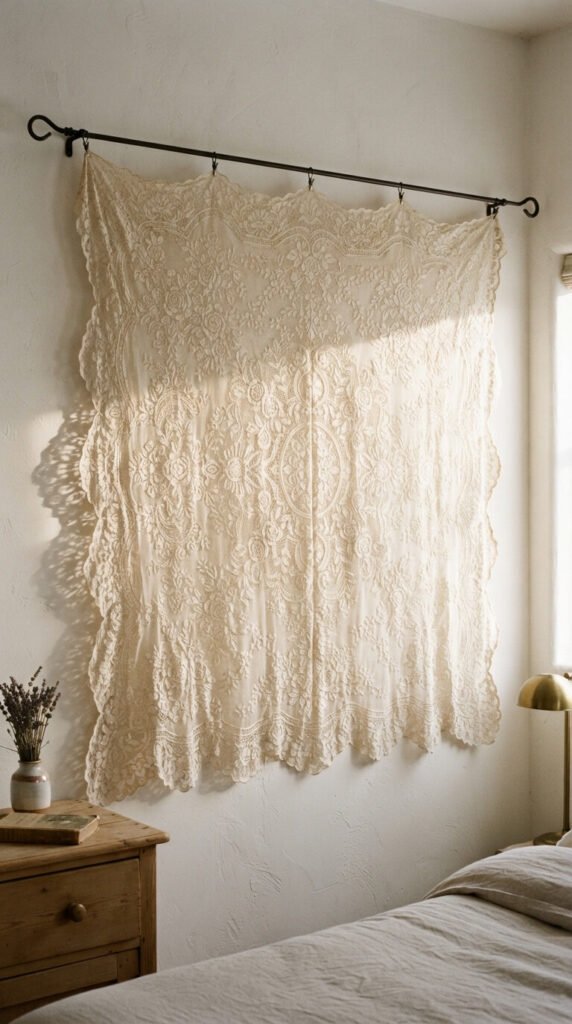
A vintage lace tablecloth is too beautiful to live folded in a drawer. Hang it on the wall. Use a simple wooden dowel or curtain rod threaded through the hem or a casing you create with a few quick stitches. The lace pattern casts extraordinary shadow designs when light hits it right — it almost acts as its own light fixture. Estate sales and linen closet lots at thrift stores are the best hunting grounds. An intricate hand-made lace cloth that cost $3 at a thrift store can anchor an entire bedroom wall.
22. Weathered Garden Urns
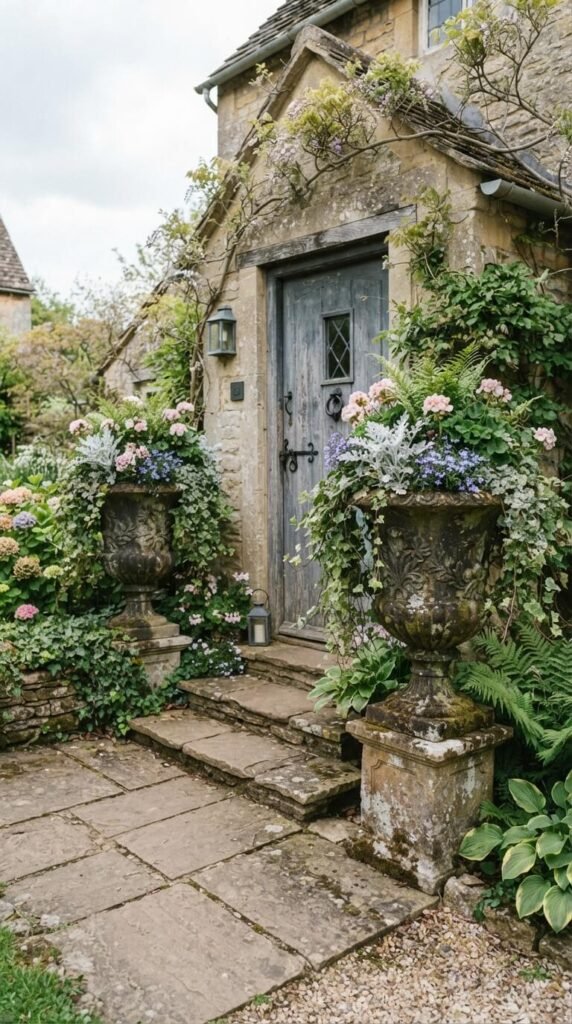
Old concrete or cast iron garden urns develop moss, lichen, and a mineral patina over the years that makes them look like they belong to the landscape. Pair them at an entry, set one alone on a porch, or bring a small one indoors on a pedestal. Estate sales and architectural salvage yards often have them at reasonable prices. Plant trailing plants — ivy, sweet potato vine, bacopa — to spill over the edges. The silhouette of a well-planted urn signals spring arrival better than almost any other single decor choice.
23. Flour Sack Tea Towels
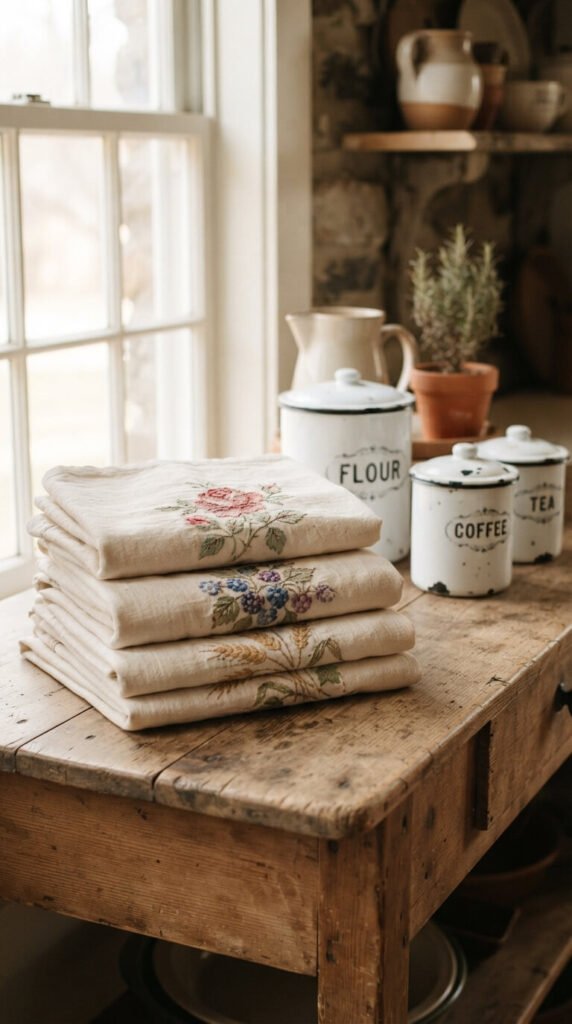
Original flour sack towels — thin, flat-woven cotton with embroidered designs — are one of the best thrift store finds you can make. Women decorated them with hand embroidery: flowers, birds, kitchen motifs. The fabric softens beautifully with age. Use them as real dish towels, fold them over oven handles as display pieces, or frame one under glass as art. Spring-themed designs — floral, vegetable garden, butterfly — are common. If you’re crafty, buy plain vintage flour sacks and embroider your own motifs. Supplies cost very little.
24. Moss and Rock Terrariums in Old Bottles
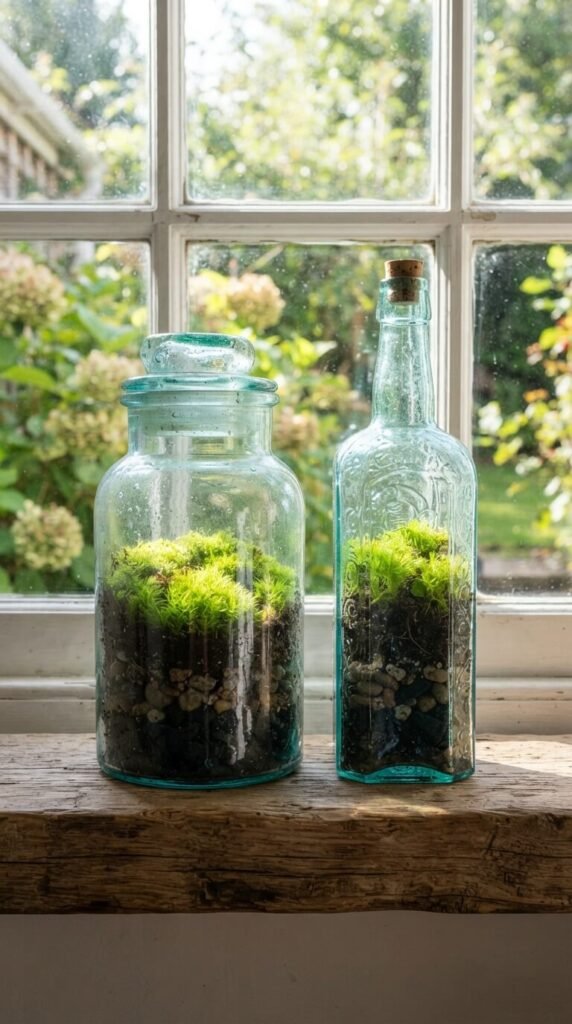
Old glass bottles — especially aqua and green-tinted ones — make beautiful terrarium containers for simple moss and rock arrangements. Layer small stones, then charcoal, then soil or sphagnum moss at the bottom. Press small pieces of sheet moss against the glass. These require almost no maintenance. Hunt for antique bottles at flea markets, bottle shows, or bottle digging sites. The color of old glass has a quality that modern reproductions can’t match — small bubbles in the glass, slight ripples, and the depth of color in aged bottle glass are remarkable.
25. Vintage Seed Trays and Propagation Pots
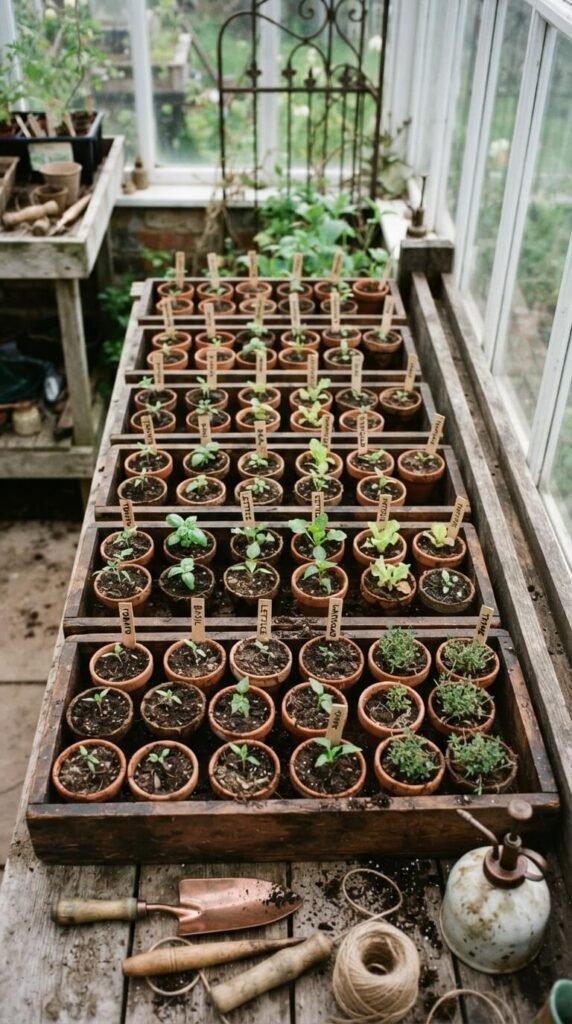
Old wooden seed trays — the kind used before plastic took over propagation — have beautiful joinery and aged patina. Use them as organizers on a shelf, line them with burlap and fill with herb pots, or actually use them for spring seed starting. Look for them at farm sales and antique agricultural shows. Even if they’re not structurally perfect, they still work well as decorative trays for grouping smaller pots. Paired with small terracotta thumb pots and simple hand-lettered wooden markers, they create a potting bench tableau that’s completely charming.
26. Hand-Painted Floral Furniture
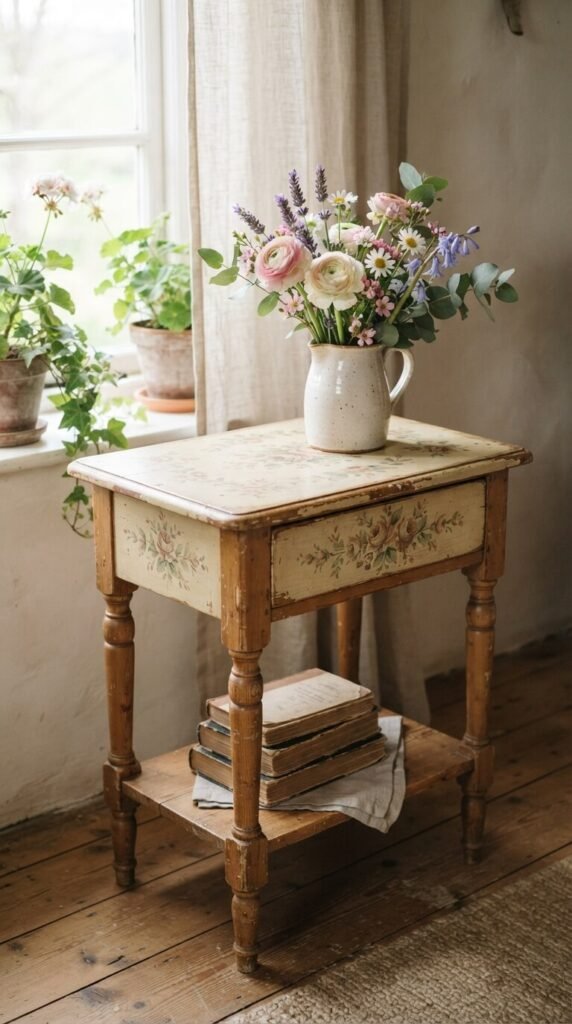
Hand-painted furniture — chairs, small tables, chests — came out of European folk traditions where painting was how ordinary people added color to plain wood. Swedish, Norwegian, and German pieces often have floral and botanical motifs in soft, aged palettes. These pieces show up at estate sales and specialized antique dealers. Even a small painted stool or a single chair adds a story to a room that mass-produced furniture simply can’t. Don’t restore the paint aggressively — the worn areas are where the history lives. A light wax is usually all these pieces need.
27. Botanical Garden Maps and Prints
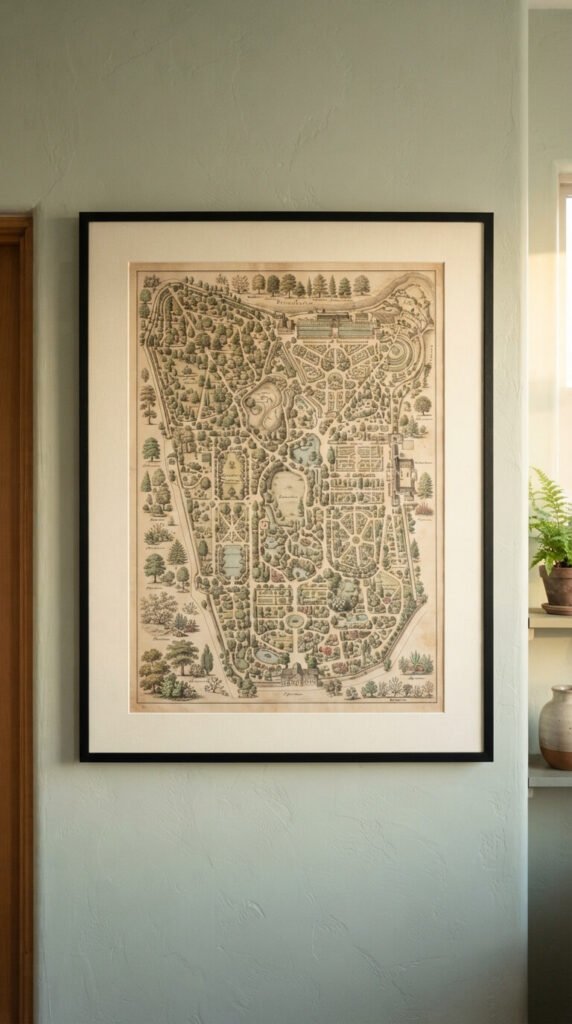
Old garden maps and horticultural survey prints have extraordinary detail — hand-drawn illustrations of plant specimens arranged like cartographic art. Look for them at antique paper dealers, map shops, and estate sales. Alternatively, seek out horticultural society catalogs from the early 1900s, which often contain gorgeous botanical illustration pages. Frame one large print for a statement wall piece, or group three smaller prints vertically. The aged paper tone — whether ivory, cream, or sepia — pairs with spring greens and whites in a way that feels restrained and lovely.
28. Vintage Picnic Baskets as Storage
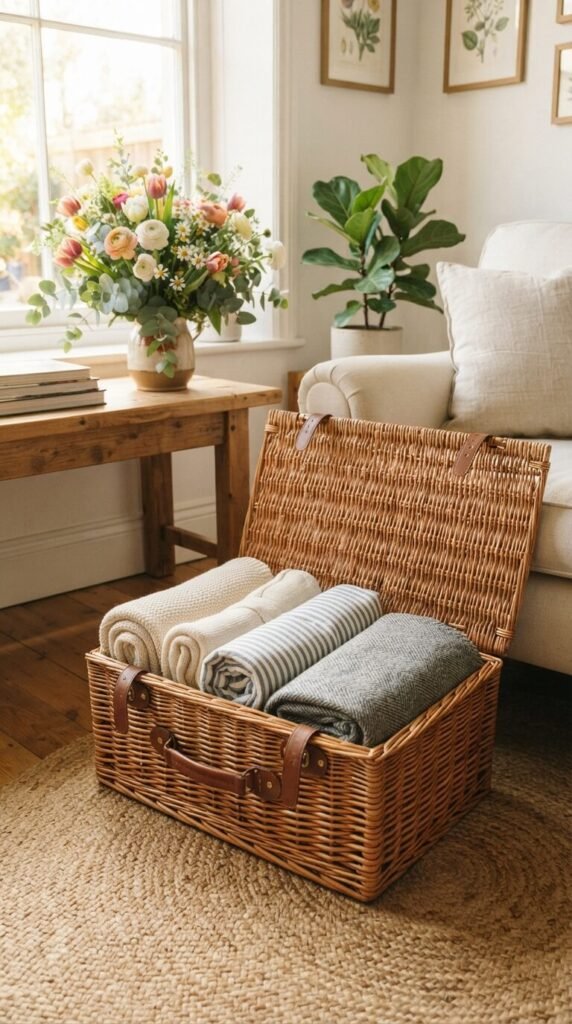
A good wicker picnic basket is one of the most practical vintage finds you can make. Use one as a blanket storage basket in the living room, a bathroom hamper, a toy chest, or a portable garden tote. The wicker develops a warm honey color with age that new baskets don’t have. Look for the kind with leather buckle straps and a fitted lid — these tend to be sturdier. Estate sales and antique fairs usually have several to choose from. Fill one with spring picnic supplies near your door as a seasonal reminder that the outdoors is waiting.
29. Painted Watering Can Collections
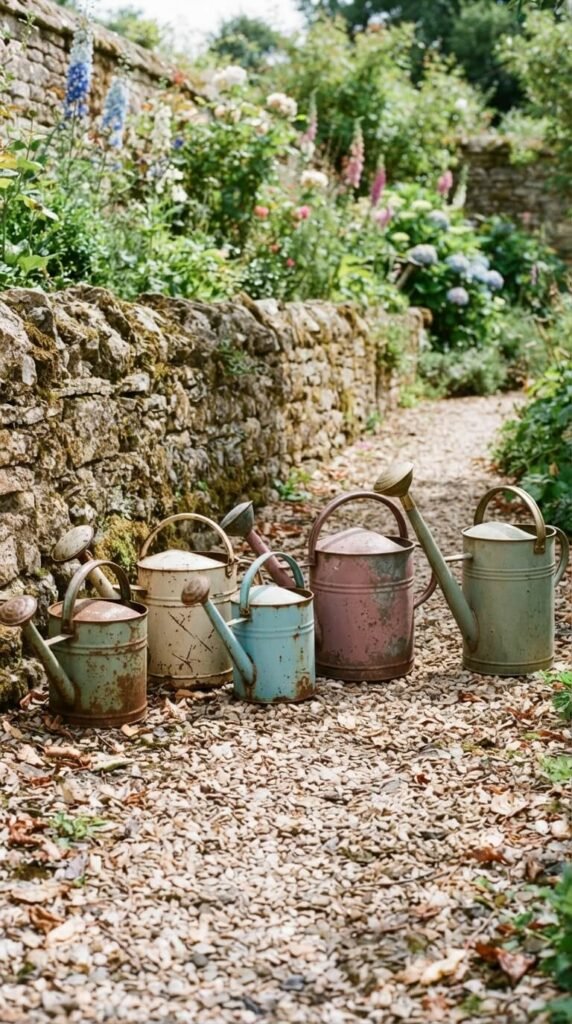
A grouping of painted metal watering cans in different sizes, colors, and states of age creates one of the most characterful displays possible — in a garden, on a porch, or along a garden path. The faded paint, the rust spots, the dented sides all contribute to an arrangement that looks like it was collected over a lifetime rather than purchased all at once. Hunt for them at flea markets, farm auctions, and barn sales. Use them as actual watering cans for your spring garden, or simply let them sit and look beautiful. Both uses are equally valid.
Conclusion
Vintage spring decor works because it carries evidence of real use. Every chip, every faded label, every worn edge is a detail that mass production can’t manufacture. The best part is that most of these pieces are genuinely affordable — found at estate sales, thrift stores, flea markets, and antique fairs for far less than their newer counterparts. You don’t need to redecorate a whole room. Start with one enamel pitcher on a shelf, a handful of old milk glass vases on a windowsill, or a stack of botanical books on your coffee table. Let the season come in slowly, piece by piece, and give each find a little room to tell its own story.