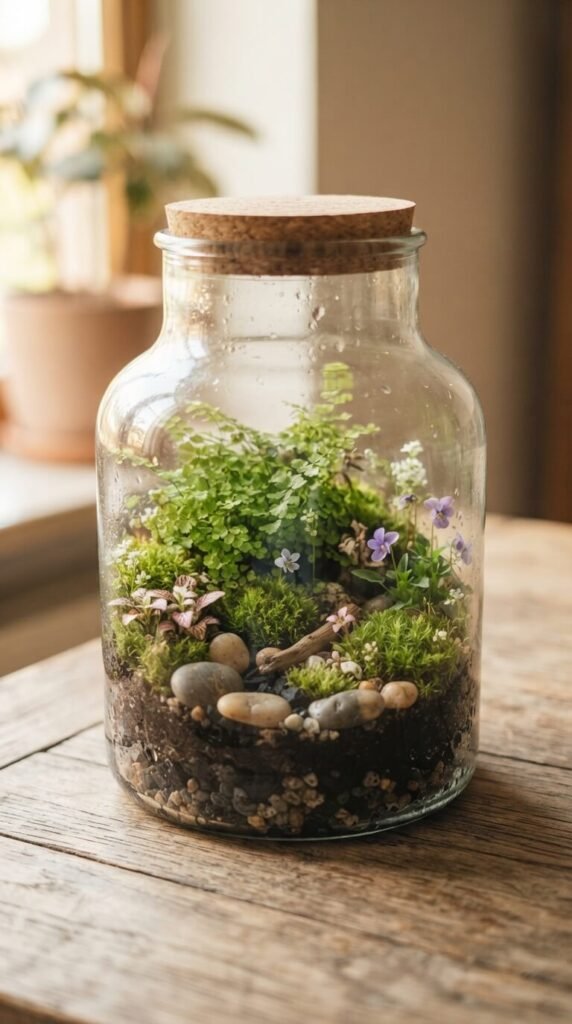
Spring is the perfect season to bring the outdoors in — and miniature terrariums make that surprisingly simple. Whether you have a mason jar collecting dust or a glass bowl sitting unused, there is a tiny garden waiting to happen. These small, self-contained worlds are low-maintenance, budget-friendly, and wildly satisfying to put together. From mossy woodland scenes to pastel flower displays, each project on this list gives you a real starting point, not just an idea. If you love nature, seasonal decorating, or just a good afternoon craft, you are in the right place. Let’s walk through 25 projects that will actually get done.
1. Moss and Pebble Zen Garden Terrarium
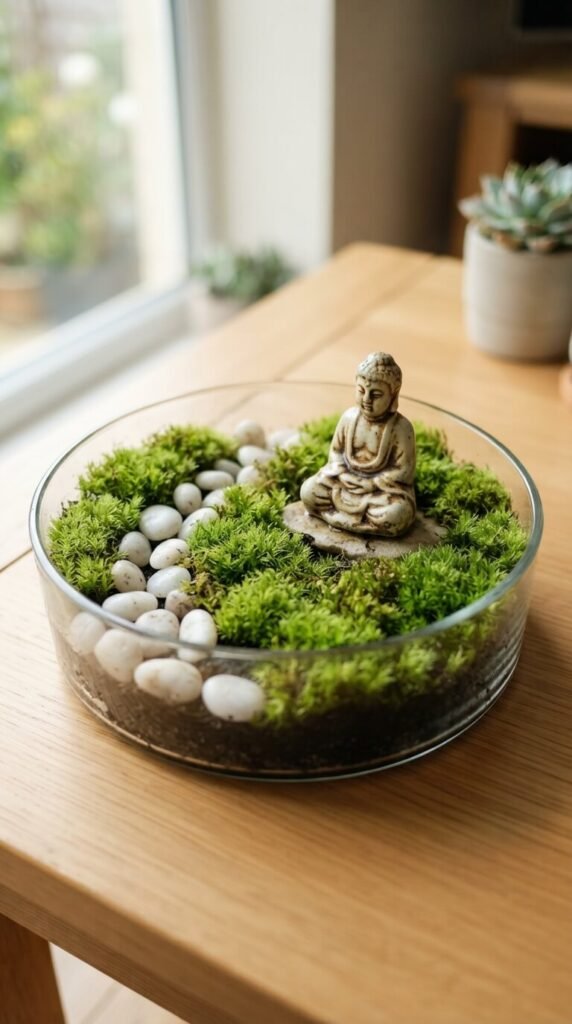
Start with a wide, shallow glass bowl. Add a layer of small pebbles at the base for drainage. Press in patches of cushion moss from a craft store or your backyard. Tuck in a few smooth stones and a tiny decorative figure. This one costs almost nothing. Moss is easy to source, and pebbles can come from any garden. Keep it near indirect light and mist lightly once a week. The result is calming, minimal, and feels very spring-like without being overdone.
2. Pastel Succulent Spring Bowl
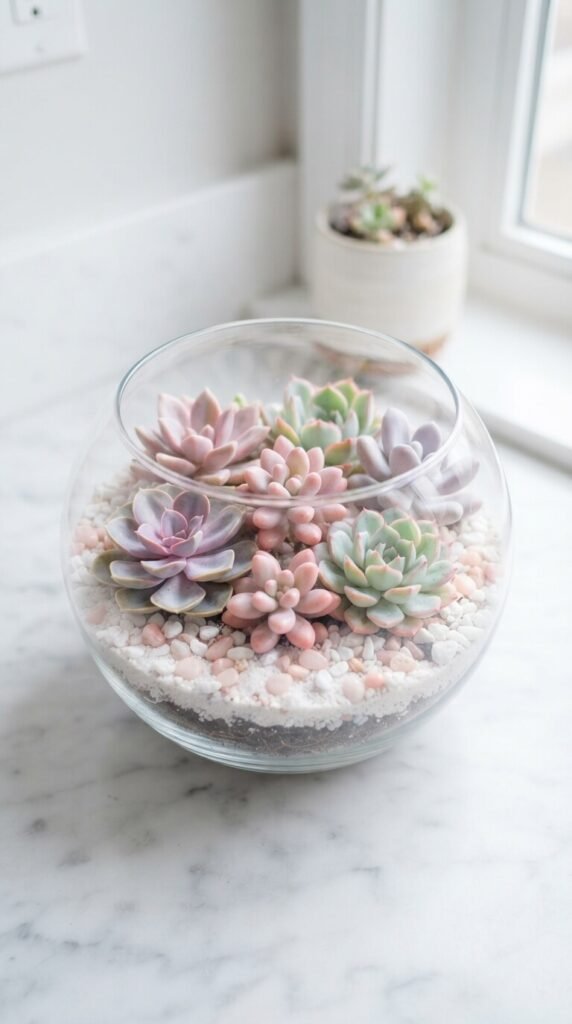
Succulents in soft spring colors are hard to beat. Look for echeveria varieties in pink, purple, or mint — most garden centers carry them in spring for under $3 each. Layer white sand, then top with colored pebbles. Arrange three to five succulents at different heights. Use a wide glass bowl so air circulates well. Succulents barely need watering, making this a nearly maintenance-free display. Add a tiny decorative butterfly or egg for a seasonal touch that pulls the whole thing together.
3. Woodland Fairy Door Terrarium
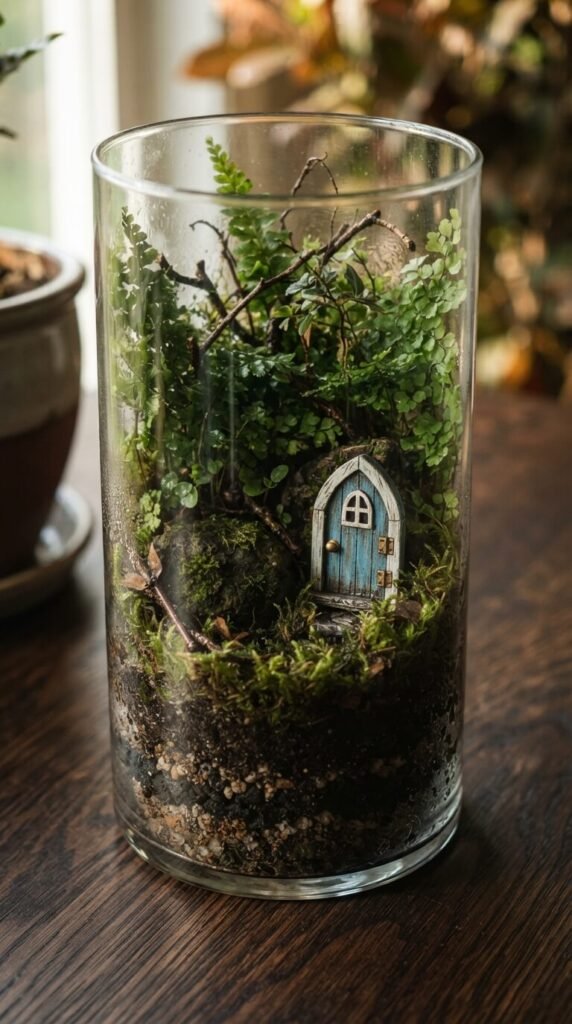
Fairy doors cost around $2–$5 at craft stores and they completely change the personality of a terrarium. Use a tall cylindrical glass jar. Layer gravel, activated charcoal, and potting mix. Plant small ferns and add a few twigs and bark pieces to mimic a forest floor. Press the tiny door against a mossy stone inside. Kids absolutely love this one, but adults find it just as charming. It creates a sense of story and scale that makes people stop and look twice.
4. Eggshell Succulent Mini Planters Inside a Terrarium
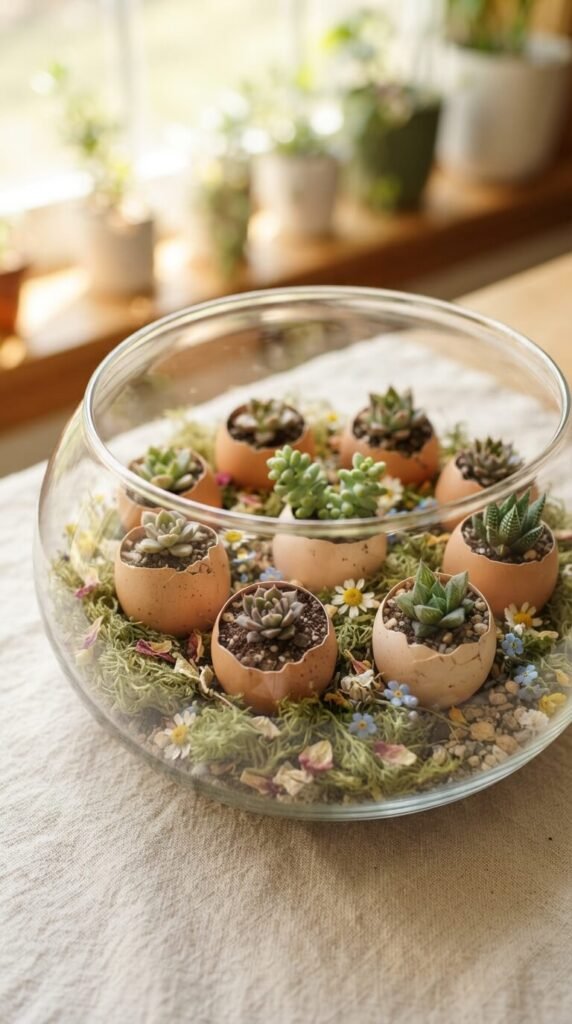
Save your eggshells from breakfast this week. Rinse them out, let them dry, and carefully fill each one with a pinch of succulent soil and a tiny plant cutting. Arrange four to six filled shells inside a wide glass container on a bed of moss. This is one of the most inexpensive spring terrarium ideas possible — total cost is nearly zero. The eggshells also add slow-release calcium to the soil as they break down. It looks delicate and seasonal without any real effort.
5. Lavender and Herb Terrarium Window Display
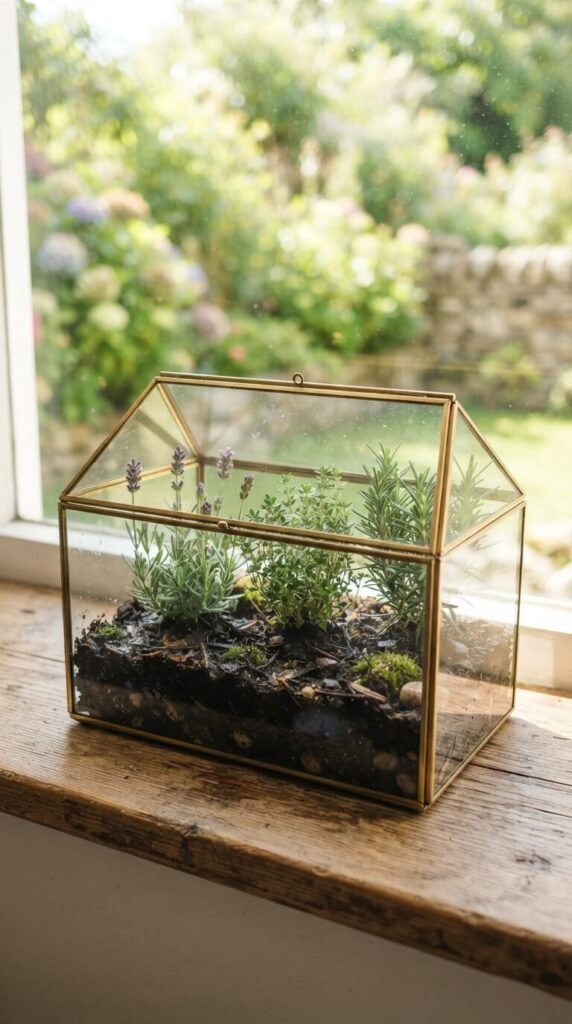
A terrarium does not have to be purely decorative. Small herbs like thyme, rosemary, and dwarf lavender work beautifully in a glass box near a sunny window. Use well-draining sandy soil and a container with ventilation. Keep the glass open or use a container without a full lid — herbs need airflow. This costs about $10–$15 total and doubles as a functional kitchen herb display. Snip as needed for cooking while enjoying the spring scent every time you walk by.
6. Spring Moss Ball Terrarium (Kokedama Style)
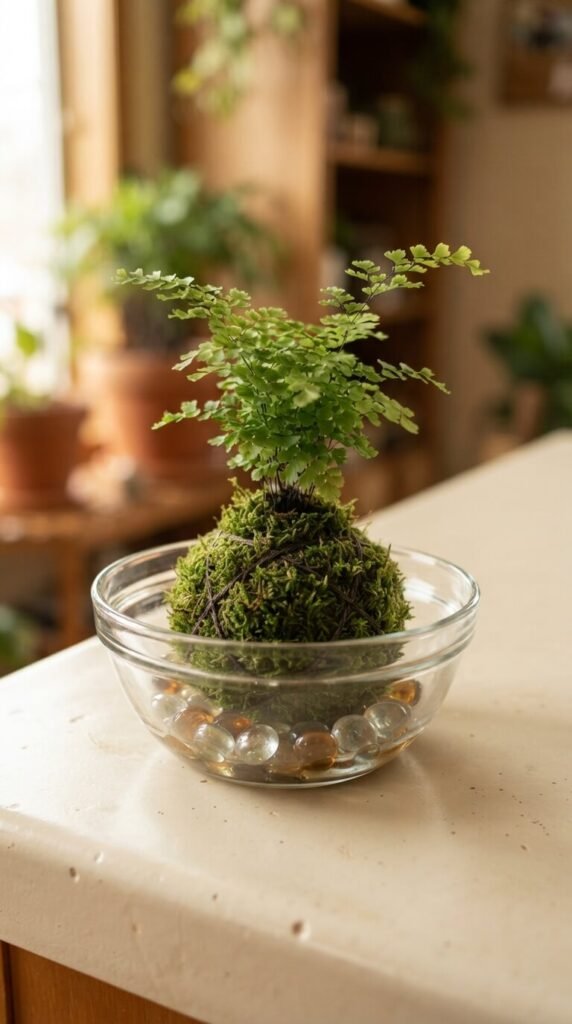
Kokedama is a Japanese technique where plants grow in a ball of soil wrapped in moss. You can create a mini version for under $8. Mix peat moss and bonsai soil, shape it into a ball around a small plant root ball, then wrap tightly with sheet moss and secure with twine. Set it in a shallow glass bowl with a few pebbles to elevate it. Mist daily. This is a conversation starter every single time. The organic shape looks like something from an art gallery.
7. Terrarium With Spring Bulb Forcing (Crocus or Hyacinth)
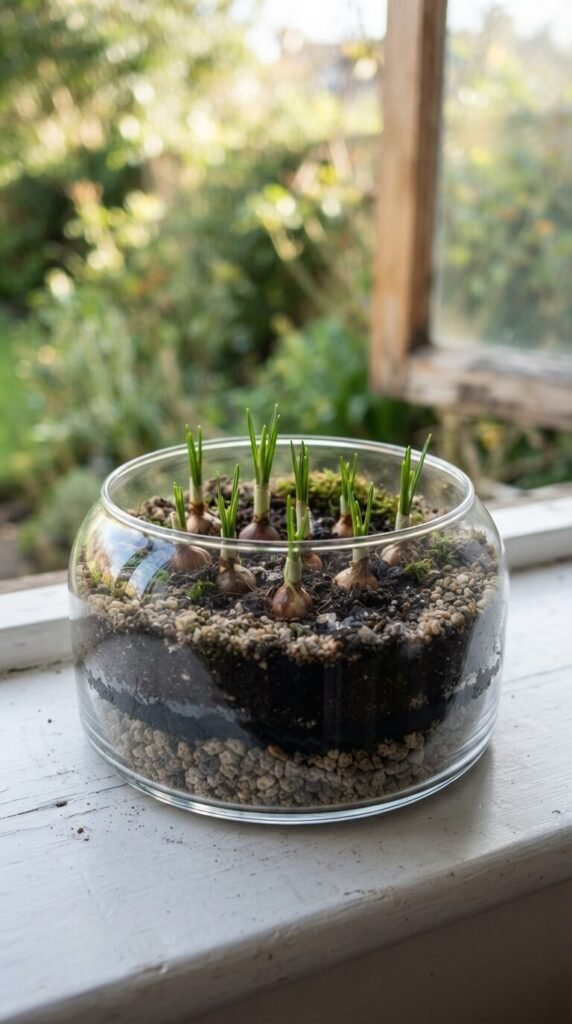
Forcing spring bulbs is easier than most people think. Buy crocus or grape hyacinth bulbs from any garden center in early spring — usually $3–$5 for a pack. Layer pebbles in a glass bowl, add a thin layer of soil, and set bulbs tip-up just touching the soil surface. Place near a bright window. Within two to three weeks, you will see green shoots pushing through. When they bloom, the colors are stunning inside a glass container. No drainage hole needed — just watch the water level.
8. Terrarium Terraced Landscape With River Stone Paths
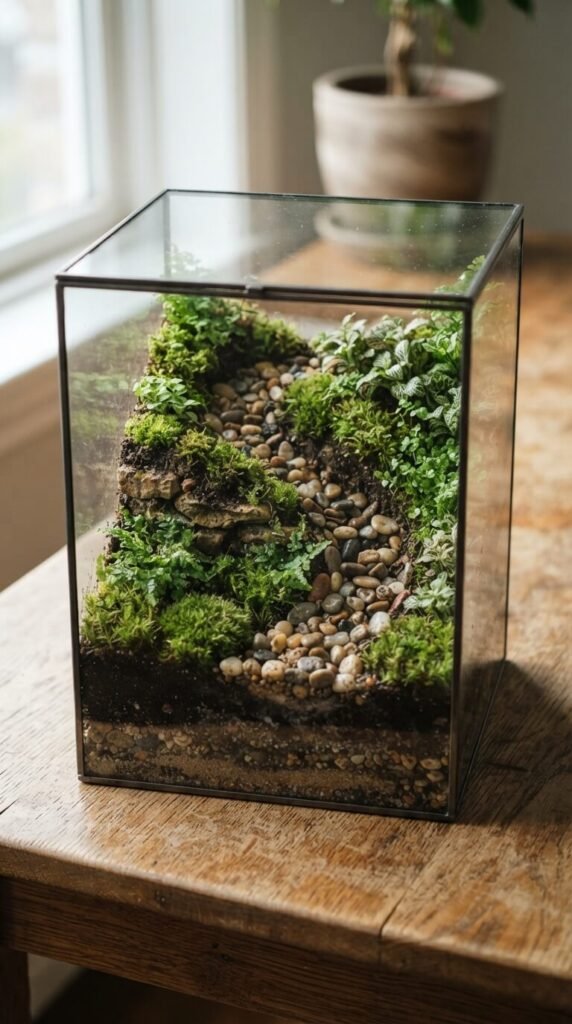
Creating levels inside a terrarium adds so much visual interest. Use stiff cardboard pieces to hold soil in terraced sections while you build, then remove once the layers are packed. Use small river stones to create a winding path between moss patches. Add tiny plants at different heights to reinforce the landscape feel. A rectangular fish tank or old glass food container works perfectly. This project takes about an hour and looks like a miniature mountain valley. Budget: around $10–$15.
9. Terrarium With Dried Wildflowers and Preserved Moss
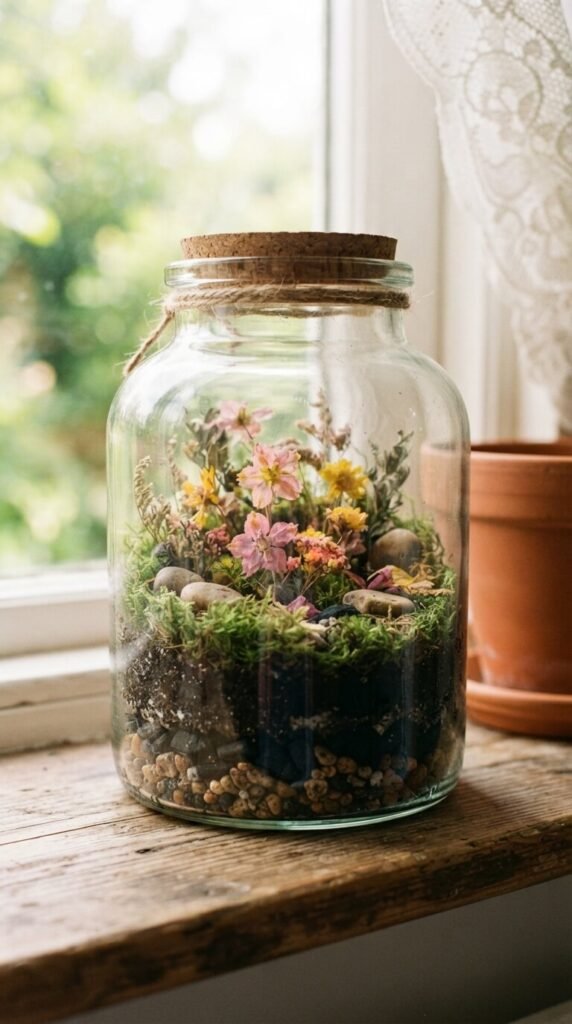
Not everyone wants to water plants. A preserved moss and dried flower terrarium requires zero maintenance after assembly. Buy preserved sheet moss and reindeer moss from a craft store — both hold their color for months. Add dried wildflowers like statice or strawflowers in spring pastels. Layer in decorative stones and close the lid. This is ideal for renters, offices, or anyone with low natural light. Total cost is $10–$20. Once it’s built, you just enjoy it.
10. Mini Cactus Desert Scene in a Glass Jar
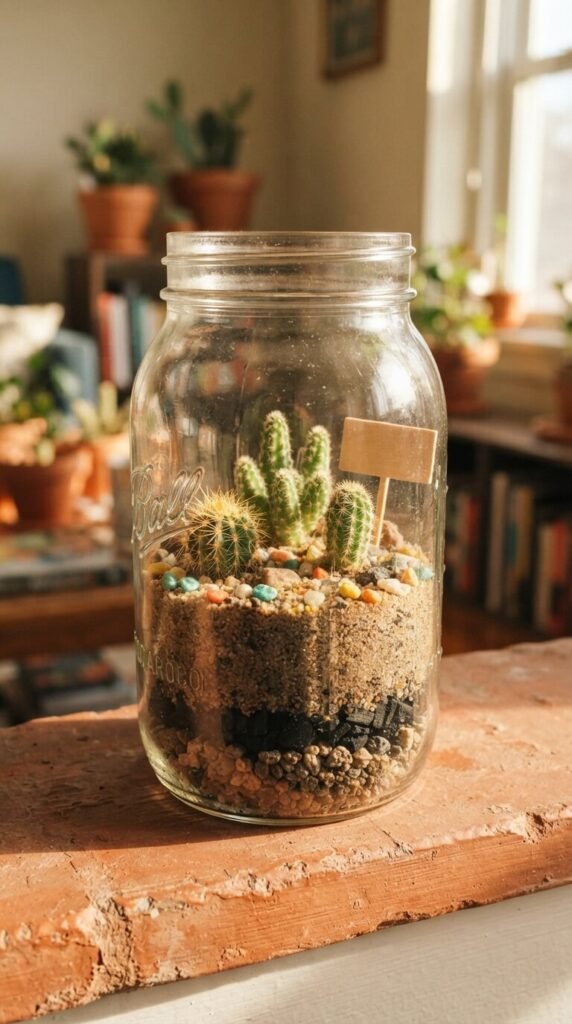
Spring does not always mean lush and green. A tiny desert landscape inside a mason jar is a low-water, high-impact project. Layer coarse sand at the bottom, then cactus potting mix. Plant two or three small cacti — hardware stores often carry these for $1–$2 each. Top with colored gravel or small stones. Add a tiny driftwood piece or small decorative rock. Place in a sunny spot and water once every two to three weeks. It is the easiest terrarium on this list.
11. Spring Raindrop Terrarium With Air Plants
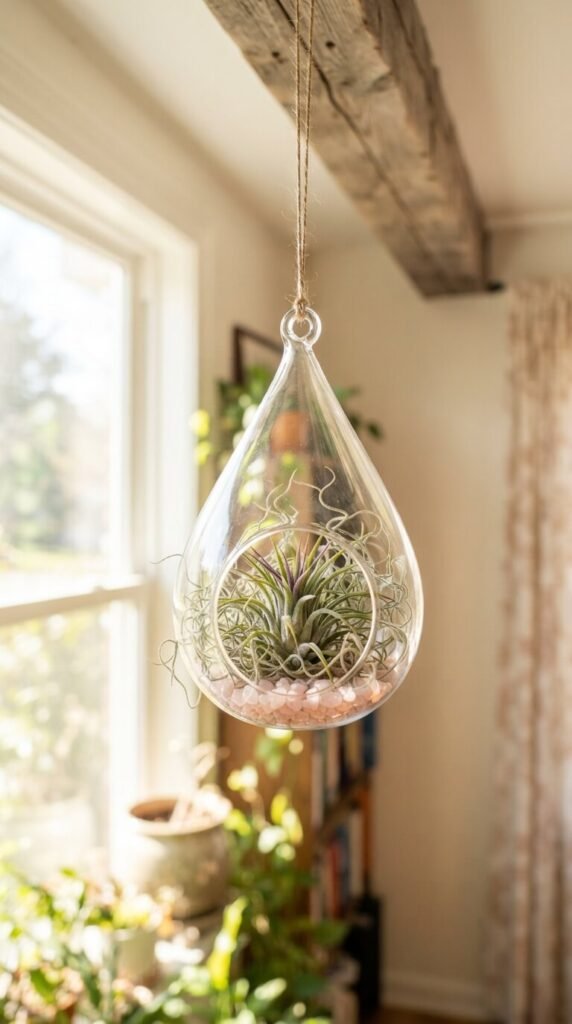
Air plants — tillandsia — need no soil. They live off humidity and air, making them ideal for a hanging teardrop glass globe. These globes cost around $5–$8 online or at craft stores. Add a layer of colored sand, a curl of Spanish moss, and one or two air plants. Hang near a window. Mist twice a week. The glass catches light beautifully in spring sunshine. You can swap out the decorative elements seasonally without disturbing the plants at all.
12. Spring Garden Terrarium With Miniature Garden Furniture
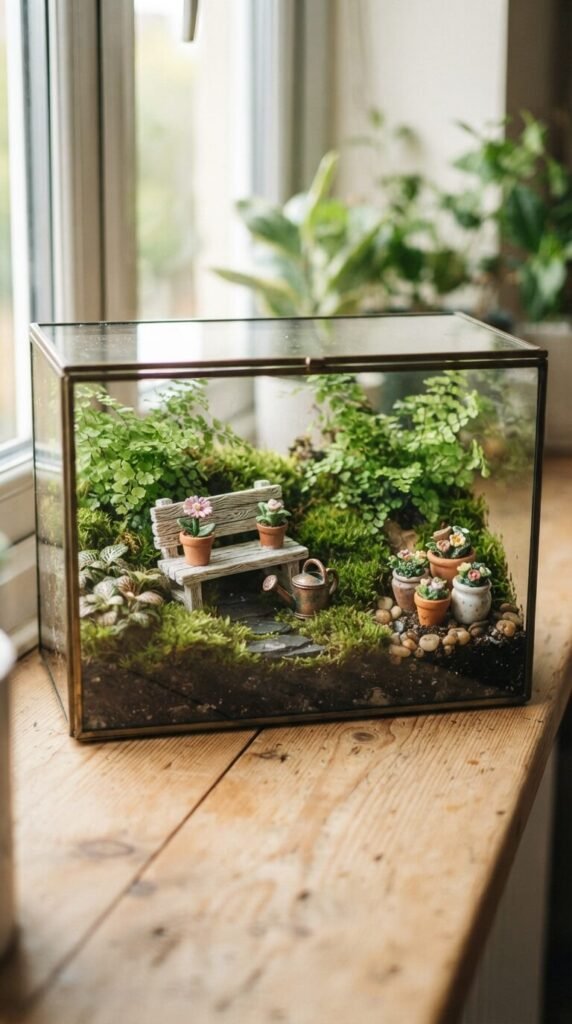
Miniature resin garden accessories are widely available at dollar stores and craft shops. Pick up a tiny bench, lantern, or wheelbarrow and build a full spring garden scene inside a glass container. Use real moss, a small fern, and some decorative gravel to fill the space around your furniture pieces. The details make people smile. This is also a great project to do with kids. Let them arrange the furniture however they like. Budget: $10–$20 depending on what you already have on hand.
13. Butterfly and Wildflower Terrarium
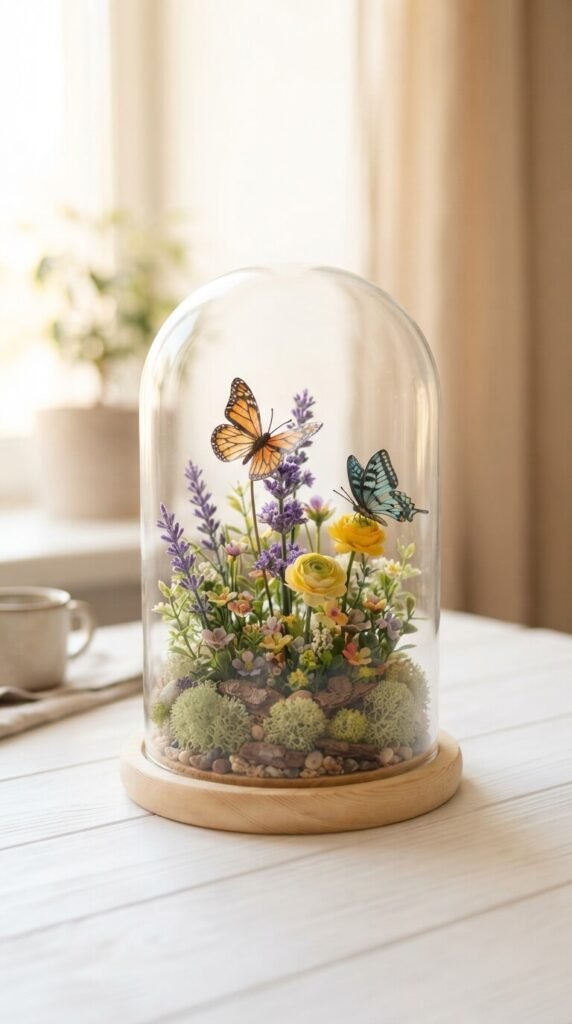
Spring and butterflies go together naturally. Use small resin butterfly figurines from a craft store — usually $2–$4 for a pack. Build a base of moss and small wildflowers, either real dried ones or quality faux. Perch butterflies on stems or rocks at different heights inside a glass dome. A glass dome cloche on a wood base works especially well for this style. It looks like a display piece from a home décor boutique but costs under $15 to make yourself.
14. Vintage Bottle Terrarium With Succulents
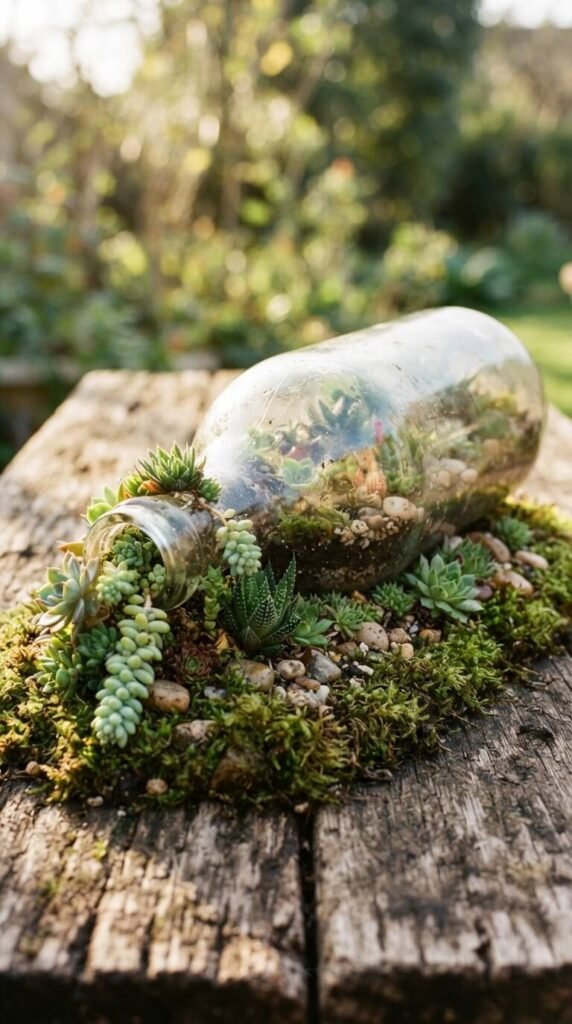
Old wine bottles or large glass bottles make stunning terrariums. Lay the bottle on its side and use a long-handled spoon or funnel to layer pebbles, activated charcoal, and cactus soil inside. Plant small succulent cuttings that will fit through the bottle neck. This is a great upcycling project that costs almost nothing if you already have a bottle. Prop it on a small wooden stand to keep it stable. The curved glass creates a magnifying effect that makes the plants look beautiful.
15. Spring Rain Cloud Terrarium
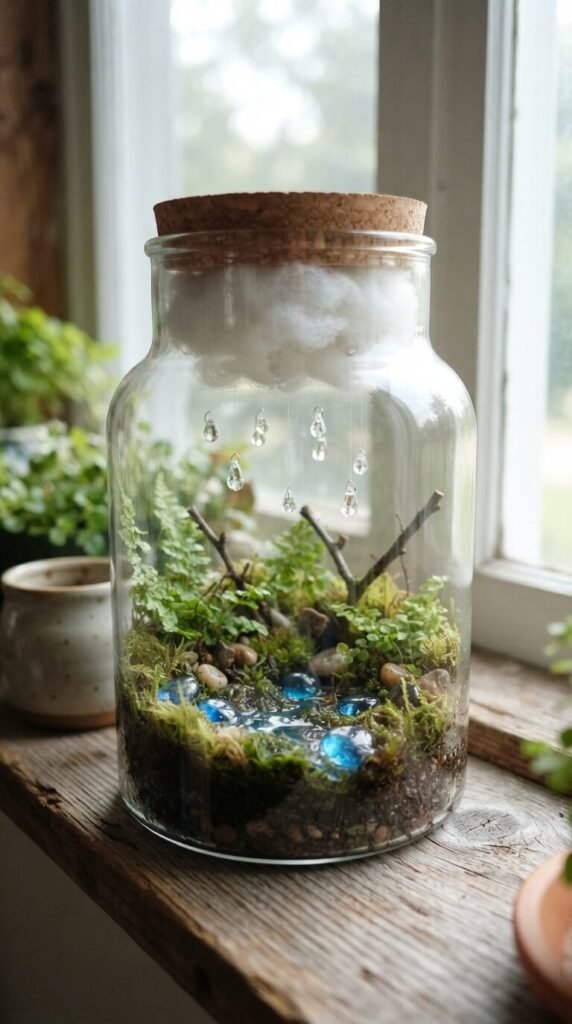
This one is playful and imaginative. Glue cotton batting or wool to the inside of a jar lid to create a cloud shape. Hang small clear crystal beads or fishing line drops to mimic rain falling. Build a mossy spring scene on the jar base with small plants, blue glass beads for puddles, and maybe a tiny umbrella. When you screw the lid back on, the whole miniature world looks like a rain shower in progress. Kids love it. Adults secretly love it too.
16. Terrarium With Mushroom Figurines and Forest Floor
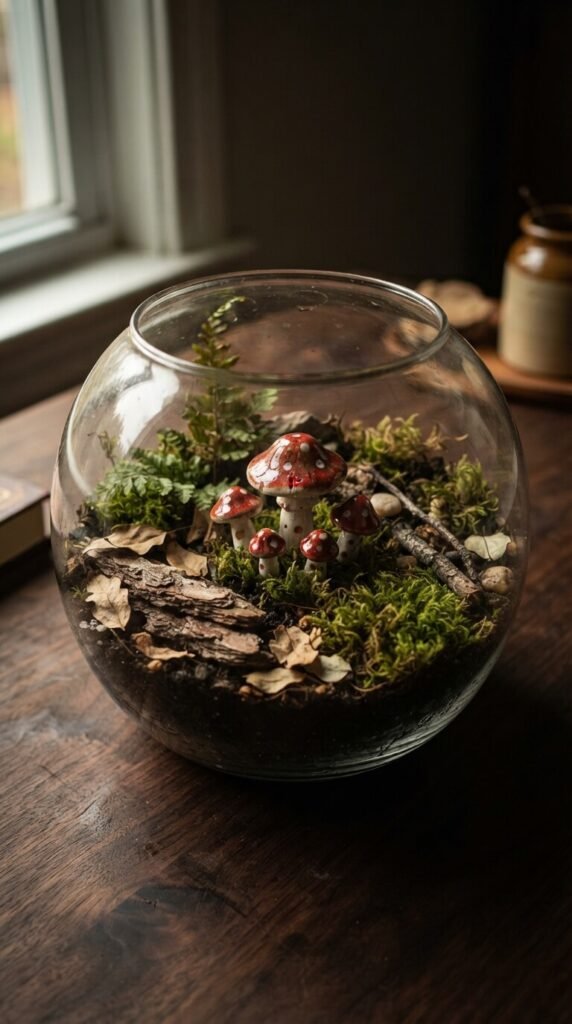
The cottagecore trend made mushroom terrariums very popular, and for good reason — they look like something from a fairy tale. Use ceramic or resin mushroom figurines from a dollar store or Etsy. Build a forest floor scene with dark potting mix, dried bark, real or faux mushrooms, and plenty of cushion moss. A few scattered dried oak leaves add realism. Keep it under glass to hold humidity. This one photographs beautifully and works year-round, but feels especially charming in spring.
17. Succulent Wreath Terrarium in a Ring Frame
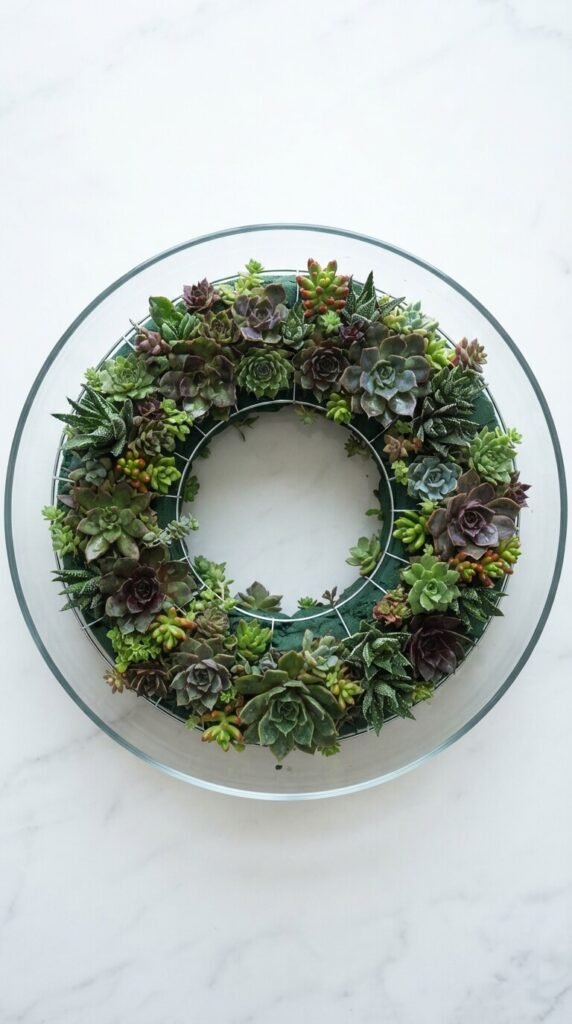
This is a flat, tray-style terrarium with a twist. Fill a wire wreath ring with damp floral foam and press in succulent cuttings in varied colors and sizes. Place the whole ring inside a wide, shallow glass bowl or tray. The circular shape creates an eye-catching display. Succulents root directly into the foam over the first few weeks. After that, you can hang the wreath on a wall or keep it as a table centerpiece. Total cost: under $15 with dollar store succulents.
18. Terrarium With Rain Chain and Blue Glass Beads
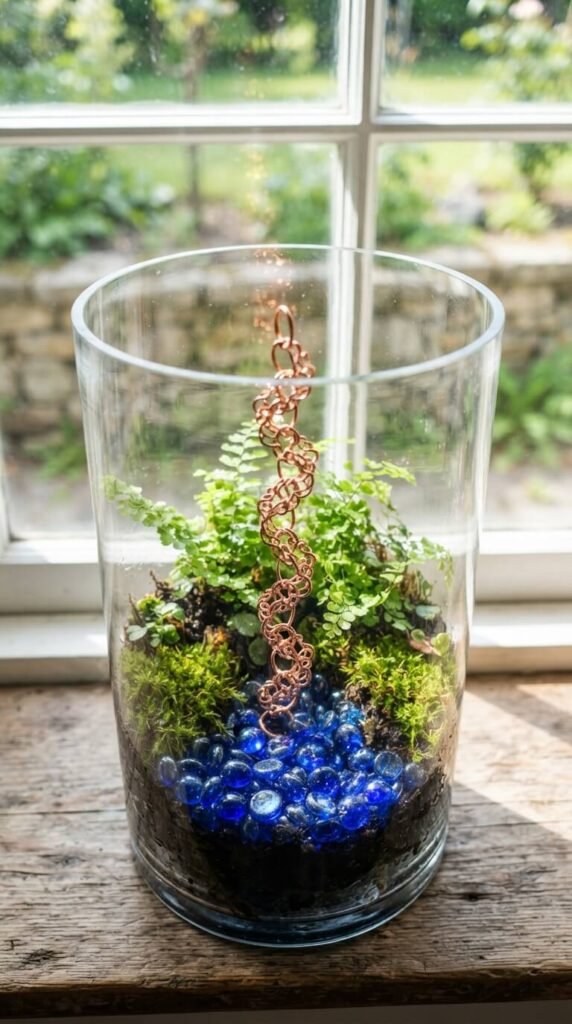
Miniature copper rain chains are available on Etsy and at garden stores. Coil a small piece inside a glass cylinder as a decorative element. Surround it with blue glass pebbles at the base to suggest water, and fill the sides with moss and small plants. The copper against the blue beads and green plants creates a beautiful spring color palette. This is more décor than garden, but it still feels organic and natural. It works especially well on a coffee table or entry shelf.
19. Terrarium With Real Grass and Spring Seeds
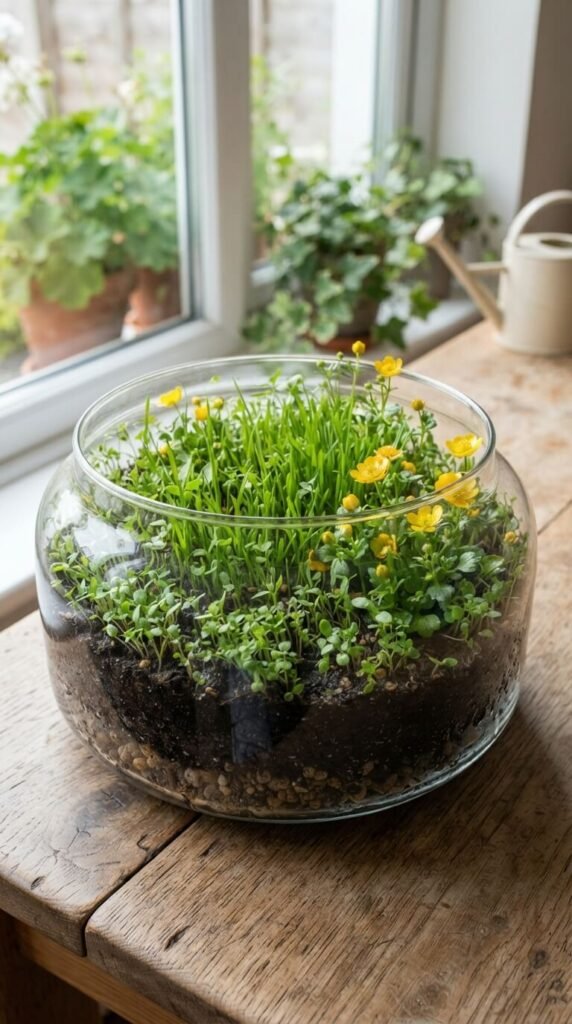
Sprout real wheatgrass or rye grass seeds inside a glass bowl for a living spring display. Grass sprouts in three to five days. Fill a shallow bowl with potting soil, scatter seeds densely, and water lightly. Keep near a bright window. Once the grass reaches two to three inches, you can trim it and tuck in small spring flowers or colorful eggs for a seasonal touch. The whole setup costs about $5 and looks like a tiny spring meadow. Replace every two to three weeks as the grass matures.
20. Fern and Fiddlehead Woodland Terrarium
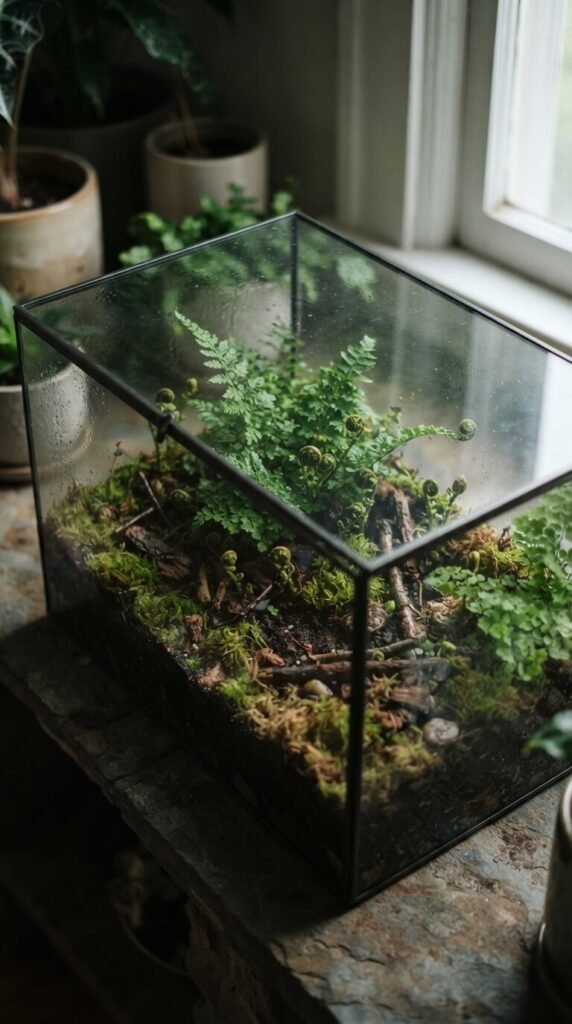
Fiddlehead ferns are one of the most iconic spring plants. Look for small maidenhair or button ferns at garden centers or nurseries in early spring. These love humidity, making them perfect for a closed or semi-closed terrarium. Layer gravel, charcoal, and potting mix. Plant ferns in groups, leaving space for the fronds to unfurl. Add bark and moss around the base. Keep the lid slightly ajar for airflow. Mist every few days. This one will thrive for months with minimal care.
21. Terrarium With Seed Packet Spring Scene
Cut up old seed packets and glue tiny fragments to small craft sticks as miniature signs inside your terrarium. Plant actual seedlings in small sections of the jar, labeled with these tiny markers. It looks like a real miniature garden center. Use herbs, lettuce, or flower seedlings. This works best in a wide-mouth mason jar or open glass bowl. The labels add personality and storytelling. This project is perfect for gardeners who also love crafting — and it costs almost nothing if you save seed packets from year to year.
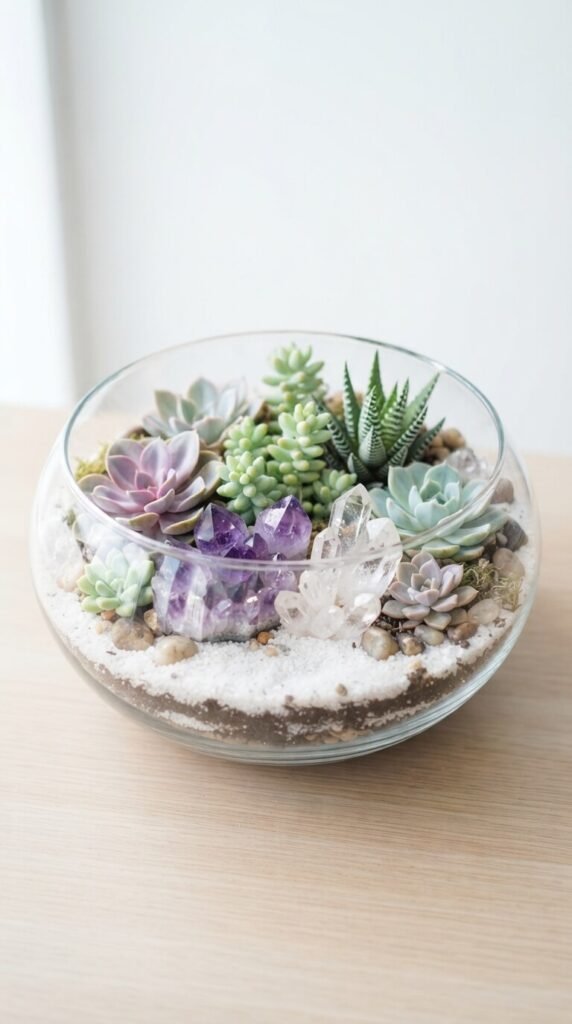
22. Crystal and Succulent Geode Terrarium
Crystals and succulents share the same low-water environment preferences. Layer white or rose-colored sand as a base, then arrange small crystal clusters — amethyst, rose quartz, or clear quartz — alongside a few succulents. The crystals catch light and make the whole container glow. Small crystals are available at most metaphysical shops or dollar stores for $2–$5 each. Keep in bright indirect light and water succulents very sparingly. This doubles as a decorative centerpiece that feels intentional and curated without much effort.
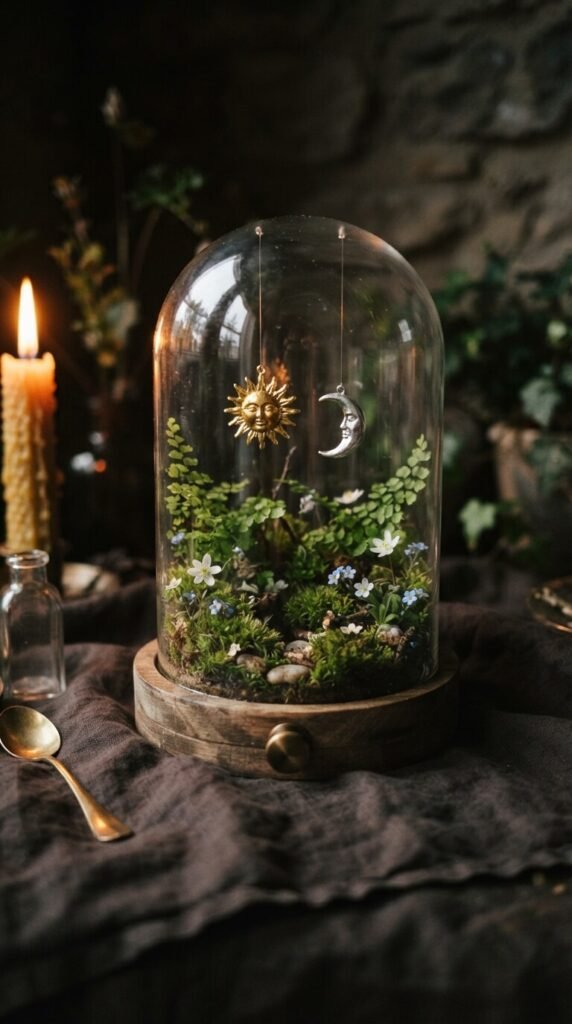
23. Terrarium Spring Equinox Scene With Sun and Moon Miniatures
Mark the season with a terrarium that celebrates the spring equinox — the balance of light and dark. Use a glass dome on a wood base. Place a miniature gold sun figurine and a silver moon charm in the center of a mossy landscape. Surround with small spring flowers and pebbles. This is a meditative and symbolic project that goes beyond seasonal decoration. It makes a meaningful handmade gift. Figurines can be found in jewelry craft supplies or Etsy. Total cost: $10–$20.
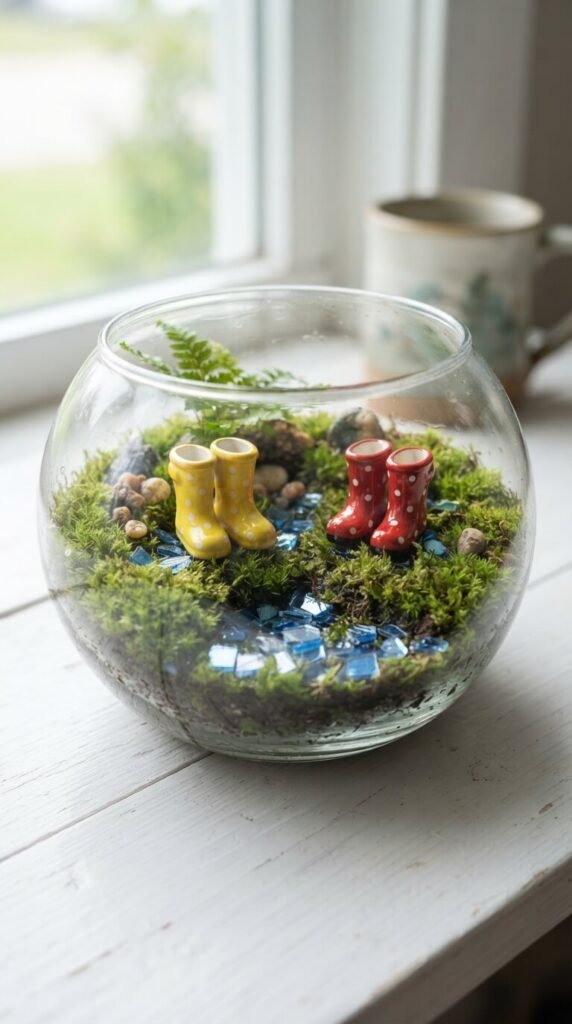
24. Rainy Day Puddle Terrarium With Rubber Boot Figurines
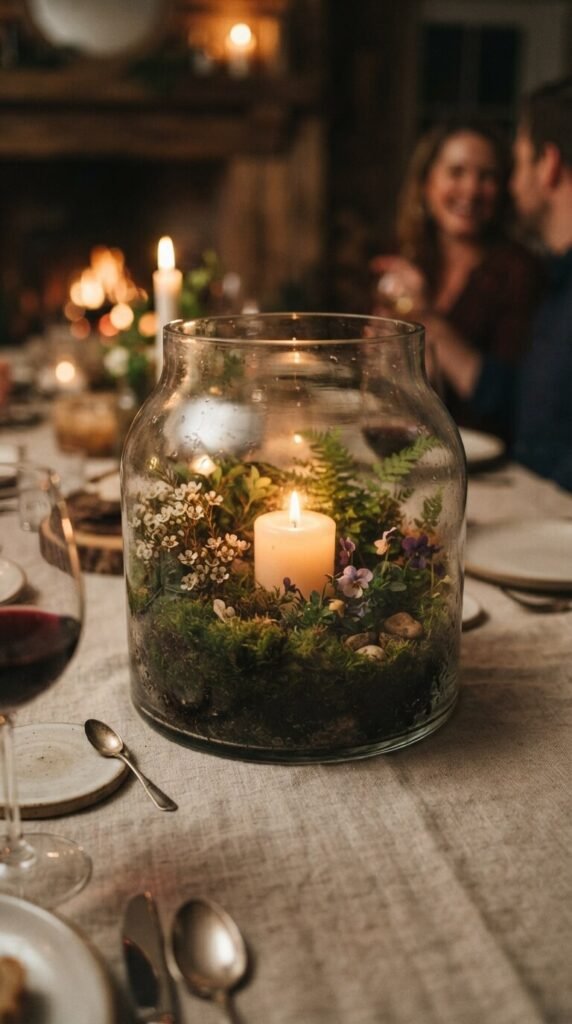
Rain boots and spring puddles are a pair that everyone recognizes. Find tiny ceramic or resin rain boot figurines at craft stores or dollar shops. Use small mirror tiles or blue glass beads to create puddle shapes on a moss base inside a glass bowl. Arrange the boots mid-step. This is a simple, lighthearted project that takes about 20 minutes. It makes a great desk display or kitchen windowsill accent. The whimsy factor is high and it costs almost nothing to put together.
25. Terrarium Centerpiece With Candle Ring and Moss
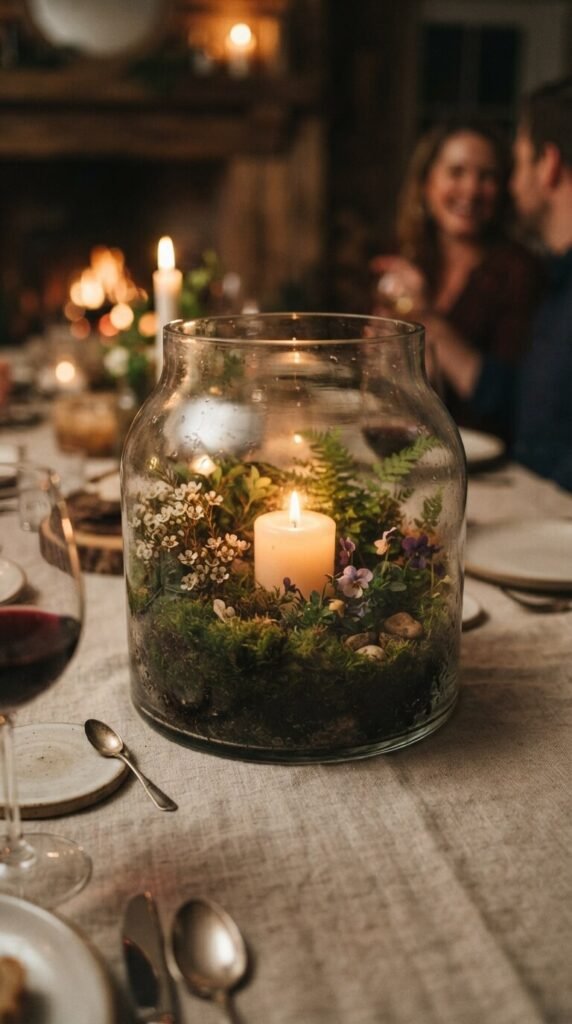
This project works as a table centerpiece or dinner party display. Use a wide glass hurricane vase or apothecary jar. Place a short pillar candle in the center. Pack damp sheet moss around the base of the candle, then tuck in small spring flowers, faux or real. The candlelight filters through the glass and lights up the moss from within. It creates a warm, organic glow that looks expensive but costs under $15. Swap out the flowers each week to keep it looking current. Never leave candles unattended near live plants.
Conclusion
Miniature terrariums are one of the most accessible and rewarding spring projects you can take on. Most of the builds on this list cost $5–$20, take under an hour, and use materials you can find at any craft store, garden center, or even your own backyard. You do not need a green thumb, a big budget, or special skills. You just need a glass container, a little soil or moss, and a few minutes of focused creativity. Start with whichever project felt most exciting as you read — that is always the right one to do first. Once you make one, you will almost certainly want to make another.