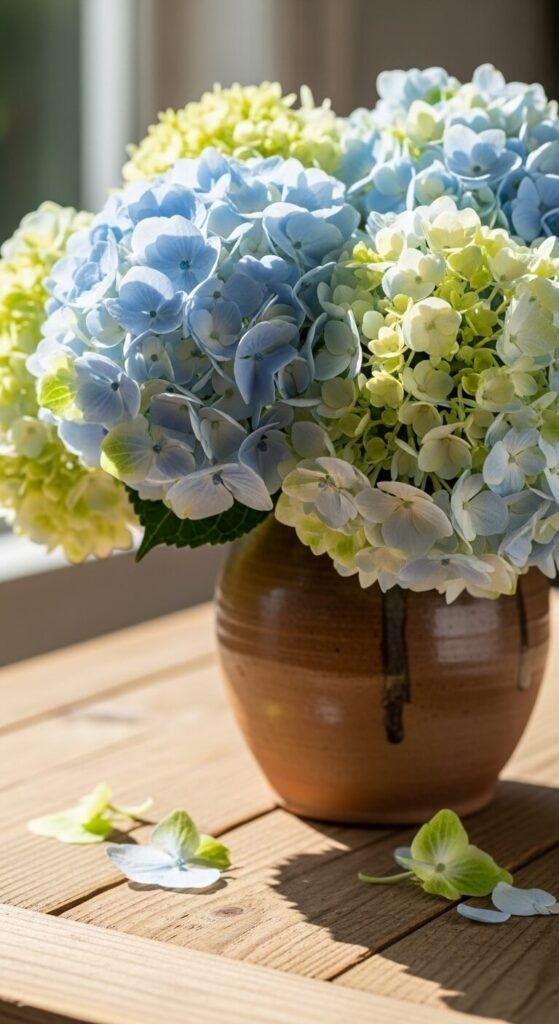
You bring home a gorgeous bunch of hydrangeas, arrange them in your favorite vase — and two days later, they’re drooping like a sad metaphor. Sound familiar? Hydrangeas are notoriously dramatic when it comes to water, but here’s the good news: with a few simple tricks, you can keep them looking full and fresh for up to two weeks. Yes, really.
Start with the Right Cut
This step makes or breaks everything. Hydrangeas have thick, woody stems that can seal up fast and block water absorption if not prepped correctly.
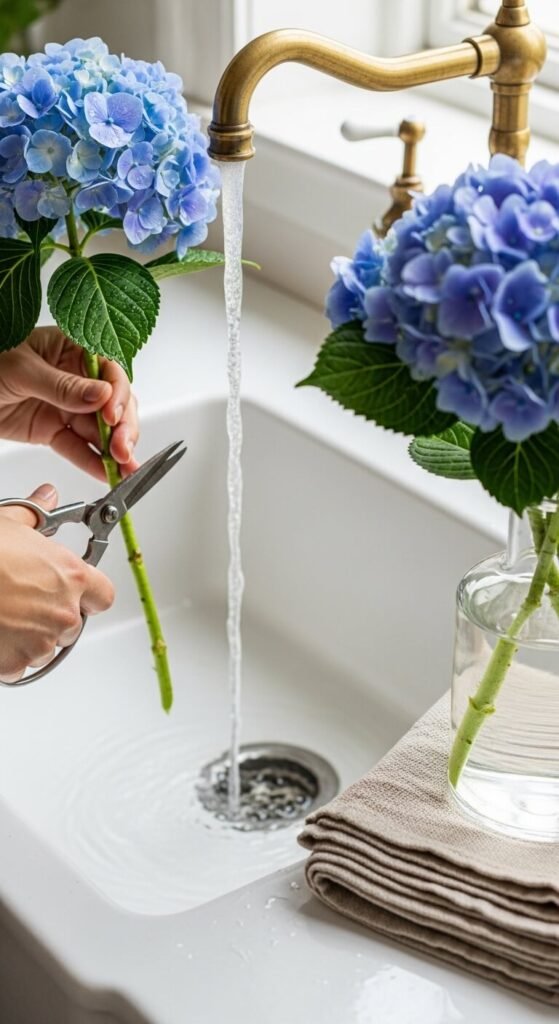
Use sharp scissors or floral shears — dull blades crush the stem and reduce water uptake.
Cut stems at a 45-degree angle to maximize the surface area for drinking.
Vary the lengths so blooms sit at different heights — it looks more natural and full.
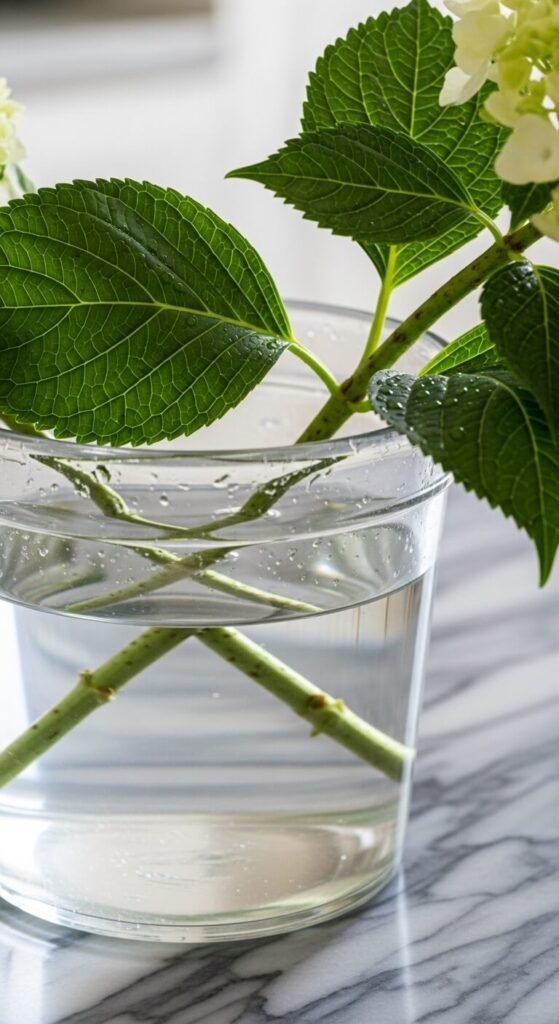
Remove any leaves that fall below the waterline. Submerged leaves rot quickly and cloud the water with bacteria.
Pro tip: Make your cuts right before placing them in water. Even 30 seconds of air exposure can cause the stems to begin sealing.
Condition the Stems Before Arranging
Here’s the secret most people skip — and it’s a total game changer.
After cutting, place the stems in a bucket of warm water (not cold!) for at least one to two hours before arranging. Warm water travels up the stem faster, helping the blooms hydrate and plump up fully before they go in the vase.
Some florists also swear by dipping the very tip of each stem in boiling water for 30 seconds before transferring to the bucket. This clears any air bubbles blocking the stem channel so water can flow freely straight to the bloom.
Choose the Right Vase and Water
Not all vases are created equal when it comes to hydrangeas.
Wide-mouthed vases work best — they let the blooms fan out naturally without crushing the petals together.
Fill the vase with cool, clean water at room temperature.
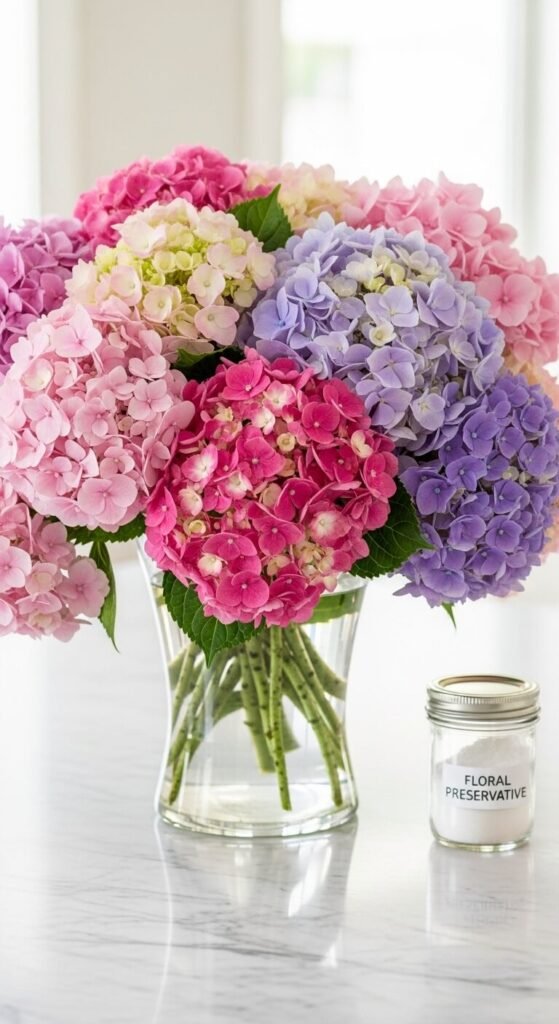
Add a floral preservative packet if you have one. No packet? A teaspoon of sugar plus a few drops of white vinegar makes a solid DIY version.
Fill the vase higher than you normally would — hydrangeas are thirsty and need a deep drink to stay perky.
Arrange for Longevity, Not Just Looks
When you’re ready to build the arrangement, think strategically.
Place larger, fuller blooms in the center and tuck slightly smaller ones around the edges.
Add foliage or filler stems like eucalyptus or baby’s breath — they support the heavy hydrangea heads and prevent crowding.
Don’t jam the stems too tightly into the vase. Crowded stems restrict water flow.
Keep the vase away from direct sunlight, heat vents, and fruit bowls — ripening fruit releases ethylene gas that speeds up wilting dramatically.
Revive Wilting Blooms Like a Pro
Even with the best care, hydrangeas can droop. Don’t toss them yet.
If your blooms start to sag:
Re-cut the stems at a fresh angle.
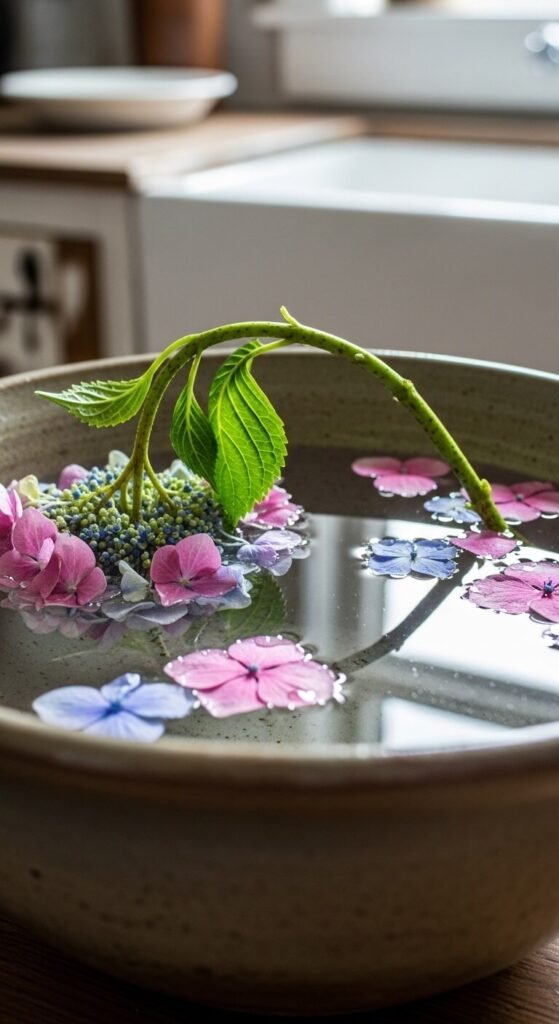
Submerge the entire flower head in cool water for 20–30 minutes.
Lift it out, give it a gentle shake, and return it to the vase.
This full-immersion soak rehydrates the petals directly — not just through the stem — and most blooms perk right back up within the hour. It genuinely feels like magic.
Keep the Water Fresh
Change the vase water every two days and snip the stems fresh each time. Bacteria is the number one silent killer of cut hydrangeas, and clean water is the easiest fix.
Rinse the vase itself with a splash of white vinegar between water changes to kill off any lingering bacteria before it has a chance to build up.
The Takeaway
Hydrangeas don’t have to be high-maintenance — they just need a little know-how. The right cut, a proper soak, fresh water every couple of days, and a cool spot away from heat and sun can take your blooms from a two-day disaster to a two-week centerpiece.
Save this for your next floral haul and share it with the friend who always ends up with sad, droopy hydrangeas by Wednesday. Your arrangements — and theirs — will never look back.