There’s something about a leaning ladder styled for spring that just works. It draws the eye up, adds instant vertical drama to any wall, and somehow makes a room feel more intentional — without requiring a single nail hole. If you’ve been scrolling past styled ladder displays and thinking “I could do that,” you absolutely can. This guide walks you through exactly how to build height, balance, and that effortless layered look that stops people mid-scroll.
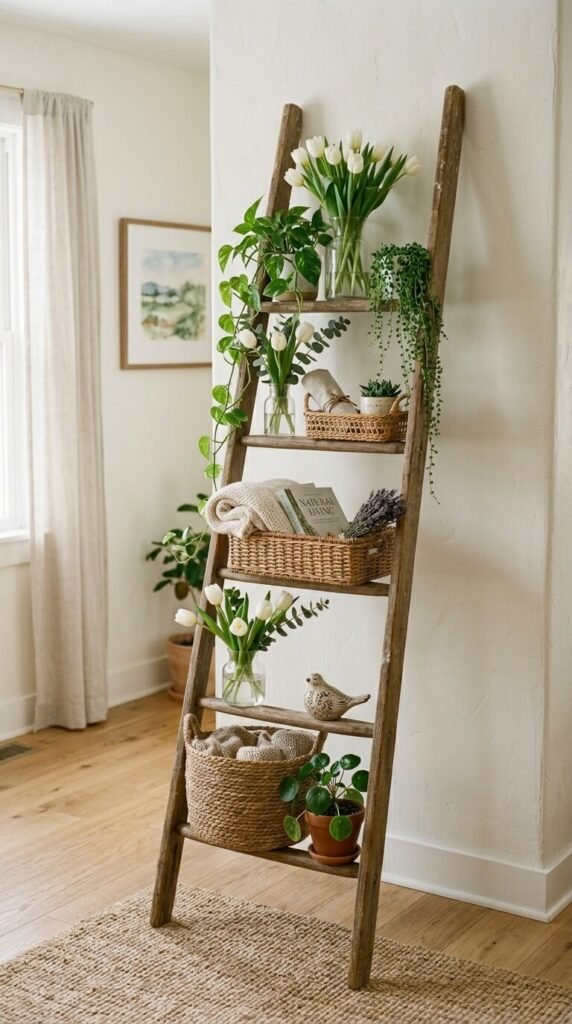
Why Height Is the Secret Ingredient
Most flat surfaces — shelves, tables, console tops — keep everything at eye level or below. A ladder display changes the game by giving you three to five tiers of vertical real estate to work with.
Height creates:
- A natural focal point that anchors a space
- Visual flow that guides the eye upward
- The illusion of a larger, more curated room
For spring specifically, height lets you mimic the feeling of things growing — think stems rising, vines trailing, layers building from bottom to top.
Step 1: Choose the Right Ladder
Not all ladders are created equal for styling purposes. You want one that leans at a natural angle without tipping and has rungs spaced wide enough to hold objects.
Best options for spring displays:
- A-frame wooden ladder (freestanding, no wall needed)
- Leaning blanket ladder (slim profile, pairs well with light decor)
- Vintage orchard ladder (three legs, great stability for heavier items)
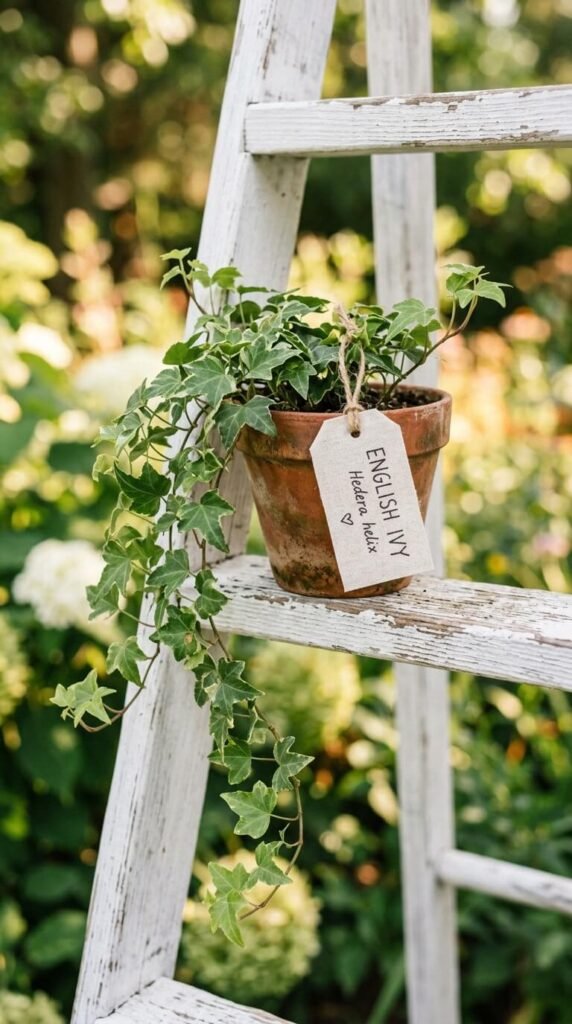
Stick to natural wood tones, white-washed finishes, or light gray for spring. Avoid dark stains — they compete with the airy palette you’re building.
Step 2: Build Your Color Palette First
Before you place a single item, decide on your spring color story. A cohesive palette is what separates a styled display from a cluttered one.
Easy spring palettes to work with:
- Soft naturals: cream, sage, terracotta, warm white
- Fresh botanicals: forest green, linen, muted yellow, dusty rose
- Coastal spring: seafoam, sandy beige, white, soft coral
Lay your chosen items on the floor first and edit ruthlessly. If something doesn’t fit the palette — even if you love it — set it aside.
Step 3: Assign a Role to Each Rung
This is the step most people skip, and it’s why their displays feel random. Think of each rung as having a job.
- Top rung: Tall and airy — think trailing greenery, a long stem in a bud vase, or a hanging macramé loop
- Middle rungs: Your anchor pieces — small baskets, stacked books with a small plant on top, a lantern
- Bottom rung: Ground the display with weight — a larger pot, a stack of linen napkins, a chunky ceramic vase
Step 4: Layer Textures, Not Just Objects
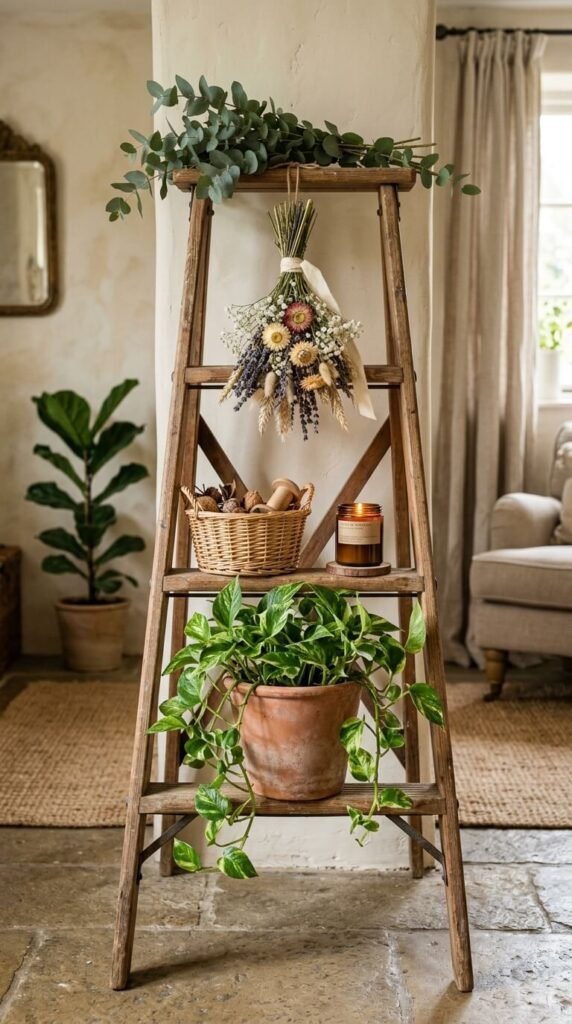
Height is visual, but texture is what makes a display feel rich. Spring is the perfect season to mix organic materials.
Textures that work beautifully together:
- Woven rattan or seagrass baskets
- Raw linen or cotton ribbon
- Smooth ceramic or glazed pottery
- Live or dried botanicals
- Weathered wood (driftwood, bark slices)
Try not to repeat the same material more than twice on a single ladder. Variation keeps the eye moving and the display feeling intentional.
Step 5: Add Movement With Trailing Elements
A display that has only upright, static objects can feel stiff. Movement is your final finishing touch.
Easy ways to add flow:
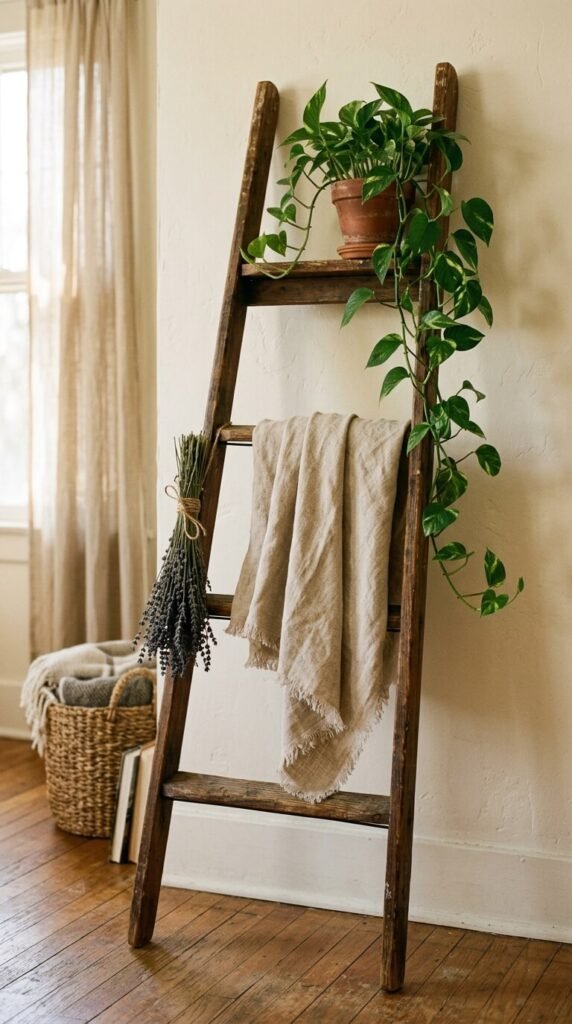
- Drape a piece of linen or a light cotton throw over one rung
- Let ivy or pothos trail down from an upper rung
- Hang a small bundle of dried lavender or eucalyptus with twine
- Use a sprig of pussy willow or cherry blossom that extends beyond the rung edge
These trailing, draping details are what make a display feel styled rather than simply arranged.
Final Touches: Edit, Step Back, Repeat
Once everything is placed, step back at least six feet and look at the display as a whole. Ask yourself:
- Does the eye travel naturally from bottom to top?
- Is there variety in height within each rung (some items taller, some lower)?
- Are there any two identical textures or shapes sitting right next to each other?
Make small adjustments, then step back again. Styling is iterative — the best displays usually go through three or four rounds of tweaking.
A spring ladder display is one of the easiest ways to bring personality and height into any room — no renovation required. Once you nail the formula (right ladder + intentional rungs + layered textures + movement), you can restyle it for every season with minimal effort.
Save this guide and tag your finished display — would love to see how yours turns out!