Your front porch is the first thing guests — and passersby — notice about your home. And when spring finally rolls around, there’s no better time to give it a little personality. A well-styled porch vignette doesn’t require a big budget or a design degree. It just takes a few thoughtful layers, a pop of seasonal color, and the right arrangement. Whether you’re starting with a bare stoop or refreshing last year’s look, this guide will walk you through exactly how to pull it together.
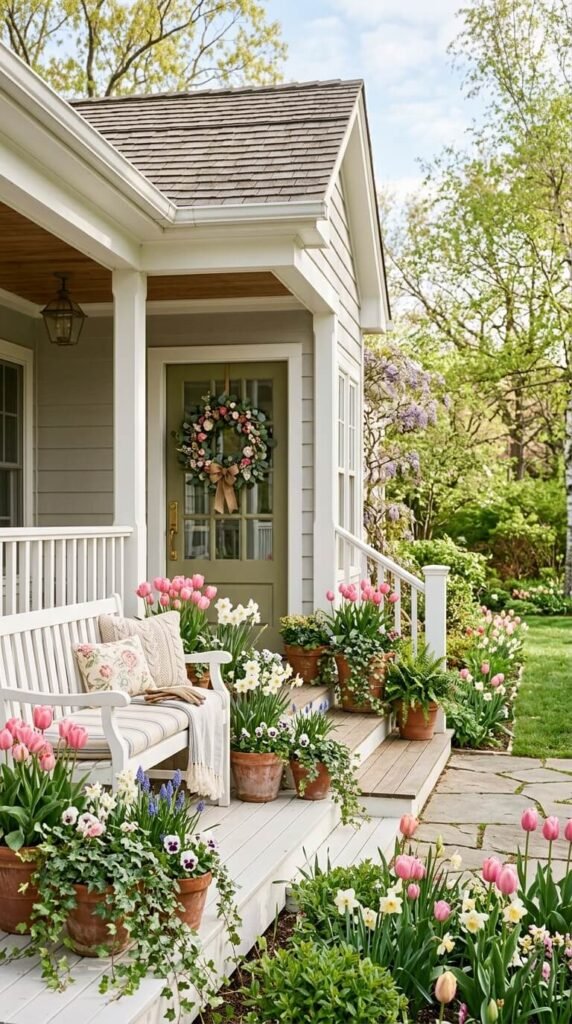
Start With a Focal Point
Every great vignette needs an anchor — one main piece that sets the tone for everything else. On a porch, this is usually:
- A bench or pair of chairs
- A decorative ladder
- A large planter or urn
- A console or potting table
Pick one and commit. Everything else you add will visually “orbit” this piece. If your porch is small, a single oversized planter can do the job beautifully. If you have more room, a bench flanked by matching urns creates instant symmetry and polish.
Don’t skip this step. Jumping straight to accessories without a focal point is the number one reason vignettes look cluttered instead of curated.
Layer in Greenery and Blooms
Once your anchor is in place, it’s time to bring in the plants. Spring is forgiving — there’s so much in season that you really can’t go wrong. The key is variety in height and texture, not just color.
Try combining:
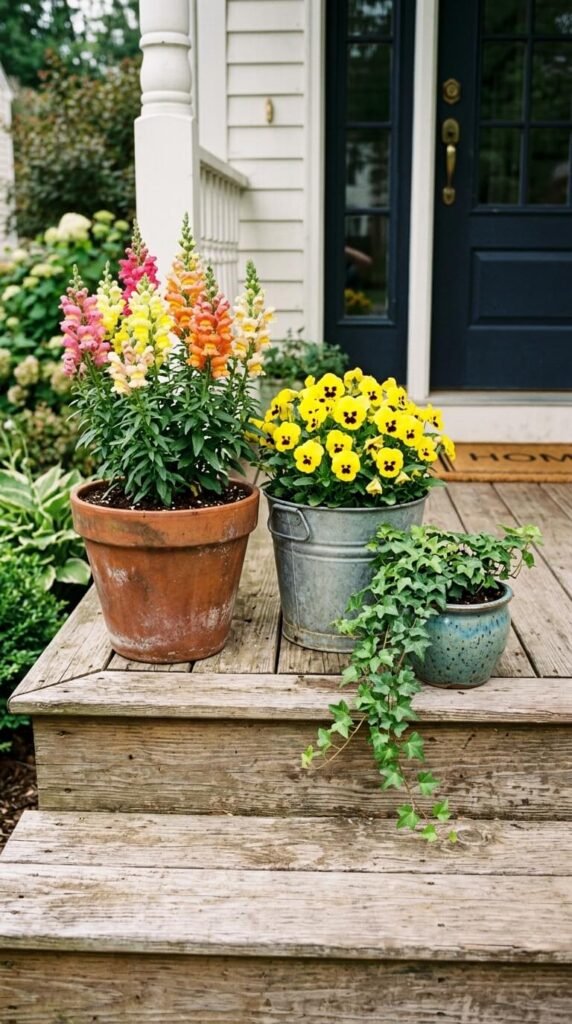
- Tall thrillers like ornamental grasses, snapdragons, or dwarf conifers
- Mid-height fillers like petunias, pansies, or sweet alyssum
- Trailing spillers like ivy, creeping jenny, or bacopa
Group pots in odd numbers — three or five feels more natural than two or four. Mix pot sizes and materials too: a large terracotta urn, a medium galvanized bucket, and a small ceramic pot instantly create visual depth.
Add Seasonal Layers and Texture
Plants alone make a porch feel alive, but layered texture is what makes it feel styled. Think about what else your eye would land on if you were walking up the path.
A few go-to spring additions:
- A fresh wreath on the door — eucalyptus, wildflowers, or a simple grapevine base with spring stems tucked in
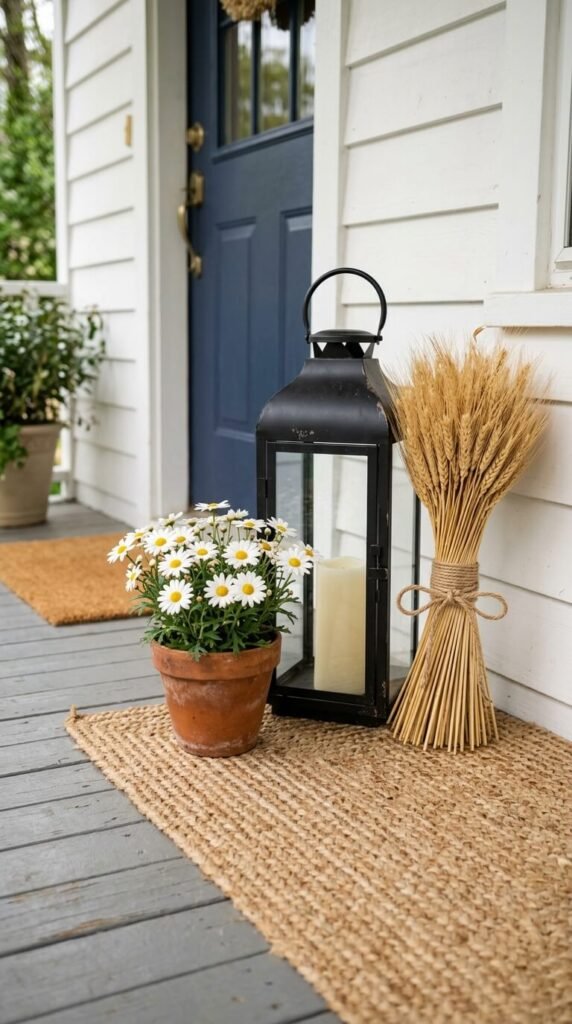
- An outdoor rug to define the space and add pattern underfoot
- A doormat with a subtle spring motif (stripes, botanicals, a simple welcome message)
- Lanterns or candle holders for warmth, especially if you use the porch in the evenings
- A small side table or tray to group smaller accessories
The trick is to use odd-numbered groupings and vary heights within each cluster. A tall lantern, a medium candle, and a short terracotta pot grouped together will always look more intentional than three identical items in a row.
Choose a Cohesive Color Palette
Spring doesn’t have to mean pastels — though they’re always a good choice. What matters is picking two to three colors and repeating them across your vignette. This is what makes a collection of random items look like a deliberate design.
Some spring palettes that work well outdoors:
- Soft and classic: White, sage green, and blush pink
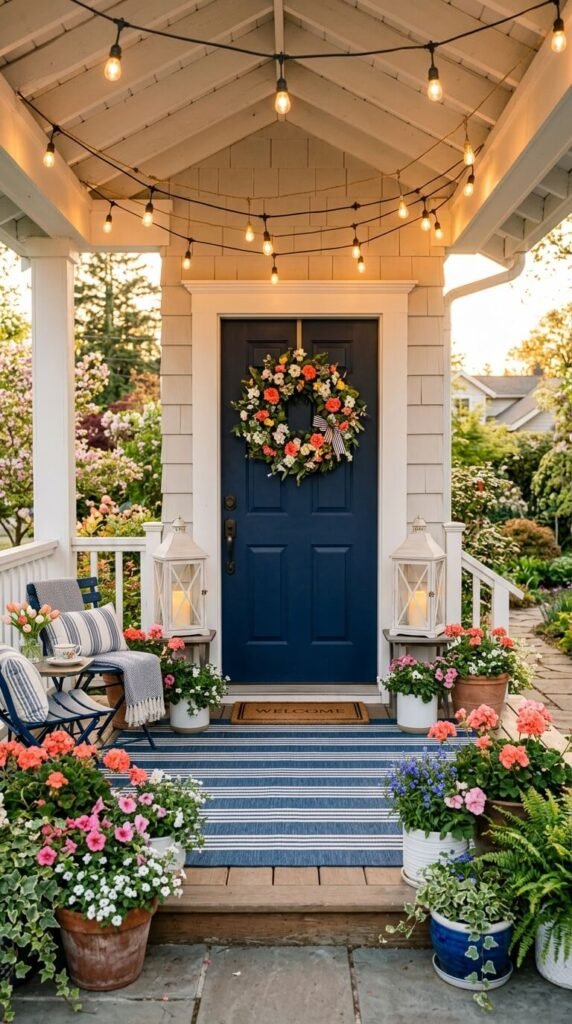
- Bold and fresh: Cobalt blue, citrus yellow, and crisp white
- Natural and earthy: Terracotta, cream, and warm olive green
Once you pick your palette, use it to guide every decision — pot colors, cushion fabric, wreath florals, even the doormat pattern. You don’t have to be rigid about it, but a thread of color running through the whole space is what gives it that polished, Pinterest-worthy finish.
Finish With the Small Details
The final touches are what separate a “nice porch” from a vignette people actually stop and photograph. These don’t need to cost much — it’s all about intention.
Consider adding:
- A monogrammed or personalized element (a door initial, a house number in an unexpected font)
- Seasonal signage — a simple wooden or metal sign with a spring phrase
- Natural materials like a bundle of twigs, a moss ball, or a small bird figurine tucked among the plants
- String lights or solar lanterns for evening ambiance
Step back and squint. If one area feels too heavy or too empty, adjust. Vignette styling is about balance — not perfection. Move things around until it feels right.
Save This for Your Next Porch Refresh
A spring porch vignette doesn’t have to be complicated — it just has to feel intentional. Start with one strong focal point, build in your plants, layer texture and color, and finish with the small details that make the space feel like yours. Even a small stoop can be transformed with a single great planter, a fresh doormat, and a wreath that says “spring lives here.”
Pin this guide to your home decor board and come back to it every time the seasons shift. Your porch deserves a little attention — and now you know exactly where to start.