There’s something about gingham that just feels like spring. That cheerful crisscross pattern has been showing up in farmhouse kitchens, cozy porches, and stylish living rooms for decades — and honestly? It never gets old. Whether you’re refreshing a single room or giving your whole home a seasonal update, gingham is one of the easiest, most affordable ways to bring in that breezy, classic spring energy. Here’s how to do it without going overboard.
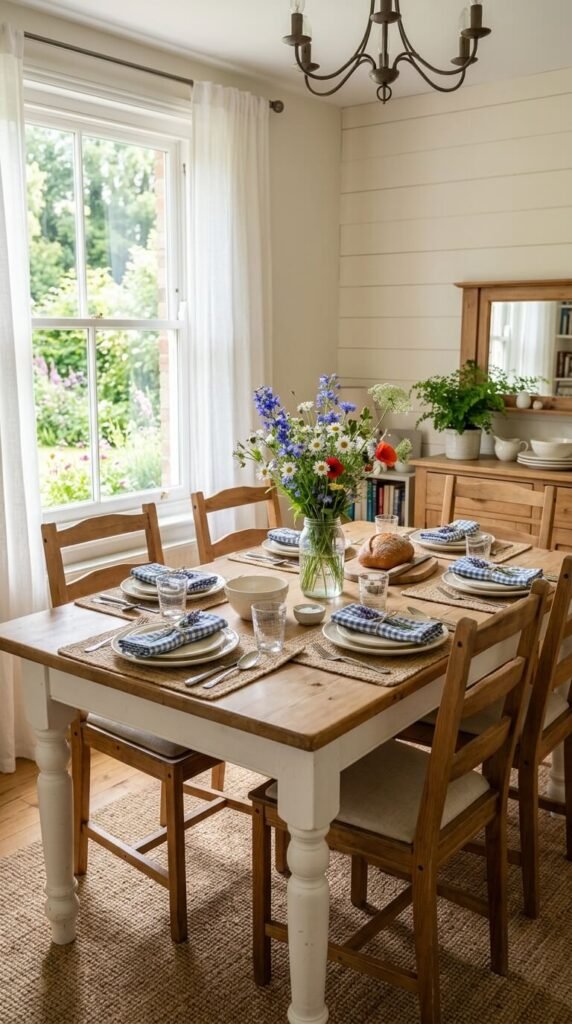
Start With a Color Palette That Works
Gingham comes in every color imaginable, but not all of them read as “spring.” The key is to stick with colors that feel fresh and light.
Best gingham colors for spring:
- Blue and white — timeless, crisp, always works
- Green and white — brings in that garden-fresh feel
- Red and white — cheerful and classic, especially in kitchen spaces
- Yellow and white — sunny, optimistic, perfect for breakfast nooks
Avoid heavy or dark-toned gingham in large doses — burgundy, navy, or black checks can feel more fall/winter than spring. Save those for accent pieces only.
Use Gingham as a Soft Furnishing First
The easiest way to introduce gingham into your space is through textiles. They’re low-commitment, budget-friendly, and totally swappable when the season changes.
Where to start:
- Throw pillows on a sofa or outdoor bench
- Table runners on a dining or coffee table
- Tea towels hung in the kitchen
- Curtain panels in a breakfast nook or sunroom
Mixing gingham with solid linen or a simple stripe keeps things from looking too “theme-y.” A green gingham pillow against natural linen cushions? That’s the sweet spot.
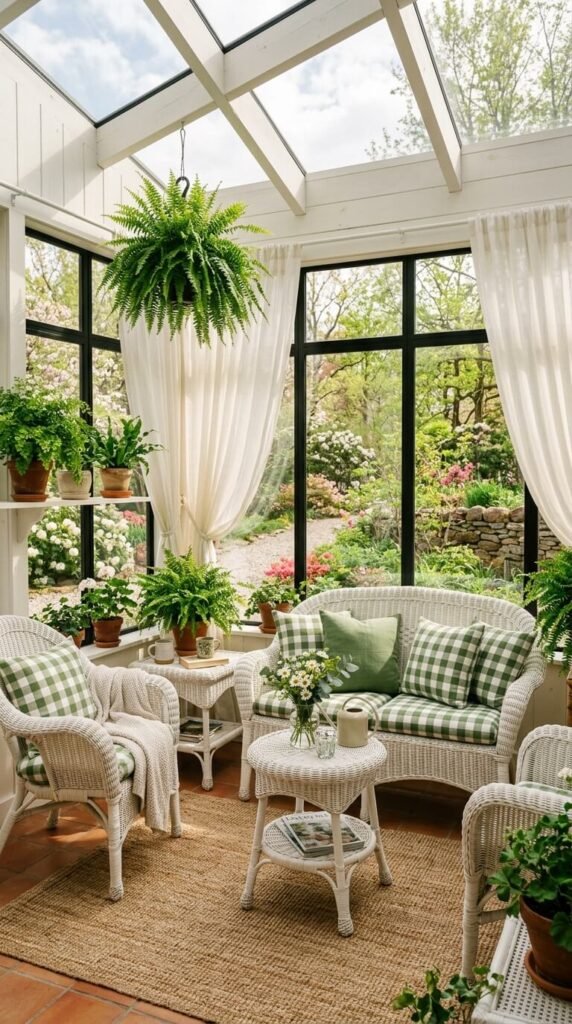
Layer Pattern Scales for a Designer Look
One of the most common gingham mistakes is using the same size check everywhere. The trick to making it look intentional — not costumey — is mixing scales.
Try this:
- Large-scale gingham on curtains or a tablecloth (makes a bold statement)
- Medium-scale gingham on throw pillows or an accent chair seat cushion
- Small-scale gingham on napkins, ribbon details, or small accessories
When you vary the scale, the eye reads it as a curated pattern story rather than a uniform pattern dump. Pair with florals, solids, or woven textures to round it out.
Bring Gingham Into the Kitchen and Dining Room
Spring entertaining is basically made for gingham. The kitchen and dining room are the most natural homes for this pattern, and even small touches go a long way.
Quick ideas:
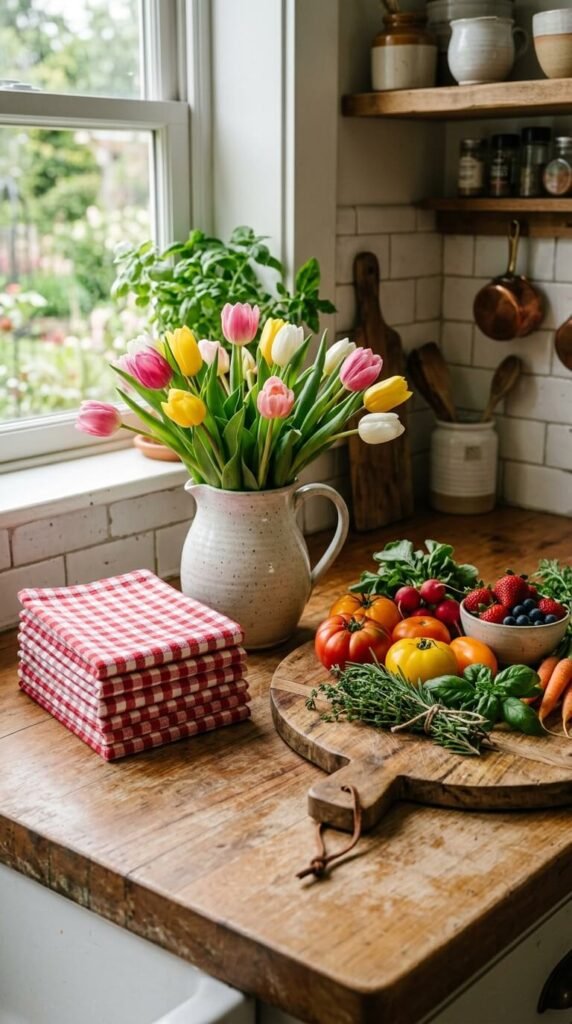
- Swap out plain dish towels for red and white gingham ones
- Use a gingham tablecloth for weekend brunch setups
- Tie gingham ribbon around mason jar centerpieces
- Layer a gingham runner under a wooden cutting board display
Take It Outdoors
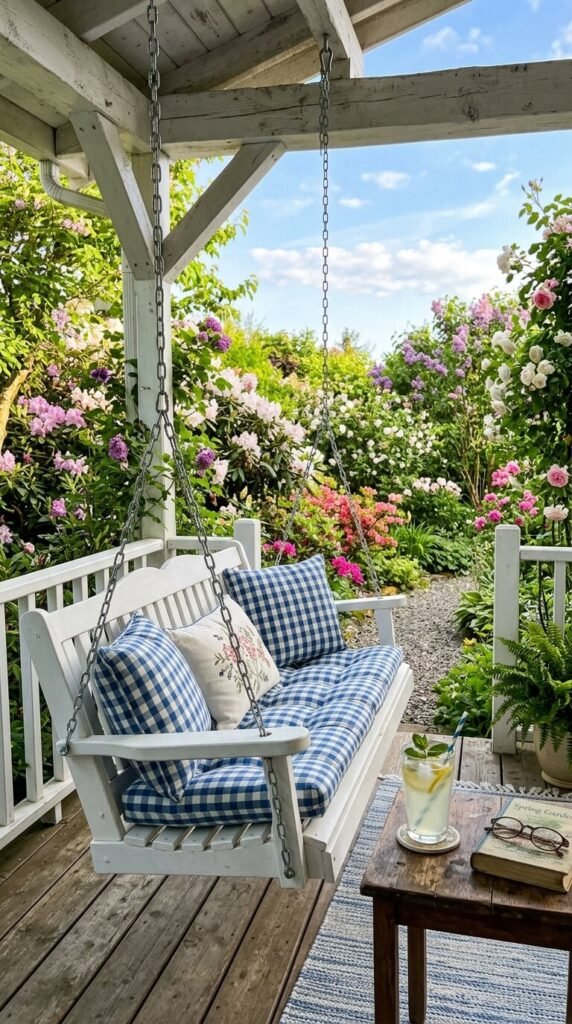
Gingham is practically made for porches, patios, and picnic setups. The pattern holds up visually in natural outdoor light and plays beautifully against greenery and garden textures.
Outdoor gingham ideas:
- Porch bench cushions in blue or green gingham
- Outdoor throw blanket for cool spring evenings
- Picnic tablecloth for backyard entertaining
- Planter accents — tie gingham bows around terra cotta pots for an easy seasonal touch
Just make sure any outdoor gingham textiles are made from weather-resistant or outdoor-rated fabric so they hold up to spring showers.
Keep It Balanced — Less Is More
Gingham is charming in doses. The goal is to accent, not overwhelm. A good rule of thumb: pick one or two focal points per room where gingham shines, and let everything else stay simple.
- One gingham textile per room is usually enough
- Pair with natural materials like wood, rattan, and linen to ground the pattern
- Let white or cream be your dominant base color
When gingham is used as a supporting character rather than the star of the show, it makes the whole space feel intentional and polished.
Ready to Style Your Space for Spring?
Gingham is one of those patterns that works whether your style is farmhouse, coastal cottage, or transitional traditional. It’s friendly, versatile, and surprisingly sophisticated when styled with care. Start with one piece — a table runner, a set of throw pillows, a pair of kitchen curtains — and build from there.
Save this guide and come back to it every spring! Once you start decorating with gingham, you’ll wonder how your home ever felt complete without it.