Spring is the perfect time to bring the outdoors in — and nothing does that better than a gorgeous succulent arrangement sitting pretty on your windowsill. The best part? Succulents are basically the low-maintenance dream plant. They’re forgiving, long-lasting, and with just a few tricks, you can create an arrangement that looks like it came straight from a high-end boutique — without the price tag.
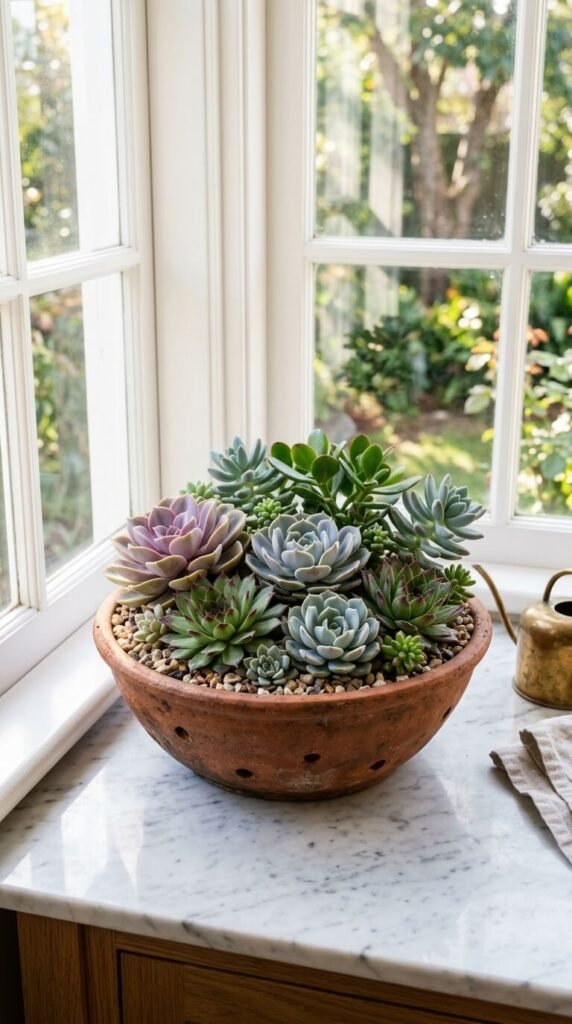
Whether you’re a total beginner or just looking to level up your plant game this season, this guide walks you through everything you need to create a thriving succulent arrangement from scratch.
Gather Your Supplies Before You Start
Getting everything ready before you begin makes the whole process smoother. Here’s what you’ll need:
- A container — terracotta pots, wooden crates, ceramic bowls, or even vintage tins all work beautifully
- Well-draining cactus/succulent soil mix — this is non-negotiable; regular potting soil holds too much moisture
- Perlite or coarse sand — mix into soil for extra drainage (about 50/50 ratio)
- Gravel or small stones — for the bottom layer and decorative top dressing
- Succulents — aim for 3–7 plants per arrangement depending on container size
- Small trowel or spoon — for planting
- Spray bottle — for initial watering
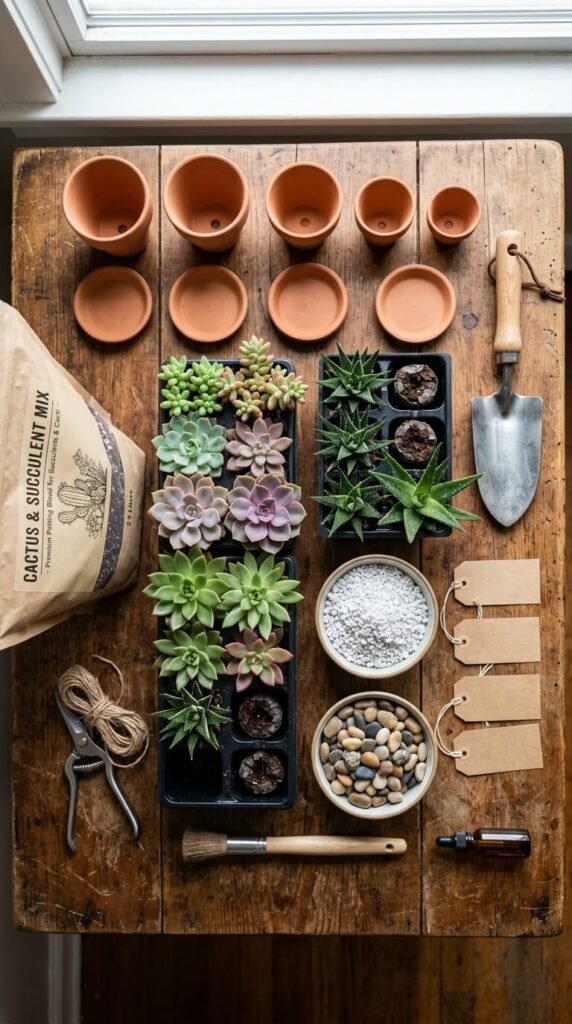
Pro tip: Choose succulents with varying heights, textures, and colors for the most visually interesting arrangement. Mix rosette shapes like echeveria with trailing types like string of pearls for a dynamic look.
Pick the Right Container (Drainage Is Everything)
Before you even think about plants, check your container for drainage holes. No drainage hole = root rot waiting to happen. If you’ve fallen in love with a container that doesn’t have one, you have two options:
- Drill a hole in the bottom (ceramic and terracotta drill easily with the right bit)
- Use it as a cachepot — plant in a smaller pot with drainage and just set it inside
The size of your container matters too. Go snug, not spacious. Succulents prefer cozy conditions; too much soil around the roots stays wet longer and leads to rot.
Plant Your Arrangement Like a Pro
Now for the fun part. Follow these steps for the best results:
- Add a gravel layer to the bottom of your container (about an inch) for extra drainage buffer.
- Fill halfway with your soil mix, then lightly water and let it settle for a minute.
- Remove succulents from their nursery pots and gently loosen any tightly bound roots.
- Start with your tallest or focal plant — place it slightly off-center for a natural look.
- Fill in around it with medium plants, then tuck smaller ones into gaps.
- Leave a little breathing room between plants — they’ll grow and fill in over time.
- Top dress with pebbles or decorative sand to finish the look and help retain just the right amount of moisture.
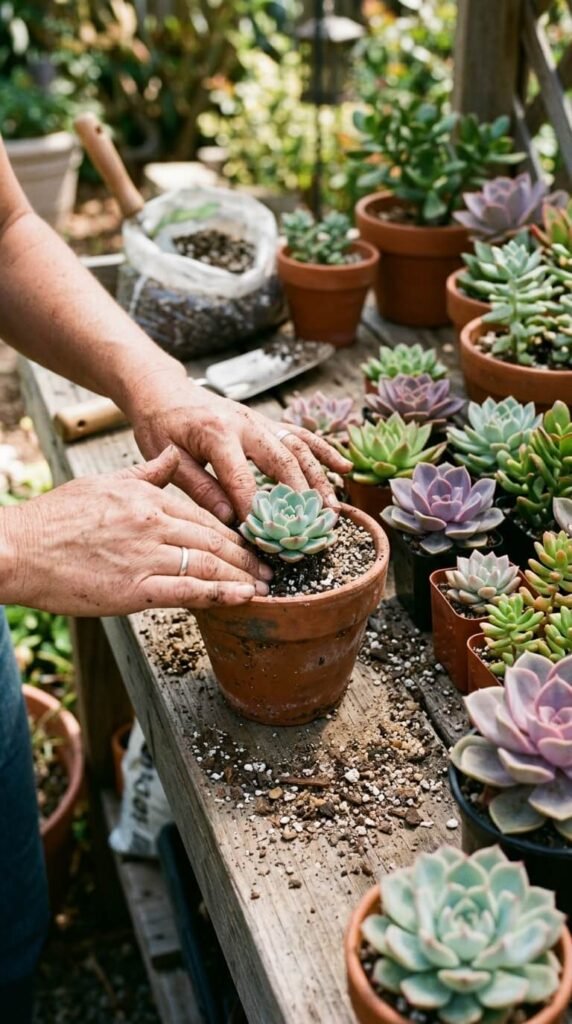
Once planted, don’t water immediately — give roots 24–48 hours to settle before the first light watering. This helps any damaged roots callous over and prevents rot.
Find the Perfect Spot
Succulents are sun lovers, but placement is more nuanced than just “put them in light.”
- Indoors: A south or east-facing window is ideal. Aim for 6+ hours of bright, indirect light per day. If you notice stretching or leaning, they need more light.
- Outdoors: A covered patio or spot with morning sun and afternoon shade works perfectly in spring. Avoid direct harsh afternoon sun until your plants have adjusted.
- Rotate your arrangement every week or two so all sides get even light exposure — it keeps growth balanced and prevents that one-sided lean.
Water Smart, Not Often
Overwatering kills more succulents than anything else. Spring is their active growing season, so they do need a bit more water than in winter — but “more” is still relative.
The golden rule: soak and dry. Water thoroughly until it drains from the bottom, then let the soil dry out completely before watering again. In spring, that’s typically every 7–10 days, depending on your climate and light levels.
Signs you’re overwatering: mushy, translucent leaves; yellowing at the base. Signs you’re underwatering: wrinkled or shriveled leaves that feel soft.
Keep It Thriving All Season
A few simple habits will keep your arrangement looking full and fresh through spring and beyond:
- Fertilize lightly once a month in spring with a diluted succulent fertilizer — half strength is plenty
- Remove dead or dried leaves from the base regularly to prevent pests and improve airflow
- Watch for pests like mealybugs (they look like white fluff) — treat early with a cotton swab dipped in rubbing alcohol
- Repot when needed — if roots start poking out the drainage holes, it’s time for a slightly bigger home
You’ve Got This
A beautiful succulent spring arrangement isn’t just a decor piece — it’s a little living sculpture that rewards you with almost zero effort. Start with quality soil, pick a well-draining container, and let your creativity run wild with plant combinations.
Save this guide for when you’re ready to plant — and don’t be afraid to experiment. Half the fun is discovering which succulents you love most.