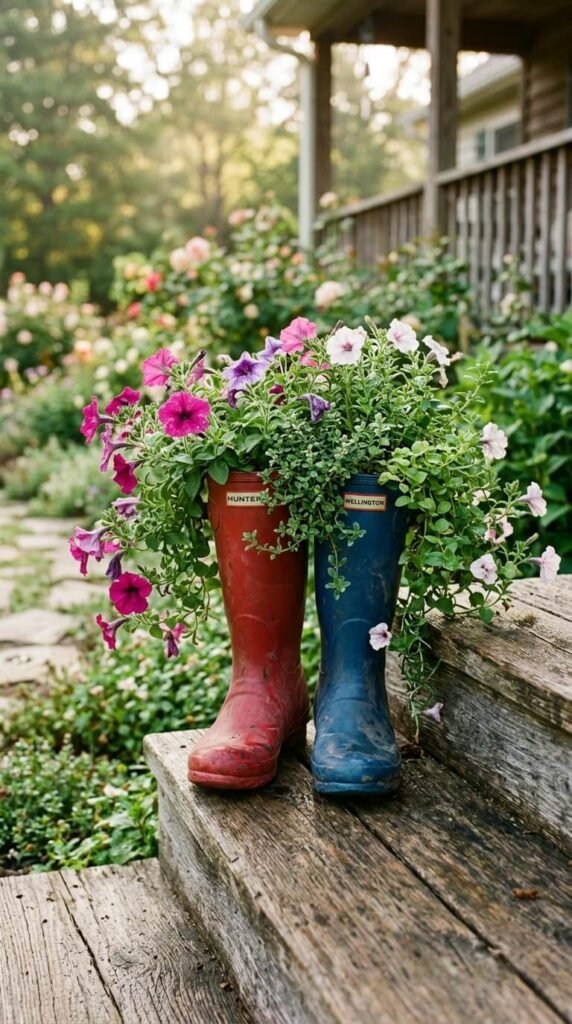
Old rain boots don’t have to end up in a landfill. Once the soles crack or a buckle breaks, those boots can become one of the easiest upcycled planters you’ll ever make. This list walks through creative, budget-friendly ways to turn worn-out rain boots into garden décor, herb gardens, and porch accents. Each idea uses stuff you probably already have lying around, so you can get started today without spending much. Grab a spare pair of boots and a bag of soil, and let’s turn trash into a little bit of charm for your yard.
1. Classic Herb Garden Boots
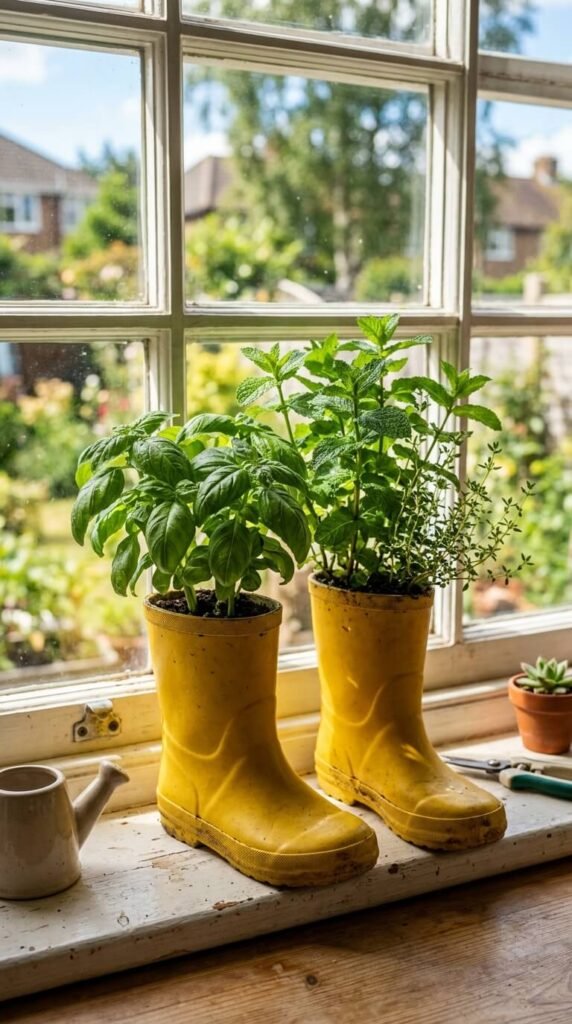
Turn old boots into a mini herb station. Drill a few holes in the sole first so water can drain out. Fill each boot with potting soil, then tuck in basil, mint, or thyme starts. Set them near a sunny window or back door for easy snipping while cooking. This works great with dollar-store seed packets if you’re starting from scratch. Kids can help with this one too—it’s a simple way to teach them about growing food. No need for fancy pots when boots do the job just fine.
2. Mismatched Pair Flower Display
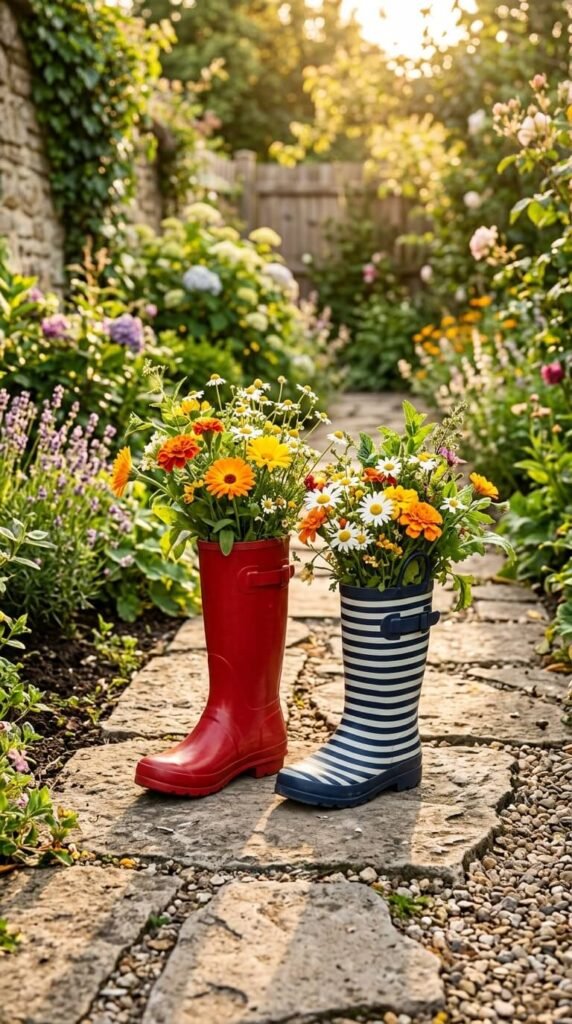
Don’t toss that lone boot just because its match is gone. Pair it with any other single boot for a fun mismatched look. Fill both with cheerful flowers like marigolds or daisies. The contrast in colors and patterns adds personality to a porch or garden bed. This is a smart way to use boots you’d otherwise throw out. Check thrift stores for cheap single boots if you want more variety. Group three or four mismatched pairs together for a bold, playful display near your front door.
3. Hanging Boot Baskets
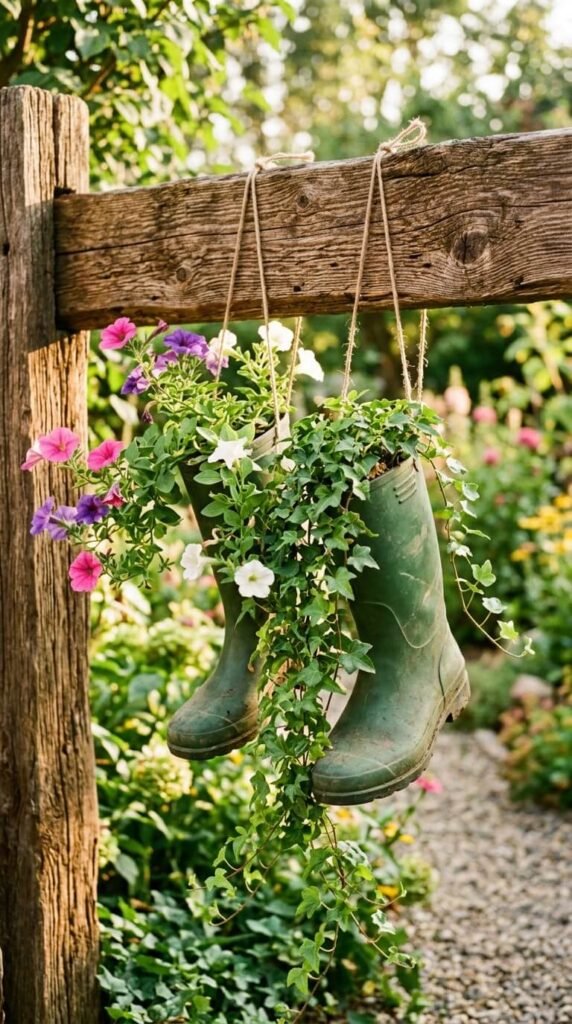
Give your boots a second life off the ground. Drill drainage holes, then attach sturdy rope or wire through the top loops. Hang them from a fence, porch beam, or tree branch. Fill with trailing plants like ivy or petunias so vines spill over the edges. This trick saves floor space and adds height to your garden layout. Use old shoelaces or twine if you don’t have rope handy. Hanging boots also keep plants safer from ground pests like slugs and snails.
4. Rustic Farmhouse Entryway Planters
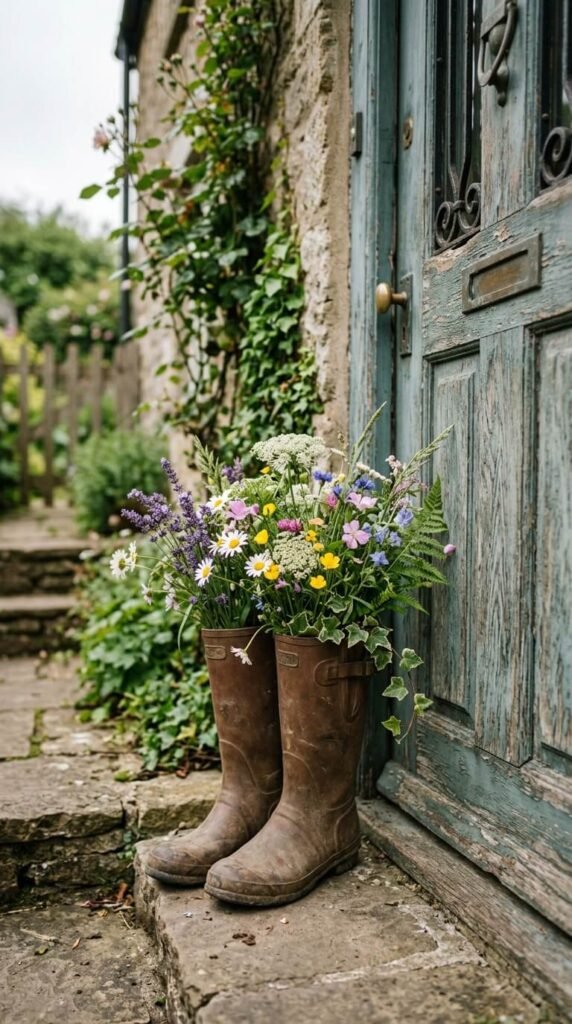
Old boots with a worn, faded look fit right into farmhouse-style décor. Skip the polish—let the scuffs and cracks add character. Fill them with wildflowers, ferns, or dried grasses for a natural feel. Set a pair on either side of your front steps for a welcoming touch. This idea costs nothing if you already have retired boots sitting in a closet. Add a small chalkboard tag with your house number for a homemade detail. Simple, cheap, and full of personality.
5. Succulent Boot Garden
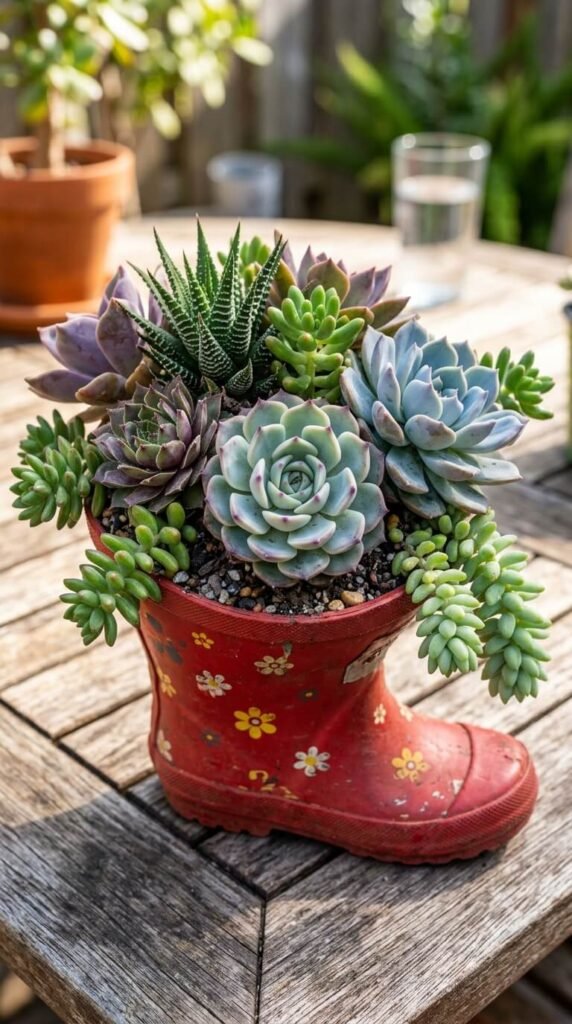
Succulents barely need water, which makes them perfect for boots without perfect drainage. Layer small rocks at the bottom before adding cactus soil. Mix in different succulent varieties for texture and color. This setup works well indoors on a sunny sill or outdoors in a dry climate. Kids’ rain boots that are too small make great mini succulent pots. Check garden centers for clearance succulent cuttings—they’re often just a dollar or two each and root easily in fresh soil.
6. Painted Pattern Planters
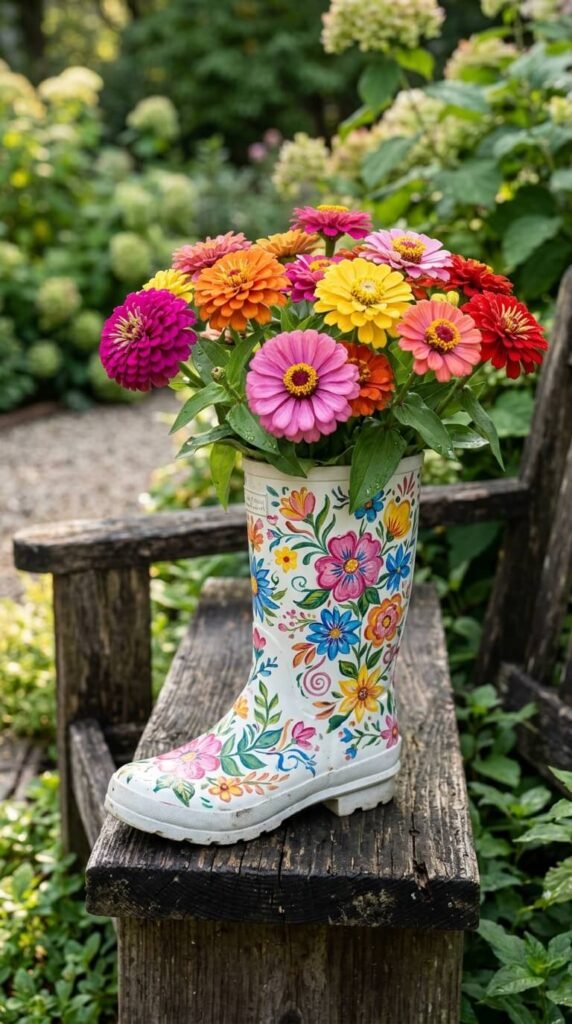
Give plain boots a custom look with outdoor-safe paint. Sand the surface lightly first so paint sticks better. Use stencils for stripes, polka dots, or simple flowers if freehand painting feels tricky. Let the boots dry fully before adding soil and plants. This project turns a $2 thrift-store find into a piece that matches your garden theme. Seal with a clear outdoor spray to protect the design from rain. Bright zinnias or petunias pair well with painted patterns for extra pop.
7. Vegetable Starter Boots
8. Boot Planter Border
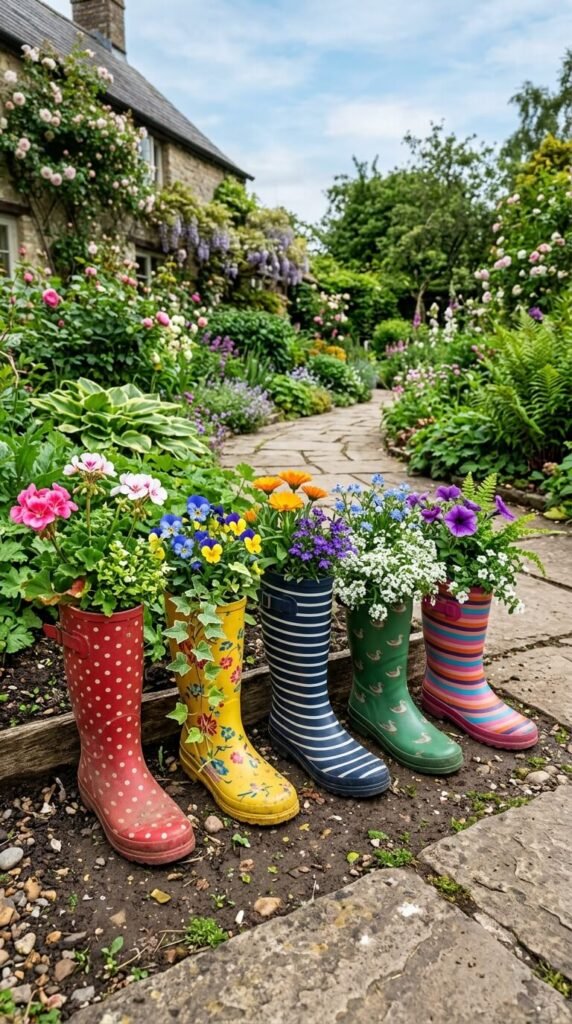
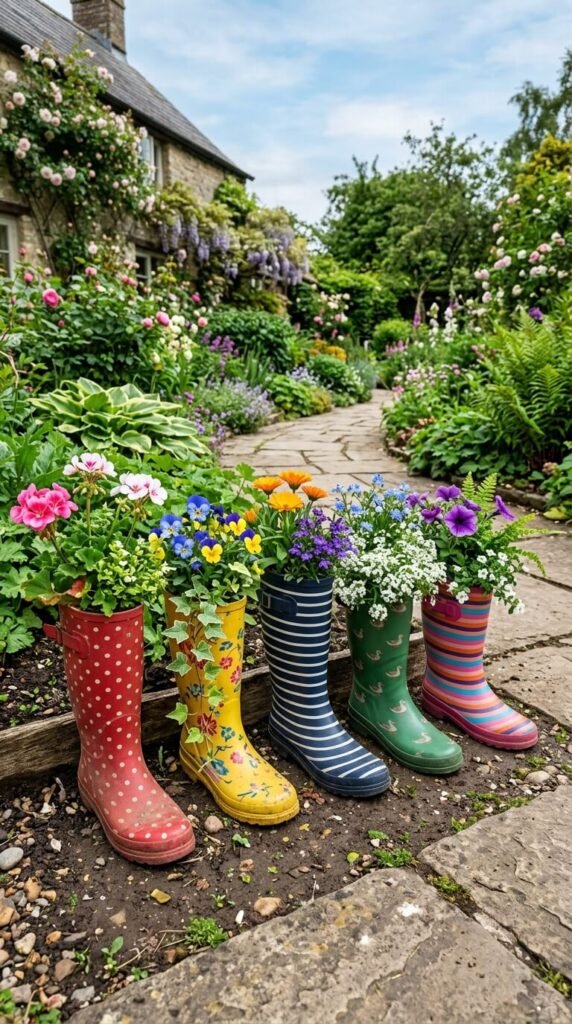
Line a walkway or garden bed edge with a row of boots. Mix colors and sizes for a playful, collected-over-time look. Fill each with low, spreading flowers like alyssum or lobelia. This border costs next to nothing if you gather boots from neighbors or secondhand shops. Space them evenly for a tidy appearance, or cluster them for a more relaxed style. It’s an easy weekend project that adds instant charm without digging up any grass or soil.
9. Kids’ Boot Fairy Garden
Old kids’ boots are perfect for tiny fairy gardens. Add a layer of moss, pebbles, and small succulents for texture. Tuck in miniature figurines or a small wooden sign for extra charm. This project is a fun way to include kids in gardening without needing real tools. Dollar stores often carry cheap fairy garden accessories that work great here. Set the finished boot on a windowsill or porch step where little visitors can enjoy the tiny scene up close.
10. Boot Planters on a Ladder Shelf
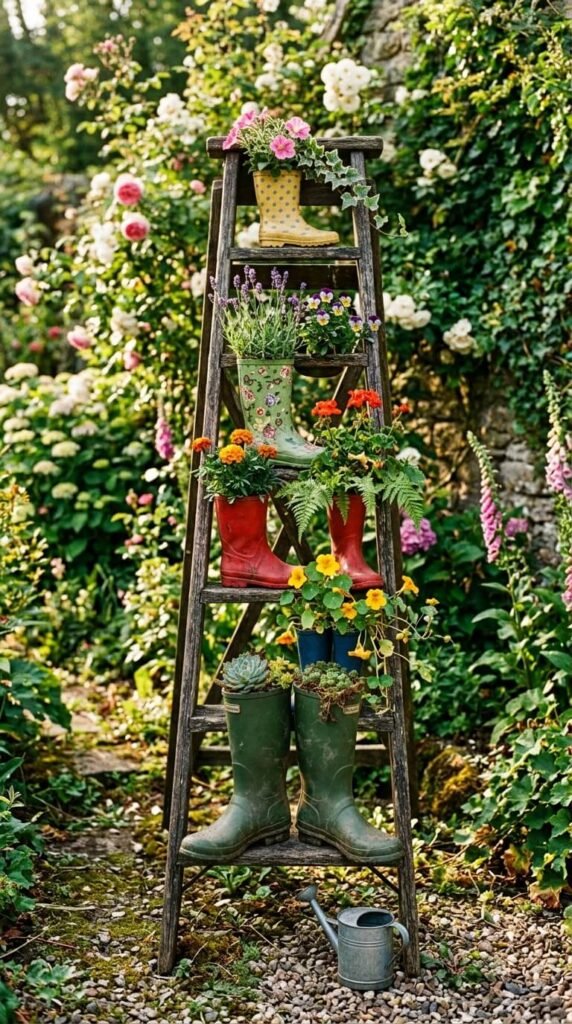
An old wooden ladder makes a great display shelf for boot planters. Lean it against a wall or fence, then set a filled boot on each rung. This vertical setup saves ground space and creates a striking focal point. Mix plant types and boot colors for visual interest. Secondhand ladders show up cheap at yard sales or thrift stores. Make sure the ladder is stable before loading it with planters. This idea works well for small patios or narrow side yards.
11. Boot Planters with Chalk Paint Labels
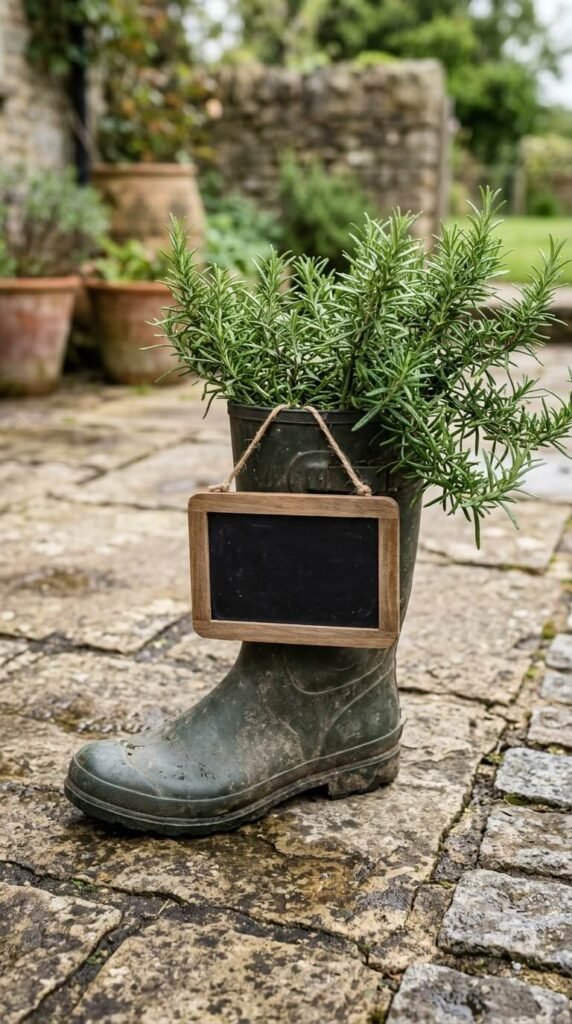
Add a small chalkboard tag to each herb-filled boot so you always know what’s growing. Glue a wooden tag or paint a chalkboard patch directly on the boot. This trick helps beginners keep track of rosemary, sage, or chives without guessing. It also adds a homemade, personal touch to your garden setup. Chalkboard paint costs just a few dollars and covers several boots easily. Update the labels each season as you switch out different herbs or plants.
12. Boot Planters for Shade Gardens
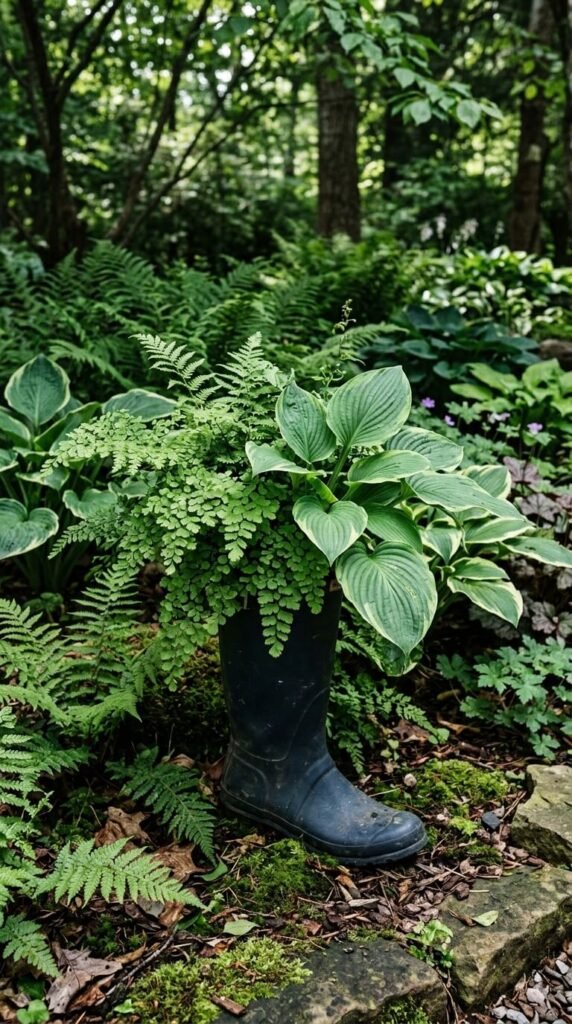
Not every spot in your yard gets full sun, and boots can handle that too. Fill them with shade-loving plants like ferns, hostas, or impatiens. These plants thrive with less light and stay compact, which fits well in a boot’s limited space. Place them under trees or along a shaded fence line. This is a good option if you’ve struggled to grow anything in darker corners of your yard. Water a little less often since shaded soil holds moisture longer.
13. Boot Planters as Bird-Friendly Additions
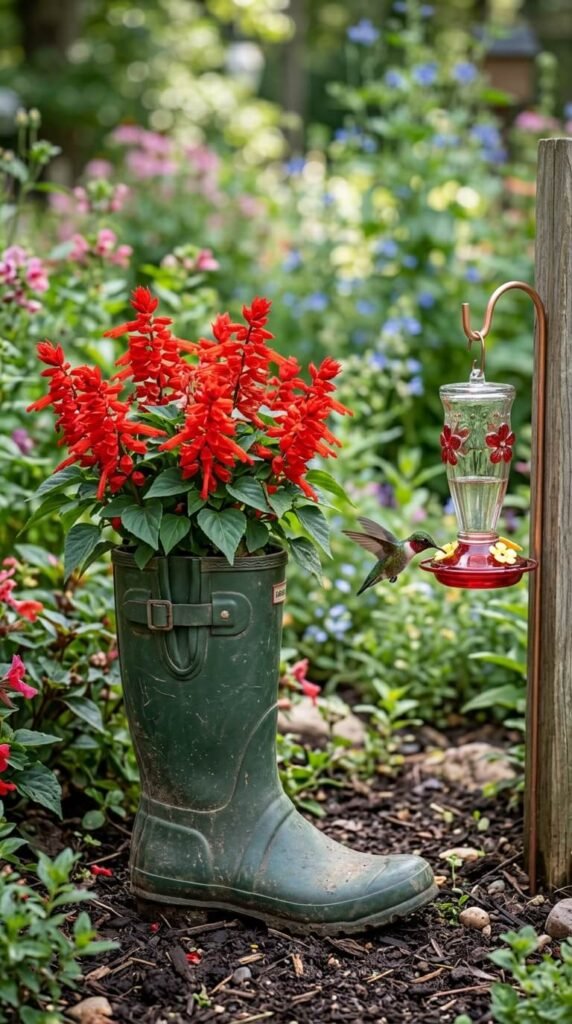
Attract birds and pollinators by filling boots with nectar-rich flowers like salvia or bee balm. Hang a small feeder nearby for extra visitors. This combo turns a simple planter into a mini wildlife stop in your yard. Choose bright colors since birds and bees notice bold reds and purples first. This setup works well near a patio where you can sit and watch. Refill feeders weekly and swap flowers as seasons change to keep the area active year-round.
14. Boot Planters with Repurposed Trays
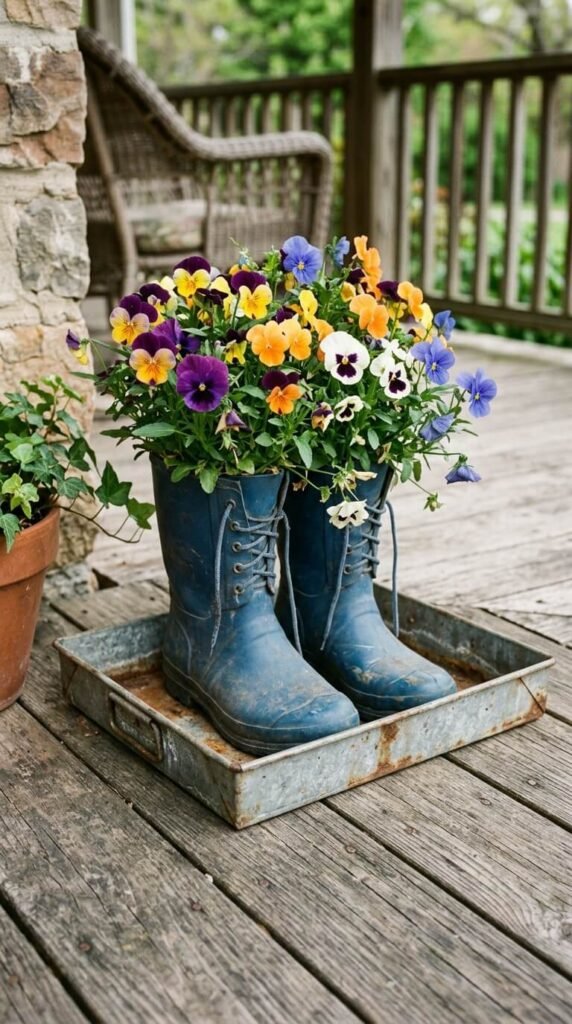
Set your boot planters on an old tray or baking sheet to catch drips. This keeps porches and patios clean while still allowing proper drainage. Thrift stores often sell metal trays for next to nothing. Fill boots with pansies or violas for cooler months, since these flowers handle mild frost well. The tray also makes it easy to move boots around without dragging soil across your floor. This small addition solves a common mess problem with boot planters.
15. Boot Planters for Balcony Gardens
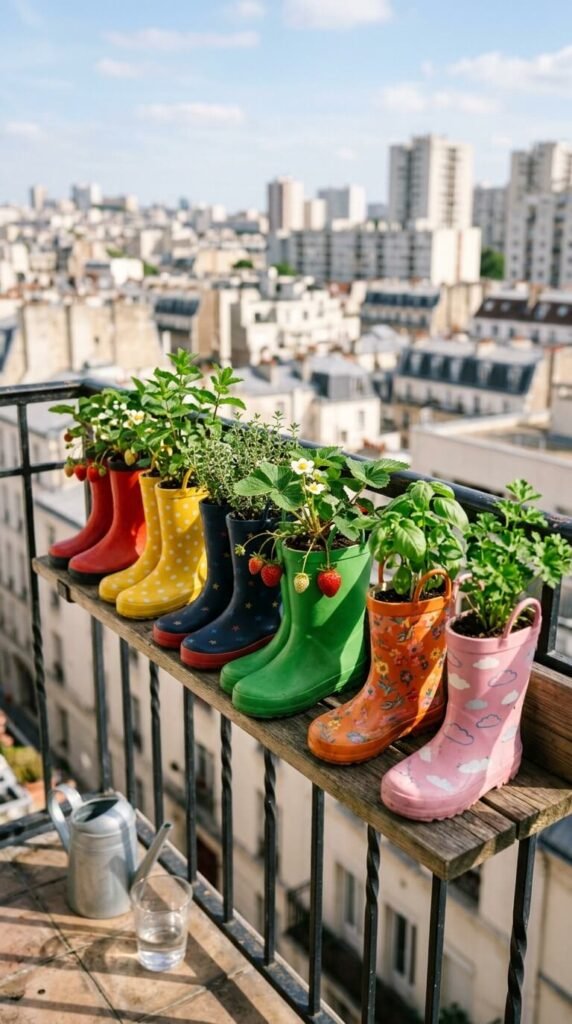
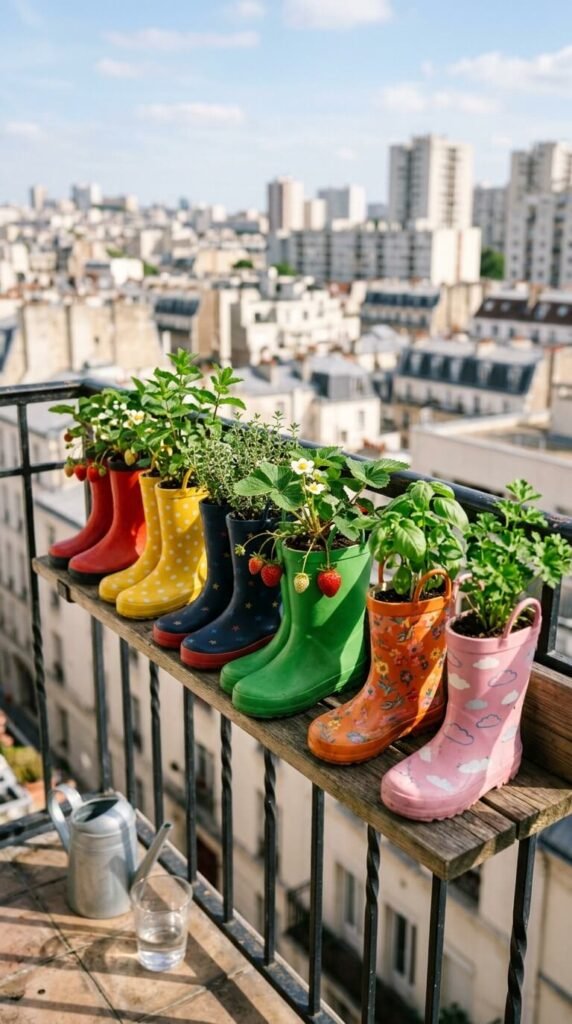
Small-space gardeners can still enjoy boot planters. Line a balcony railing or narrow ledge with a row of boots filled with strawberries, herbs, or small flowers. Use zip ties or hooks to secure boots safely if wind is a concern. This setup works great for apartment dwellers who want greenery without a yard. Choose lightweight boots and soil mixes to keep things manageable. Rotate plants seasonally to keep the display fresh through spring, summer, and fall.
16. Boot Planters Painted as Animals
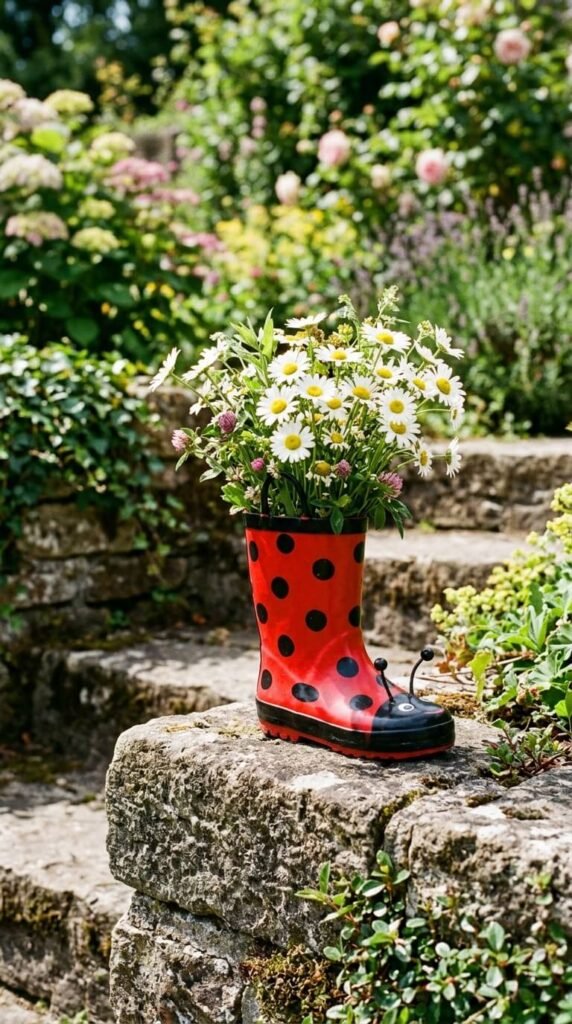
Turn boots into whimsical characters with a little paint. Ladybugs, owls, or bumblebees are simple, fun designs for beginners. Use acrylic craft paint and a clear sealant to protect the design outdoors. This project is a great weekend activity with kids. Fill the finished boot with small flowers that complement the design, like daisies for a ladybug or sunflowers for a bee. These painted planters make playful additions to a backyard or garden path for visiting children.
17. Boot Planters with Solar Lights
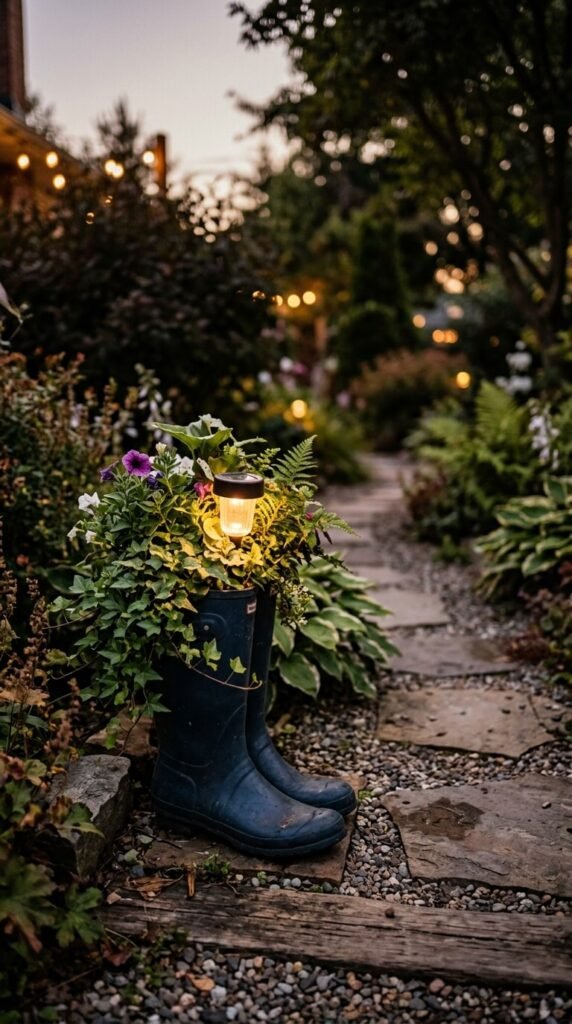
Add a small solar light stake into your boot planter for evening glow. This turns a daytime planter into a nighttime feature along walkways or patios. Solar stakes cost just a few dollars and need no wiring. Push the stake into the soil next to your plants so the light peeks above the leaves. This works especially well with trailing greenery that catches the light’s glow. It’s a simple upgrade that makes your boot planters useful even after the sun goes down.
18. Boot Planters for Herb Drying Displays
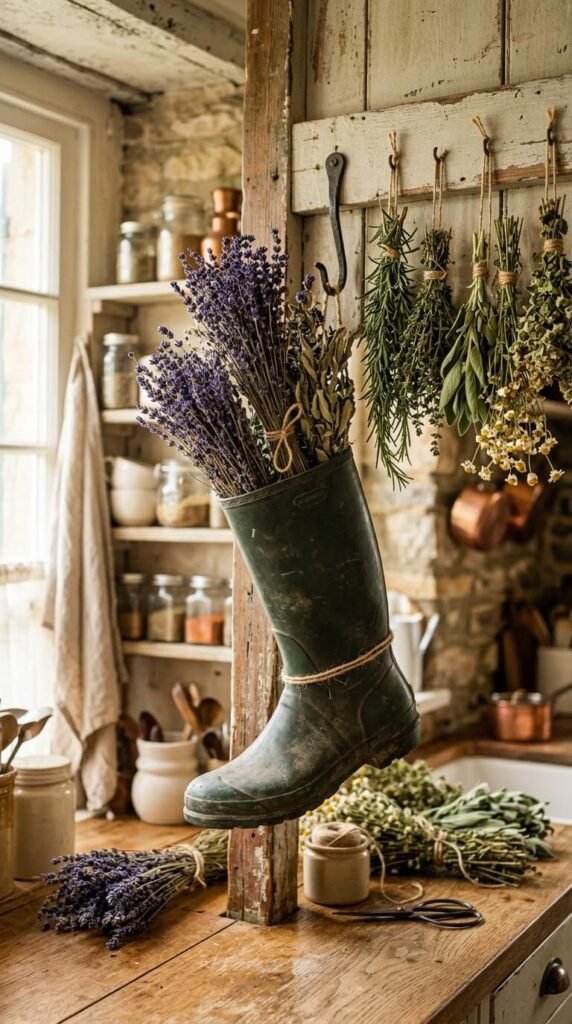
Once your herbs are ready to dry, boots can double as a rustic display stand. Tie small bundles of lavender or rosemary and tuck the stems into a boot filled with dry sand or rice for support. This keeps bundles upright while they dry naturally. Set the boot on a kitchen counter or windowsill for a farmhouse touch. This trick saves you from buying a drying rack. Once dried, the herbs are ready for cooking, sachets, or homemade wreaths.
19. Boot Planters as Garden Markers
Use a single painted boot to mark the start of a garden row or path. Fill it with small flowers so it stands out against green vegetable rows. This works as a simple, cheap alternative to store-bought garden markers. Pick a bright color like yellow or orange so it’s easy to spot from a distance. This idea is especially handy for community gardens where rows can get confusing. One boot per row keeps things organized without spending money on fancy signage.
20. Boot Planters with Recycled Bottle Drip Feeders
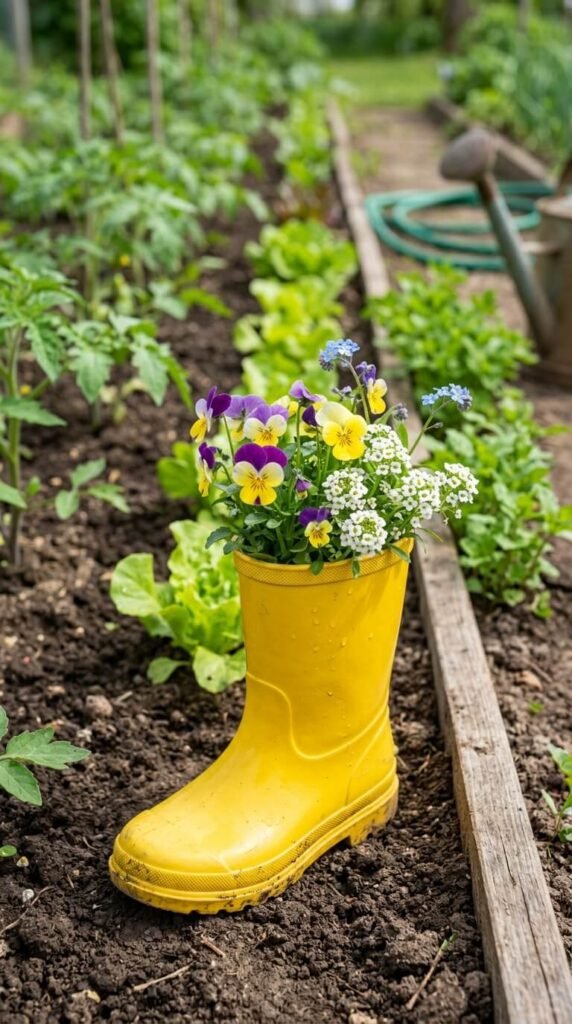
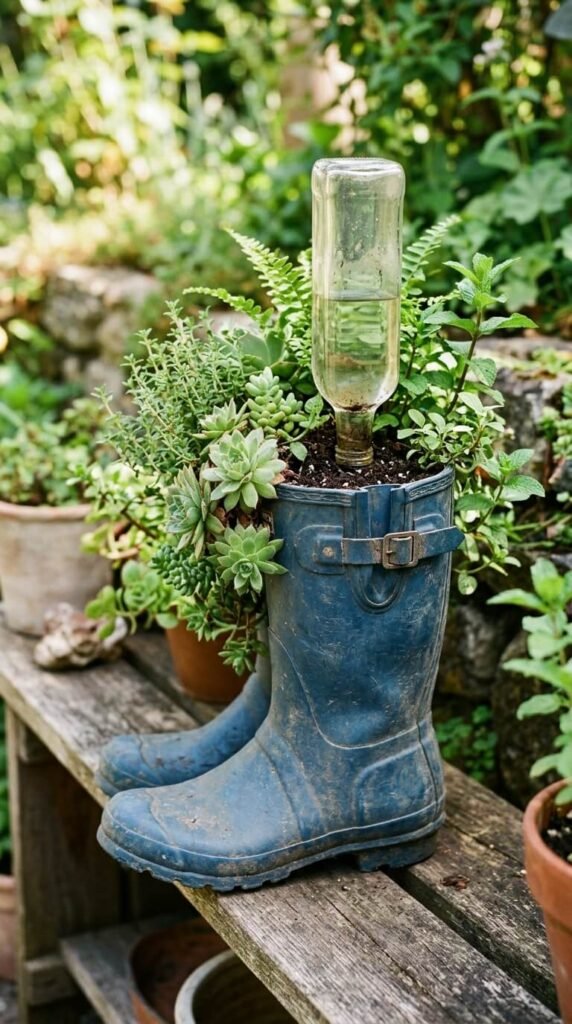
Keep your boot planters watered without daily effort. Poke a small hole in a plastic bottle cap, fill the bottle with water, and insert it upside down into the soil. This creates a slow drip feeder that keeps plants hydrated for days. This trick is handy if you travel often or simply forget to water. It costs nothing since you’re reusing a bottle you’d otherwise toss. Check the bottle every few days and refill as needed to keep plants healthy.
21. Boot Planters for Fall Displays
Switch out summer flowers for a fall-themed boot display. Fill boots with mini pumpkins, mums, and a few scattered leaves for texture. This works great on porch steps during October and November. Thrift store boots in brown or orange tones fit the season especially well. Swap out mums for ornamental kale if you want something that lasts through the first frost. This seasonal refresh keeps your boot planters looking current without buying new containers each year.
Conclusion
Rain boot planters prove that a little creativity can turn old, worn-out footwear into something genuinely useful. Whether you’re growing herbs on a windowsill, dressing up a front porch, or teaching kids about gardening, these ideas cost little and use what you already have. Grab a pair of retired boots, add some soil and a few plants, and see which of these projects fits your space best. Your garden—and your wallet—will both come out ahead.