Topiary adds instant structure and height to any space — inside or out. Whether you have a grand entry or a tiny balcony, a well-placed sculpted plant changes everything. It draws the eye upward, creates symmetry, and signals intention. You don’t need a formal garden or a huge budget to pull this off. Many of these ideas work with inexpensive nursery plants, basic tools, and a little patience. Here are 22 sophisticated topiary decoration ideas that make your space look taller, more polished, and effortlessly curated.
1. Classic Double Ball Spiral in a Stone Urn
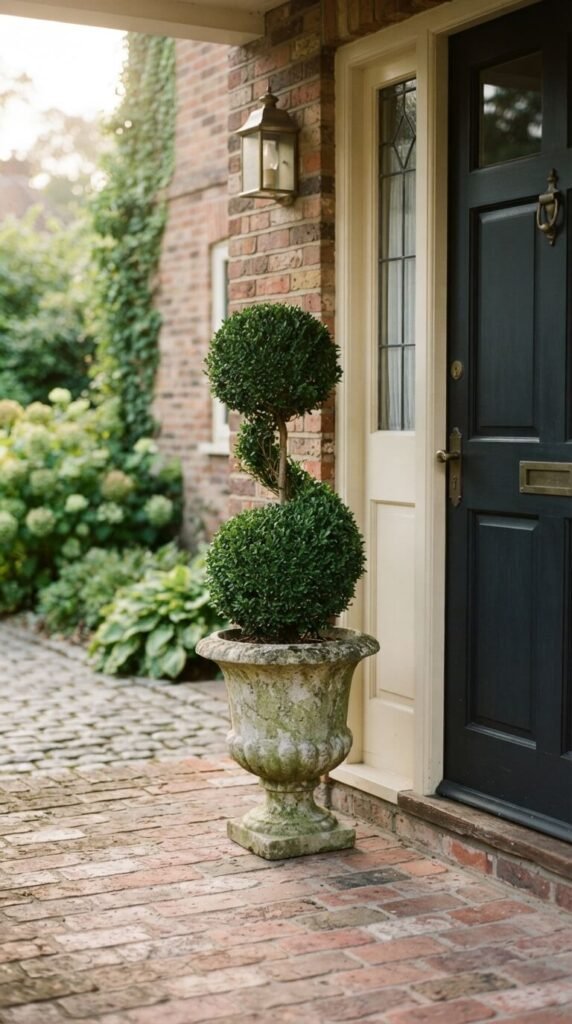
The double ball spiral is a timeless choice. Two round shapes stacked on a single trunk create immediate height and elegance. Boxwood or eugenia work great for this shape. You can find pre-shaped versions at most garden centers for under $40. Place them flanking an entryway for a hotel-lobby effect at home. Trim every 4–6 weeks to keep the shape crisp. A plain pot makes the plant the star. Start small — even a 12-inch urn reads as sophisticated when the topiary is well-formed.
2. Tall Cone Topiaries Flanking a Front Door
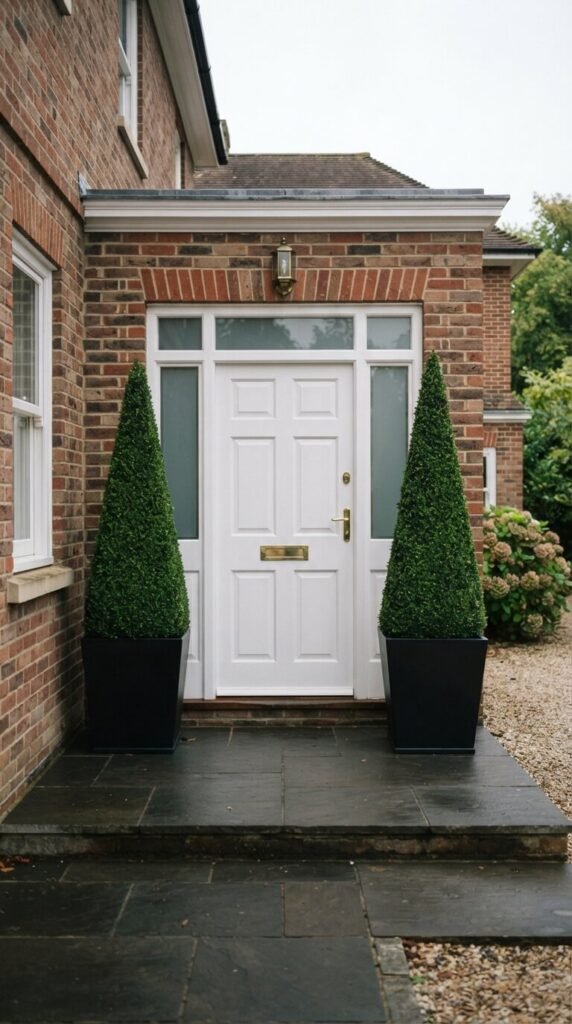
A pair of matching cone topiaries at the front door signals instant curb appeal. Tall cones — think 4 to 6 feet — create vertical lines that make any entrance look more grand. Italian cypress or sky pencil holly are naturally narrow and easy to maintain. If budget is tight, buy smaller versions and let them grow into the cone shape over one season. Use identical planters for balance. Black or charcoal planters contrast beautifully with green. Keep them symmetrical — even a slight difference in height breaks the effect.
3. Lollipop Standard in a Terracotta Pot
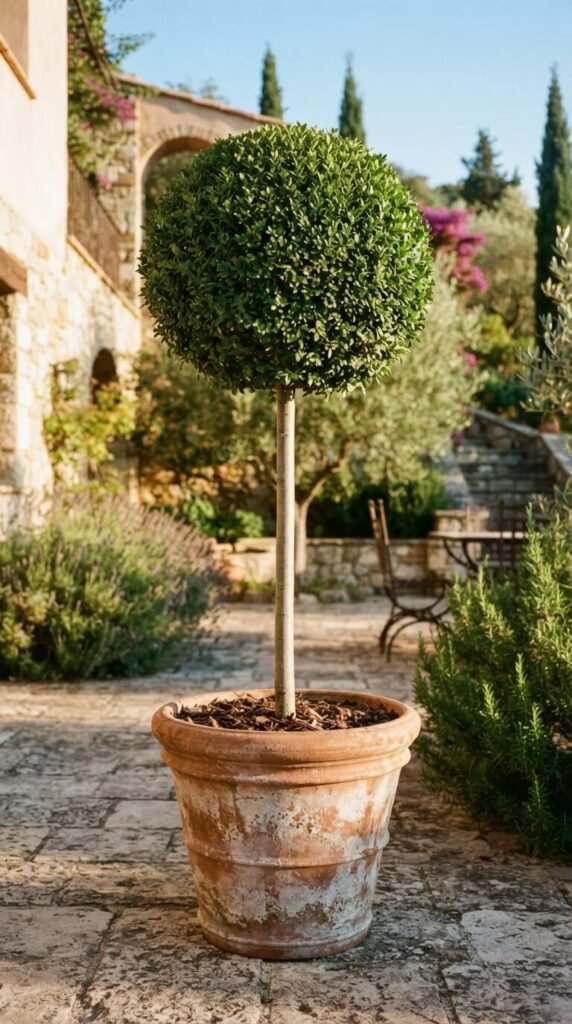
The lollipop or “standard” topiary is one clean round ball on a bare trunk. It looks expensive but is simple to achieve. Rosemary, lavender, or eugenia can all be trained this way. Buy a bushy plant and gradually strip the lower leaves over several months, leaving only the top growth. Shape the canopy into a sphere with small scissors. A terracotta pot adds warmth and suits any patio or balcony. The contrast of the bare stem against the tight ball shape is what makes this look so refined.
4. Tiered Pyramid in a Geometric Planter
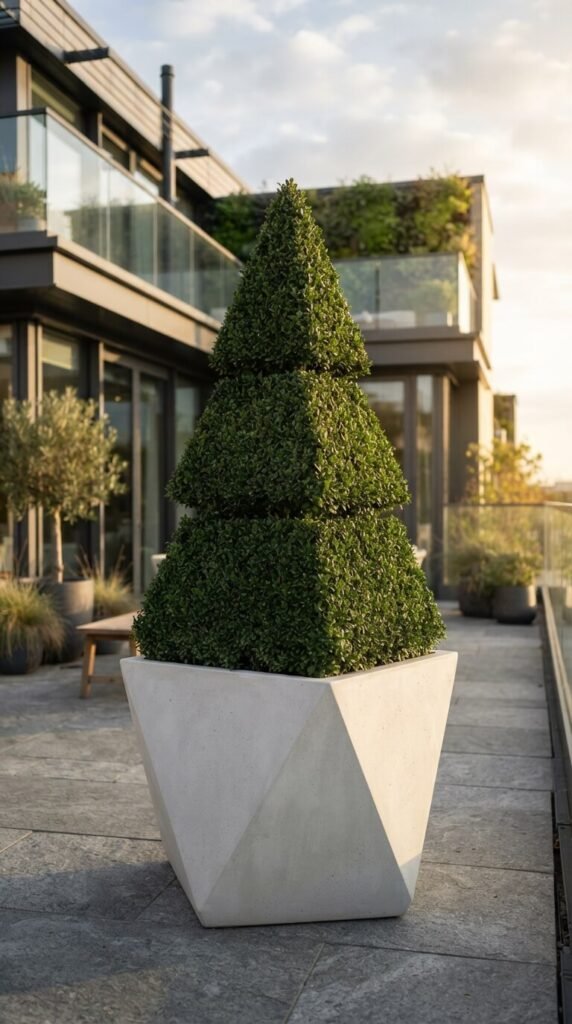
Tiered pyramids give maximum visual interest without extra width. Three defined horizontal layers carved into a conical plant create a formal, architectural look. Boxwood, privet, or yew hold shape well for this style. Use a taut string wrapped around the plant as a guide when trimming — it keeps your lines level. A square or geometric planter sharpens the overall aesthetic. This works especially well on narrow patios where you want height without bulk. Practice the cut on one side before committing to the full shape.
5. Spiral Juniper in a Glazed Ceramic Pot
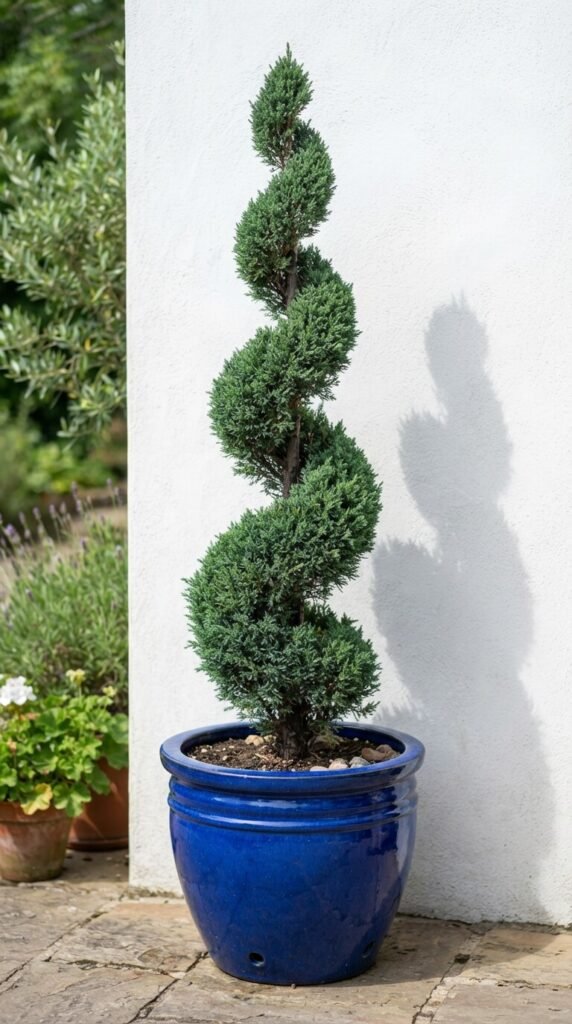
The spiral topiary is a showstopper. That elegant corkscrew twist up a single trunk is iconic for a reason. Juniper is the most forgiving choice for beginners — it’s hardy and holds shape after trimming. Mark your spiral line with a ribbon tied around the plant before cutting. Cut shallow at first, then deepen the groove over multiple sessions. A glossy glazed pot — cobalt blue, celadon, or deep plum — makes the blue-green juniper color pop. This is a great long-term investment that gets more impressive every year.
6. Boxwood Pompom Cloud Tree
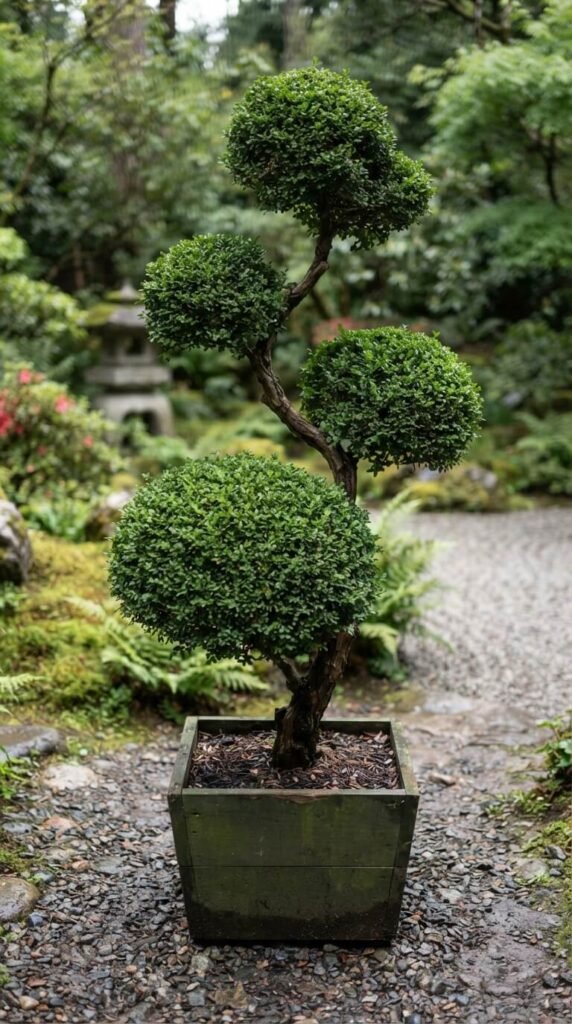
Cloud pruning — or “niwaki” style — creates organic, asymmetrical pom-poms of foliage on a single trunk. Unlike rigid ball shapes, cloud topiaries look artistic and hand-crafted. Boxwood, bay laurel, or Japanese holly respond well to this treatment. The goal is not perfection — slight irregularity is the point. Use sharp hand shears and trim a little at a time. Space your pompom clusters unevenly for that natural, sculptural feel. This style suits modern or Japanese-inspired garden spaces and looks dramatic against a plain fence or wall.
7. Tall Rosemary Cone in a Rustic Zinc Pot
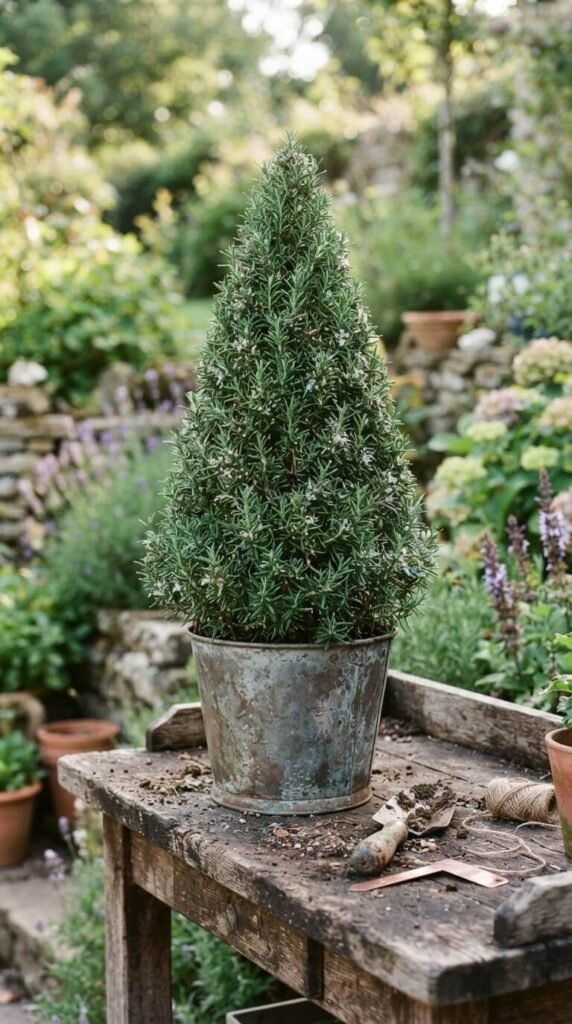
Rosemary is one of the most underrated topiary plants. It’s fragrant, edible, and holds its shape beautifully in a cone. Start with a bushy 6-inch nursery plant, remove lower stems gradually, and guide the remaining growth upward. Clip the sides tight to encourage the cone form. Rosemary loves sun and dries out quickly, so check the pot every two days in summer. A zinc or galvanized metal pot suits the herb’s rustic nature. As a bonus, you can snip a sprig any time you’re cooking.
8. Matched Pair of Spiral Buxus at a Garden Gate
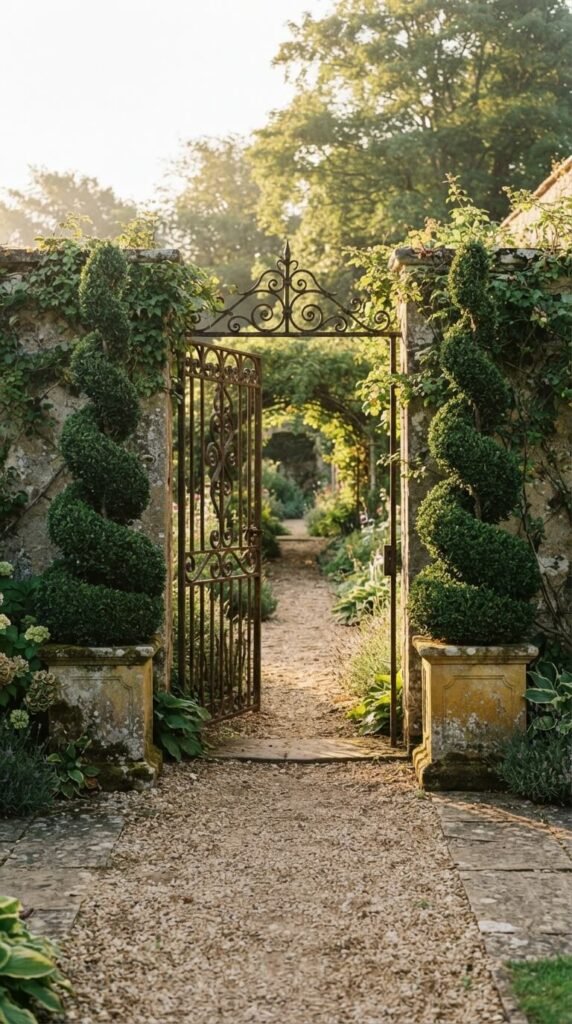
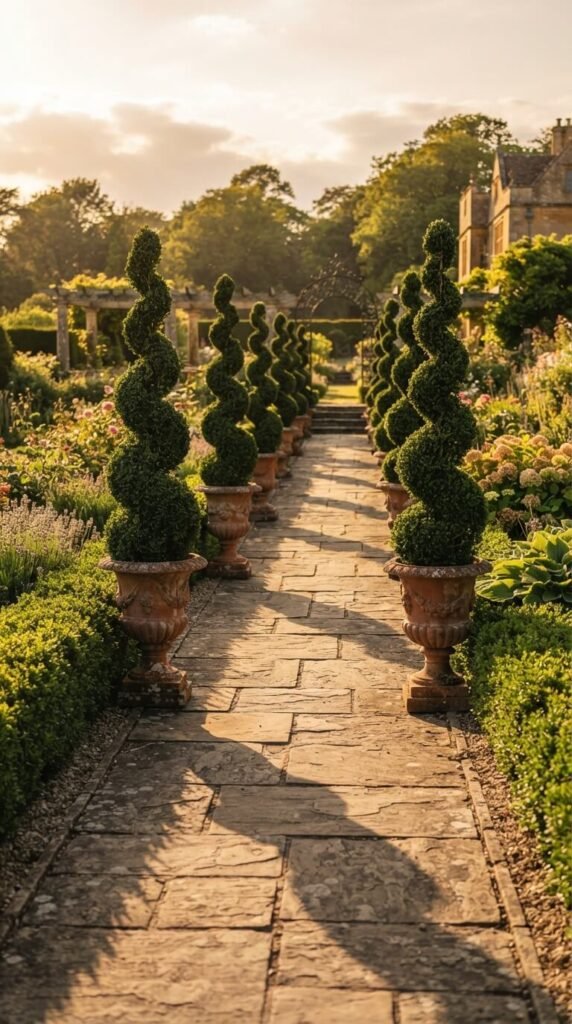
Symmetry is the secret weapon of sophisticated garden design. A matched pair of spirals at a garden gate creates a formal threshold effect — turning any entrance into something intentional. Buxus sempervirens (common boxwood) is the classic choice. Buy matching plants from the same grower if possible, so they start at the same size. Place them at equal distances from the gate and keep both pots identical. Maintaining identical trimming schedules keeps the pair looking balanced. Even a simple wooden gate looks grand with this treatment.
9. Slim Pencil Pine in a Tall Powder-Coated Planter
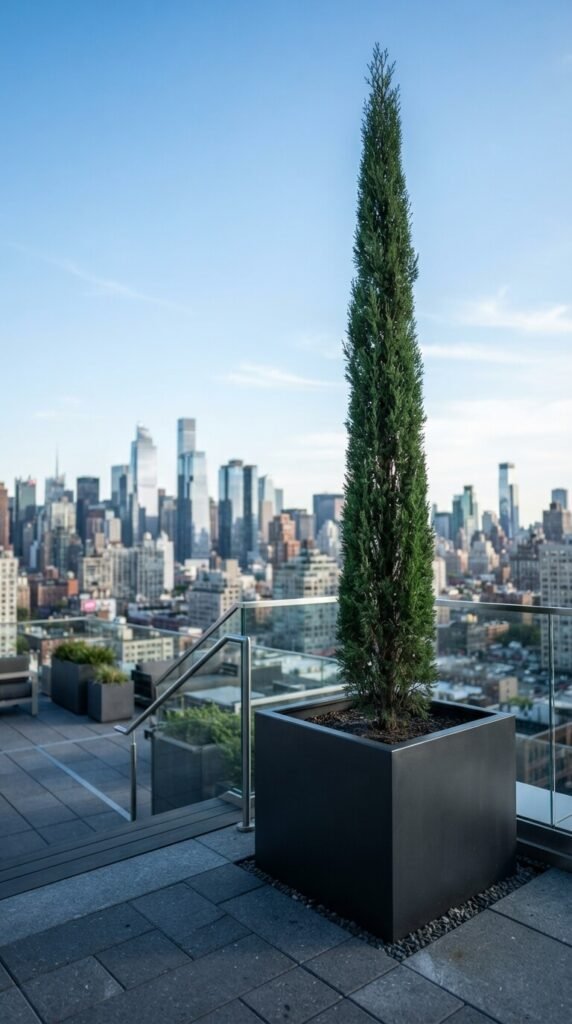
When you’re short on horizontal space, go vertical. A pencil pine or Italian cypress is naturally narrow — no trimming needed to maintain the shape. It grows upward, adding 6 to 8 feet of green height without spreading outward. Plant in a tall rectangular planter to reinforce the vertical line. This works brilliantly on rooftop terraces, narrow side paths, or beside a garage door. A charcoal or matte black planter makes the slim silhouette pop against the sky. One plant makes a statement; three in a row make an impact.
10. Bay Laurel Lollipop Indoors by a Window
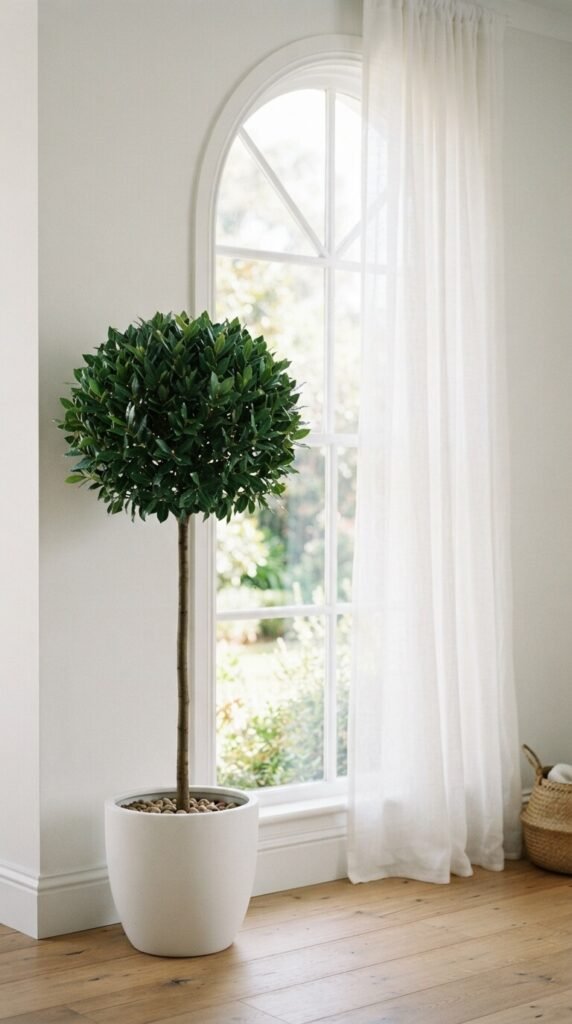
Topiary doesn’t have to stay outside. A bay laurel standard works beautifully as an indoor plant near a bright window. The glossy dark leaves look polished in any room, and the plant doubles as a kitchen herb — snip a leaf for your next stew. Bay laurel prefers at least 4 hours of direct light daily. A simple white or cream ceramic pot keeps the look clean and modern. The lollipop shape adds height to a corner without taking up floor space. Rotate the pot quarterly so the canopy grows evenly.
11. Myrtle Pom-Pom Tree in an Antique Urn
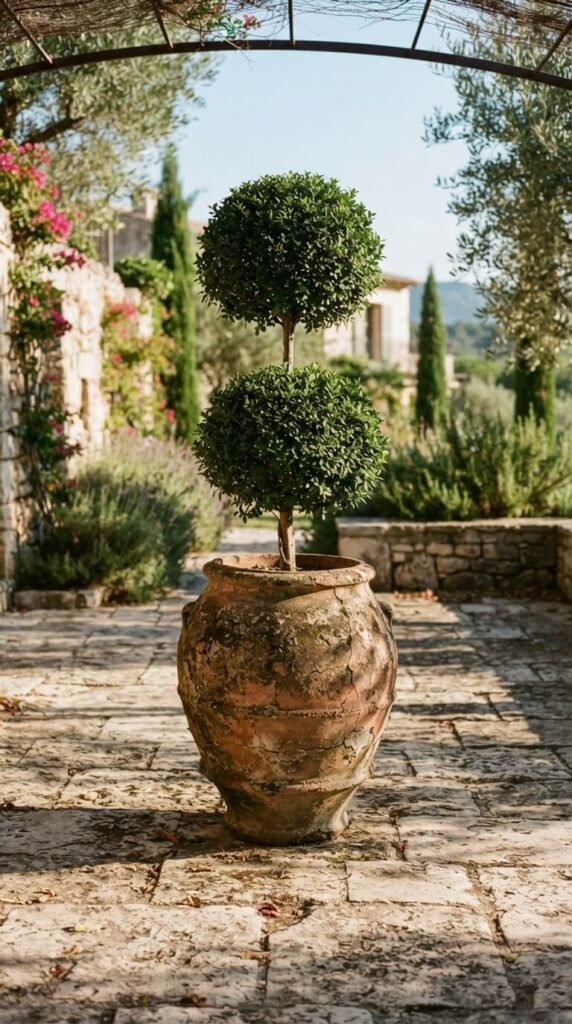
Myrtle has been used in formal gardens since ancient Rome — and with good reason. Its small leaves, dense growth, and natural fragrance make it ideal for topiary work. Trained into a pom-pom on a clean stem, myrtle looks both historic and fresh. It responds well to shaping and bounces back quickly after trimming. An antique-style urn or classically shaped pot complements the ancient heritage of this plant. Keep it in full sun and water regularly. In colder climates, bring it inside over winter near a sunny window.
12. Sculpted Holly Obelisk for Winter Interest
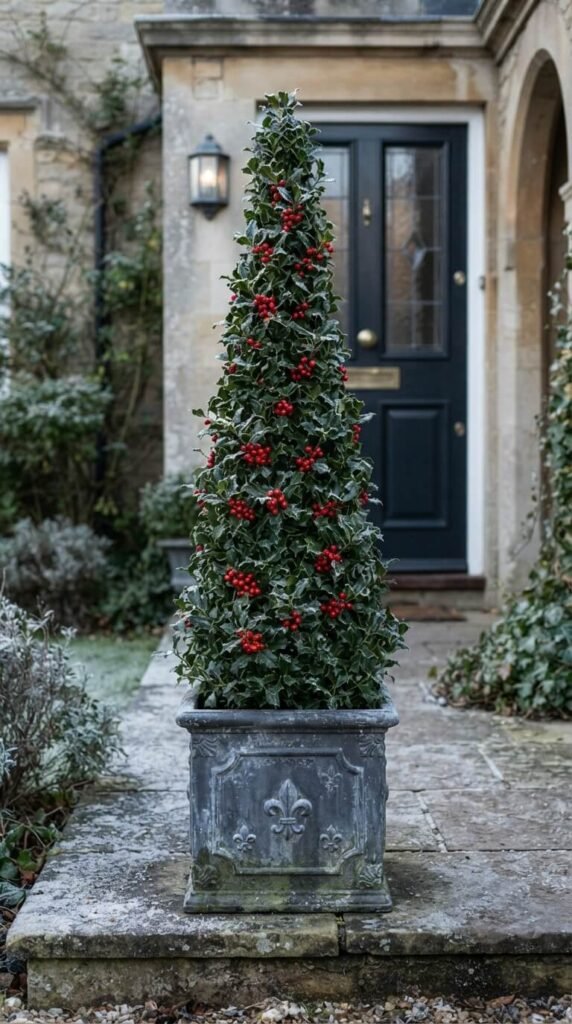
Obelisk topiary brings architectural drama without needing any special equipment. The four-sided tapered shape is easy to train and maintain. Holly is an exceptional choice for this form — it keeps its structure through winter and produces red berries that add seasonal color. Use four bamboo stakes to define the shape while the plant fills in, then remove the stakes once the holly holds the form on its own. A lead-effect or iron-look planter adds gravitas. This shape works year-round but really shines between November and February when little else in the garden has color.
13. Eugenia Topiary Pair on a Modern Balcony
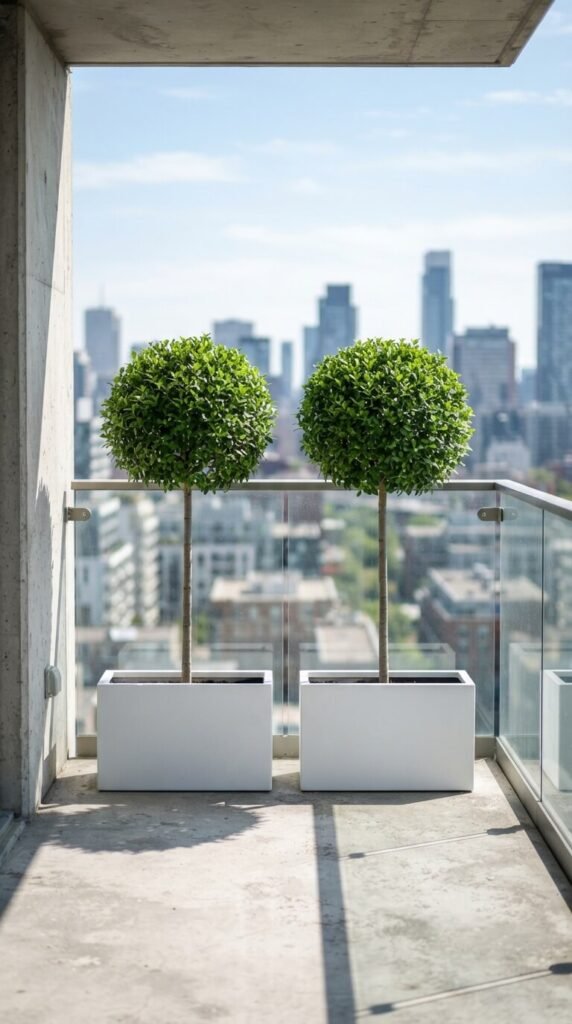
Eugenia is one of the best topiary plants for beginners. It’s fast-growing, tolerates trimming well, and stays green year-round in warm climates. Pre-trained eugenia standards are available at most garden centers — often cheaper than boxwood of the same size. A matched pair in identical white rectangular planters is all you need to transform a plain balcony. Keep them in full sun and water every two to three days. Trim the canopy once a month to maintain the ball shape. Rotate both pots by a quarter turn each week for even growth.
14. Privet Sphere on a Stone Pedestal
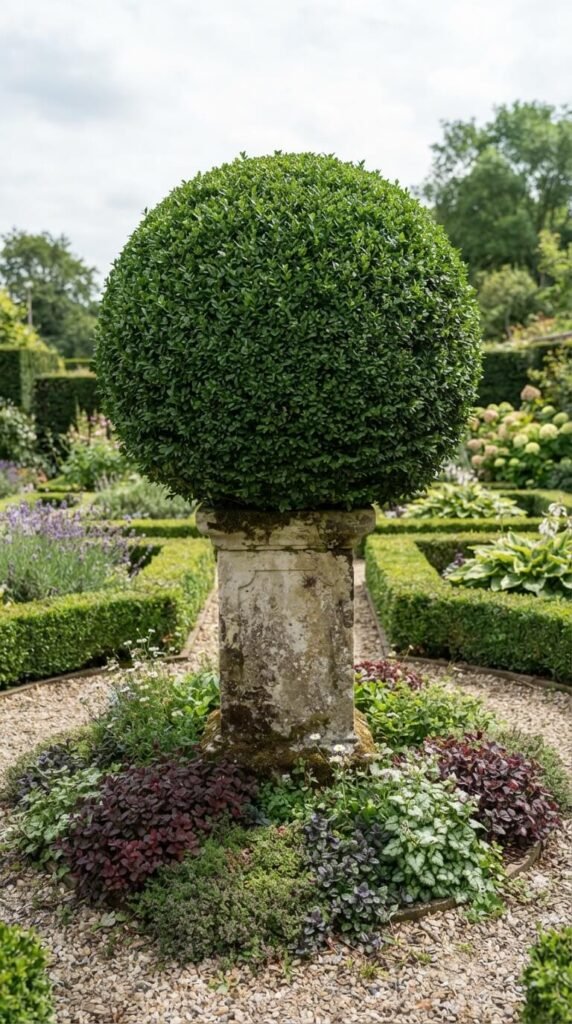
A large topiary sphere on a pedestal works like garden sculpture. It creates a strong focal point that draws the eye and anchors a planting bed. Privet grows quickly enough to fill in a sphere shape within one season if you start with a large plant. Use a circular wire form or a round template to guide your shears evenly. The key to a convincing sphere is slow, deliberate trimming — walking around the plant and checking from every angle. A simple stone or concrete pedestal lifts the sphere to eye level, adding that gallery-quality presence.
15. Climbing Ivy Trained Into a Cone Frame
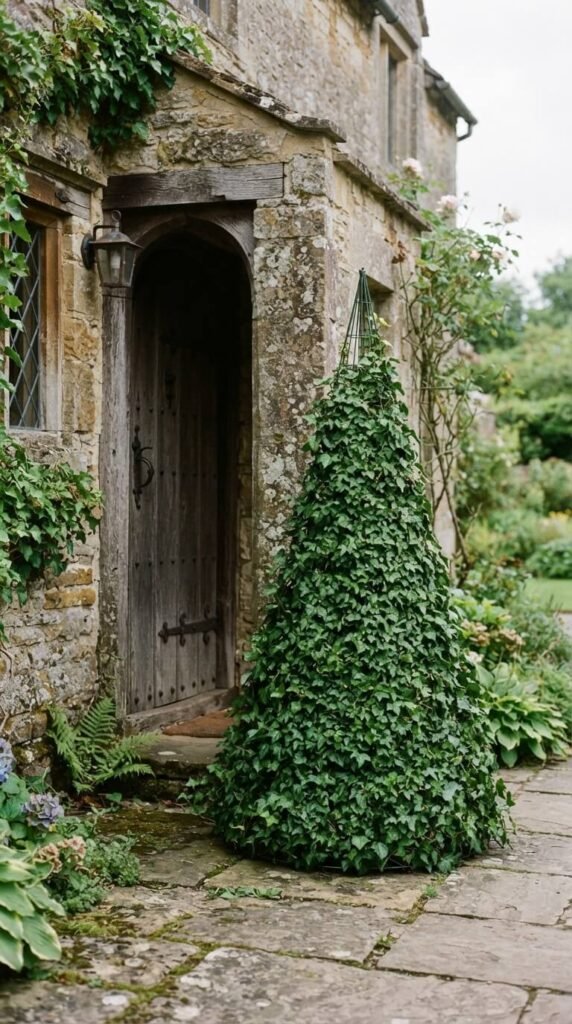
Not all topiary requires years of waiting. An ivy topiary frame is one of the fastest ways to add a shaped green column to your space. Buy a wire obelisk or cone frame — widely available for $10–$20 — plant English or Irish ivy at the base, and guide the stems up and through the frame. Within one growing season, you’ll have a fully covered green cone. Pin wayward stems with floral wire. The effect looks instant and lasts for years. This is one of the most affordable routes to a structured, sophisticated look.
16. Lavender Globe Standard for a Sunny Patio
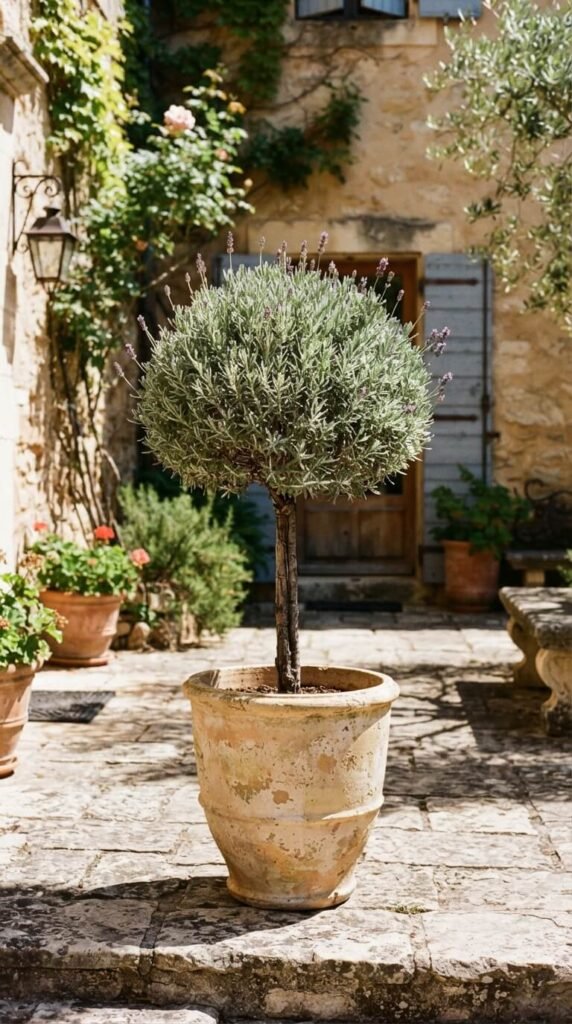
Training lavender into a globe standard requires patience, but the result is outstanding. Strip all side growth from the lower stem over 12 to 18 months, guiding the upper growth into a sphere. The fragrance alone makes this worth the effort. Lavender prefers full sun and excellent drainage — a terracotta pot with grit added to the compost is ideal. Don’t overwater. Once established, the woody stem thickens and the look becomes increasingly sculptural. Trim back after flowering to keep the globe compact. This works beautifully on a south-facing patio or rooftop.
17. Box Hedging in Geometric Raised Planters
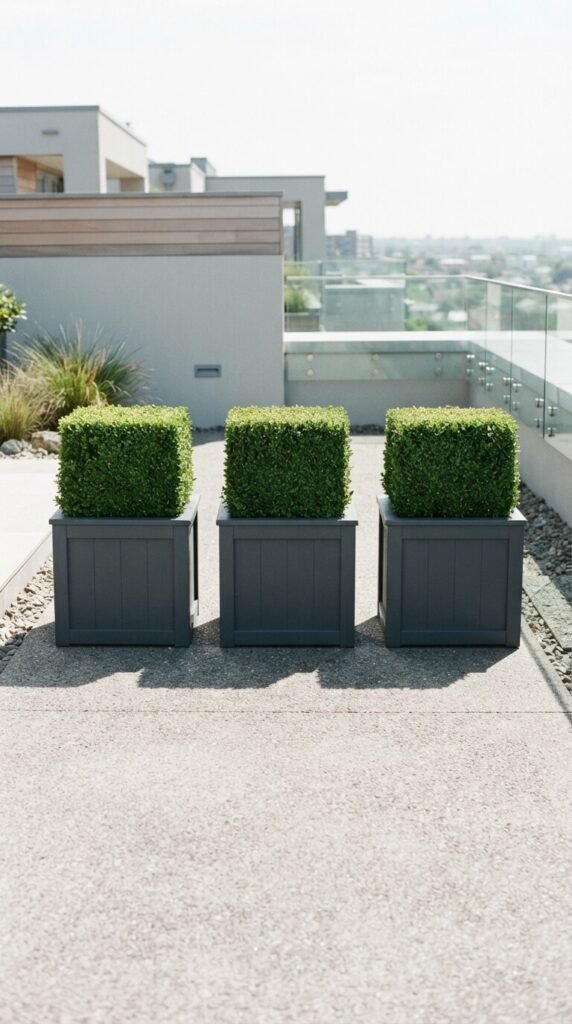
You don’t need a large garden to do formal hedging. Three matching raised planters with flat-top boxwood hedges create a linear, contemporary look on any terrace or driveway. Keep all three at exactly the same height — use a spirit level to check. Flat-top hedges are easier to maintain than shaped topiaries and look just as polished. This works as a windbreak, a privacy screen, or a visual divider between zones. The geometric repetition is what makes the arrangement look intentional. It’s a slow build, but once established, it’s almost zero-maintenance.
18. Camellia Standard in a Dark Glazed Pot
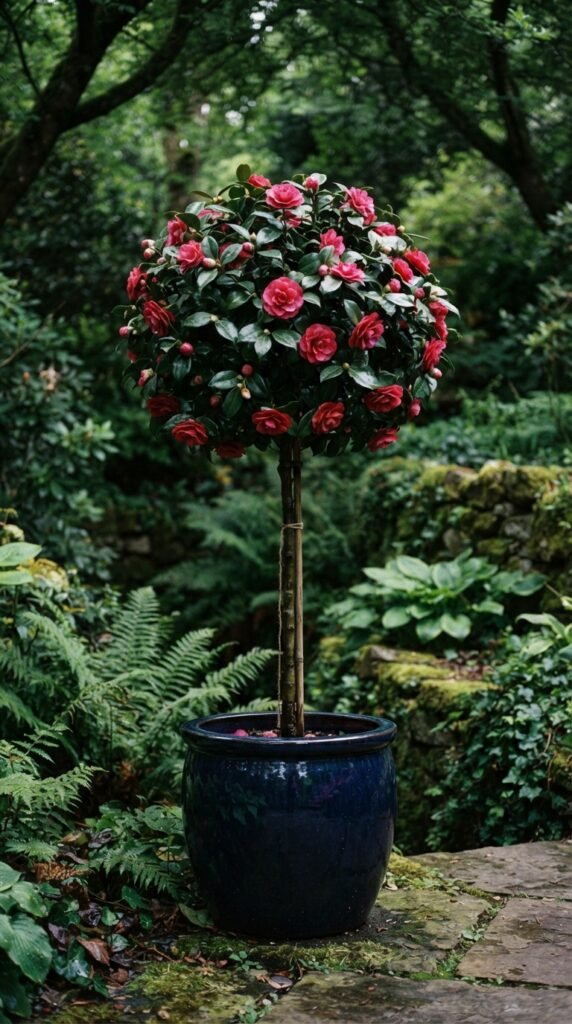
A camellia standard is a luxurious alternative to the usual boxwood topiary. Camellias flower in late winter or early spring, so your topiary also doubles as a seasonal statement. Strip all lower growth gradually over two years while allowing the canopy to thicken above. Camellias prefer light shade and acidic soil — use ericaceous compost and feed monthly with a specialist fertilizer. A dark midnight blue or deep plum glazed pot complements the waxy leaves and vivid blooms perfectly. This is one to show off in the most prominent spot in the garden.
19. Miniature Bonsai Topiary on a Garden Wall
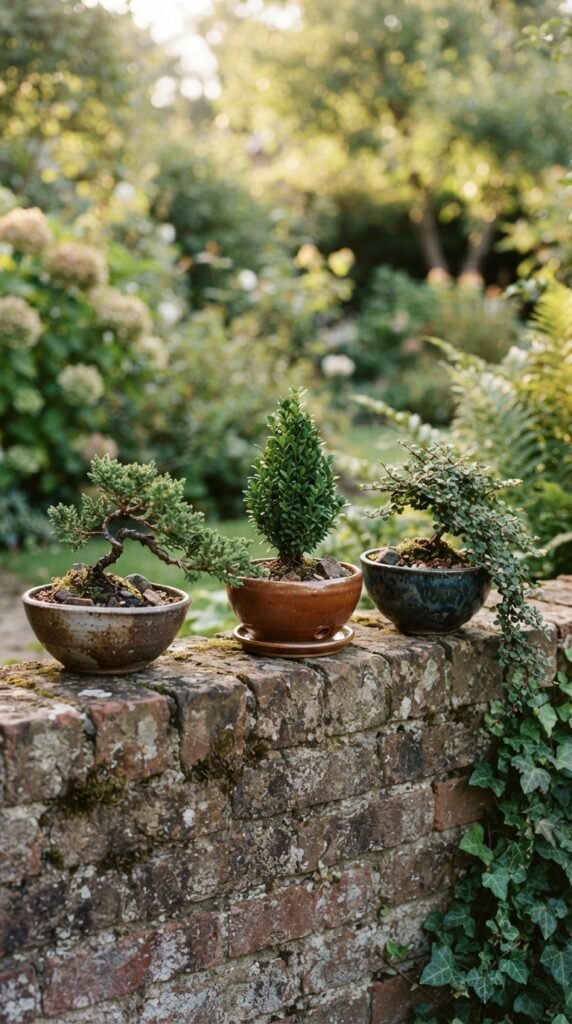
Miniature topiaries on a wall or shelf add dimension at eye level — something most gardens miss entirely. Small-leaved plants like cotoneaster, serissa, or juniper are ideal for compact, bonsai-style shaping. Three mismatched pieces of different heights in coordinating ceramic bowls create a gallery-like display. Keep them trimmed to scale — tiny plants look best with very fine scissors. Water regularly since small pots dry out fast. Sit them where people can look closely and appreciate the detail. The effect is quiet and sophisticated rather than loud or showy.
20. Clipped Hornbeam Column for Narrow Spaces
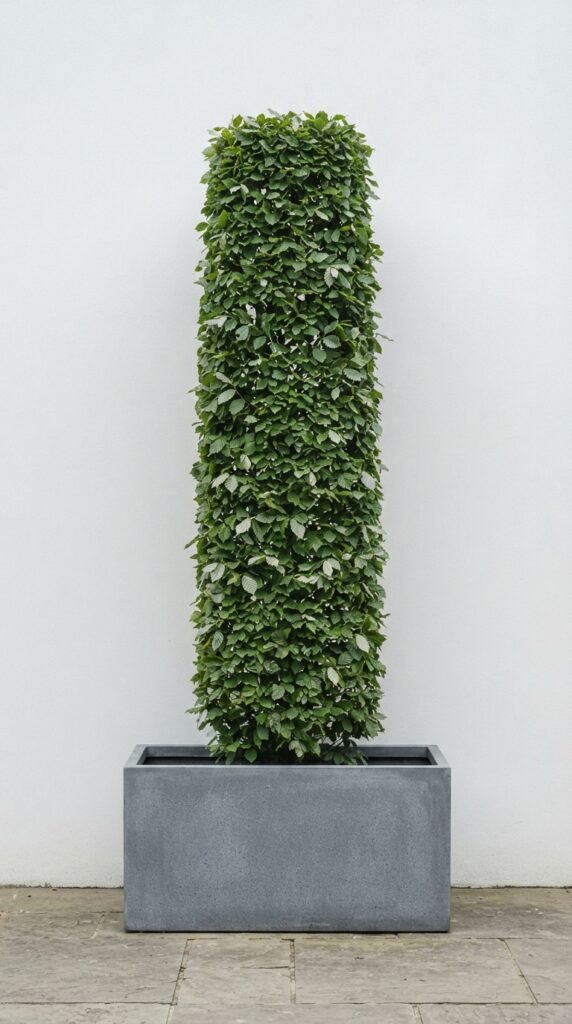
For genuinely narrow spaces — a passage, a side return, a slim balcony — the hornbeam column is hard to beat. Hornbeam holds a clean column shape better than almost any other plant and tolerates trimming back hard. It’s also tolerant of shade, which makes it one of few topiary choices that works in darker spots. Clip twice a year — once in late spring and once in late summer — to keep the column crisp. A tall, rectangular planter in slate or dark concrete reinforces the clean vertical line. One or two columns flanking a window work like living curtains.
21. Festive Topiary Cone Decorated for the Holidays
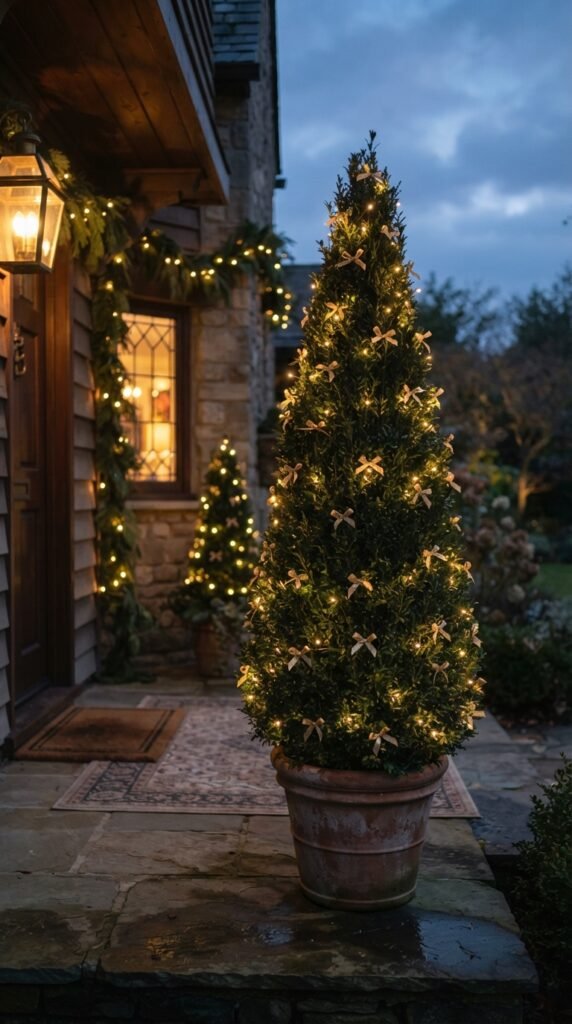
Living topiary cones are the most sophisticated alternative to a cut Christmas tree. A 12-inch Italian cypress or Alberta spruce in a pot becomes a beautifully shaped cone with zero effort — the plant does the work naturally. Add warm white LED string lights and a few gold or copper ornaments for a festive look that doesn’t feel overdone. After the holidays, remove the decorations and move the plant back to its spot outdoors. It stays in shape year after year. This is also far cheaper long-term than buying a cut tree annually.
22. Bay Tree Pyramid as a Kitchen Garden Feature
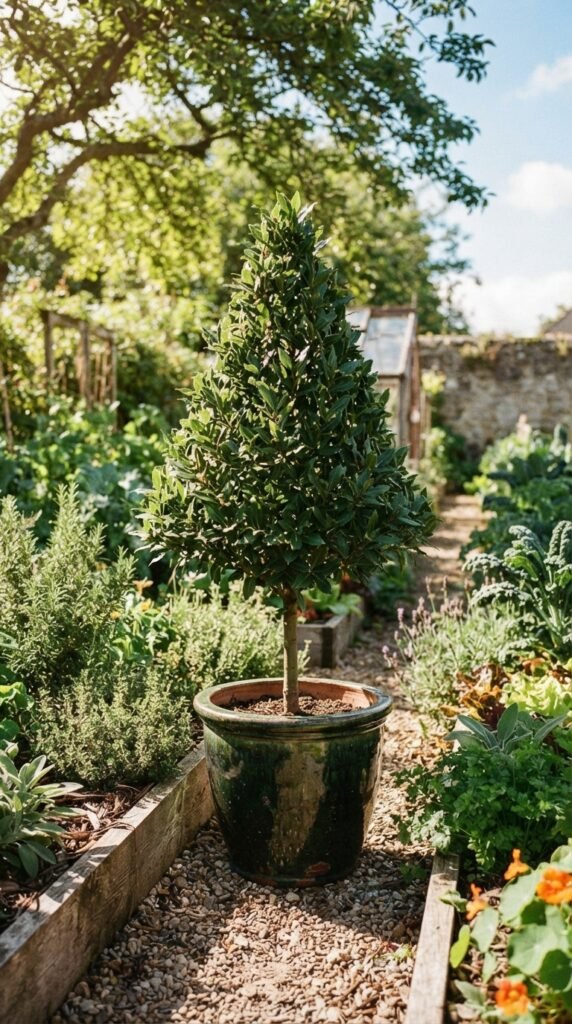
A bay tree pyramid belongs in every kitchen garden. It’s functional — you harvest the leaves — and architectural, providing a year-round focal point among seasonal crops. Bay grows slowly, which makes it easy to control and shape over time. Guide the lateral branches outward and trim the tips regularly to define the pyramid form. Unlike boxwood, there’s no risk of blight, and the plant gets more valuable (and useful) every year. Use a dark glazed pot to separate it visually from the surrounding vegetable beds. It’s beauty and practicality in the same plant.
Conclusion
Topiary works because it does something most plants can’t — it holds a shape. That shape creates height, structure, and intention, three things that separate a beautiful space from a forgettable one. Whether you choose a double ball spiral for your front door, a slim pencil pine for your balcony, or a rosemary cone for your kitchen step, the principle is the same: one well-placed, well-maintained plant transforms how the whole space reads. Start with a single piece. Choose a plant that suits your light and climate. Keep it trimmed, keep it healthy, and let the shape do the work. You don’t need a grand estate. You just need a good eye and the willingness to start.