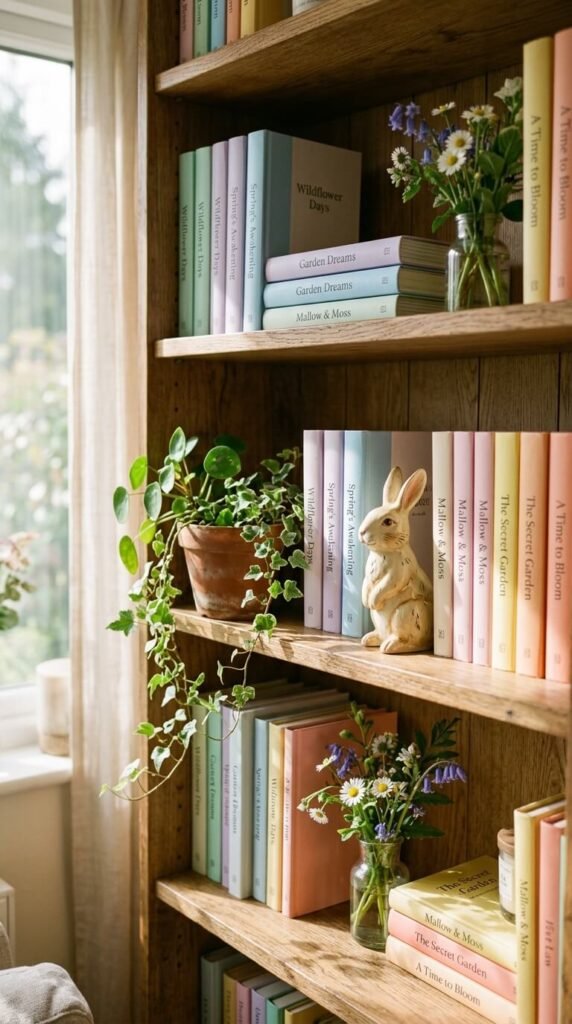
Spring is the perfect excuse to pull every book off your shelves and start over. A bookshelf isn’t just storage — it’s a small stage for the things you love, from paperback collections to flea-market finds. With the right mix of color, texture, and a little seasonal greenery, your shelves can feel like a fresh, curated corner of your home without spending a fortune. Below are 24 practical, budget-friendly ways to style your bookshelf this spring and finally show off the collections you’ve been hiding.
1. Sort Books By Color, Not Author
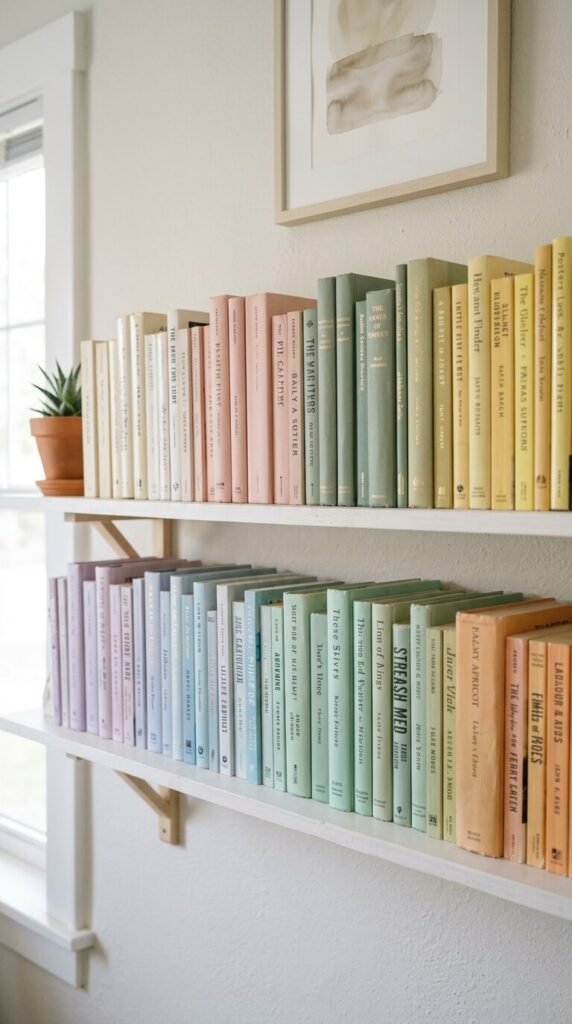
Color sorting turns a plain shelf into art. Group your books by spine color and build a soft gradient across each row. Start light, end dark, or go rainbow if you’re bold. This trick works with any budget — you already own the books. Try pastel tones for spring: blush pink, sage green, butter yellow. It takes an afternoon and costs nothing. The result looks curated, even if your collection is a mix of thrift finds and hand-me-downs.
2. Mix Vertical And Horizontal Stacks
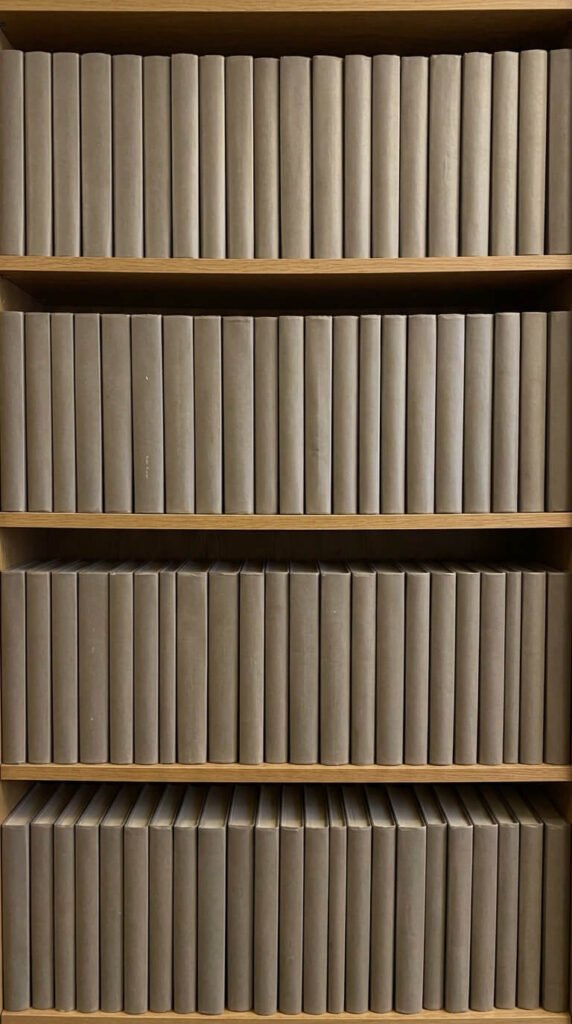
Straight rows of upright books get boring fast. Break the pattern. Stack a few books flat, then rest a small object on top — a candle, a shell, a tiny plant. Lean one or two books against the stack at an angle. This creates natural height changes across the shelf. It’s an easy fix that takes five minutes per shelf. No new purchases needed, just rearrange what’s already there.
3. Add A Trailing Plant For Softness
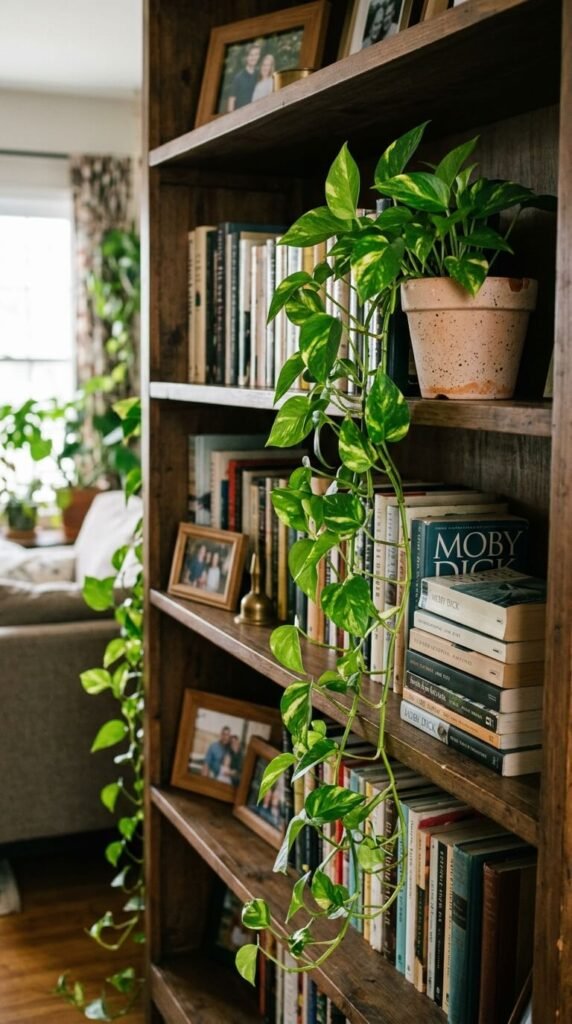
A plant instantly softens hard edges. Pick something with trailing vines, like pothos or ivy, and let it spill over the shelf edge. Thrift stores often sell small pots for a dollar or two. Fake plants work fine if you forget to water things. Place it at the end of a row so the vines drape down the side of the shelf. It adds movement and a spring feel without much effort.
4. Use Bookends As Mini Sculptures
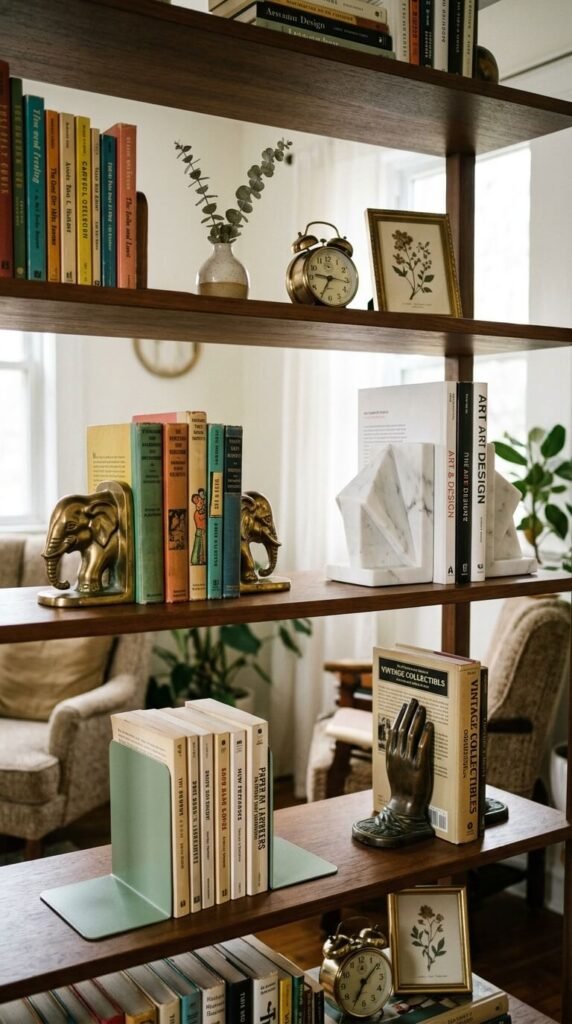
Skip boring bookends. Look for ones shaped like animals, hands, or geometric forms. Thrift shops and yard sales often have unique ones for cheap. Bookends don’t just hold books up — they can be the focal point of a shelf. Paint a plain pair with spray paint in a soft spring color for an instant upgrade. Brass or marble-look finishes photograph especially well if you share your shelf online.
5. Create A Small Reading Nook Corner
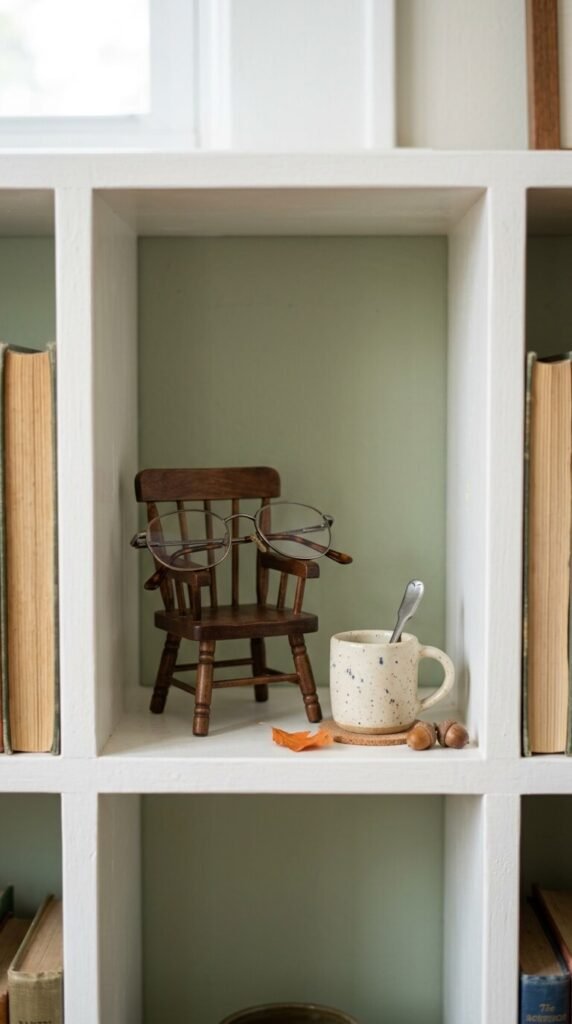
Dedicate one shelf section to a mini scene. Add a small chair-shaped object, a mug, or reading glasses. This tells a tiny story instead of just holding books. Keep it simple — three or four items max. Rotate the props each season to keep things interesting. This trick works well on lower shelves at eye level, where people naturally pause and look.
6. Layer In Woven Baskets
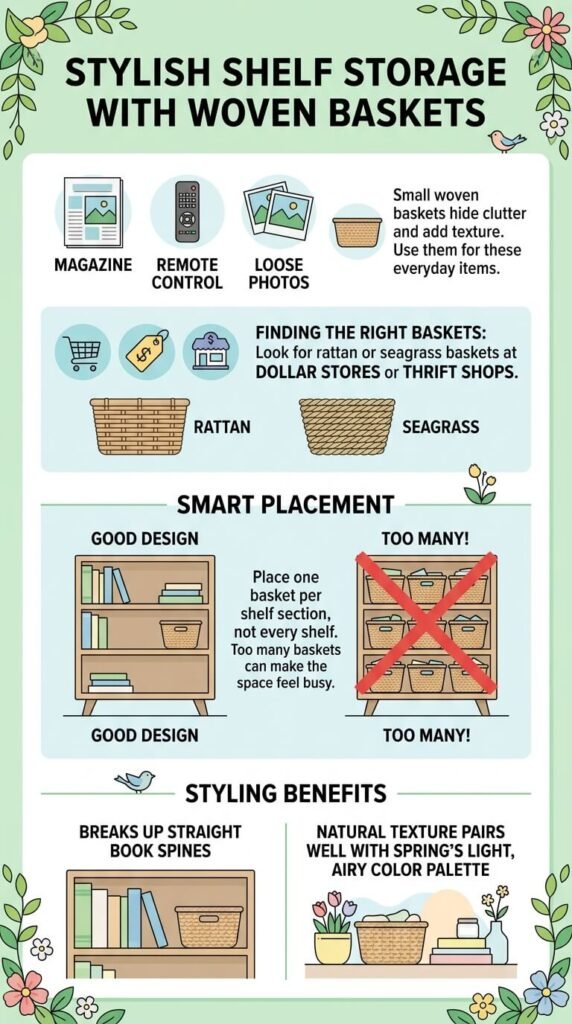
Small woven baskets hide clutter and add texture. Use them for magazines, remote controls, or loose photos. Look for rattan or seagrass baskets at dollar stores or thrift shops. Place one basket per shelf section, not every shelf. Too many baskets can make the space feel busy. The natural texture pairs well with spring’s light, airy color palette and breaks up rows of straight book spines.
7. Display Books With Covers Facing Out
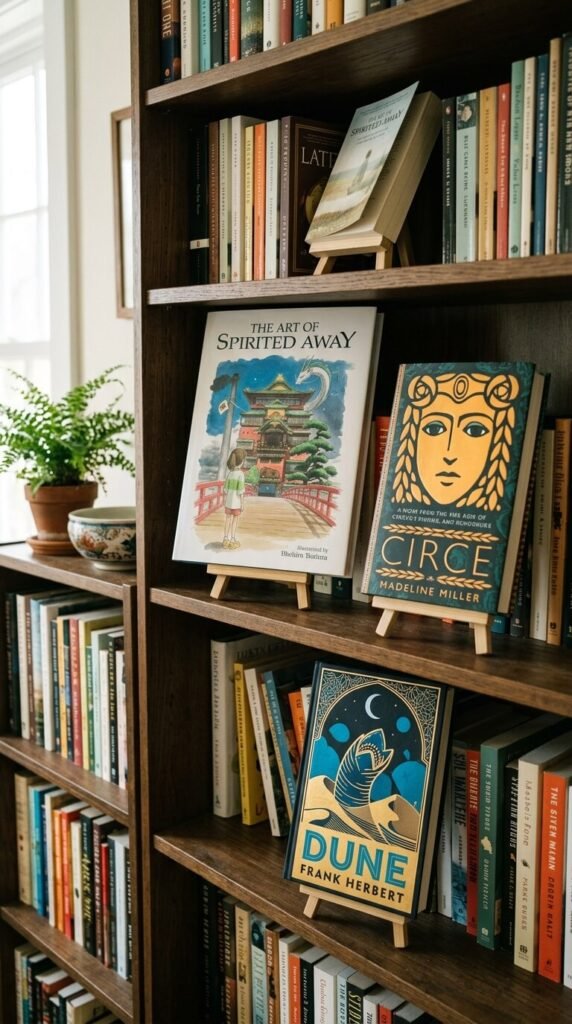
Pick your three or four favorite covers and turn them face-forward. This works especially well for art books or ones with striking covers. It breaks the visual rhythm of spine after spine. Use a small easel or simply lean the book against other books. Rotate which titles you feature every few weeks. It’s a free way to highlight books you’re currently reading or love most.
8. Add Framed Botanical Prints
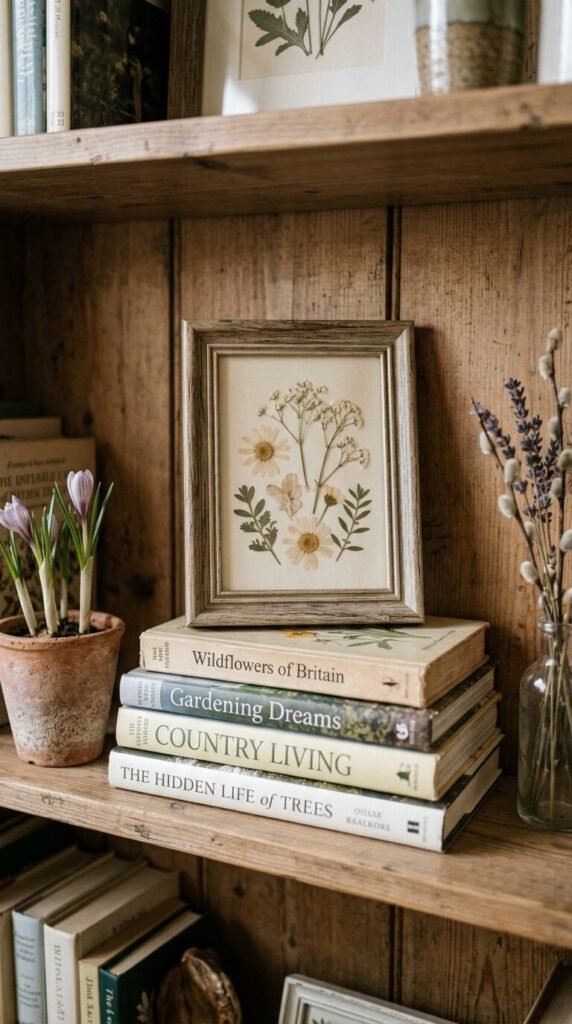
Lean a small framed print against the back of the shelf instead of hanging it. Botanical prints, pressed flowers, or simple line drawings fit the spring mood well. Thrift stores sell frames cheap — swap the art inside for something seasonal. Prop it behind a stack of books so only the top half shows. This layering trick adds depth without taking up shelf space.
9. Group Collections By Theme
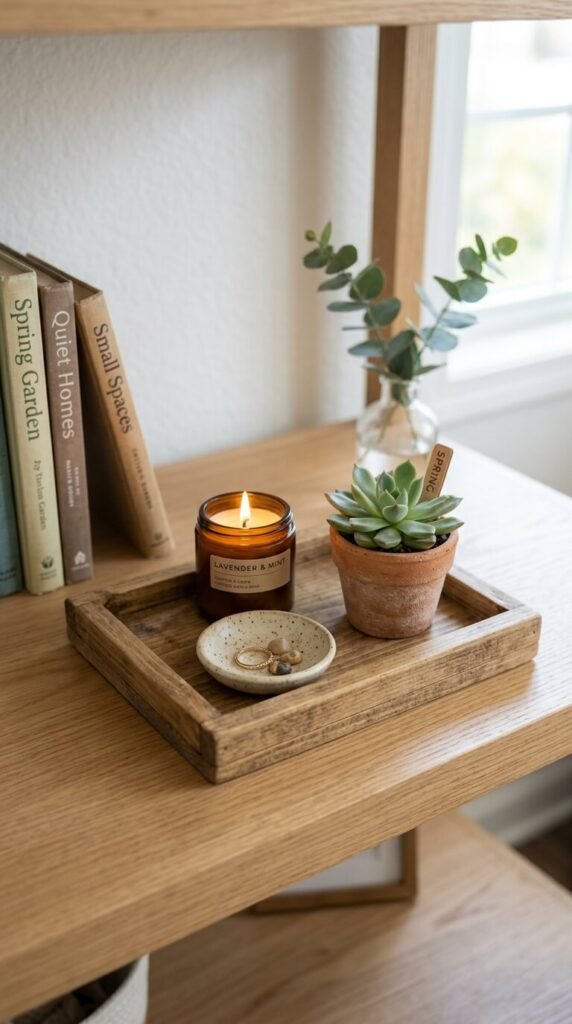
If you collect vintage cameras, seashells, or small figurines, cluster them together instead of scattering them. Group items in odd numbers — three or five — for a natural look. Place your collection on one dedicated shelf so it reads as intentional, not random. Odd groupings feel more balanced to the eye than pairs. This is a free styling method using items you already own.
10. Use A Tray To Anchor Small Objects
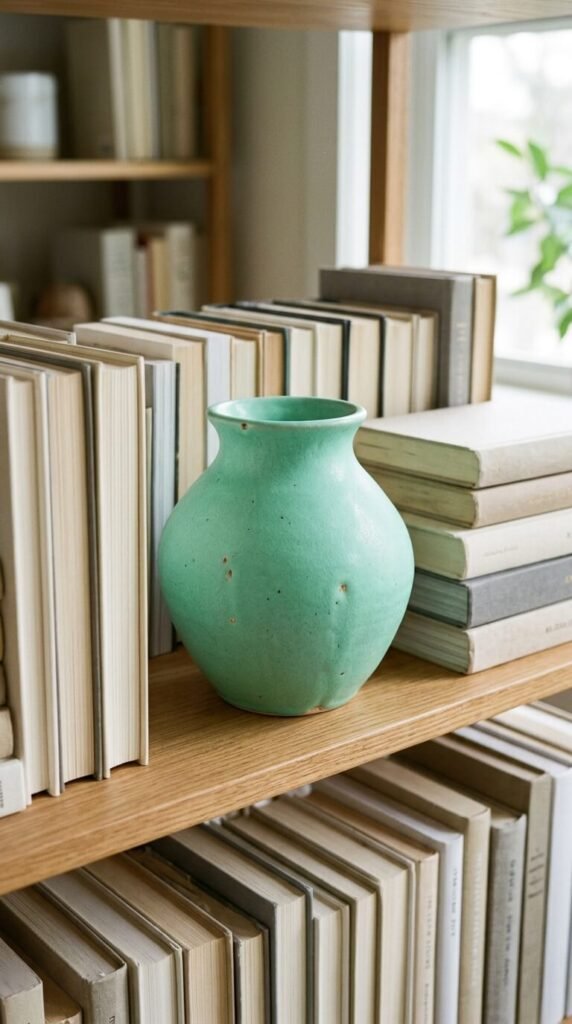
A small tray keeps tiny items from looking scattered. Place a candle, a small dish, and a mini plant on one tray. This grouping trick works on any shelf with loose knickknacks. Wooden or mirrored trays both work well for spring. Dollar stores carry simple options. The tray acts like a frame, pulling random objects into one cohesive little scene.
11. Add A Pop Of Spring Color With Ceramics
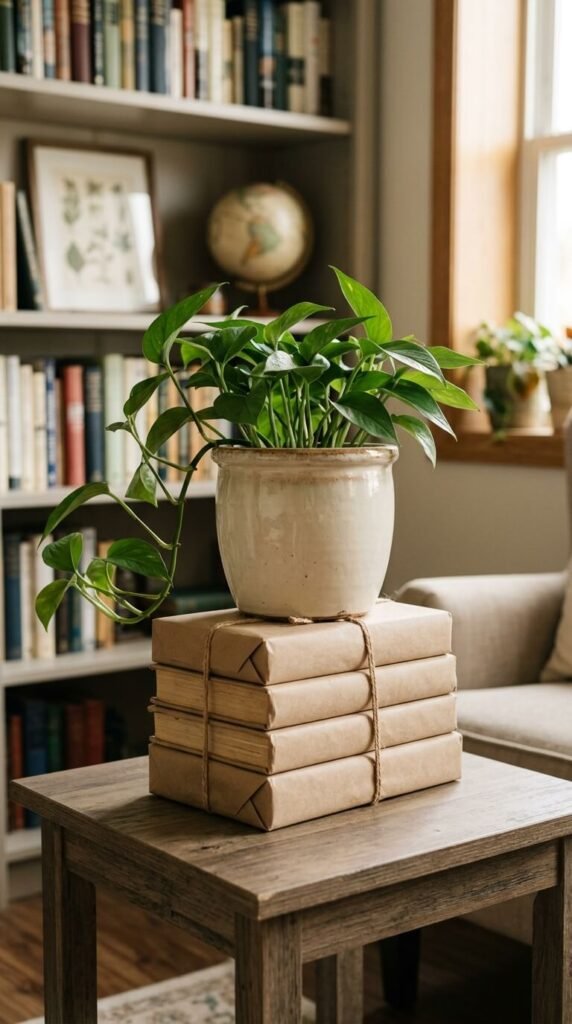
A single colorful ceramic vase or bowl can carry a whole shelf. Choose one spring shade — coral, mint, or lavender — and let it stand alone against neutral books. Thrift shops are full of ceramic pieces under five dollars. You don’t need a matching set. One bold piece per shelf is enough to draw the eye without overwhelming the space.
12. Stack Books As A Plant Stand
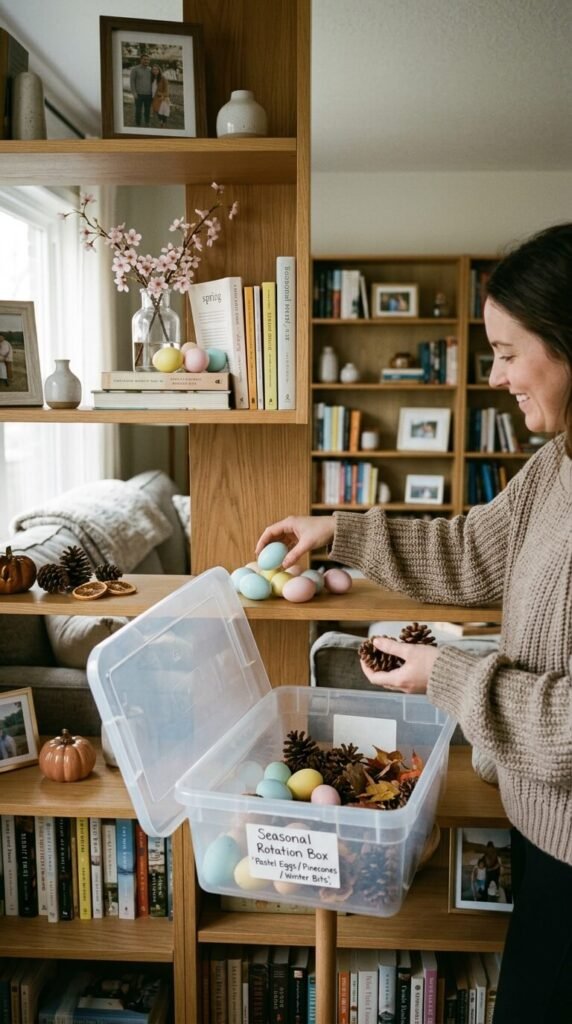
Use a small stack of books as a pedestal for a potted plant. This raises the plant to a better height and adds visual interest at the same time. Pick old paperbacks you don’t mind using as props. Wrap them in plain paper if the spines clash with your color scheme. It’s a two-in-one trick: storage and styling in one move.
13. Add Small Woven Or Wooden Trinkets
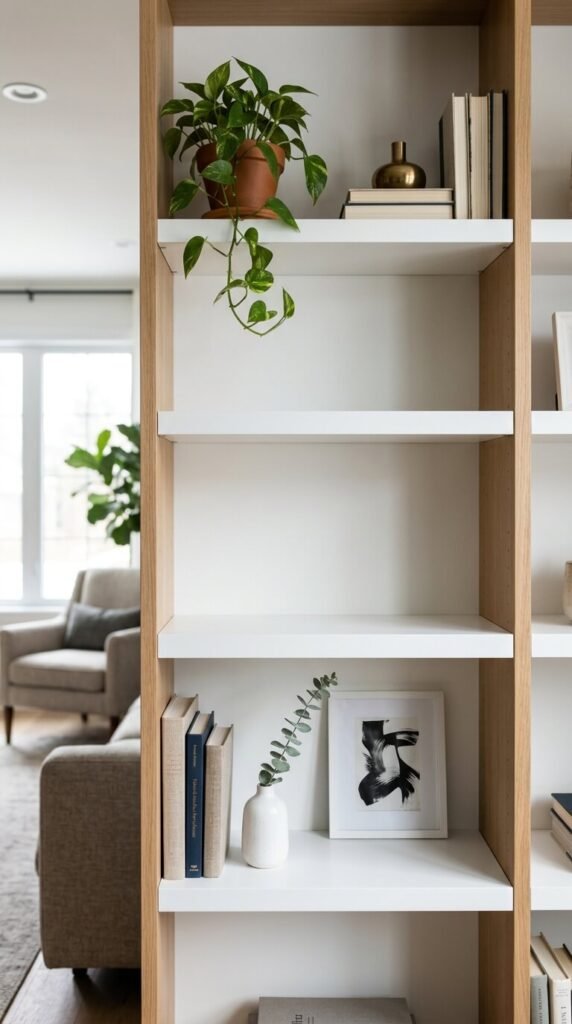
Small wooden carvings, woven coasters, or little bowls add texture without much cost. Look for natural materials that feel organic against straight book spines. Place one or two per shelf, not a cluttered row. These trinkets photograph well in natural light and give the shelf a handmade, personal feel. Flea markets and craft fairs are good sources for unique, affordable pieces.
14. Rotate Seasonal Objects Every Few Months
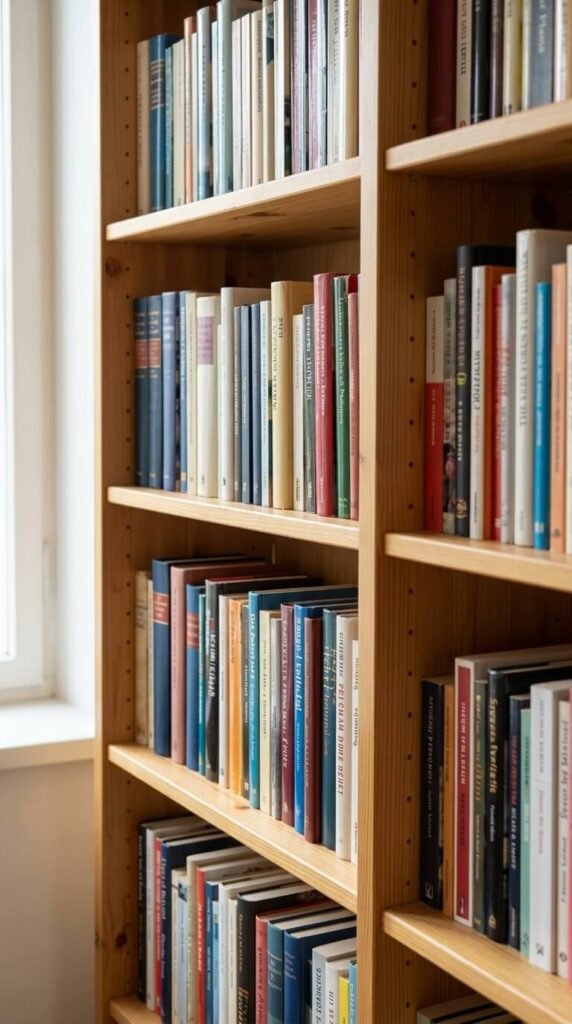
Keep a small box of seasonal decor — pastel eggs for spring, pinecones for fall — and swap pieces out shelf by shelf. This keeps your bookshelf feeling current without buying new decor constantly. Spend ten minutes each season rotating three or four items. It’s a low-cost way to keep the space feeling intentional instead of static all year.
15. Use Negative Space On Purpose
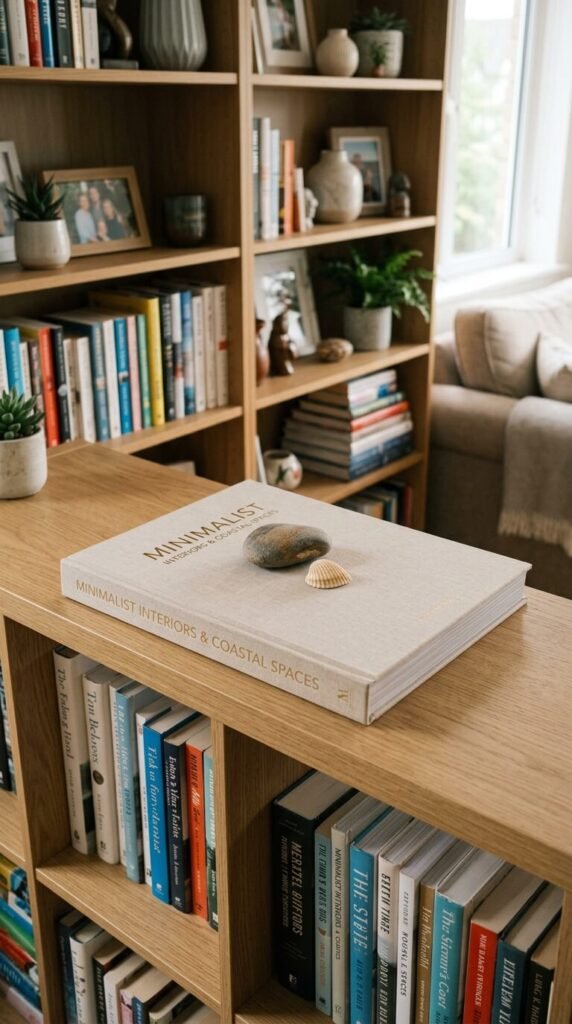
Don’t fill every inch. Leave open space on at least one shelf. Empty space lets your eye rest and makes the styled areas stand out more. This is the easiest, cheapest tip on this list — it costs nothing and takes seconds. A shelf packed edge to edge looks cluttered, no matter how nice the individual pieces are.
16. Add A Small Mirror For Light
Prop a small mirror against the back wall of one shelf. It bounces light around the room and makes the space feel bigger. Thrift stores often carry small framed mirrors for a few dollars. Position it behind a short stack of books so only the top edge peeks out. This trick works especially well on shelves near a window.
17. Use Fabric Or Ribbon As A Backdrop
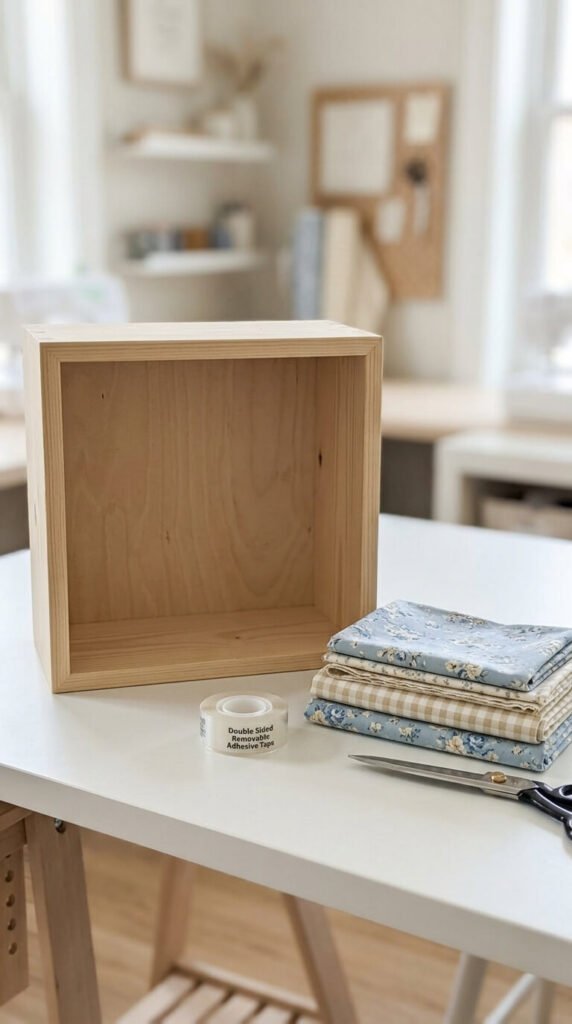
Line the back panel of one shelf cube with fabric or wallpaper scraps. A soft floral or gingham print adds a spring feel behind your books. Use removable adhesive so you can change it later. This is a weekend project that costs very little if you use fabric remnants. It makes open shelving feel more like furniture than storage.
18. Display A Single Statement Book
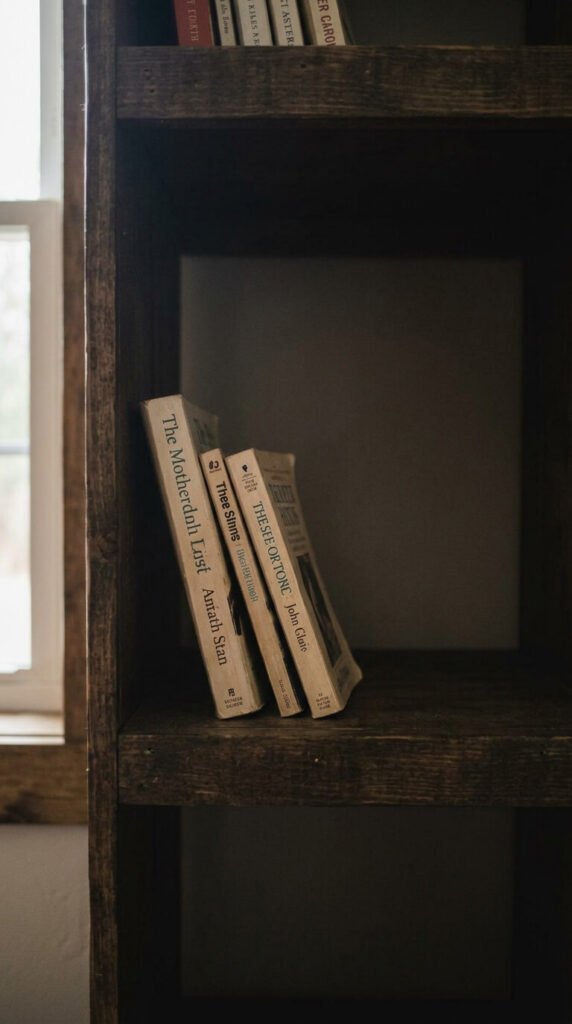
Pick one oversized coffee table book and lay it flat on its own. Top it with a small object like a stone or shell. This creates a calm, uncluttered focal point on an otherwise busy shelf. Choose a book with a cover color that matches your palette. It’s a simple, free styling move if you already own a large book.
19. Add Dried Or Faux Flowers In A Small Vase
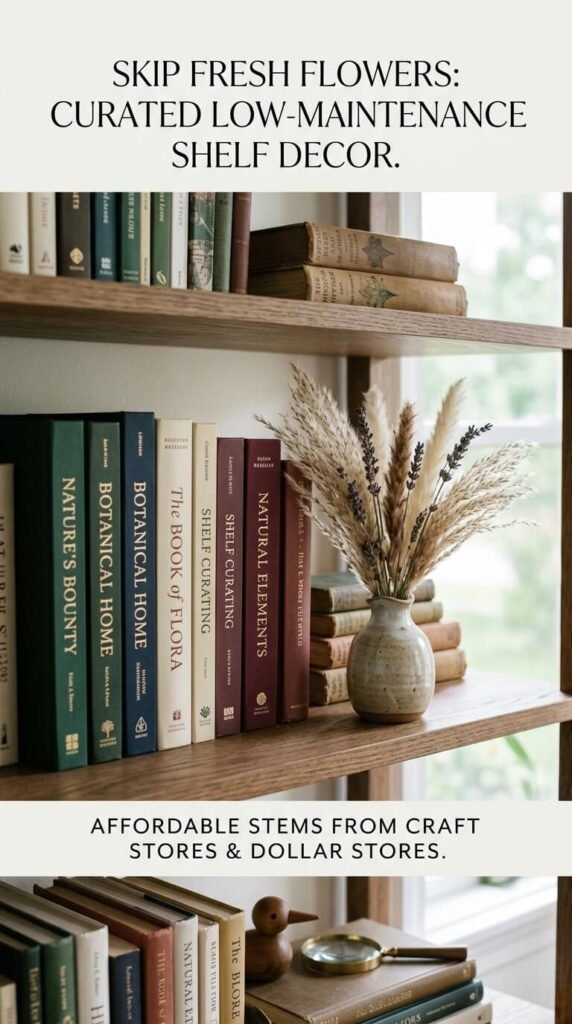
Skip fresh flowers if you want something low-maintenance. Dried pampas grass, lavender, or faux stems hold their look for months. Use a small bud vase so the flowers don’t overwhelm the shelf. Dollar stores and craft stores both carry affordable stems. Place the vase near the edge of a shelf so it doesn’t block book spines behind it.
20. Create Height Variation With Risers

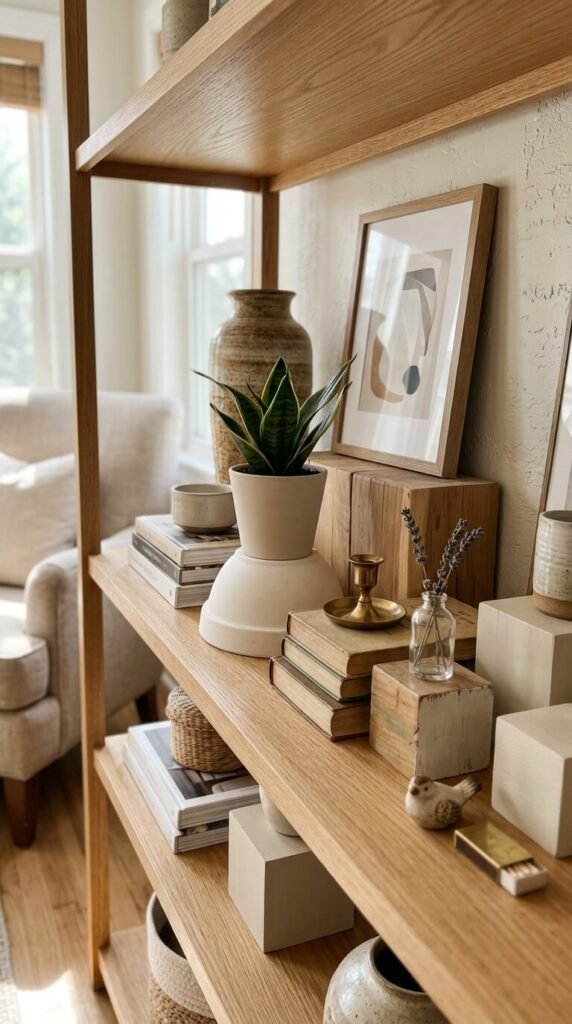
Use small wooden blocks or overturned bowls as risers under objects. This adds height differences across a flat shelf, which keeps the eye moving. You can DIY risers from scrap wood painted a neutral color. Place your tallest item at the back, shortest at the front. This layering trick is used by professional stylists and costs almost nothing to try at home.
21. Label Sections With Small Tags
If your collection is large, add small handwritten tags to mark sections — genre, author, or color group. Use plain cardstock and a fine-tip pen. This isn’t just decorative, it makes the shelf functional too. Guests browsing your shelves will appreciate the organization. It’s a five-minute project that adds a personal, thoughtful touch to your styling.
22. Add A Small Plant Cutting In Water

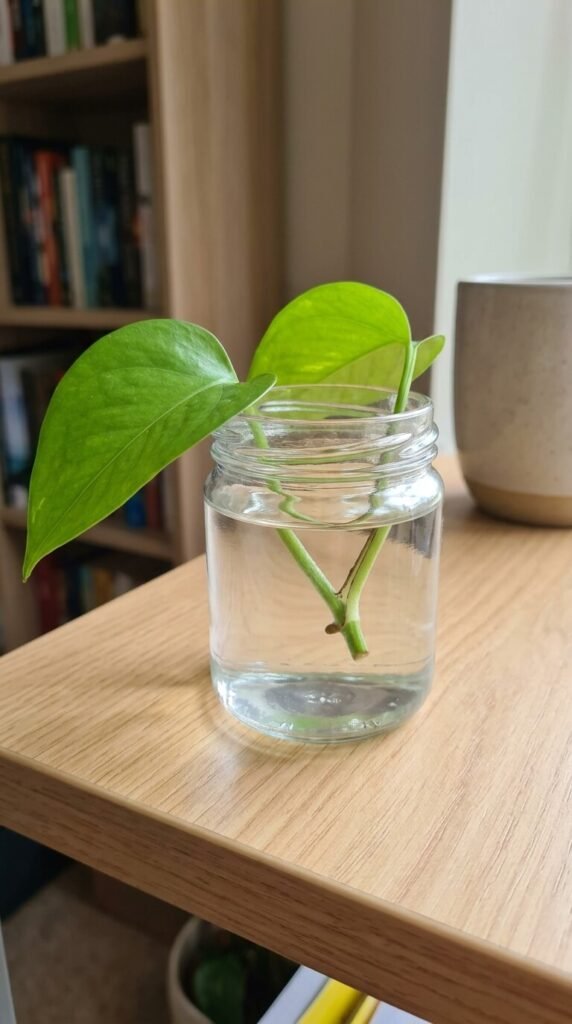
Instead of buying a whole plant, root a cutting in a small glass jar of water. Pothos and philodendron cuttings root easily and look charming on a shelf. This costs nothing if you already have a plant at home or know someone who does. The glass jar adds a clean, modern touch, and watching roots grow is a nice bonus.
23. Use A Small Clock Or Vintage Object As An Accent
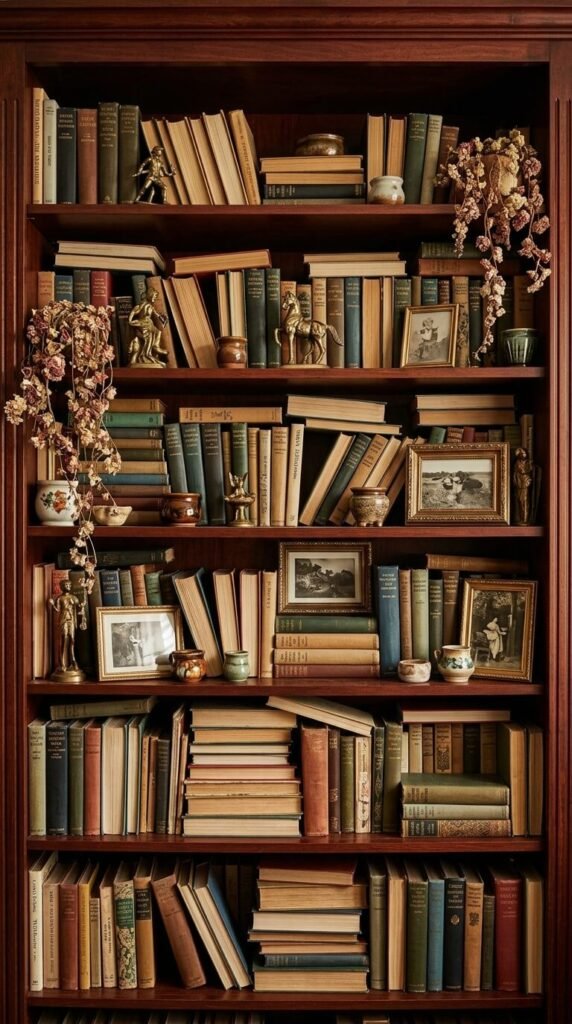
An old wind-up clock, a vintage camera, or a small brass object adds character fast. These pieces work well as a single accent on an otherwise simple shelf. Estate sales and thrift shops are good hunting grounds. Pick one piece with some age or patina — it adds a story to the shelf that new decor can’t match.
24. Step Back And Edit Ruthlessly
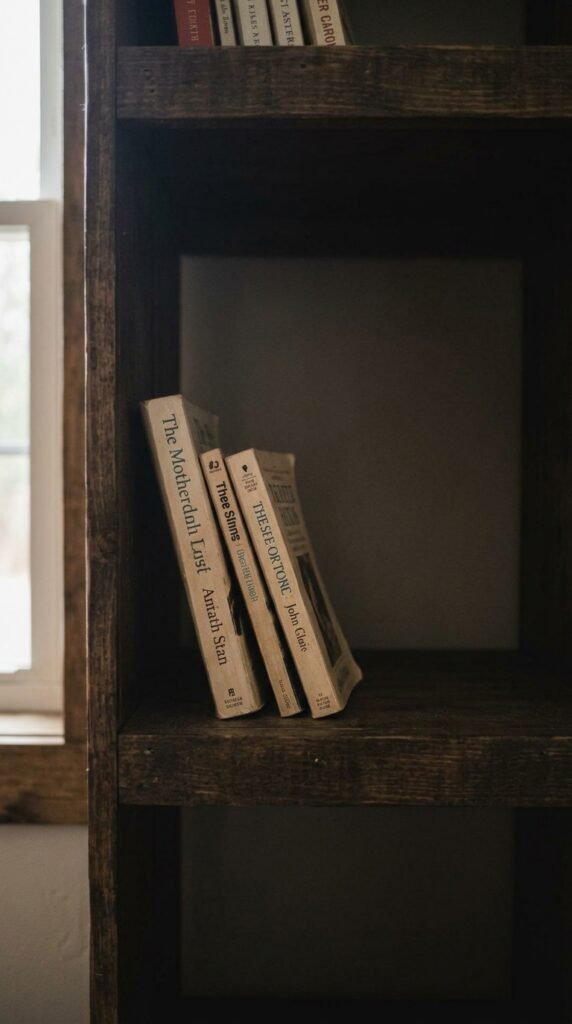
Once every shelf is styled, walk away and come back with fresh eyes. Remove anything that feels crowded or repetitive. Good shelf styling is often about subtraction, not addition. Take a photo — it’s easier to spot clutter in a picture than in person. Trim the shelf down until every object earns its spot.
Conclusion
Styling a spring bookshelf doesn’t require a big budget or a design degree. Small, simple changes — sorting by color, adding a plant, leaving open space — turn ordinary shelves into a display worth showing off. Try a few tips from this list this weekend, mix and match what works for your space, and let your bookshelf reflect the collections and pieces you actually love.