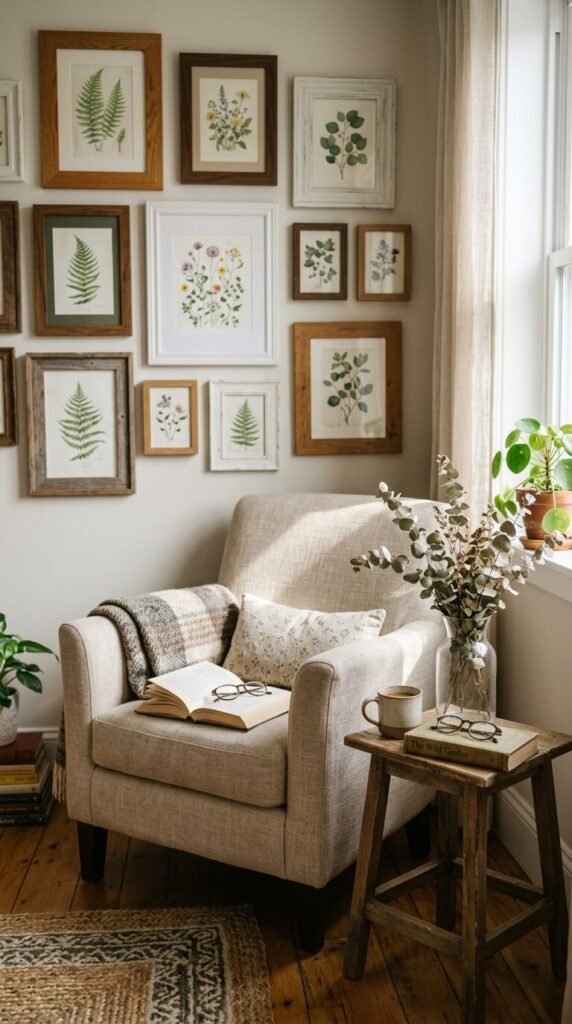
Botanical prints turn bare walls into a private garden that never wilts. Whether you love the delicate linework of vintage herbarium sheets or the bold color of tropical leaf art, these prints add texture, calm, and a lived-in feel to any room. They work in rentals, small apartments, and full-size homes alike, and most cost far less than real houseplants that need light, water, and attention. Below are 25 fresh ways to bring botanical prints into your space, plus simple, budget-friendly ideas you can start this weekend.
1. Vintage Herbarium Sheets
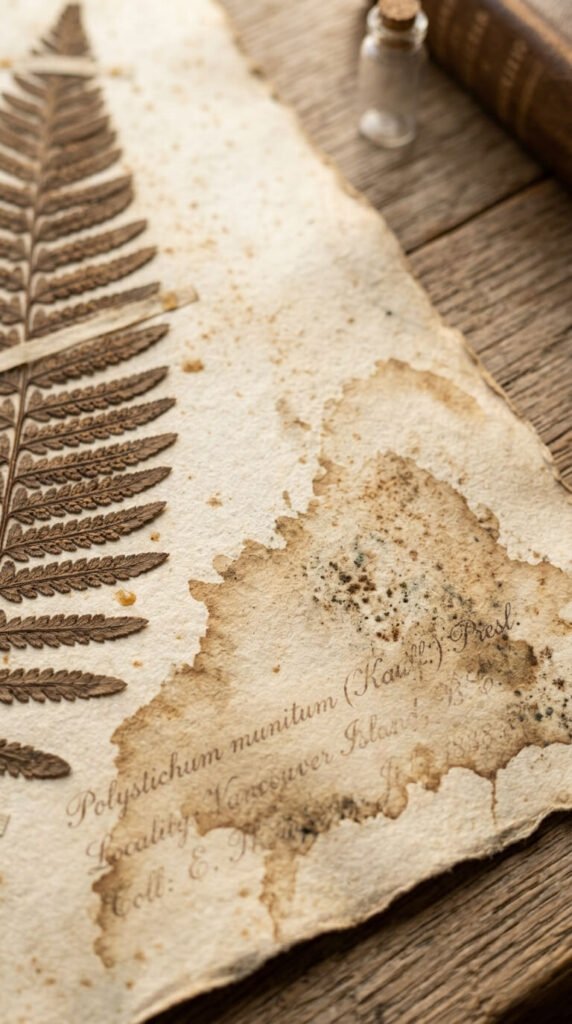
Old herbarium sheets have a quiet, scientific charm. Look for reprints online or at estate sales. Frame a few together in thin black frames for a clean, museum look. Skip pricey originals — reproductions look nearly identical. Group three or four sheets in a row above a console table. The faded ink and pressed-leaf outlines add age without clutter. This style works well in studies, hallways, or reading corners where you want something quiet, not loud.
2. Tropical Leaf Statement Wall
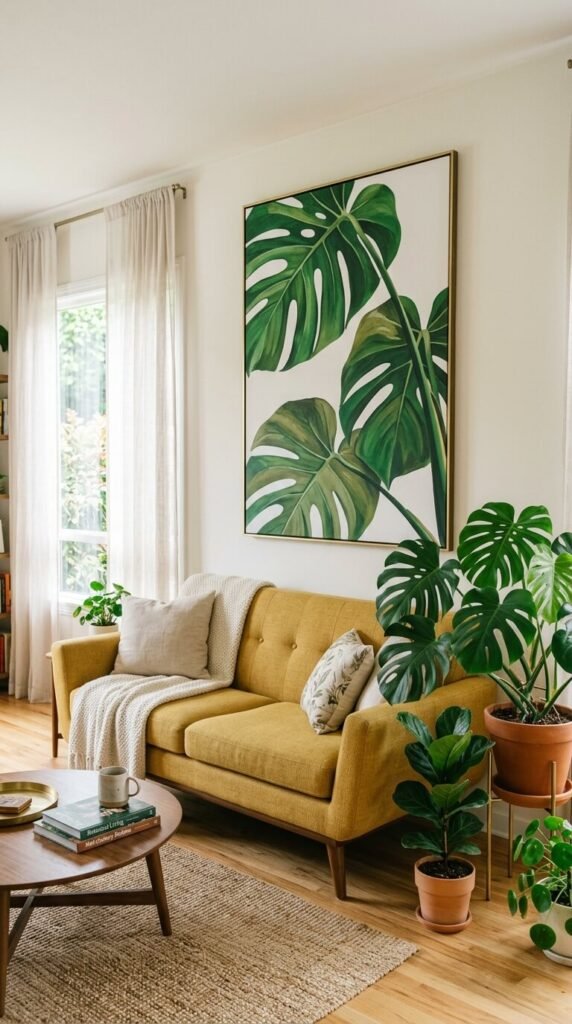
Go big with one oversized leaf print instead of many small ones. A single monstera or banana leaf poster fills a wall fast and cheap. Print shops often sell large-format posters for less than a small framed piece. Pair it with a simple black frame or none at all — clip it to a wood dowel for a relaxed look. This works best above sofas or beds where you need one strong focal point without buying multiple pieces.
3. Botanical Grid Gallery Wall
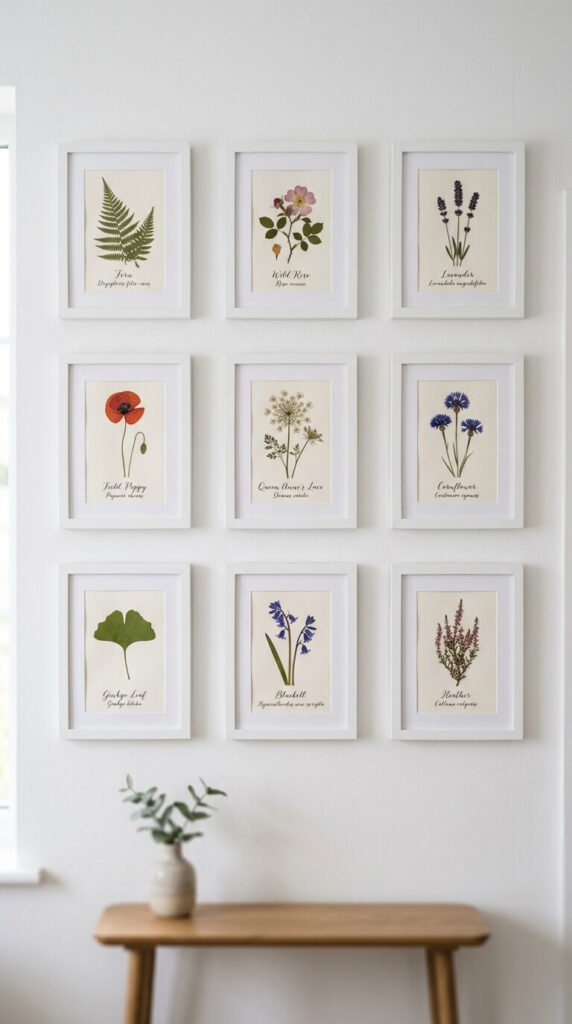
A grid layout keeps things tidy even with lots of prints. Pick one frame color and size, then fill each slot with a different flower or leaf. Print your own from free botanical archives to save money. Use a paper template on the wall first to plan spacing before hammering nails. Nine or twelve frames in a 3×3 or 3×4 grid reads as intentional, not cluttered. This is a great weekend project for a stairwell or hallway.
4. Pressed Flower Frames You Make Yourself
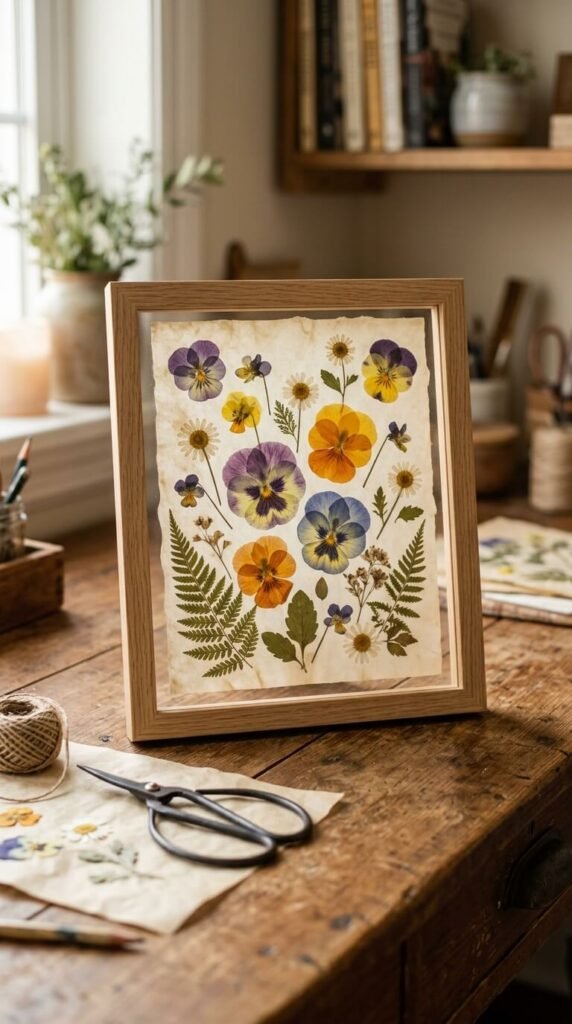
Skip buying prints and press your own flowers instead. Pick blooms from your yard or a cheap grocery bouquet. Flatten them in a heavy book for two weeks. Then sandwich them between two pieces of glass in a simple floating frame. This costs almost nothing and feels personal. Try mixing petals with ferns for texture. It’s a relaxing project for a rainy afternoon, and no two frames turn out the same.
5. Black and White Botanical Line Art
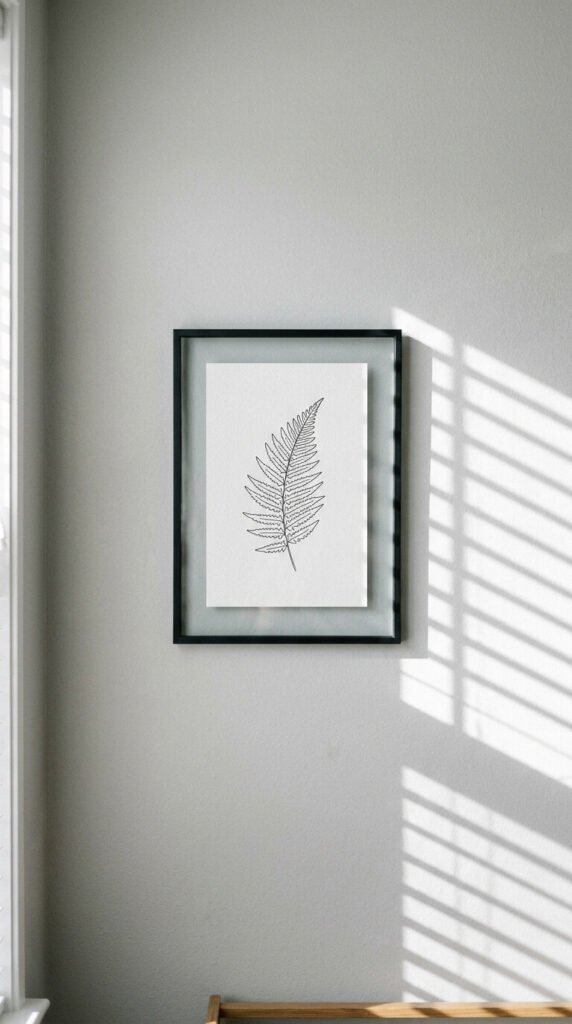
Simple line drawings suit modern, uncluttered rooms. A single black line on white paper reads as calm and modern. These prints are cheap to find because they use so little ink and detail. Hang one small piece per wall instead of clustering several. This style pairs well with wood furniture and neutral textiles. If you’re on a tight budget, sketch your own leaf outline and photocopy it onto thick cardstock for a free version.
6. Botanical Prints in the Bathroom
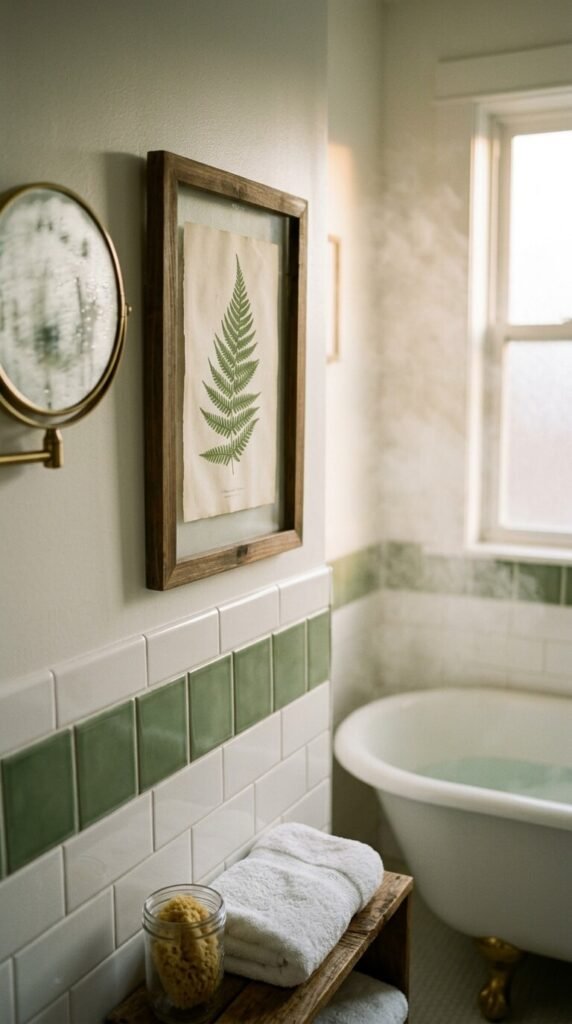
Bathrooms often get skipped when decorating, but they’re perfect for botanical prints. Choose fern or palm prints since they echo the humid, jungle feel already present. Use a plastic or acrylic frame instead of wood, since wood warps in steam. Small prints above the toilet or beside the mirror fill dead space cheaply. Thrift stores often sell single botanical frames for a couple of dollars — perfect for a room where you don’t want to spend much.
7. Layered Leaning Frames
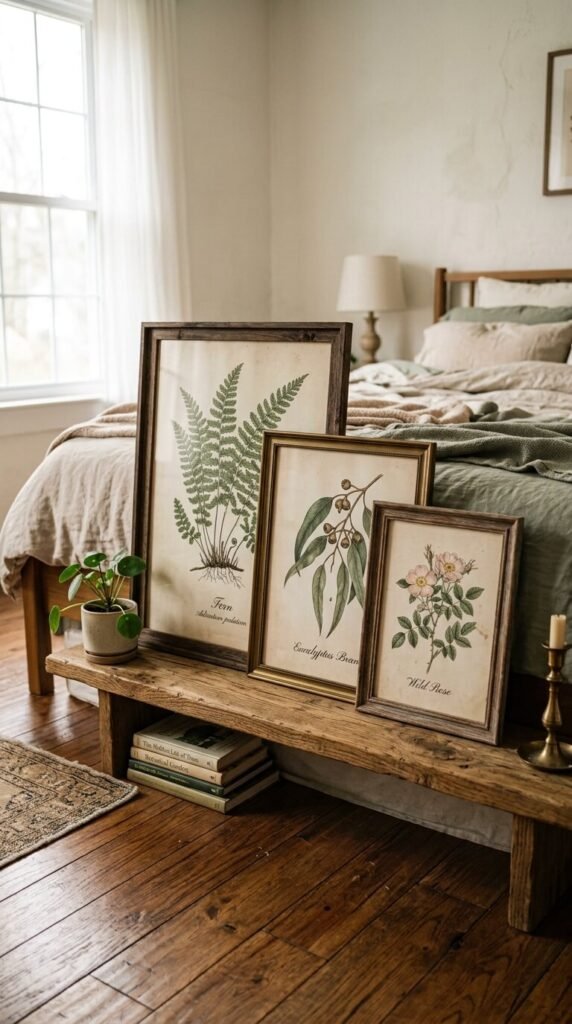
Skip the hammer and nails entirely. Lean two or three botanical prints against the wall on a shelf or floating ledge. Layer a small print in front of a larger one for depth. This setup is renter-friendly and easy to change on a whim. Swap prints by season — bright leaves in summer, dried stems in fall. It’s one of the fastest, cheapest ways to style a shelf without any tools or wall damage.
8. Citrus and Fruit Botanical Illustrations
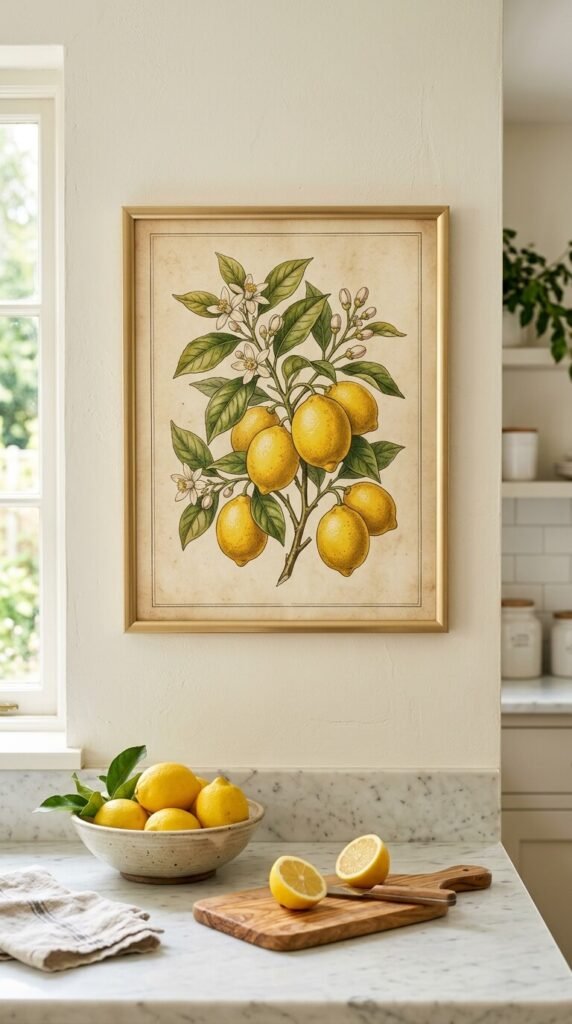
Fruit-tree illustrations bring warmth to kitchens and dining nooks. Think lemon branches, orange blossoms, or fig leaves. These prints feel fresh without being literal produce art. Hang a small set above open shelving or a breakfast nook. Old botanical fruit plates are easy to find as free public-domain downloads — print them at a local shop for a few dollars each. This is an easy swap if your kitchen art still feels generic or store-bought.
9. Oversized Single Leaf in a Round Frame
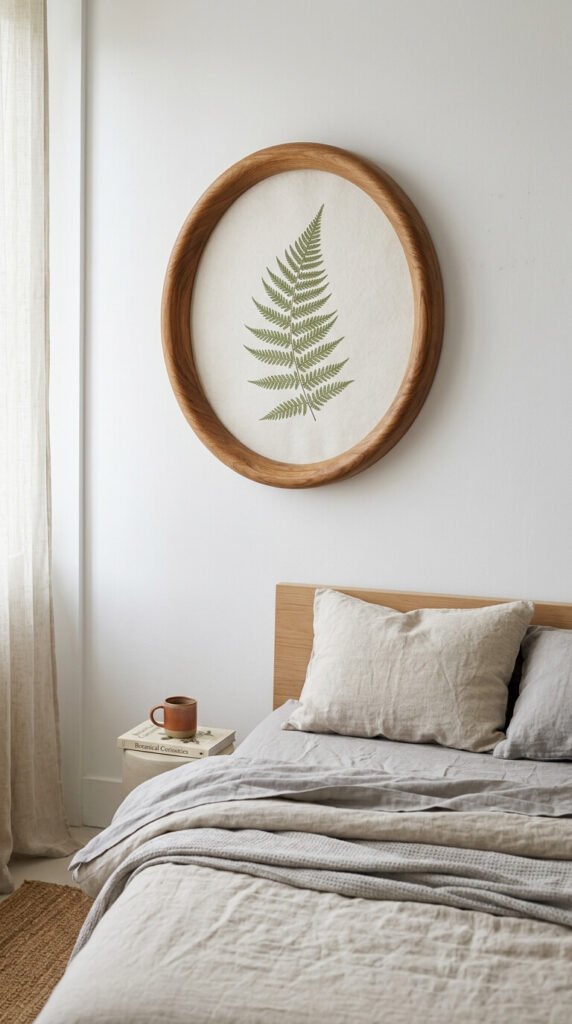
Round frames break up all the rectangles in a typical room. A single fern or palm leaf inside a circular frame feels calm and different. Hang it slightly off-center above a bed or dresser for a relaxed look. Round frames are often cheaper secondhand since fewer people buy them. This is a small change that makes a room feel curated rather than default, and it works with almost any print style you already own.
10. Botanical Prints on Fabric Panels
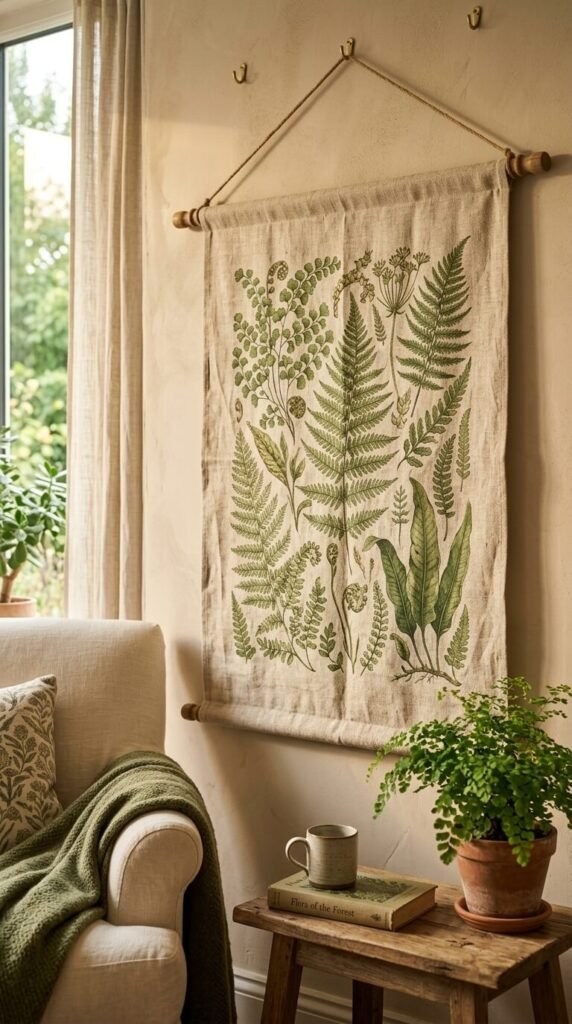
Fabric wall hangings feel softer than framed glass. Print a leaf pattern on canvas or linen, then hang it with a simple dowel and string. No frame, no glass, no glare. This is a lightweight option for renters since it uses small nails or even removable hooks. Fabric panels also muffle sound slightly, which helps in echoey rooms. Etsy shops sell these for less than framed prints, and they roll flat for easy storage or moving.
11. Botanical Prints as Headboard Art
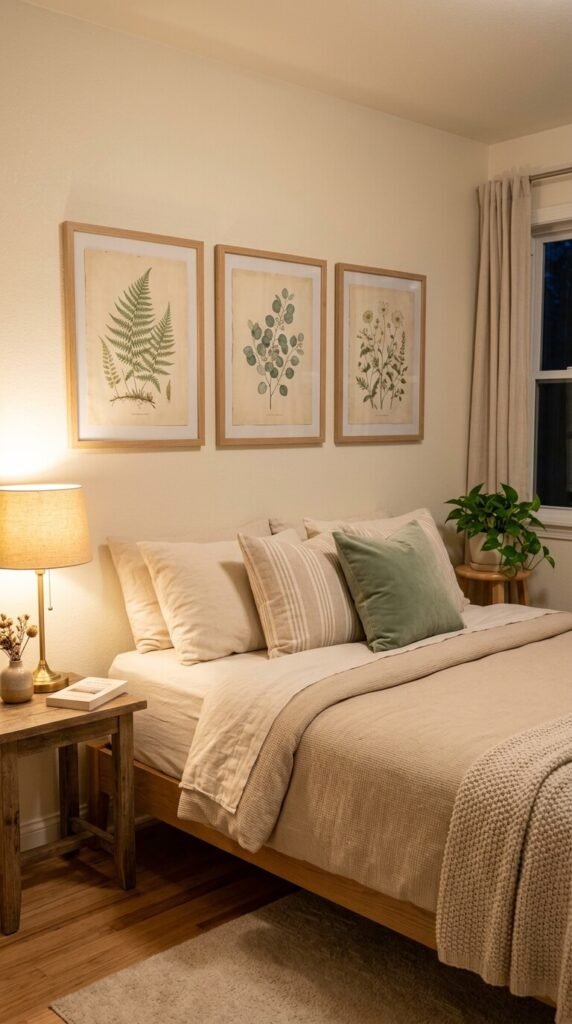
Skip buying an actual headboard. Arrange three or four matching botanical prints directly above your bed frame instead. This creates the illusion of a built-in headboard for a fraction of the cost. Keep the frames identical in size and finish for a clean, symmetrical look. Center the grouping above the mattress, not the whole wall. This trick works especially well in studio apartments where furniture budgets are tight but wall space is free.
12. Dried Botanical Specimens in Shadow Boxes
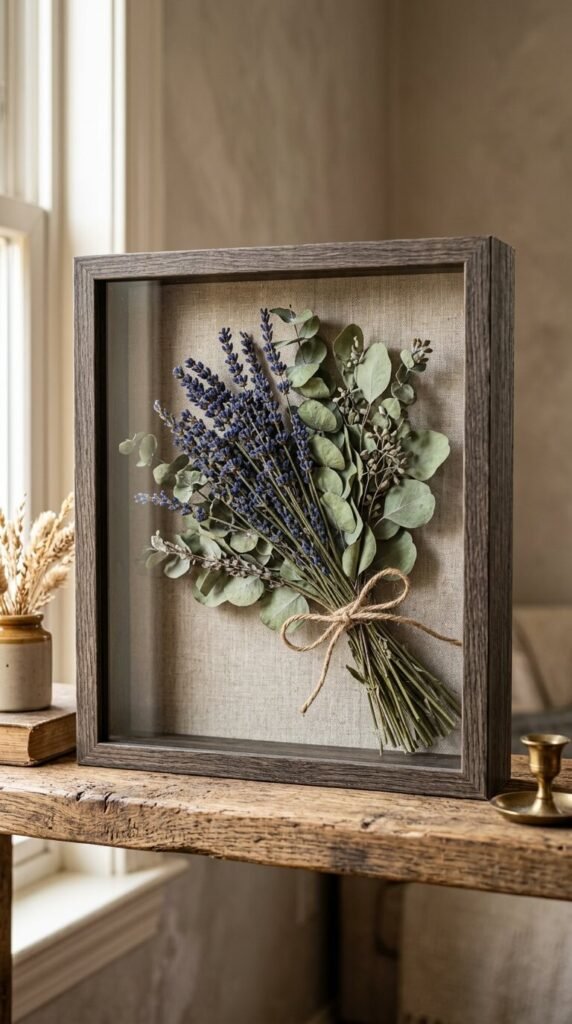
Shadow boxes add real dimension instead of flat paper. Fill one with dried lavender, eucalyptus, or wheat stems from your own garden or a cheap bunch from the store. Arrange the stems loosely so shadows form naturally inside the box. These frames cost more upfront but last for years without fading like fresh flowers. Hang a small cluster in an entryway for a tactile, three-dimensional welcome that feels more special than a flat print.
13. Botanical Prints for Small Apartments
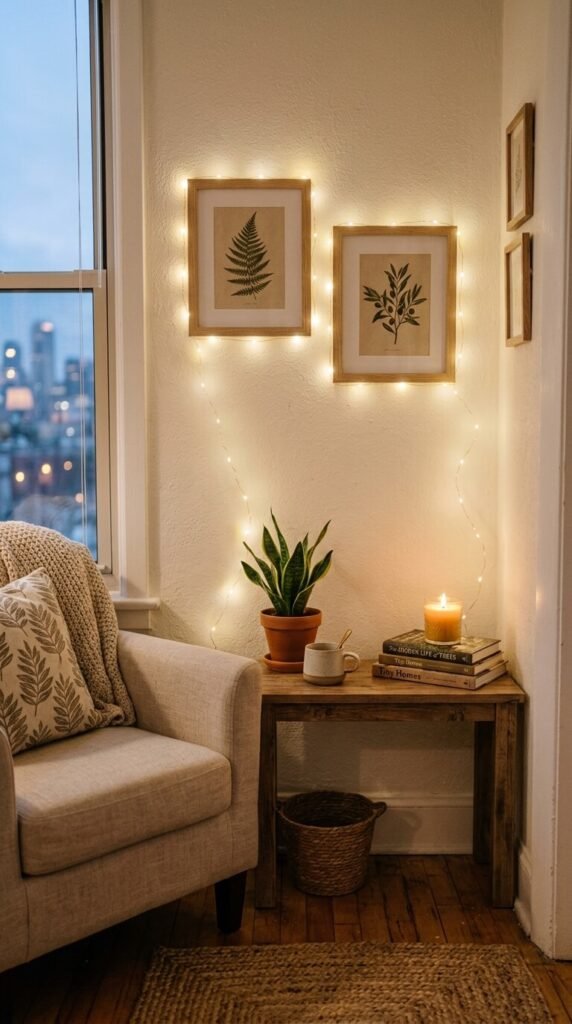
Small spaces need small-scale decisions. Choose petite prints, 5×7 or smaller, so they don’t overwhelm a tight room. Use removable adhesive strips instead of nails so you keep your deposit. Cluster two or three near a mirror to make the space feel larger through reflection. Thrift stores and dollar stores often carry mini botanical prints for next to nothing. This approach proves you don’t need a big budget or a big wall to add greenery-inspired art.
14. Botanical Prints Behind Open Shelving
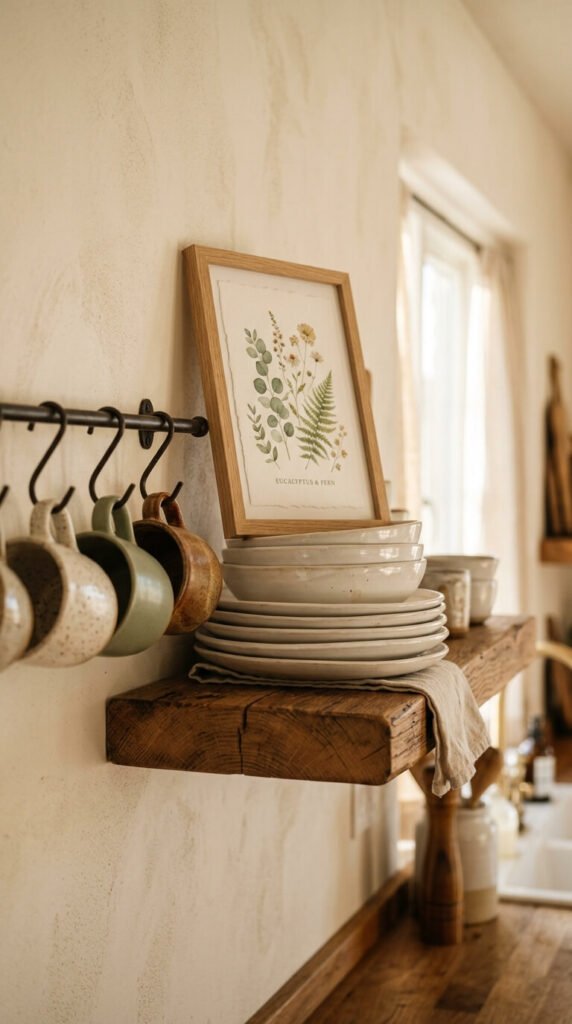
Open shelves often look empty behind the dishes. Slide a small botanical print flat against the wall behind your plates or mugs. It fills the gap without taking up counter space. Rotate the print with the seasons, or swap it whenever you rearrange your shelf. This trick costs nothing if you already own a spare print. It’s a simple fix for kitchens that feel plain but don’t have room for traditional wall art.
15. Framed Botanical Prints in Mismatched Frames
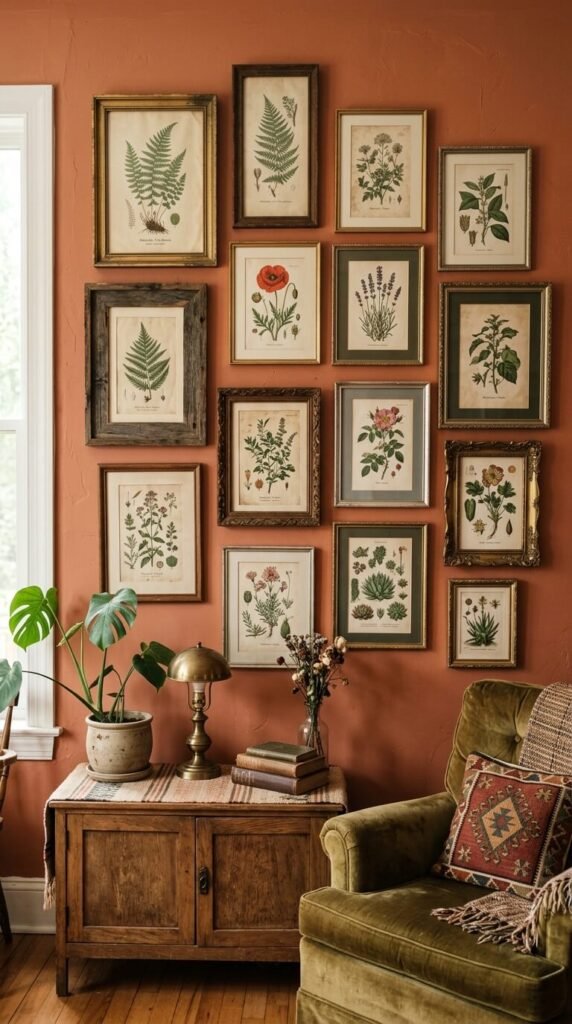
Matching frames aren’t required. Collect secondhand frames in different woods, metals, and finishes, then unify them with similar botanical subjects — all leaves, or all flowers. The variety in frame style feels collected over time rather than bought in one trip. Thrift stores are goldmines for cheap frames; just swap the artwork inside. This approach saves money since you’re not buying a matching set, and it adds character that store-bought sets rarely have.
16. Botanical Prints for Home Offices
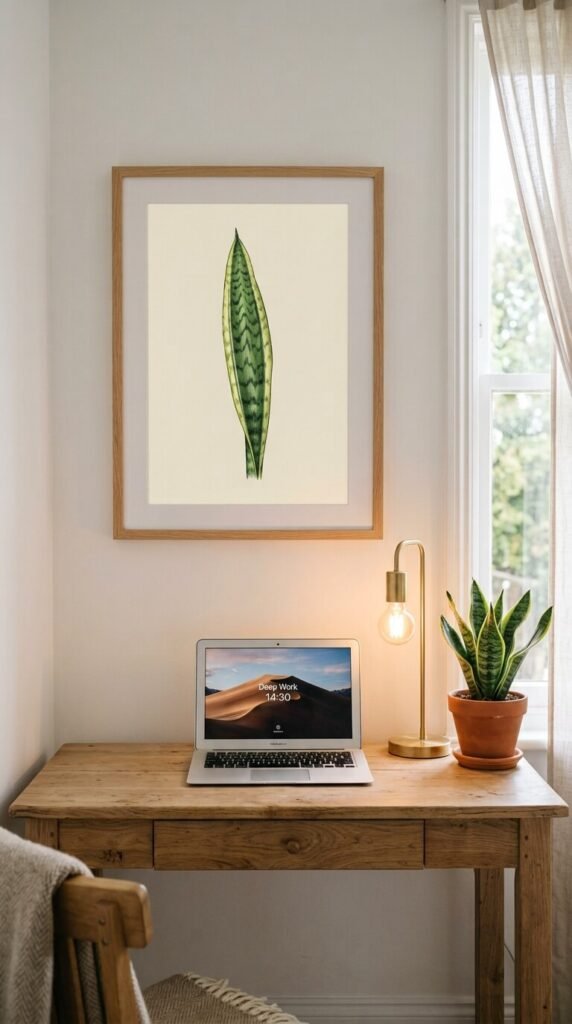
A calm desk setup helps with focus. Hang one simple leaf print at eye level above your monitor instead of a busy gallery wall. Muted greens work better than bright colors for long work sessions. Print a free botanical illustration at home on cardstock if you’re not ready to spend on framing. This tiny addition breaks up a plain office wall without distracting from your actual work, and it costs less than a single desk plant.
17. Botanical Prints Layered with Mirrors
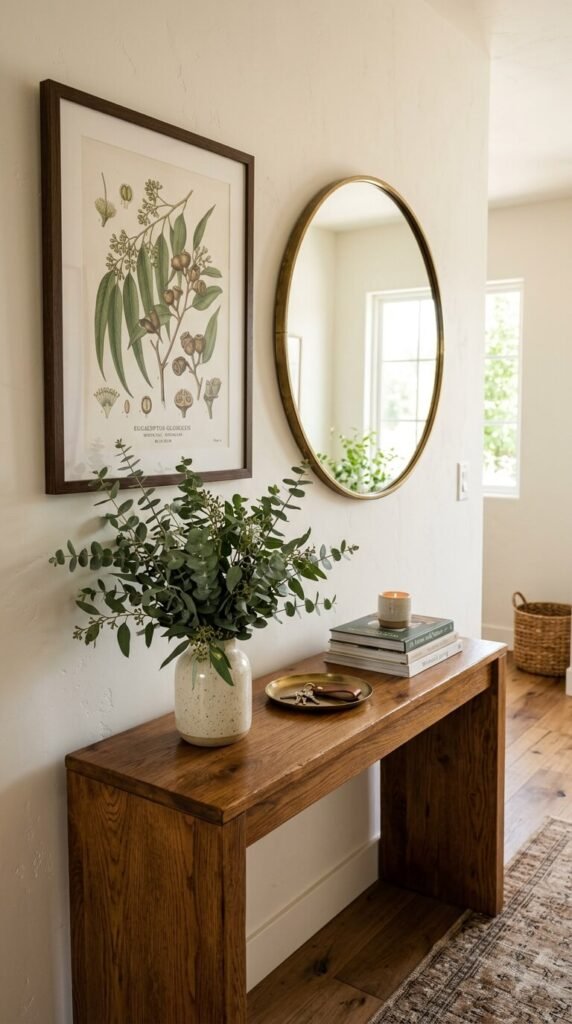
Pair a print with a mirror instead of hanging it alone. The mirror bounces light around the print and makes a narrow hallway feel wider. Choose a fern or eucalyptus print for a soft green accent next to the glass. This combo works especially well in entryways where you check your reflection anyway. Buy a cheap round mirror and a small print separately rather than a matching set — it’s usually less expensive and gives you more style choices.
18. Seasonal Botanical Print Swaps
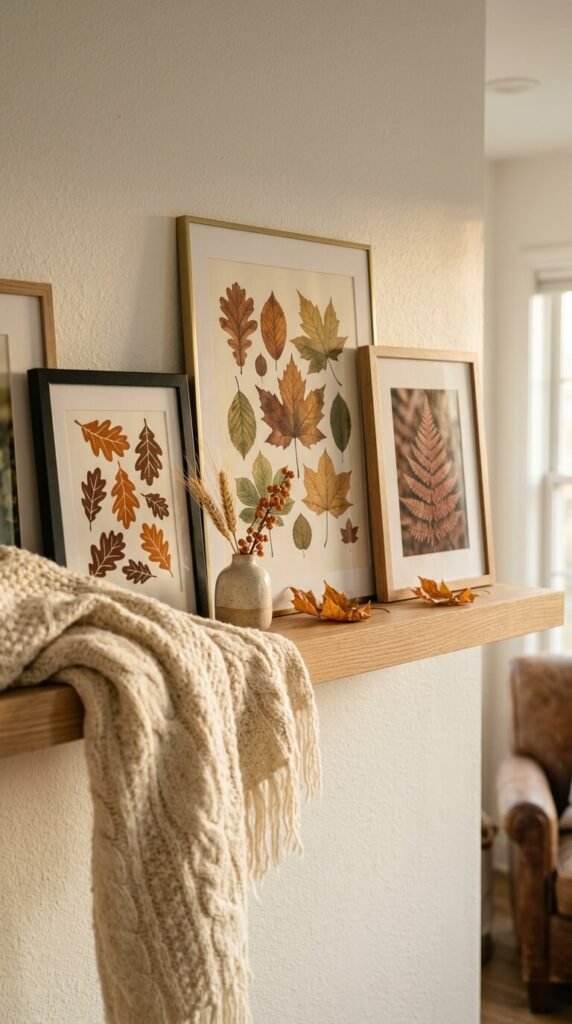
Keep one ledge or frame dedicated to rotating seasonal prints. Bright florals in spring, ferns in summer, amber leaves in fall. Store the off-season prints flat in a closet folder to avoid damage. This keeps your space feeling current without buying new furniture or paint. A frame with a quick-release back makes swapping prints in seconds. It’s a low-cost habit that keeps a room feeling attended to throughout the year.
19. Botanical Prints on a Gallery Ladder
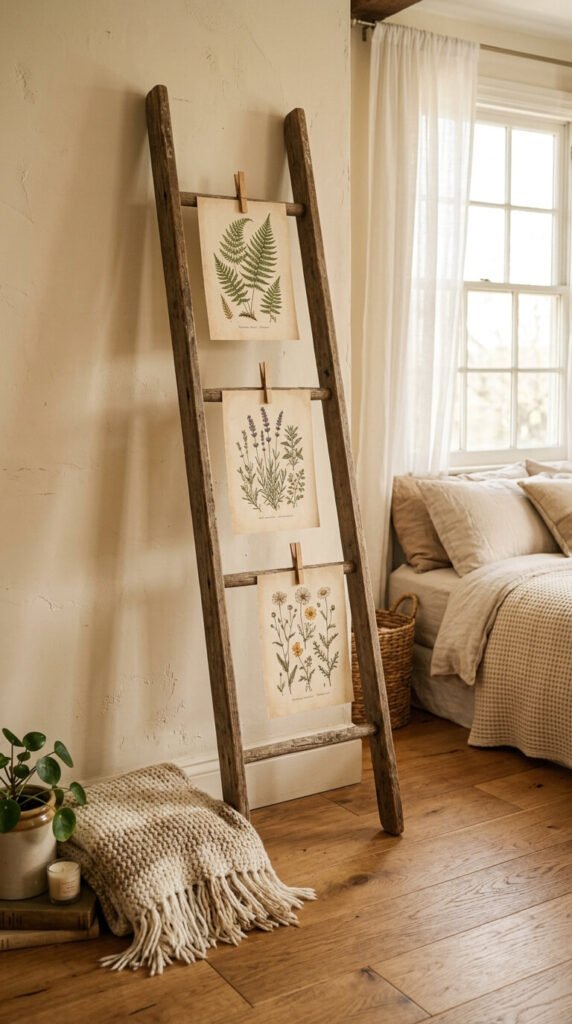
A leaning ladder makes a flexible print display. Clip small botanical prints to each rung with simple wood clothespins. This avoids wall damage entirely and looks relaxed rather than formal. Old ladders are cheap at flea markets or salvage yards. Swap prints anytime without tools. This idea works especially well in a reading corner or beside a window where natural light can hit the paper directly.
20. Botanical Prints as Kitchen Backsplash Art
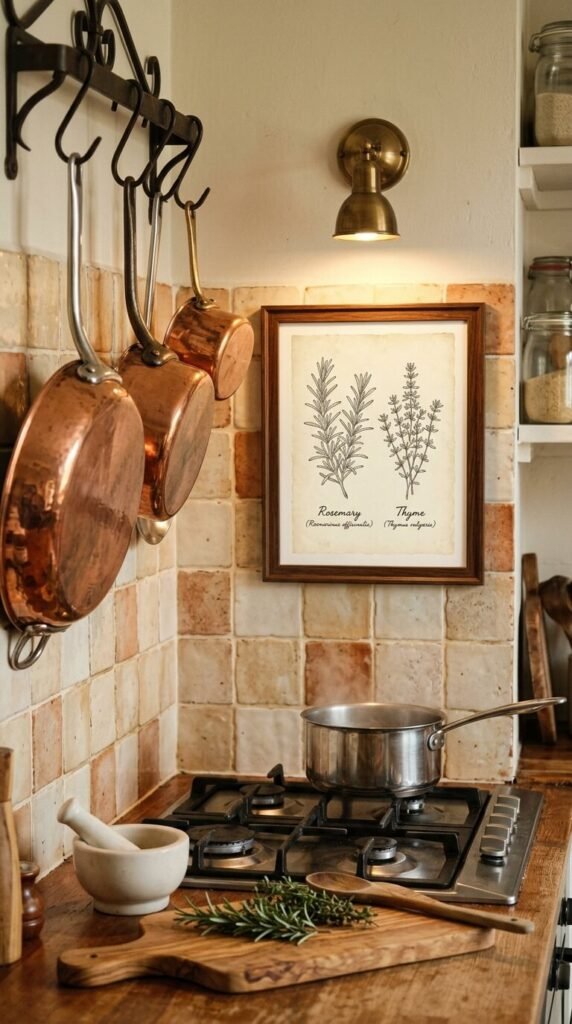
Skip expensive tile murals. A small herb illustration print — rosemary, thyme, basil — adds character near your stove for far less money. Use a wipeable acrylic frame since kitchens get greasy. Group two or three herb prints in a row above the range for a cohesive look. This is an easy way to bring the botanical theme into a room usually reserved for functional decor, and it costs less than any tile project.
21. Botanical Prints in Kids’ Rooms
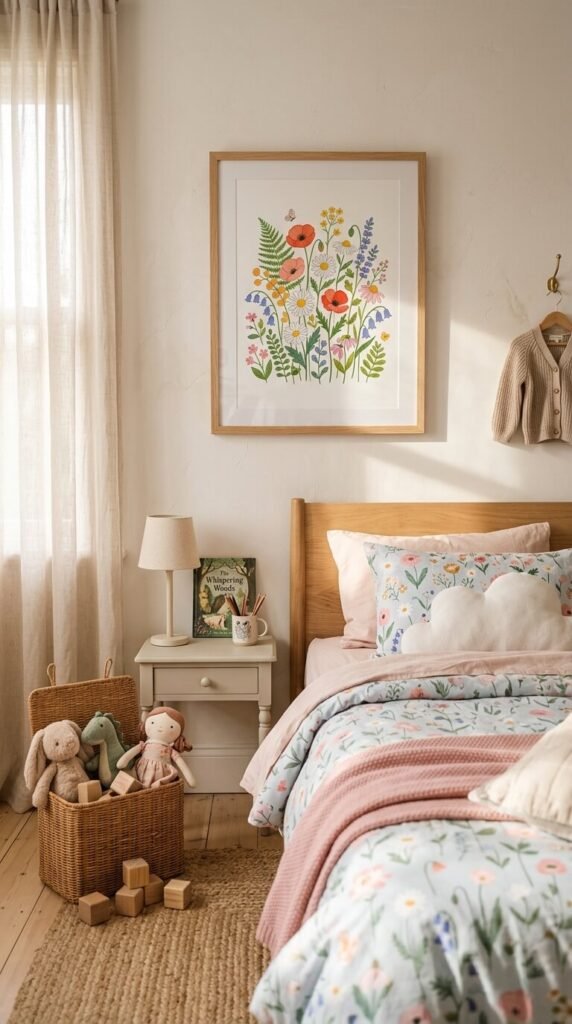
Botanical prints work in kids’ spaces too. Choose bright wildflower or butterfly-adjacent leaf prints instead of muted vintage tones. Hang them low enough for a child to actually see and enjoy, not just adults. Poster prints laminated at a print shop survive sticky fingers better than framed glass. This is a budget-friendly way to add nature themes to a nursery or playroom without committing to permanent wallpaper or murals.
22. Botanical Prints Paired with Real Plants
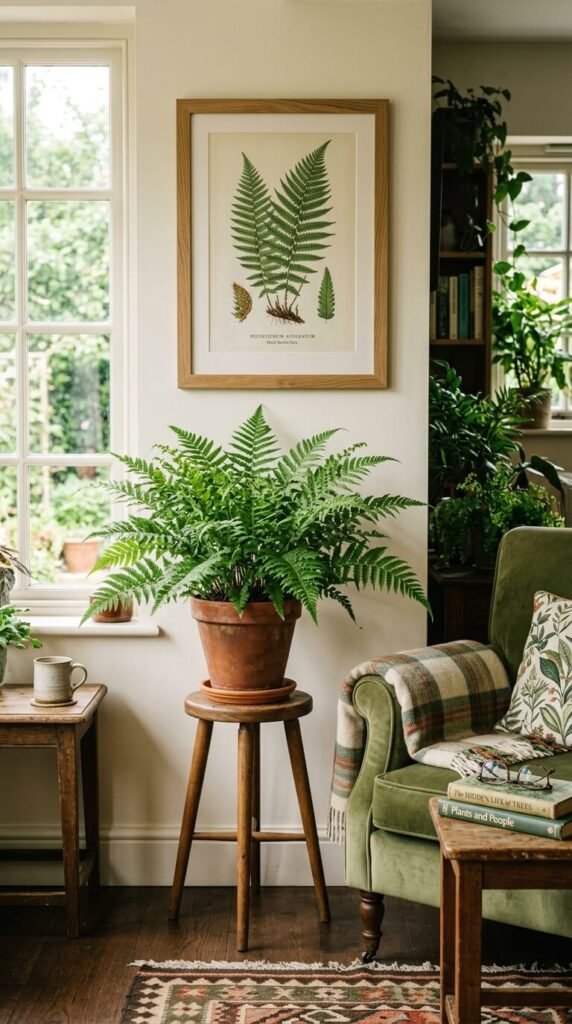
Double down on a leaf shape by pairing the print with the actual plant it depicts. Hang a fern print directly above a real potted fern. The repetition ties the room together and reinforces the theme without adding more wall art. This trick works with monstera, palm, or snake plant prints too. It’s a simple styling move that costs nothing extra if you already own the plant, and it photographs beautifully for a shelfie.
23. Botanical Prints on a Budget Cork Board
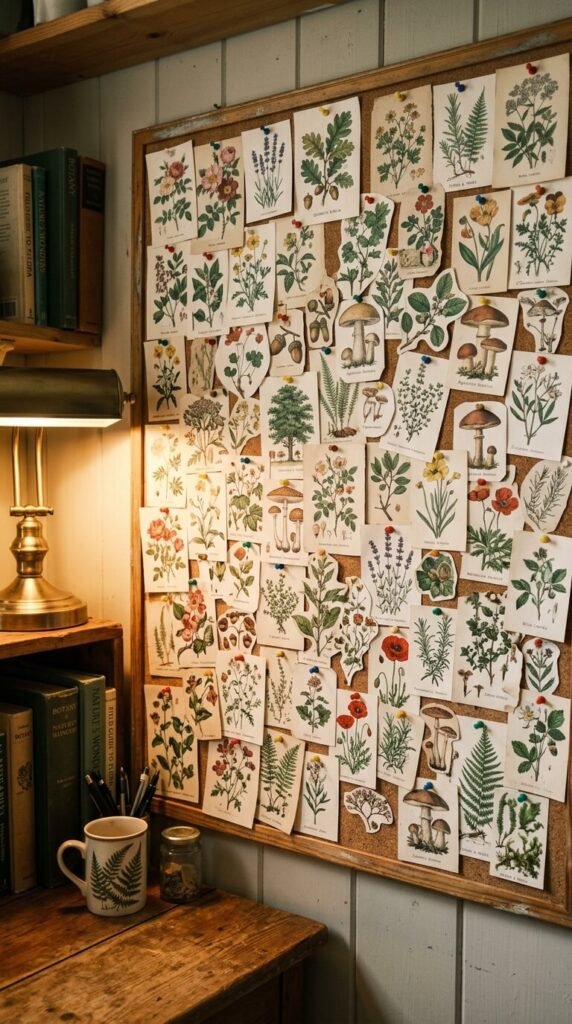
No frames, no problem. Pin small botanical cutouts directly to a cork board in a loose collage. This works for renters, students, or anyone testing out the look before committing to real frames. Print pages from free botanical archive sites and trim them by hand. Rearrange the layout anytime you get bored. This is the cheapest entry point on this whole list, and it still delivers the same leafy, calming effect.
24. Botanical Prints in Entryway Consoles
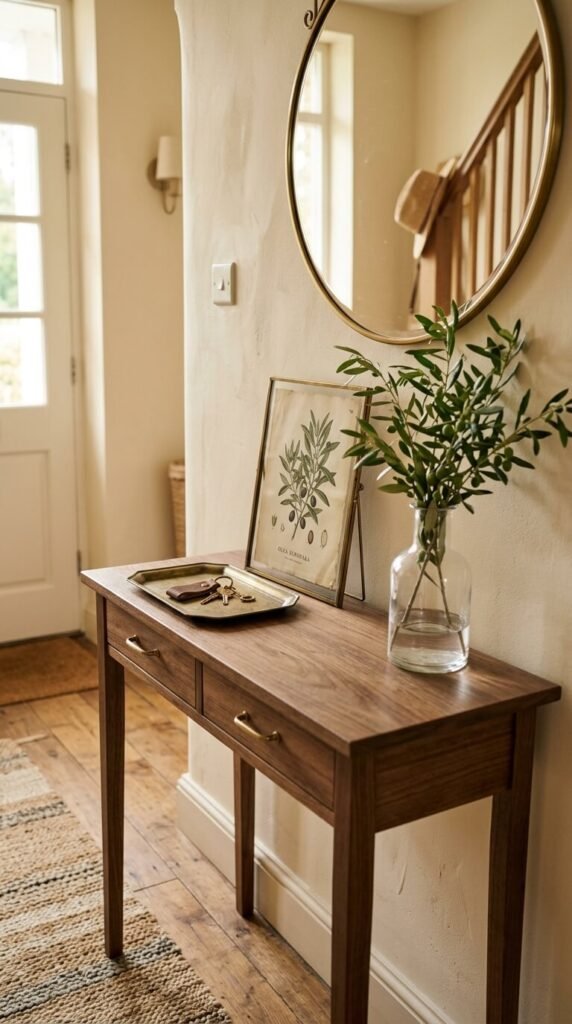
Entryways set the tone for a whole home. Lean a small olive branch or eucalyptus print against the wall behind your console table. Skip hanging hardware entirely — just prop it up. Add a small vase with real stems in front for extra texture. This combo takes five minutes to set up and instantly makes a hallway feel considered instead of like a dumping ground for keys and mail.
25. Botanical Prints as a Bookshelf Backdrop
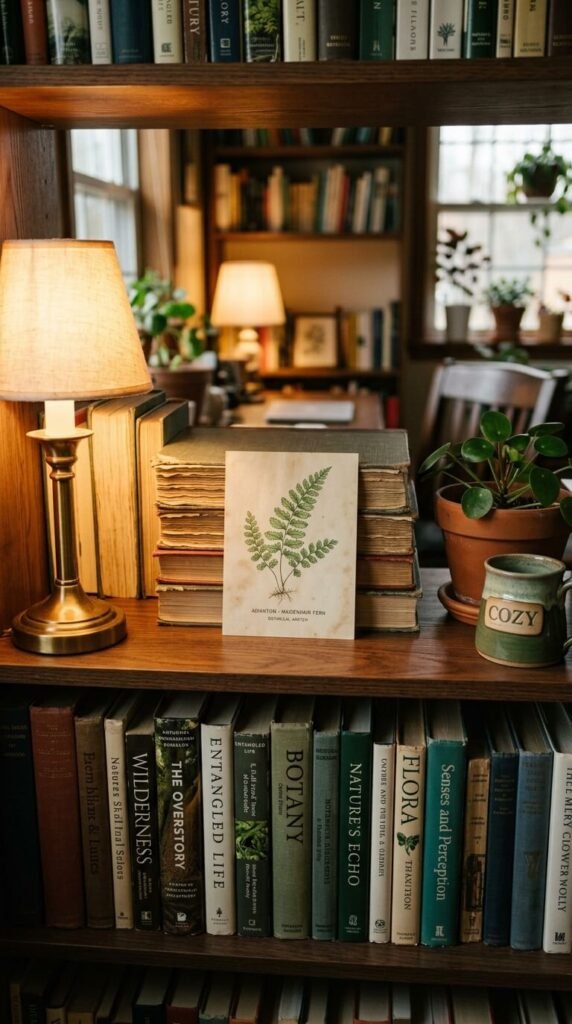
Bookshelves have more display space than most people use. Tuck a small leaf print between book stacks or lean it against the back of a shelf. This fills awkward gaps without buying more books or knickknacks. Rotate the print whenever you rearrange your shelf. It’s a nearly free styling trick since most people already own a spare print or two sitting in a drawer, forgotten.
Conclusion
Botanical prints give you a simple, low-cost way to fill a home with the calm, organic feeling of a garden — no watering required. From leaning a single leaf print on a shelf to building a full gallery wall of pressed flowers, each idea on this list can be done on a small budget with things you may already own. Pick two or three that fit your space, start with whatever frames or prints you have on hand, and build from there room by room.