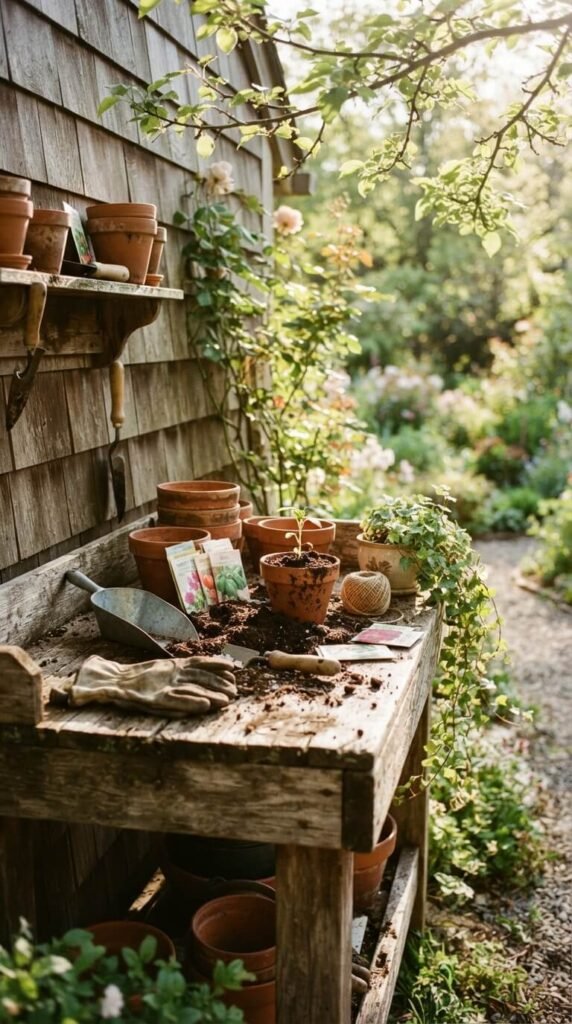
A potting bench is the quiet engine behind a well-run garden. It gives you a dedicated spot to pot, prune, and plan — without turning your patio table into a muddy mess. Whether you have a sprawling backyard or a narrow balcony, the right setup makes gardening faster, more organized, and honestly more enjoyable. These 26 real-world setups range from simple weekend builds to repurposed furniture finds — all designed to fit a real gardener’s life and budget.
1. The Classic Wooden Workstation
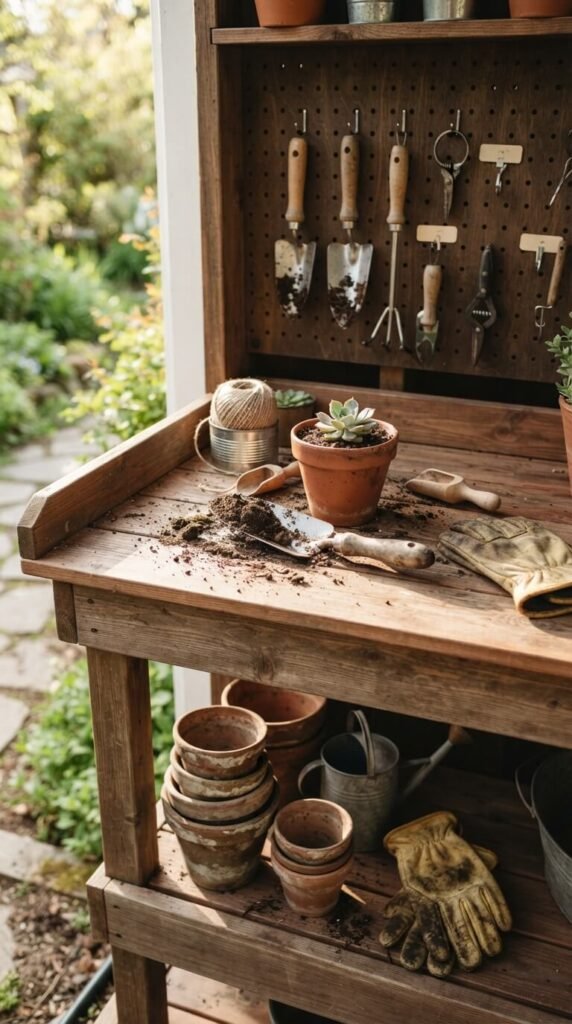
Wood is the go-to for most DIY potting benches — and for good reason. Cedar and pine are both affordable and rot-resistant, making them ideal for outdoor use. A basic design needs just four legs, a flat work surface, and one lower shelf. You can build one from fence boards for under $40. Sand the edges smooth so you don’t snag your gloves. Stain it or leave it natural. Either way, it ages beautifully. This is the starting point most gardeners never regret.
2. The Pegboard Tool Wall Bench
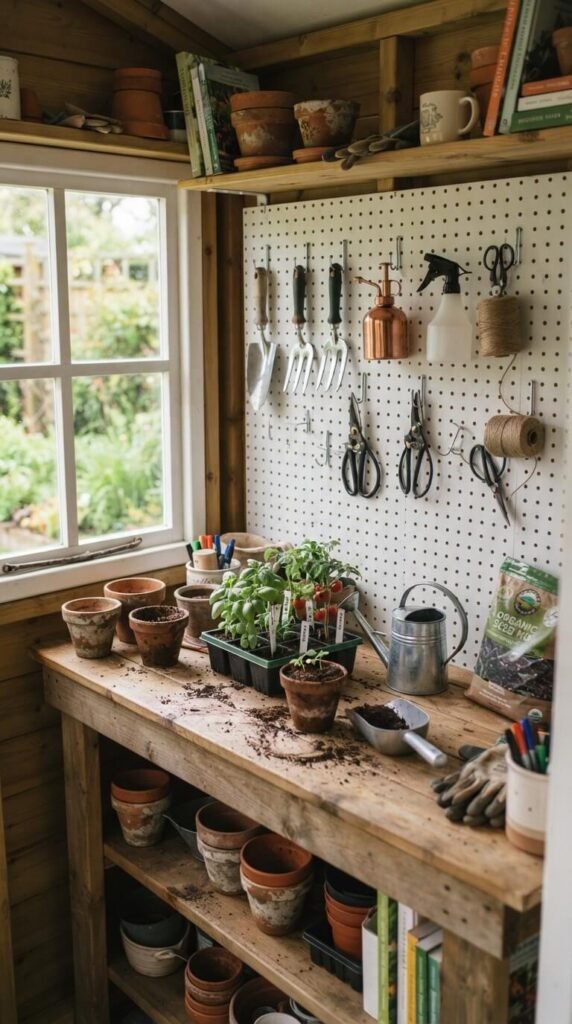
A pegboard panel behind your bench changes everything. Suddenly every tool has a home, and you stop losing your snips under a pot. Mount a 2×4-foot sheet of pegboard directly to the back of the bench frame. Spray paint it a fresh color if you like. Standard pegboard hooks cost almost nothing at hardware stores. Hang trowels, markers, gloves, and even seed packets in labeled bags. It’s a simple upgrade that saves real time during busy planting days.
3. The Repurposed Dresser Station
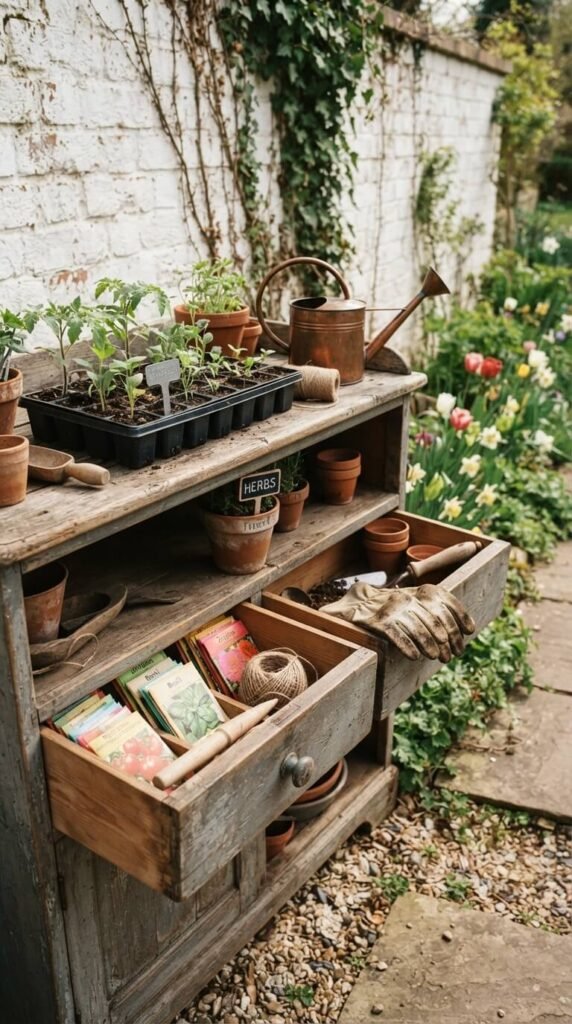
Curbside dressers make surprisingly great potting benches. The drawers store seed packets, labels, and small tools — things that usually end up scattered. Find one at a thrift store or garage sale for $10–$30. Remove the mirror, sand the top smooth, and seal it with outdoor polyurethane. You’ll want to drill a few drainage holes in the top if you plan to pot directly on the surface. It adds personality to a garden shed or patio fence corner.
4. The Galvanized Steel Industrial Setup
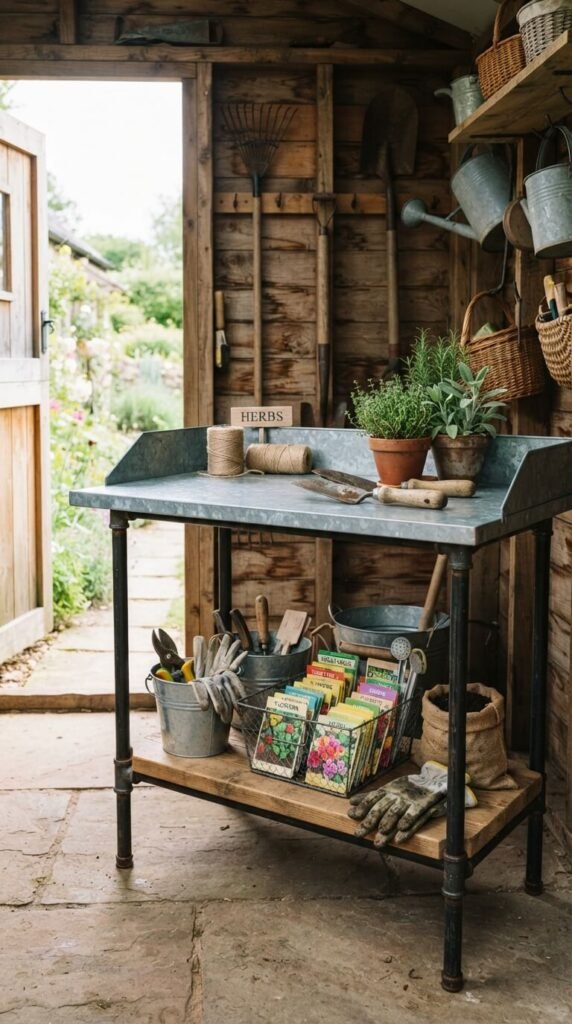
If you want something that cleans up with a hose, galvanized steel is your material. Top a simple wood frame with a steel sheet from a hardware store — usually cut to size for free. It won’t warp, won’t stain from fertilizer, and handles heavy clay pots without denting. The look is clean and modern. Pair it with black iron pipe legs for an industrial feel, or keep the legs wood for a warmer contrast. Durable, low-maintenance, and great for serious potters.
5. The Folding Balcony Bench
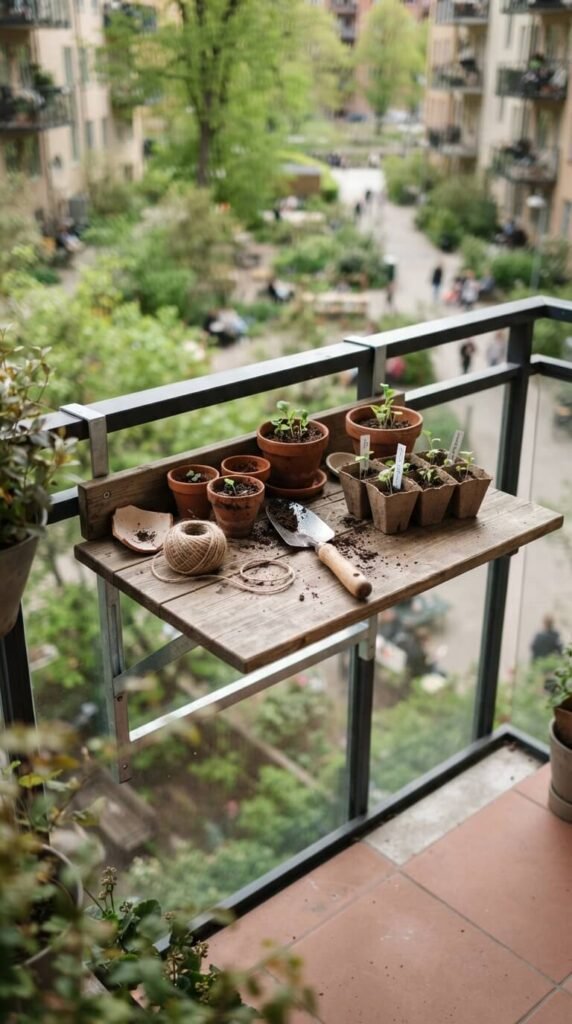
No yard? No problem. A wall-mounted fold-down bench takes up almost zero space when folded. Mount a piano hinge to a thick board and attach it to a fence or shed wall. Add a simple chain support to hold it level when open. It folds flat when not in use. This is a popular solution for balconies, narrow side yards, and small patios. Keep your pots and tools in a caddy nearby, and you have a fully functional station that disappears when you’re done.
6. The Potting Bench With Sink
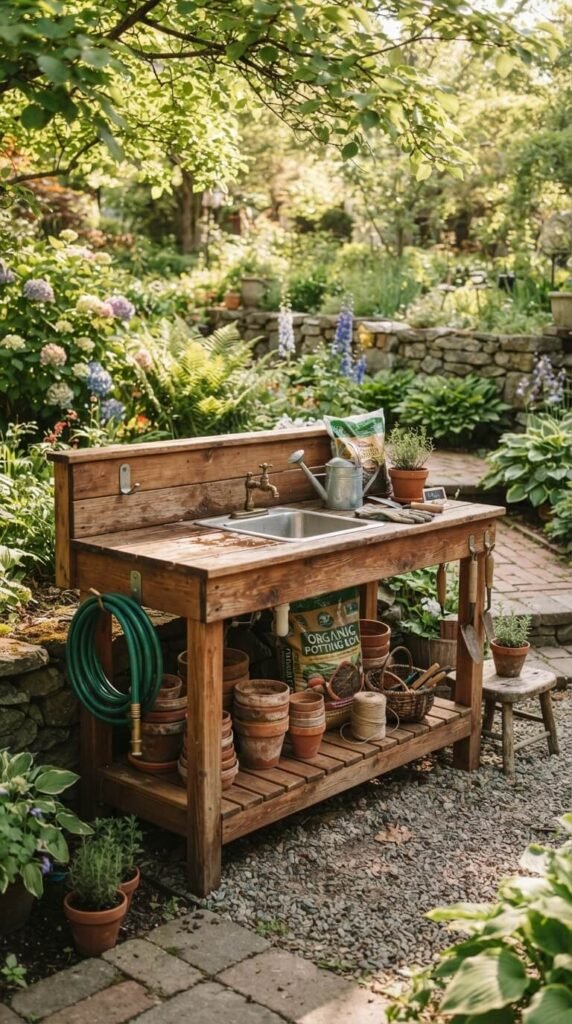
A sink changes your whole workflow. No more trips inside to wash hands or fill watering cans. You can find small utility sinks at salvage yards or big box stores for $30–$80. Drop it into a cut-out in your bench top and route a garden hose connection underneath. Even without plumbing, a bucket-drain setup works fine. This is the upgrade serious gardeners love most. It keeps the mess contained and makes long potting sessions much more comfortable from start to finish.
7. The Potting Bench With Grow Lights
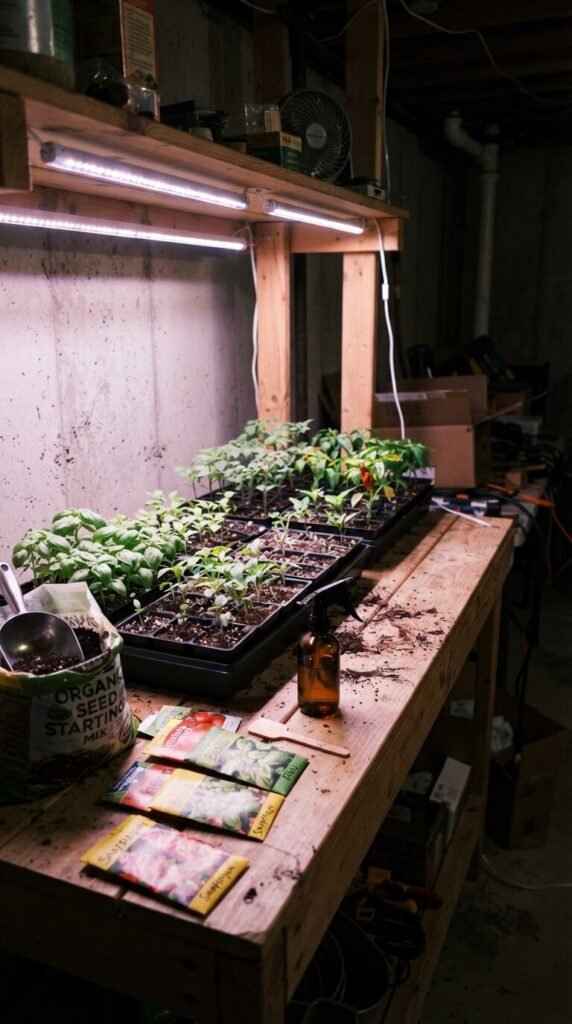
Starting seeds indoors early? Add a simple grow light shelf above your bench. Mount a second shelf 12–18 inches above the work surface using basic shelf brackets. Attach an LED grow light strip underneath it. You now have a dedicated seed-starting station. Plug the light into a basic outlet timer — 14–16 hours on, the rest off. This setup costs under $60 to add. Seeds germinate faster, seedlings stay strong, and you get a head start on the season without a dedicated grow tent.
8. The Potting Cart on Wheels
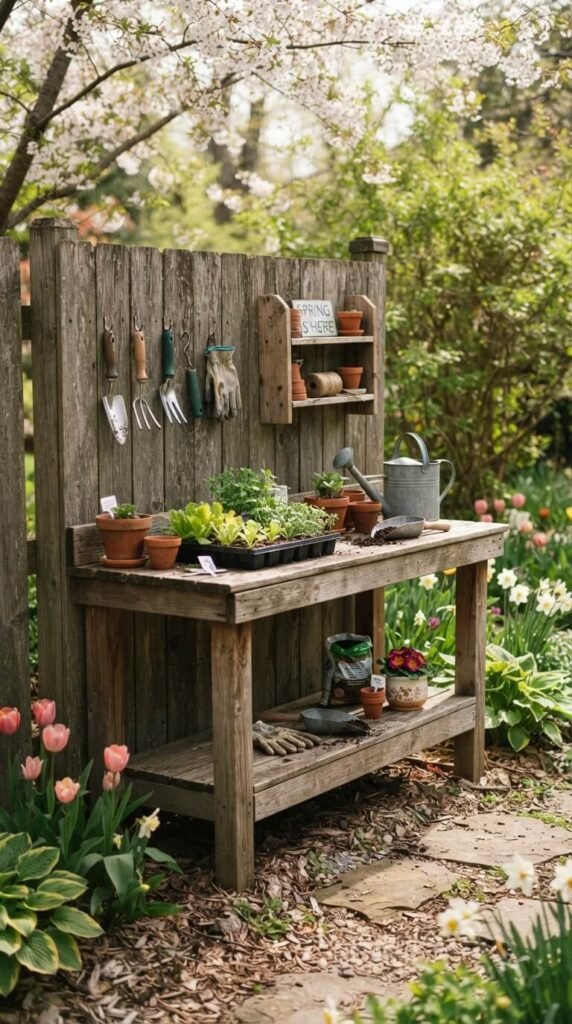
Wheels make a potting bench ten times more useful. A rolling cart lets you move your workspace to wherever you’re working in the garden. Build a simple bench on caster wheels — look for locking casters so it stays put when you need it to. Heavy-duty casters rated for 50+ lbs each work well on gravel or pavers. This is especially helpful if you garden across a large yard or share space with others. Move it into the shed when rain hits, roll it back out on sunny days.
9. The Lean-To Fence Bench
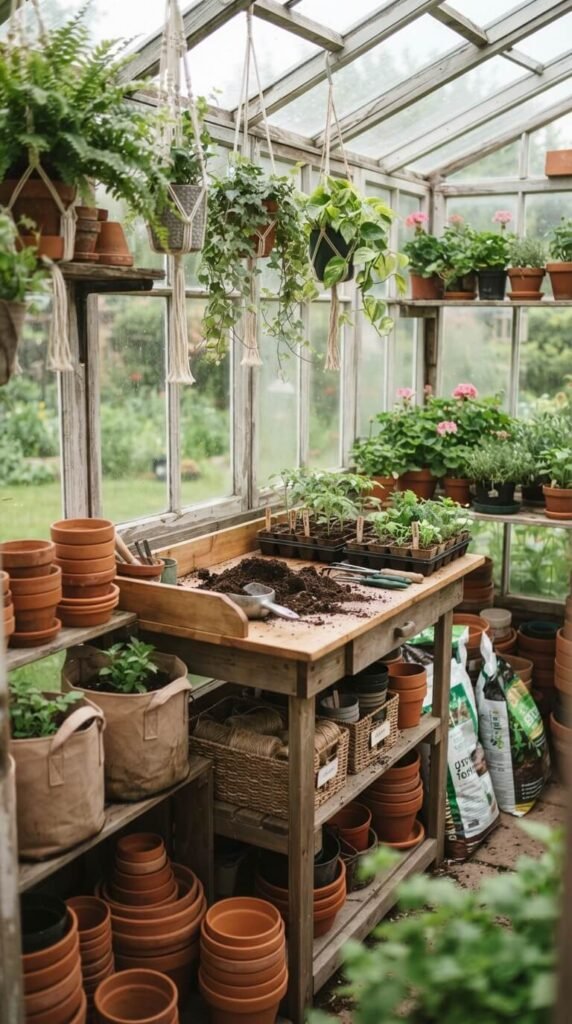
Use your fence as the back wall. This saves money and materials because you skip building a back panel altogether. Attach two side supports directly to the fence posts, then add a front rail. Drop a plywood or wood plank surface on top. You can screw hooks directly into the fence boards above for tool storage. It feels fully built-in at a fraction of the cost. Works best against a solid wood or vinyl fence. Great use of dead space along a property line.
10. The Greenhouse Corner Station
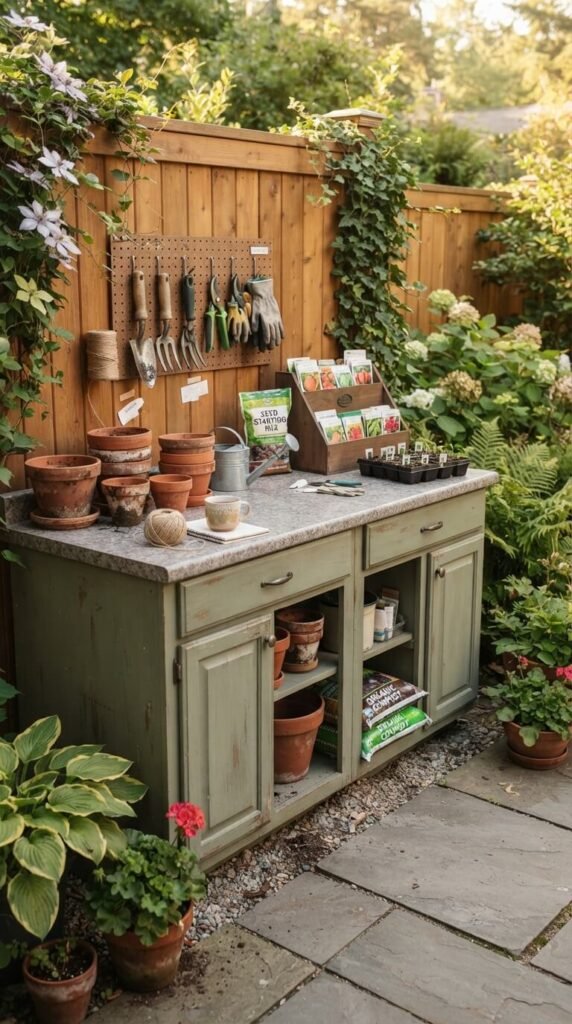
If you have a greenhouse, put the bench in a back corner where it won’t block light for your plants. A compact bench in a greenhouse becomes a year-round potting spot. Temperature stays more stable, and you can pot in rain without getting wet. Keep tools organized in bins on the lower shelf. A small rolling stool lets you work seated when tasks get long. Even a small 6×8 greenhouse has room for a 24-inch-wide bench along one wall without cramping your growing space.
11. The Outdoor Kitchen Counter Bench
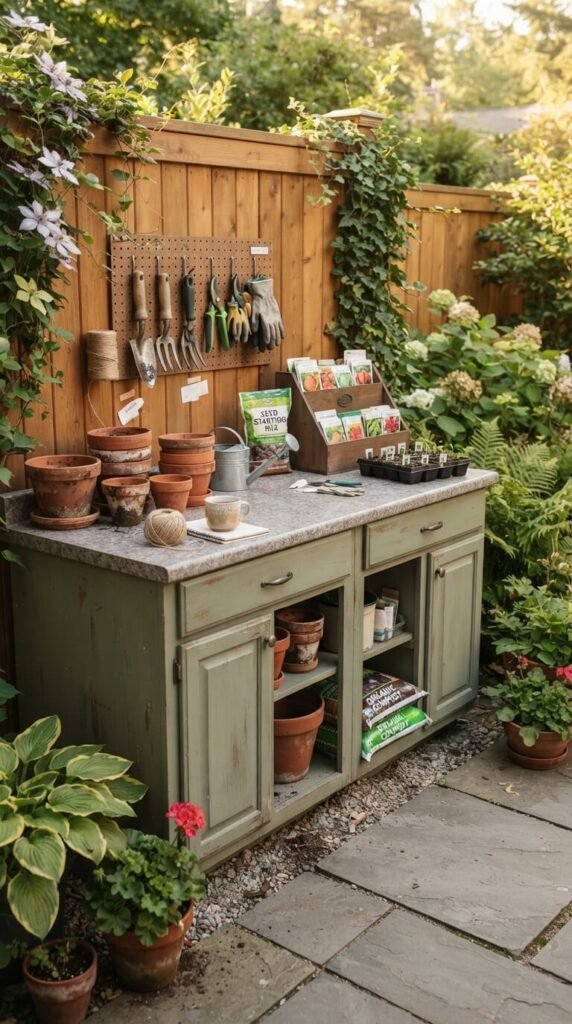
Old kitchen cabinets make a surprisingly functional potting bench. The doors hide mess, the drawers organize small items, and the height is already perfect for standing work. Find used base cabinets at a Habitat for Humanity ReStore for $20–$60. Screw them together, add an outdoor countertop (or a solid wood slab), and seal everything for weather. You get enclosed storage — which most standard benches lack. This is one of the most practical builds for a serious gardener who wants a clean-looking setup.
12. The Potting Bench With Soil Bin
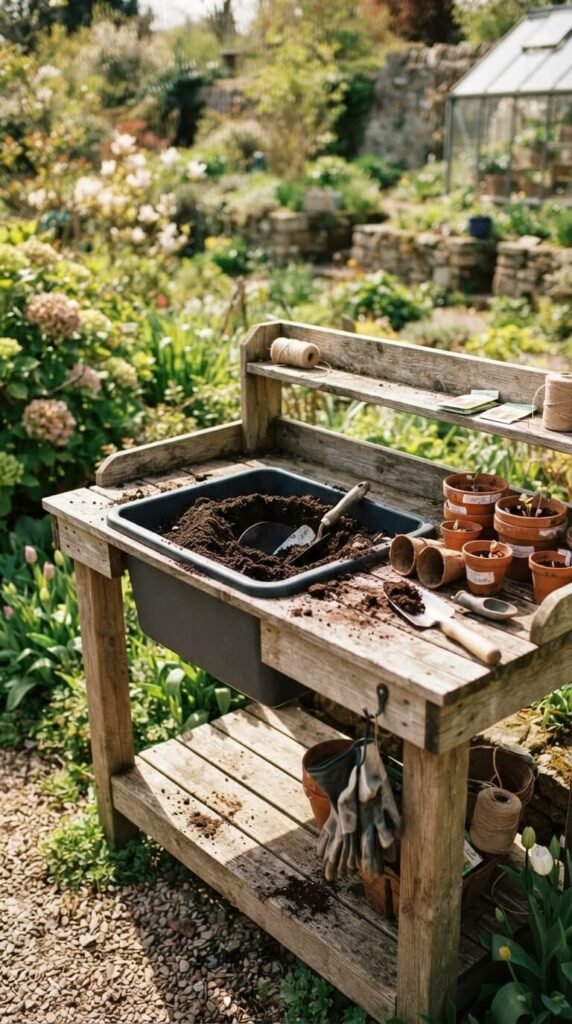
A built-in soil bin keeps your workspace clean and your soil contained. Cut a square or rectangle into your bench top and drop in a metal or plastic bin. When you’re done, lid it to keep soil dry and pests out. This simple upgrade makes potting much faster — you scoop from the bin directly into pots without managing a heavy bag. Refill the bin from a large bag of potting mix stored below. It looks polished, works great, and the whole modification costs less than $20.
13. The Vintage Washstand Conversion
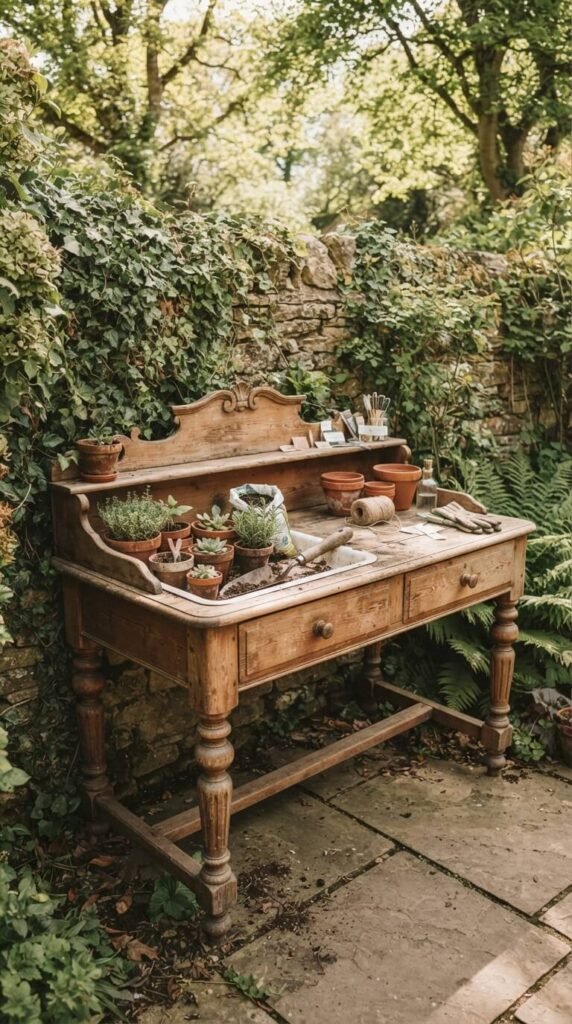
Antique washstands have the perfect bones for a potting bench. The basin already functions as a soil catch. Find one at a flea market or antique shop for $40–$100. Sand and seal the wood for outdoor use. The lower shelf holds extra pots. The drawer keeps seed packets and labels. It’s charming, functional, and looks like something you planned carefully — even if you found it at a garage sale on a Saturday morning. These pieces age beautifully outdoors in any climate.
14. The Pallet Wood Budget Build
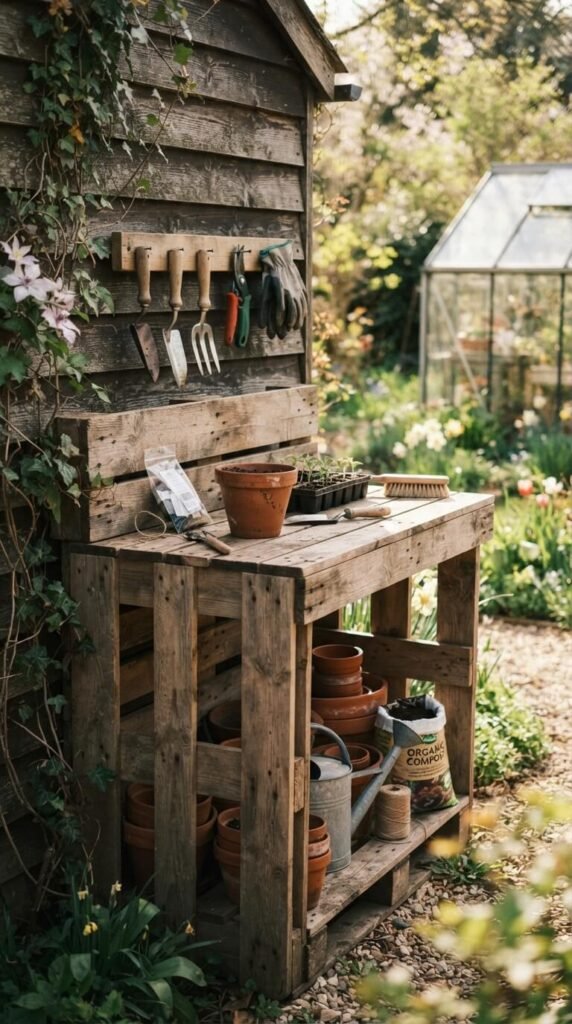
Pallets are free or nearly free, and they build a solid potting bench. Two pallets stacked vertically give you a lower shelf and a work surface. Add a few extra boards across the top for a smoother surface. Sand the planks so no splinters catch your gloves. Seal with outdoor wood oil or paint. This is one of the most budget-friendly builds possible — sometimes under $10 total. It won’t win design awards, but it works exactly as well as a bench three times the price.
15. The Potting Bench With Rain Cover
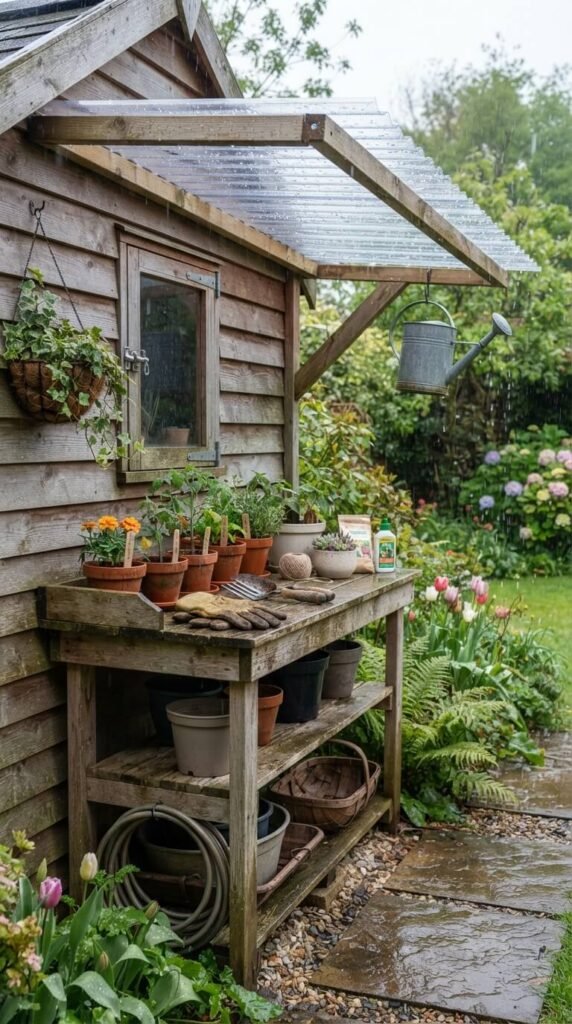
A bench you can only use in good weather is a bench you’ll use less. Add a small roof panel to extend your working season. Attach a corrugated polycarbonate sheet to the fence or shed wall above your bench — it’s lightweight and lets light through. Even a 3-foot overhang keeps rain off your surface and lets you pot right through a spring drizzle. The materials cost around $30–$50 at any hardware store. It’s one small change that adds real usability to your setup all year long.
16. The Tiered Display and Work Bench
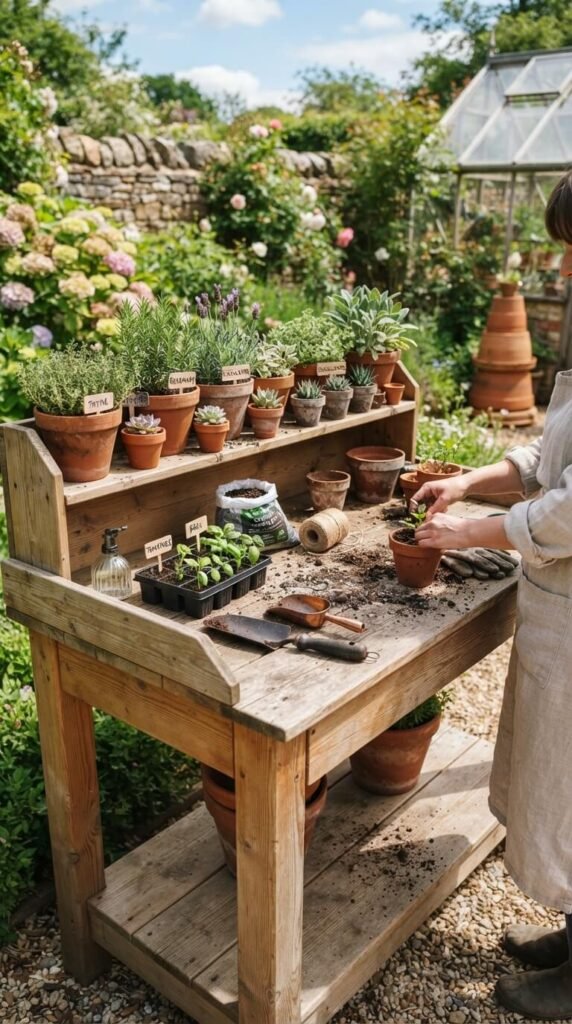
A second tiered shelf behind the bench serves two purposes. It stores pots and plants above the work surface — keeping the bench itself clear — and it creates a beautiful display backdrop. Build the tier using simple shelf brackets or extend the back legs taller and add a board. Keep herbs, small succulents, or decorative pots on the upper tier. It makes the bench look intentional and styled, while giving you the practical benefit of extra vertical storage without any additional footprint.
17. The Corner Bench Setup
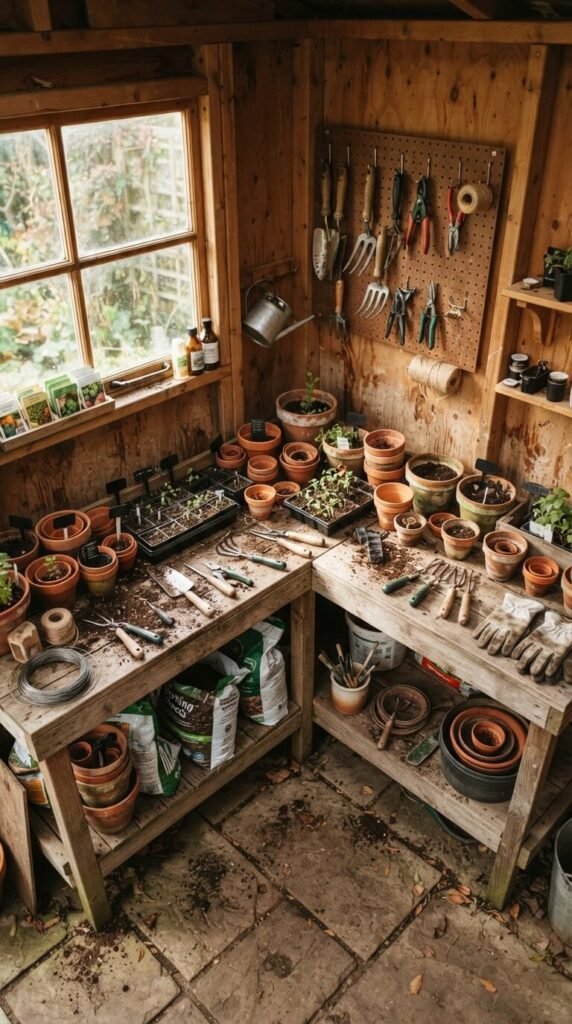
An L-shaped bench in a shed corner uses dead space brilliantly. You get two full work surfaces that connect at 90 degrees. Dedicate one side to potting and the other to seed starting or tool organizing. The corner wall space above holds a pegboard. This layout works best in a shed with at least 8×8 feet of floor space. You can build it in stages — start with one arm, add the second when ready. Many gardeners say the corner setup is the single best spatial upgrade they’ve made to their garden space.
18. The Potting Bench With Built-In Compost Bucket Slot
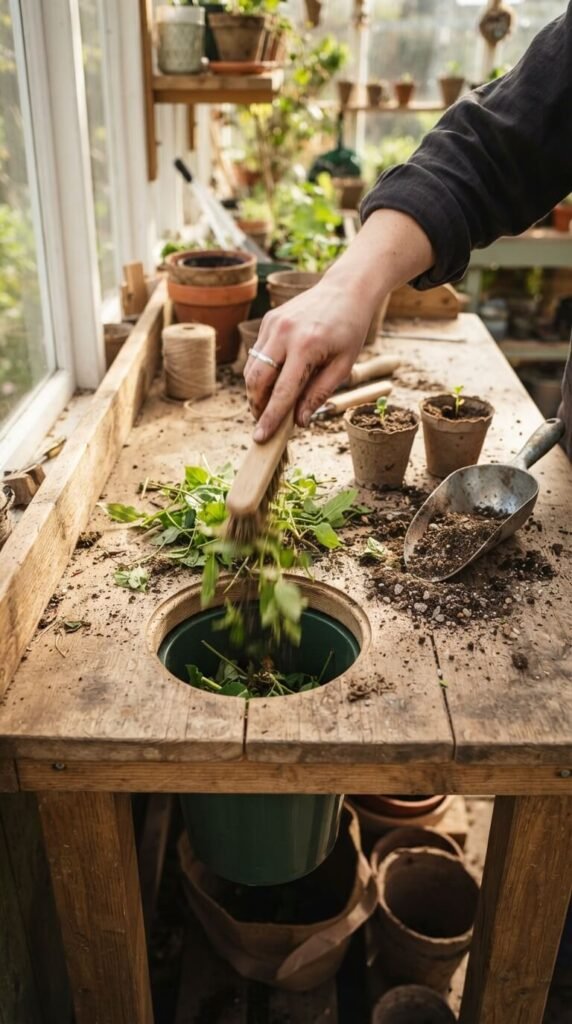
A simple hole cut into your bench surface makes cleanup effortless. Position the hole at the edge of your work surface and set a small bucket underneath. Sweep dead leaves, trimmed roots, and spent soil directly in — no bending, no separate trip to the compost bin. Remove the bucket, empty it into your compost pile, and slide it back. This is one of those small details that seems minor but you’ll use constantly. Cut the hole with a jigsaw; the whole modification takes about 20 minutes.
19. The Potting Bench With Herb Drying Rack
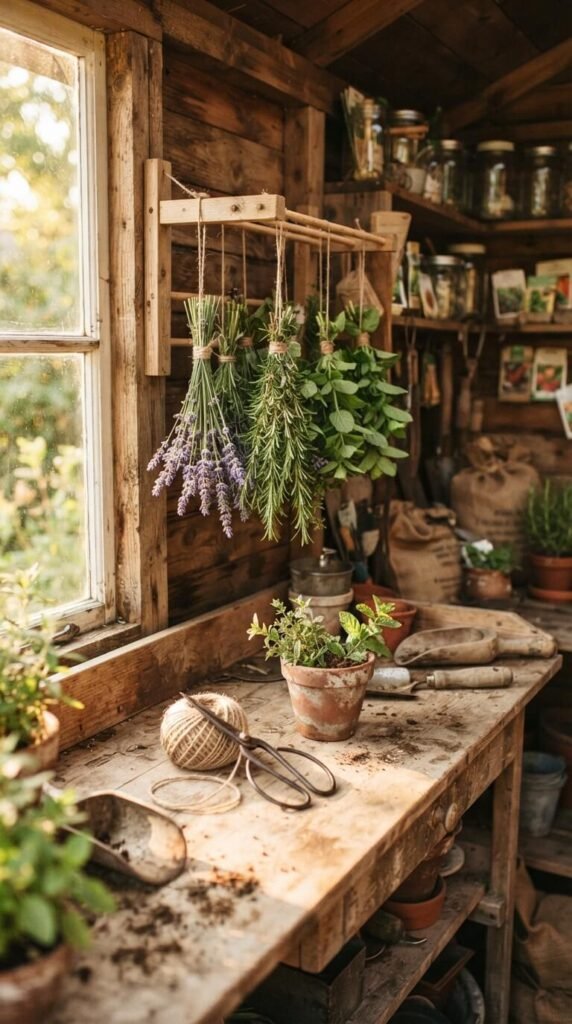
If you grow herbs, add a simple drying rack directly above your bench. Mount a dowel rod or curtain rod between two vertical posts above the bench surface. Cut your herbs, tie them in small bundles, and hang them upside down to dry — all from the same spot. This makes the bench smell incredible and turns a functional area into something that looks like a proper kitchen garden. The whole rack costs under $10 to build or can be made from scrap dowel you already have.
20. The Painted Accent Bench
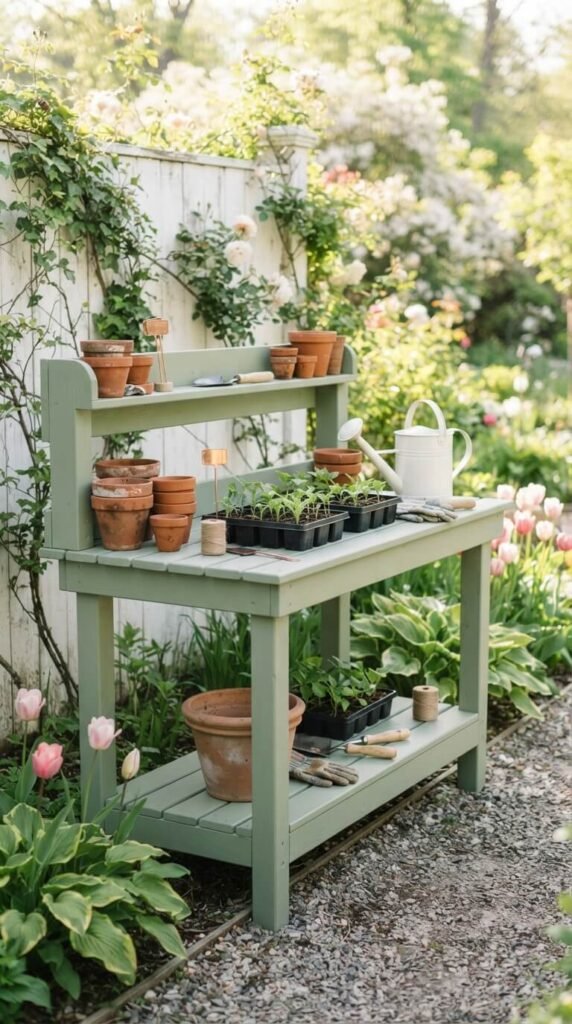
Paint transforms a basic bench into something you actually want to look at. Sage green, slate blue, and white are popular choices that blend with most garden aesthetics. Use outdoor-rated paint — it handles moisture and temperature swings without peeling. Apply two coats and let it cure fully before use. Sand lightly between coats for a smooth finish. Even an old, battered bench can look completely new with a fresh coat of paint. It’s the cheapest makeover in gardening.
21. The Potting Bench With Labeled Bin Organizer
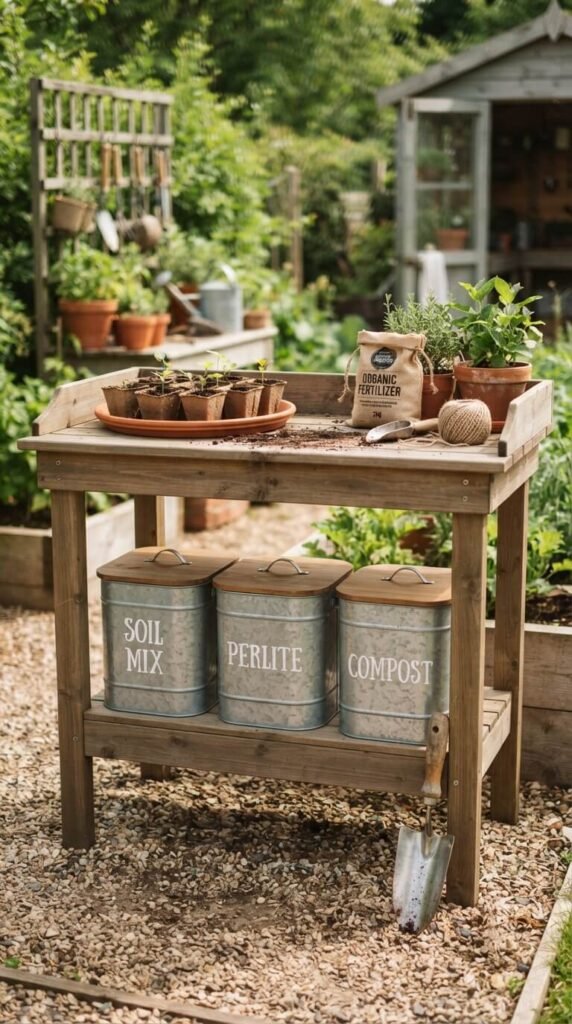
Labeled bins under your bench cut potting time significantly. Instead of hauling bags out every session, pre-fill bins with your most-used mixes — general potting soil, perlite, and compost. Scoop what you need directly. Use sturdy plastic or galvanized metal bins with lids to keep moisture and pests out. Label them clearly with a paint marker or chalkboard label. Refill the bins when they run low. This system works especially well when you’re potting many plants in one session and want to move fast.
22. The Potting Bench Paired With a Tool Caddy
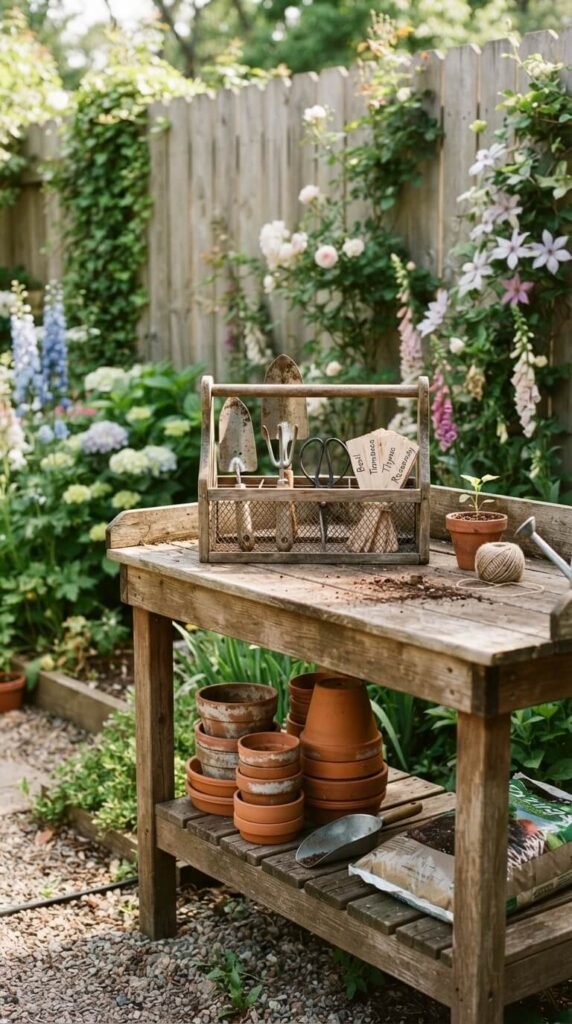
A portable tool caddy beside your bench keeps everything within reach without wall-mounting anything. Build one from scrap wood — a simple box with dividers and a center handle. Or find one at a dollar store. Stand your trowels, snips, markers, and dibber inside it upright. When you move to another part of the garden, grab the caddy and go. It means your tools travel with you, not just to the bench. Small, simple, and genuinely useful every single day.
23. The Potting Bench Built Into a Raised Bed Frame
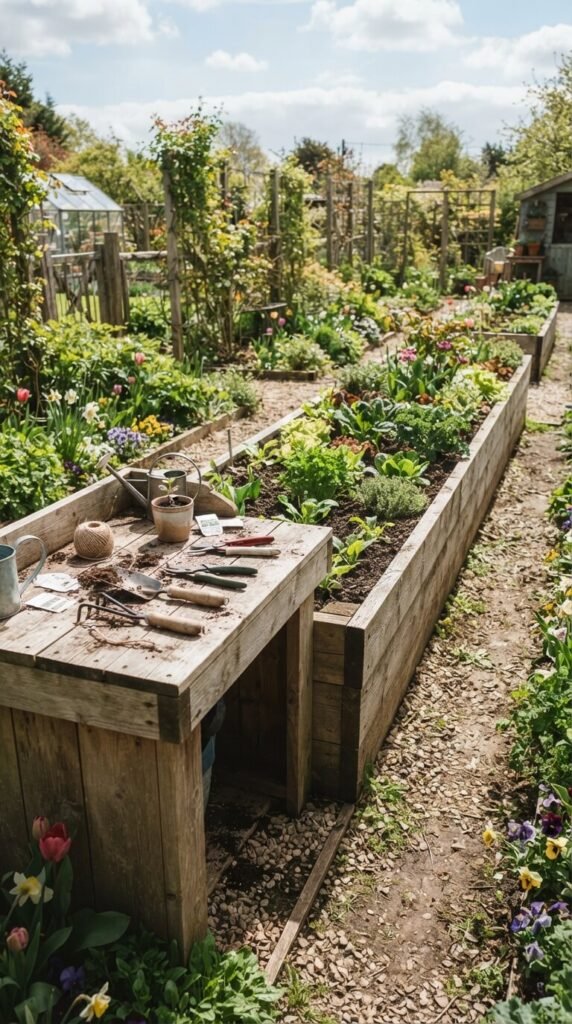
Attach a small bench section to one end of your raised bed frame. Match the height of the raised bed walls so the bench becomes a flush extension of the structure. This puts your workspace right next to where you’re planting — no carrying pots across the yard. The look is seamless and intentional. Build the bench end when you’re constructing the raised bed frame, or add it later with a few extra boards. It’s one of the cleanest functional integrations a gardener can build.
24. The Compact Apartment Courtyard Bench
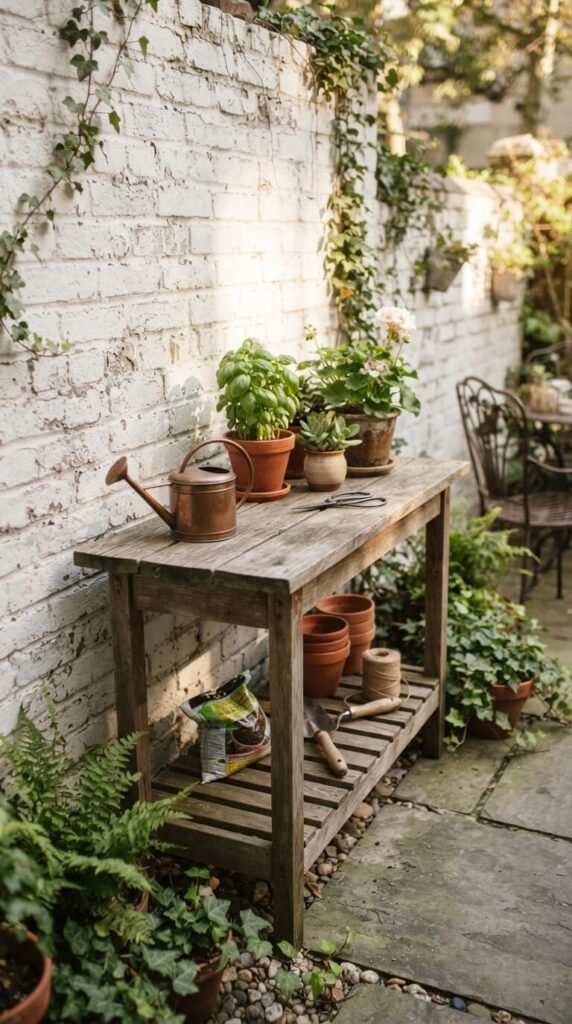
Not every garden is big. An 18-inch-deep bench fits on almost any patio or courtyard without blocking movement. Keep it narrow and tall — one lower shelf, one work surface. You don’t need a lot of surface area if you’re mostly working with small pots, herbs, and balcony plants. Stick to lightweight materials so you can move it easily. Pine works well here. Paint it white or a neutral color so it reads as furniture, not equipment, in a small outdoor space that does double duty as a living area.
25. The Weekend Market Table Hack
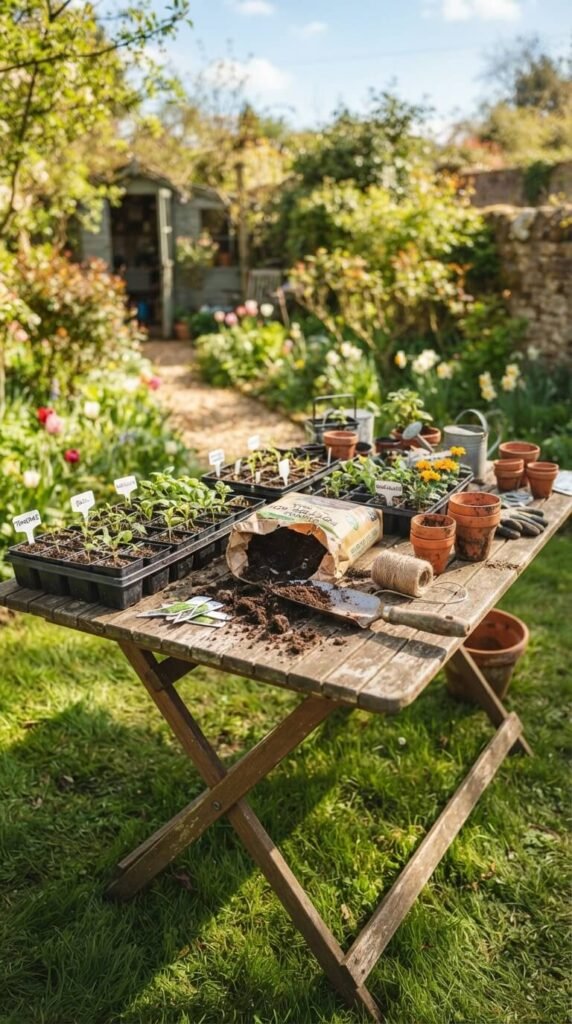
A foldable market table is a zero-build potting bench for renters or anyone who doesn’t want a permanent setup. Set it up on potting days, fold it away after. They’re sturdy, height-adjustable in some models, and available at big box stores for $30–$60. Add a plastic tray liner to protect the surface. Hang a simple over-door organizer on the back to hold tools. It’s not the most beautiful setup, but it works, stores flat, and requires absolutely no construction skills.
26. The Potting Bench With a Chalkboard Back Panel
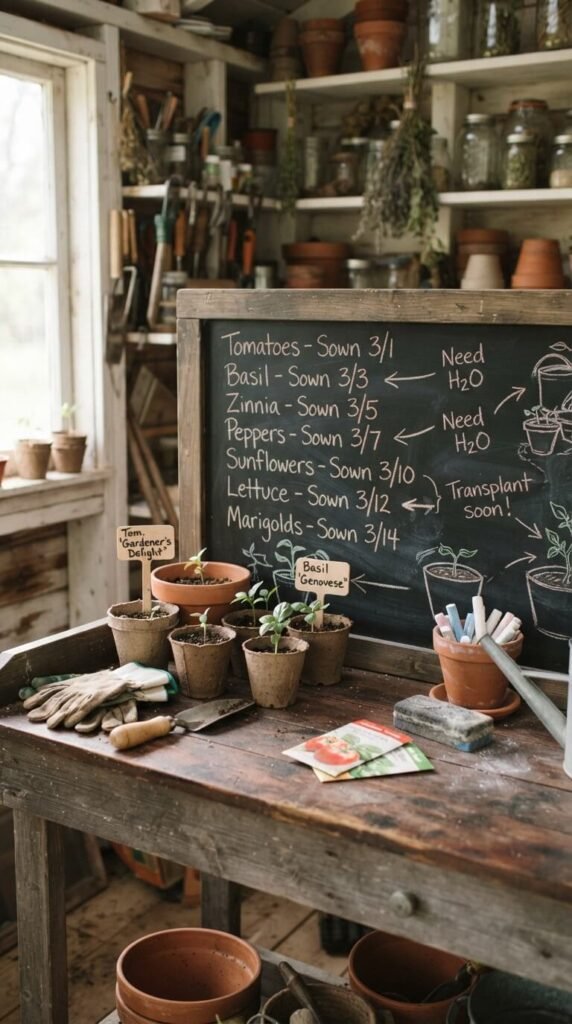
A chalkboard back panel is both practical and fun. Write planting dates, seed names, and reminders directly on the surface. Use chalkboard paint on a smooth plywood panel — two coats, cured for 24 hours. Wipe and rewrite each season. It keeps your notes visible while you work instead of buried in a notebook. It’s especially helpful if you’re starting many varieties at once and need to track what’s what. Add a small chalk holder or tray at the bottom edge to keep sticks from rolling off.
Conclusion
A potting bench doesn’t have to be expensive or complicated to be genuinely useful. The 26 setups here all have one thing in common — they make gardening easier by giving you a dedicated, organized place to work. Whether you build from scratch, repurpose something old, or fold one away after each session, the goal is the same: a setup that fits your space, your budget, and the way you actually garden. Pick one idea that clicks for you this weekend. Start simple. Your plants — and your back — will thank you for it.