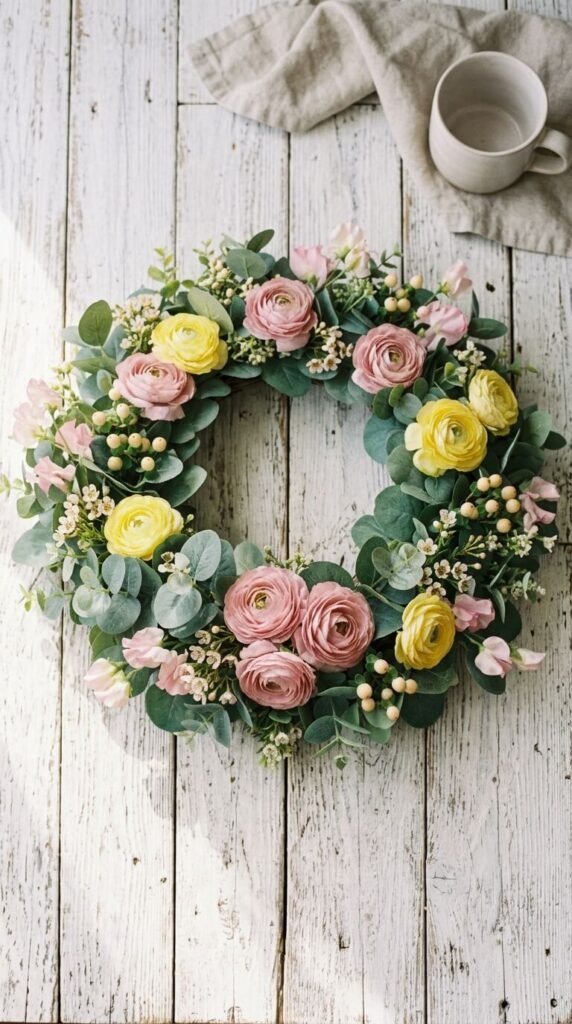
Spring wreaths set the tone for a home before anyone steps through the door. A pastel palette brings a soft welcome without shouting for attention. Muted pinks, buttery yellows, and sage greens work together to feel calm and lived-in. This list gathers 26 wreath ideas built around gentle color and easy materials. Each one comes with a simple way to make it yourself, even on a tight budget. Whether you’re new to wreath-making or just want fresh ideas, these designs keep things approachable. Grab a base, some ribbon, and a few stems, and you’re already halfway there.
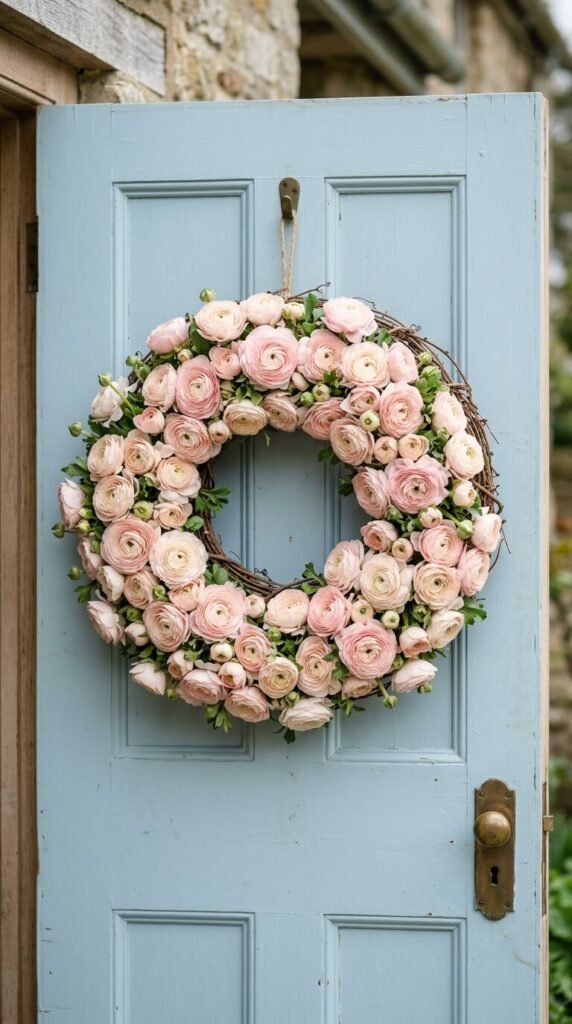
1. Blush Ranunculus Ring
Ranunculus flowers bring a soft, layered look without much effort. Pick up a bag of faux stems from a craft store. Trim them short and hot-glue them around a grapevine base. Cluster them close together so the base barely shows. Add a few stems facing different directions for texture. A thin velvet ribbon in dusty rose ties it together nicely. This one works well for front doors or above a mantel. It costs very little if you shop sales. Keep the color story to one or two pink shades for a calm finish.
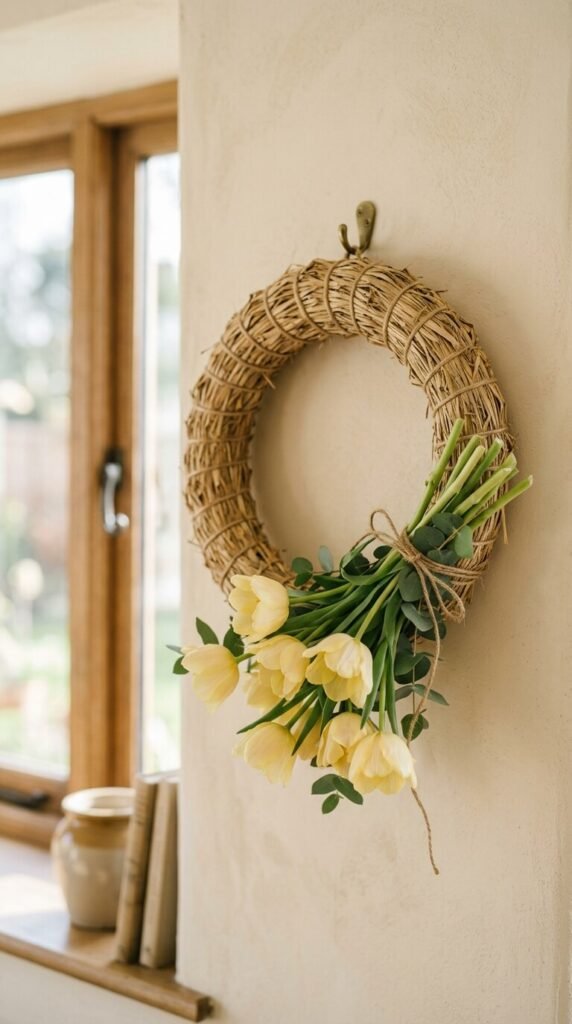
2. Buttercream Tulip Cluster
Tulips give spring wreaths an instant fresh feel. Choose pale yellow or cream-colored faux tulips for a buttery look. Group them in one corner instead of spacing them evenly. This creates a relaxed, asymmetrical style. A straw base keeps the whole thing lightweight. Secure stems with floral wire, not just glue, so they stay put. Add a small bow in ivory linen near the cluster. This wreath suits kitchen doors or covered porches. Dollar store tulip stems work just as well as pricier ones once they’re arranged together.
3. Sage and Cream Eucalyptus Loop
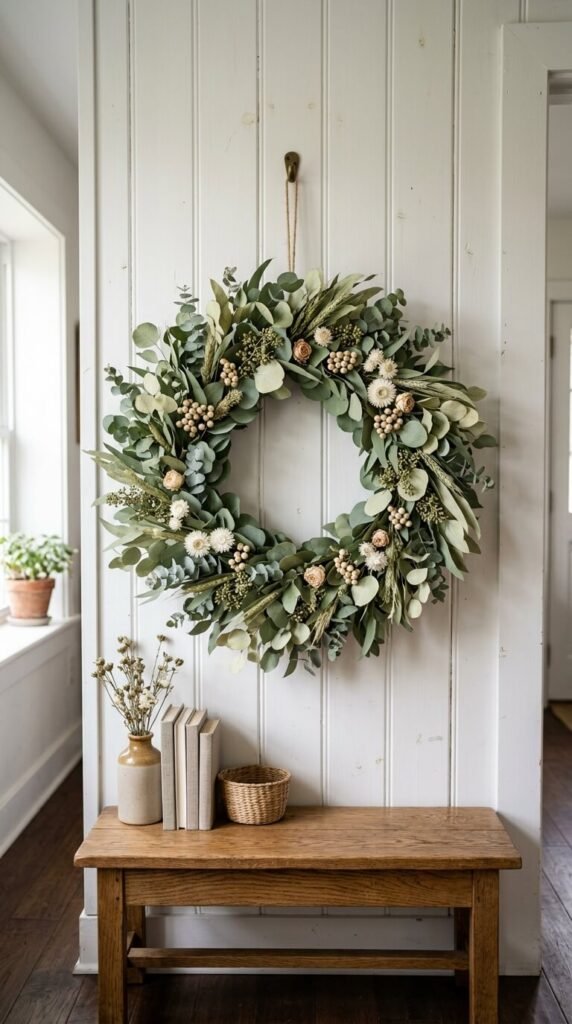
Eucalyptus brings texture without needing bright colors. Mix sage green stems with a few cream-toned dried branches. Wrap them around a wire base in one direction for a neat spiral. This style stays subtle and works in almost any room. Use painter’s tape to hold stems in place before gluing. A cotton cord for hanging keeps the look natural. This wreath lasts a long time since dried greenery doesn’t wilt. It’s a low-cost option if you already have eucalyptus stems from another project.
4. Pastel Ribbon Wrap Wreath
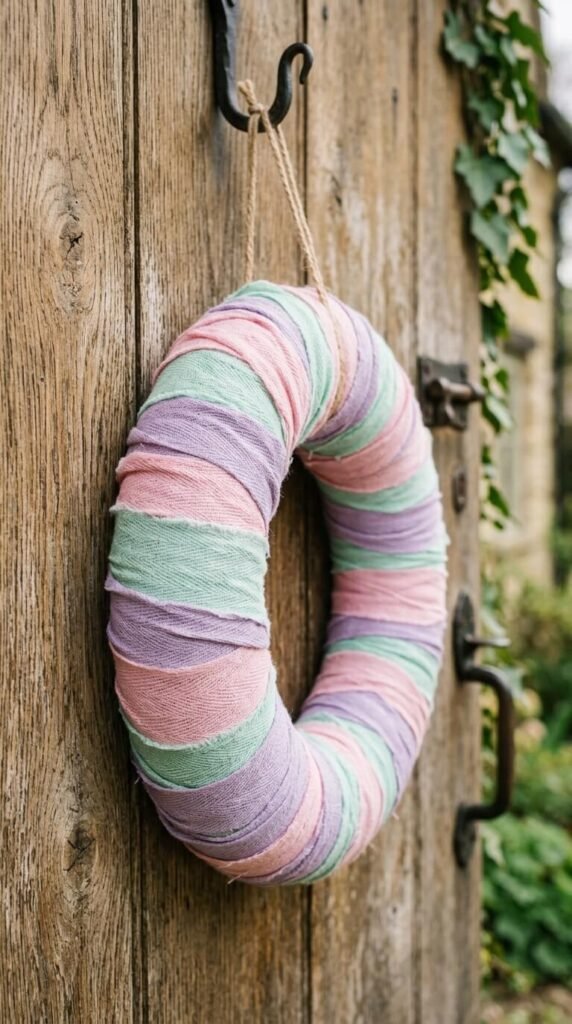
No flowers needed here. Grab a foam or wire wreath base and wrap it with ribbon in three pastel colors. Alternate the ribbons as you wrap for a striped effect. Secure the ends with hot glue on the back. Add a small bow where the ends meet. This project takes under 30 minutes. It’s a great pick for beginners or kids helping with a craft afternoon. Ribbon spools are cheap and reusable for other projects too. Try satin for a shinier finish or cotton for something more textured.
5. Dusty Lavender Sprig Wreath
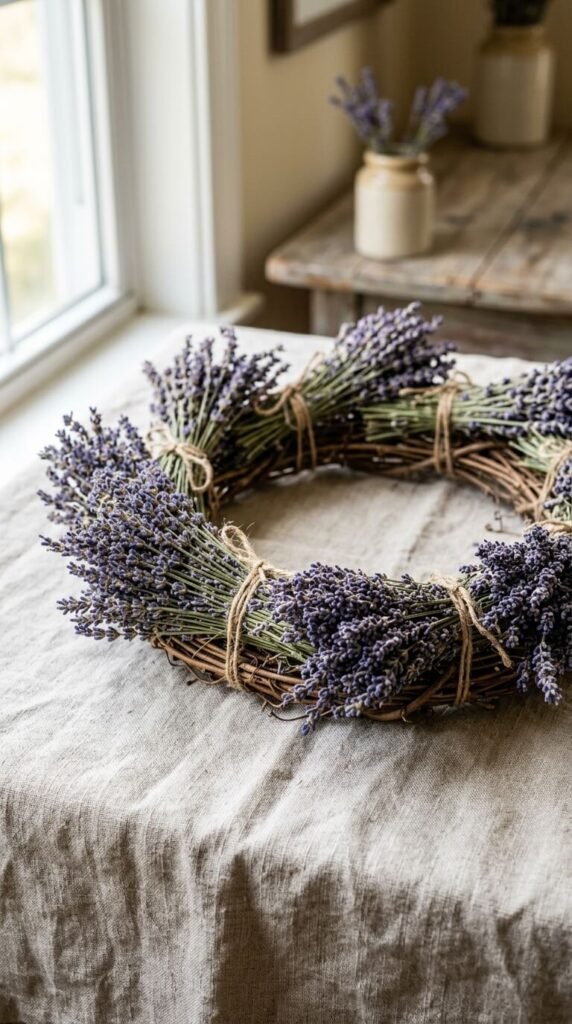
Dried lavender gives a wreath gentle color and a light scent. Buy dried lavender bunches or grow your own if possible. Bundle small groups with twine, then attach the bundles around a grapevine base. Overlap each bundle slightly to hide the stems. This design feels rustic and calm at once. Hang it somewhere out of direct sun to keep the color from fading fast. Lavender wreaths work well in bedrooms or bathrooms too, not just front doors. This is one of the most budget-friendly options on the list.
6. Cotton Candy Peony Statement
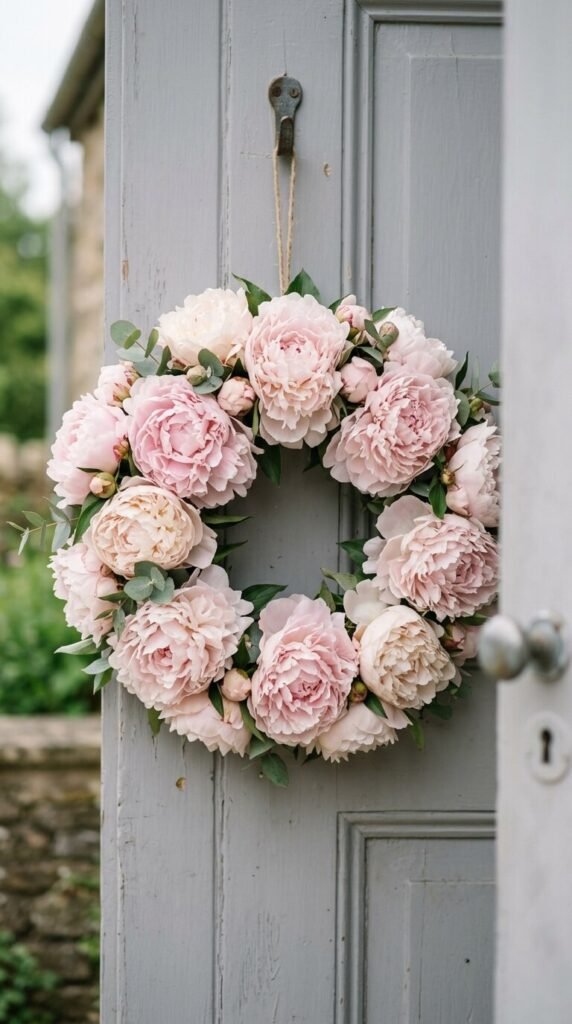
Peonies make a bigger visual statement with fewer stems needed. Choose 6 to 8 faux peony heads in soft pink. Attach them close together around the top half of the wreath, leaving the bottom lighter. This creates a balanced, not overcrowded, look. Peony stems can be pricier, so watch for seasonal sales. A satin ribbon in the same pink family keeps the palette simple. This wreath suits larger doors or entryways. Store it flat when not in use so the petals keep their shape.
7. Mint and Ivory Berry Ring
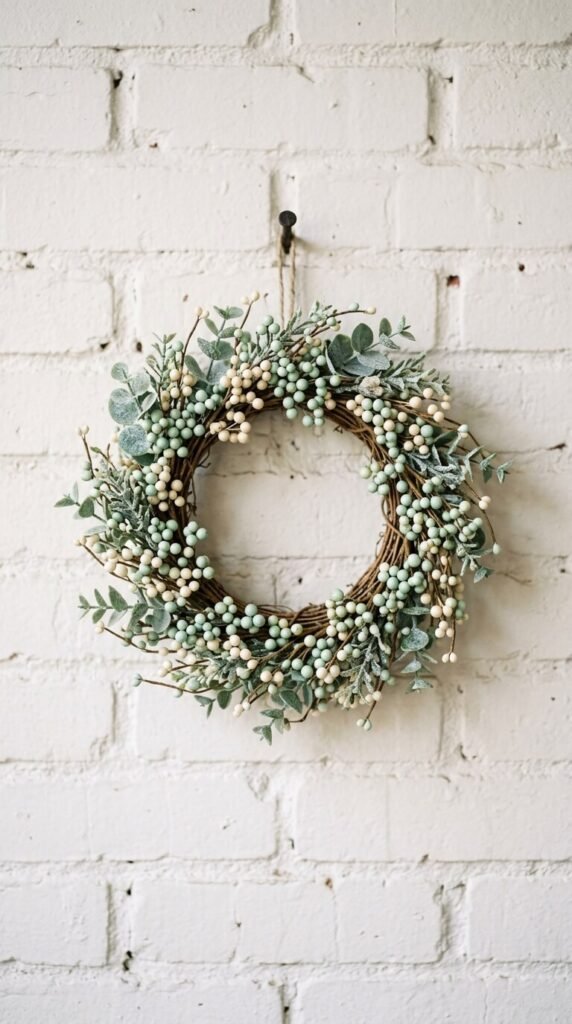
Small berry stems add texture without taking over the design. Mix mint green and ivory berry picks on a thin wire base. Space them evenly so the wreath doesn’t look too full. This style works great for smaller doors or windows. Berry stems are often sold in multi-packs, making this a cheap option per wreath. Add a thin gold wire accent if you want a little shine. Keep the rest of the room simple so this piece stands out on its own.
8. Soft Pink Hydrangea Half-Moon
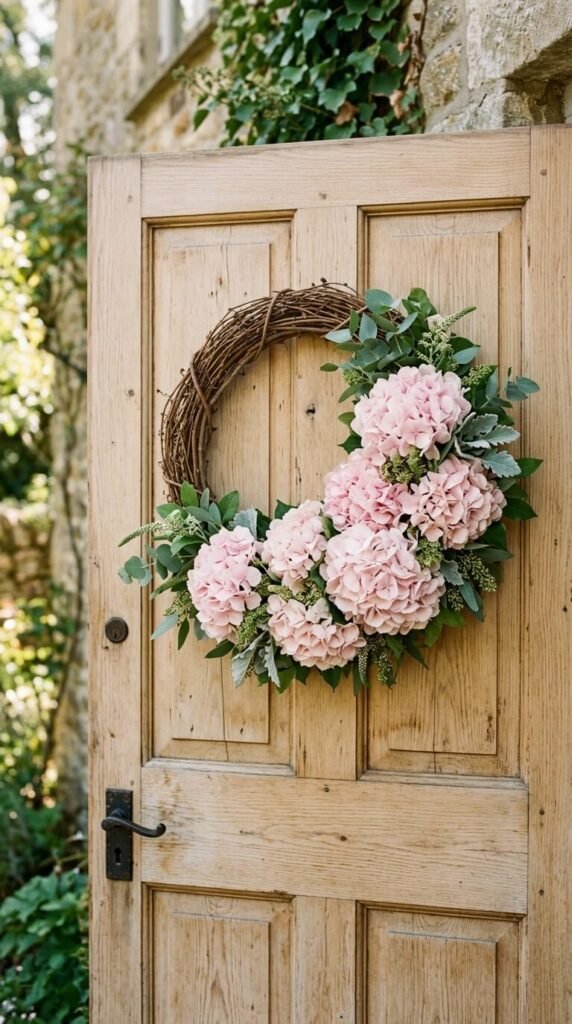
Hydrangeas have a full, cloud-like shape that fills space fast. Use 3 to 4 faux hydrangea heads and attach them to just the bottom half of the wreath. Leave the top bare for a modern, half-moon look. This uses fewer stems than a full wreath, which saves money. Hydrangea heads can be pulled apart into smaller clusters if needed. A jute ribbon adds contrast against the soft pink. This style works well for spring porches with more neutral surroundings.
9. Buttery Daffodil Doorpiece
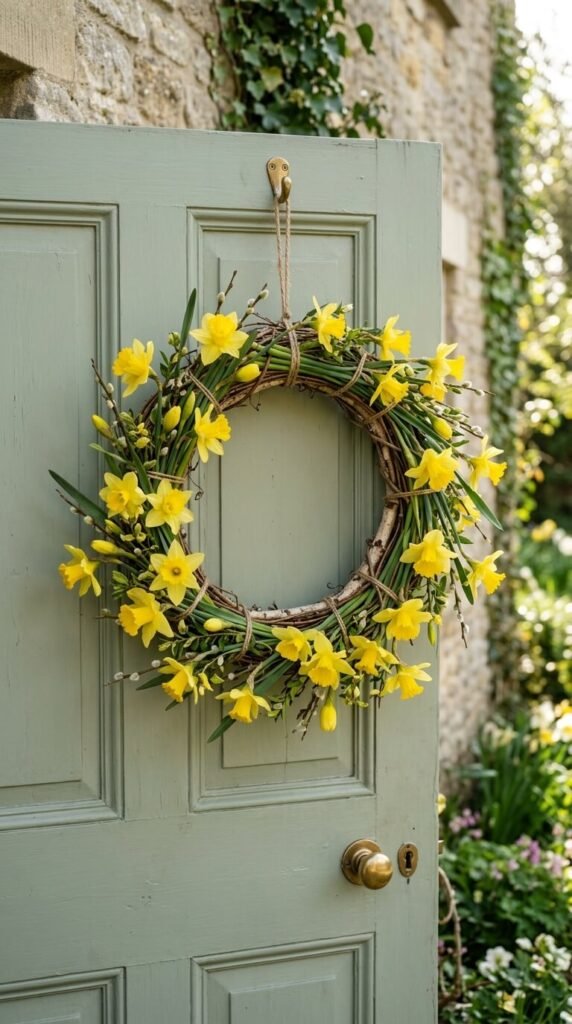
Daffodils bring an early spring feel with cheerful yellow tones. Arrange faux daffodil stems loosely around a grapevine base, letting some stems point outward. This gives a natural, just-picked look. Avoid gluing every stem flat against the base. A little movement makes it feel less stiff. Pair with a cream burlap bow for contrast. Daffodil stems are usually inexpensive and easy to find at craft stores in spring. This wreath works well near mailboxes or garden gates too.
10. Blush and Sage Two-Tone Wreath
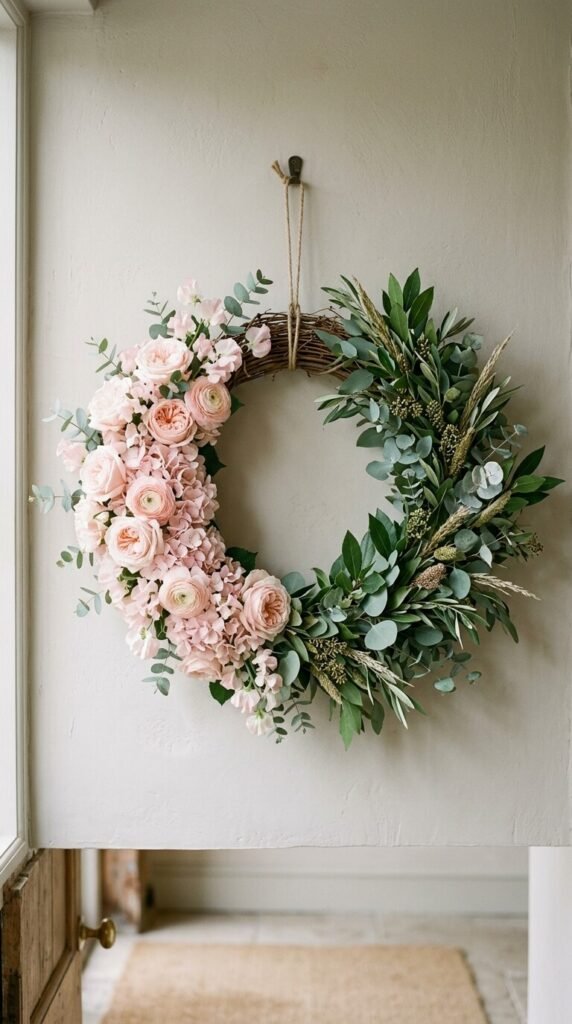
Split the wreath into two halves for an easy two-tone design. Fill one side with blush flowers and the other with sage greenery. Blend them slightly in the middle so it doesn’t look cut in half. This technique uses fewer flower stems overall, since greenery fills half the space. It’s a smart pick if you’re working with a small stem budget. Use floral tape to keep the transition smooth. This wreath suits modern or minimalist entryways especially well.
11. Powder Blue Forget-Me-Not Cluster
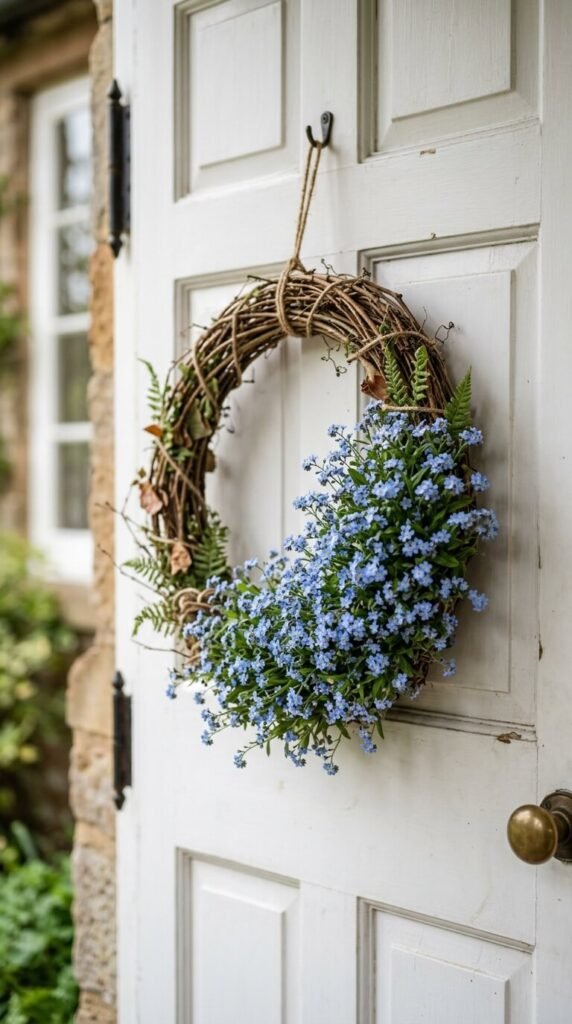
Small blue blooms add a cool, calming note to a mostly warm palette. Cluster forget-me-not stems tightly in one section rather than spreading them out. This creates a focal point instead of a busy overall look. Fill the rest of the base with simple greenery. Powder blue pairs nicely with blush or cream accents nearby. These small flower stems are often sold cheap in bulk packs. This wreath works well paired with white or pale wood doors for contrast.
12. Ivory Ranunculus and Twig Base
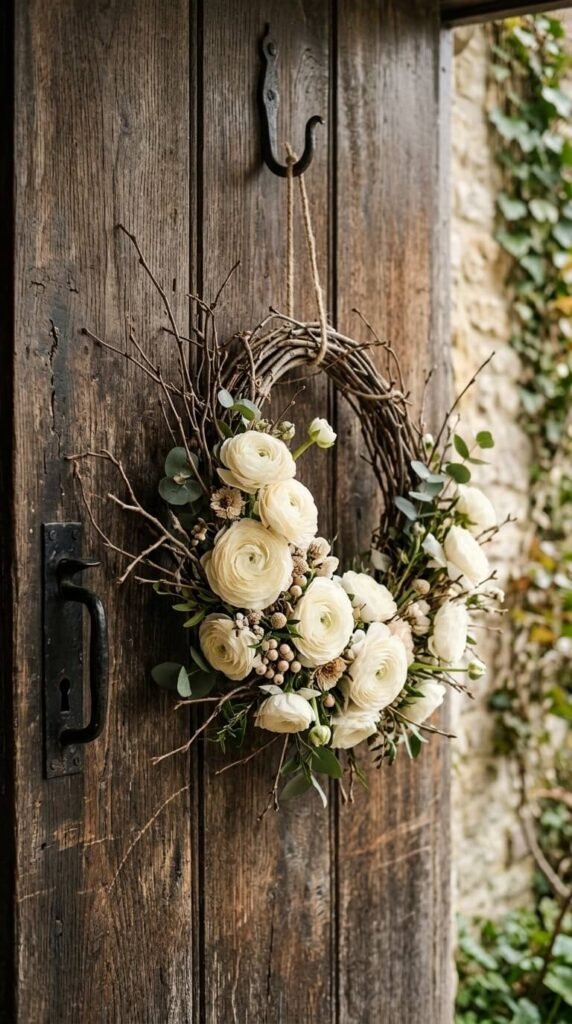
Bare twigs add texture before any flowers go on. Start with a twig or willow base, then attach a few ivory ranunculus stems in one cluster. Leave most of the twig base visible. This creates a light, airy design instead of a full one. It uses fewer flowers, which keeps costs down. This style suits farmhouse or cottage-style homes especially well. Add a thin linen ribbon for hanging. This wreath also works nicely left up through early summer since it’s not overly seasonal.
13. Pastel Rainbow Petal Wreath
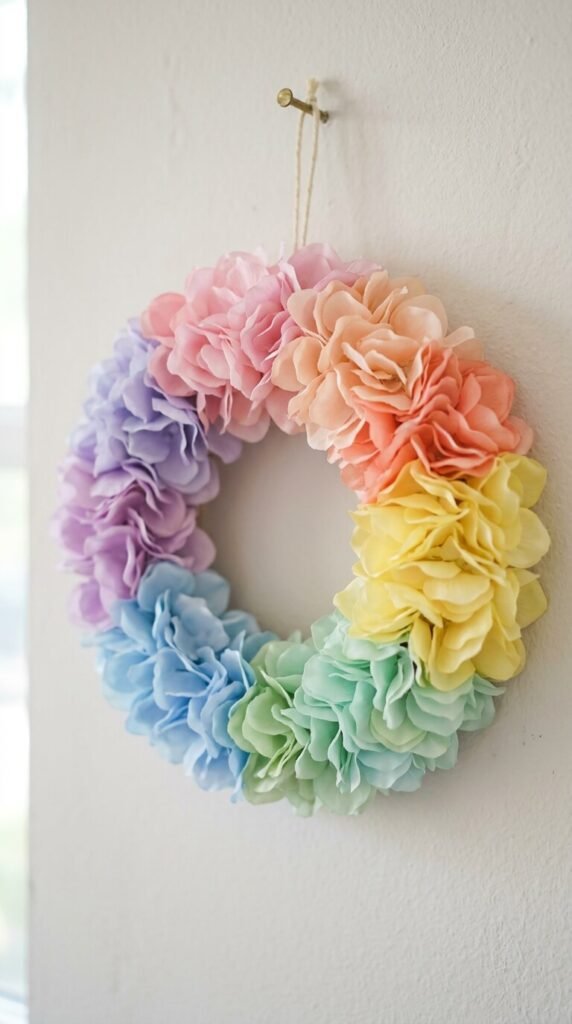
Arrange small faux petals in a gentle rainbow gradient for a playful but still soft look. Start with pink, move to yellow, then green, then blue around the ring. Keep the petals small so the colors blend rather than clash. This wreath works great for kids’ rooms or nurseries. Craft store petal packs are inexpensive and go a long way. Hot glue each petal individually for a fuller texture. This is a fun weekend project for beginners wanting to practice color blending.
14. Champagne Wheat and Blush Bloom Mix
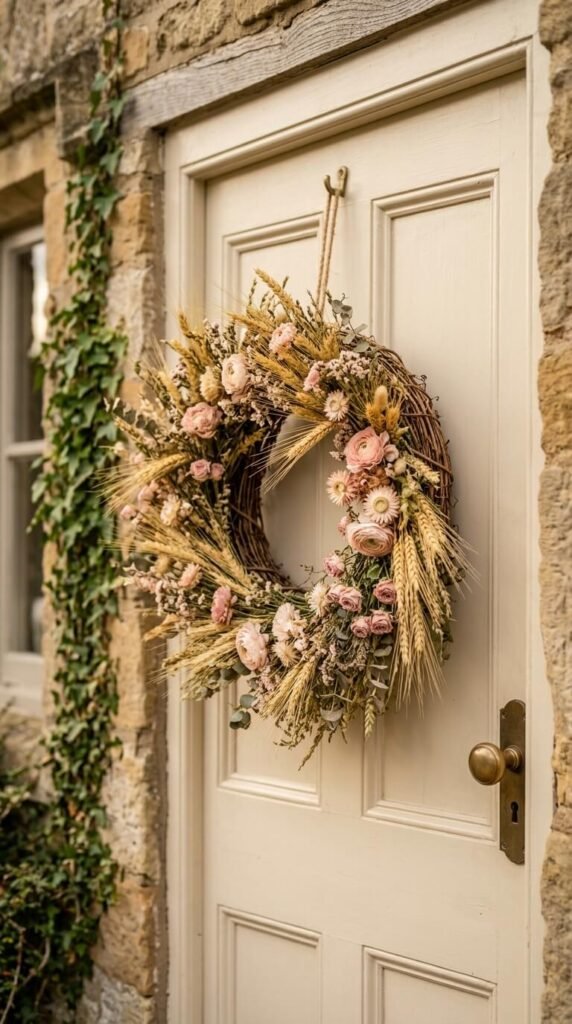
Wheat stalks bring a warm, golden texture that pairs well with soft pink blooms. Attach dried wheat stems around the full base first. Then add 3 to 4 blush flowers in one cluster for a pop of color. This combination feels both rustic and delicate at once. Wheat bundles are affordable and often sold at craft or floral shops. This wreath transitions well from late winter into spring without needing a full swap. It also holds up well outdoors since dried wheat doesn’t wilt.
15. Soft Coral Poppy Accent
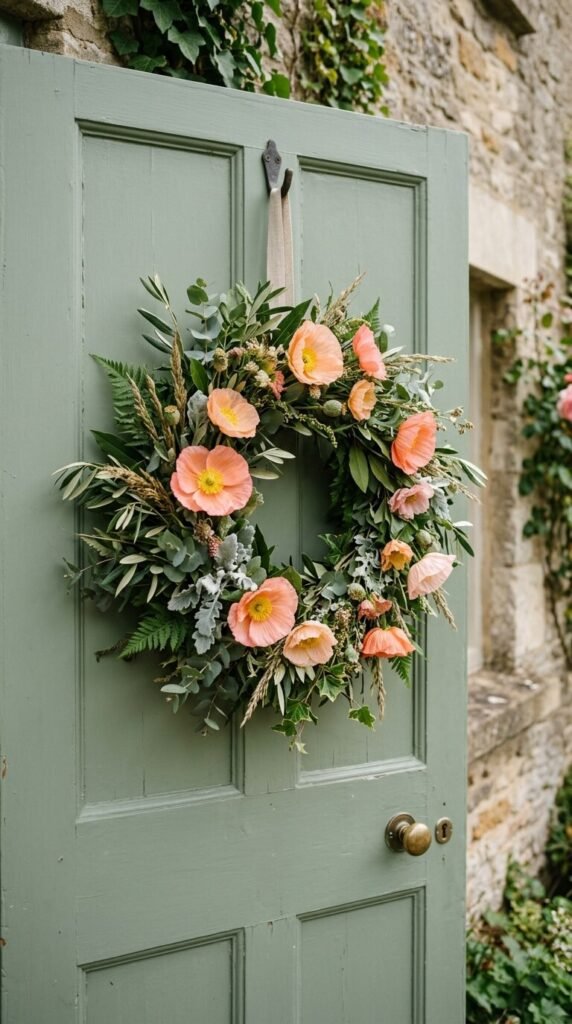
Poppies add a gentle pop of warmth to an otherwise green design. Cover most of the base in simple faux greenery first. Then add 3 to 5 coral poppy stems in a loose cluster near the bottom. This keeps the color from feeling overwhelming. Poppy stems with visible centers add nice detail up close. This style suits both spring and early summer displays. A thin twine hanger keeps the whole look simple and unfussy.
16. Lilac and White Lilac Bunch
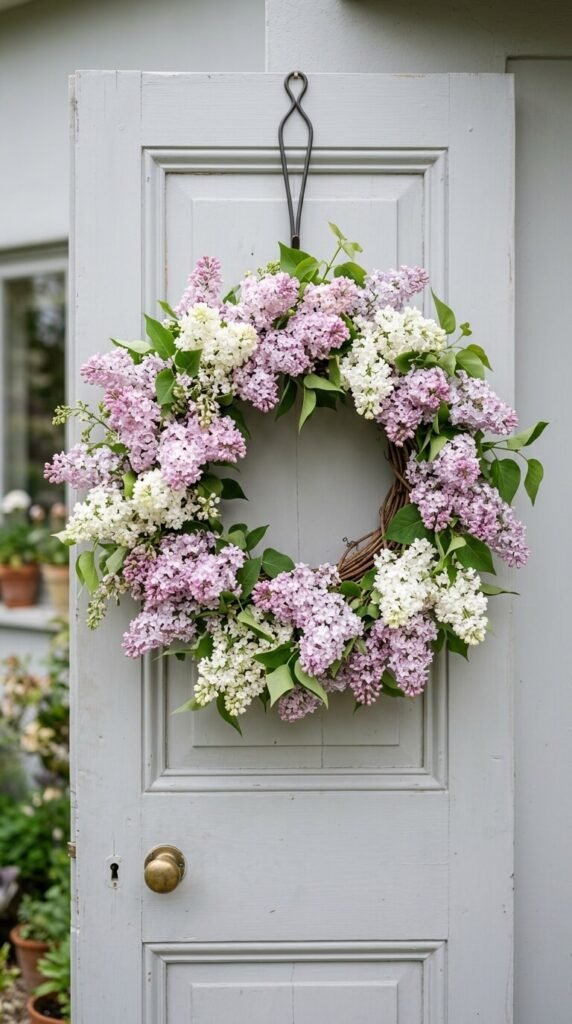
Lilac blooms have a soft, clustered shape that fills a wreath quickly. Use faux lilac bunches in pale purple and white together. Attach them in two or three sections around the base rather than spacing evenly. This gives a fuller, more natural clump look. Lilac stems are usually sold pre-bunched, which saves assembly time. This wreath pairs beautifully with pastel front porch decor like cushions or planters. Keep it out of strong sun to prevent the color from fading over the season.
17. Pale Peach Rose Garden Ring
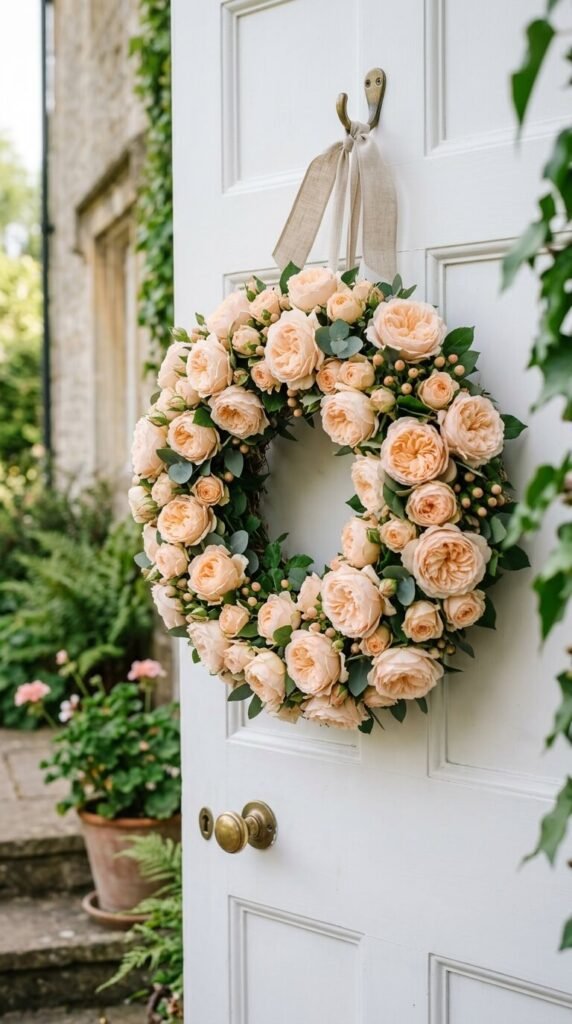
Roses give a classic, romantic feel to any spring display. Use small faux rose stems in pale peach for a soft, cohesive look. Attach them close together around the entire base for a fuller finish. Mix in a few rose buds for texture variation. This wreath works well for spring weddings, showers, or just everyday front door decor. Rose stems can be pricier individually, so buy multi-stem bushes to save money. A satin ribbon in matching peach ties the whole design together.
18. Sage Fern and Blush Bud Mix
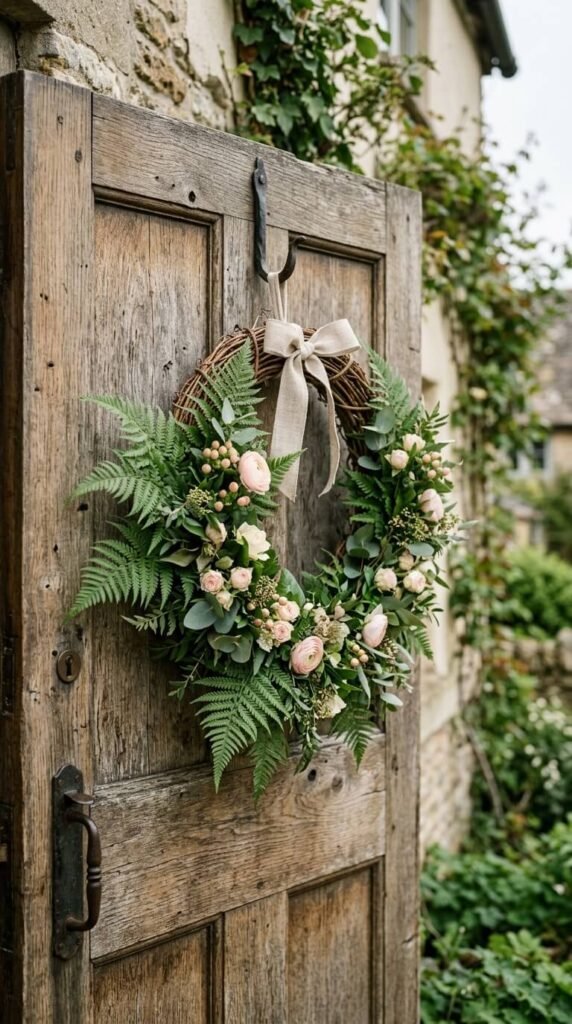
Ferns bring an unexpected texture that softens a floral design. Layer faux fern leaves around the full base first. Then tuck small blush flower buds into gaps between the leaves. This creates depth without needing many flowers. Ferns are usually cheap and sold in long stems that go far. This combination feels calm and a little woodland-inspired. It suits shaded porches or covered entryways especially well. This wreath also holds its shape nicely through wind and light rain.
19. Pastel Macaron-Inspired Pom Wreath
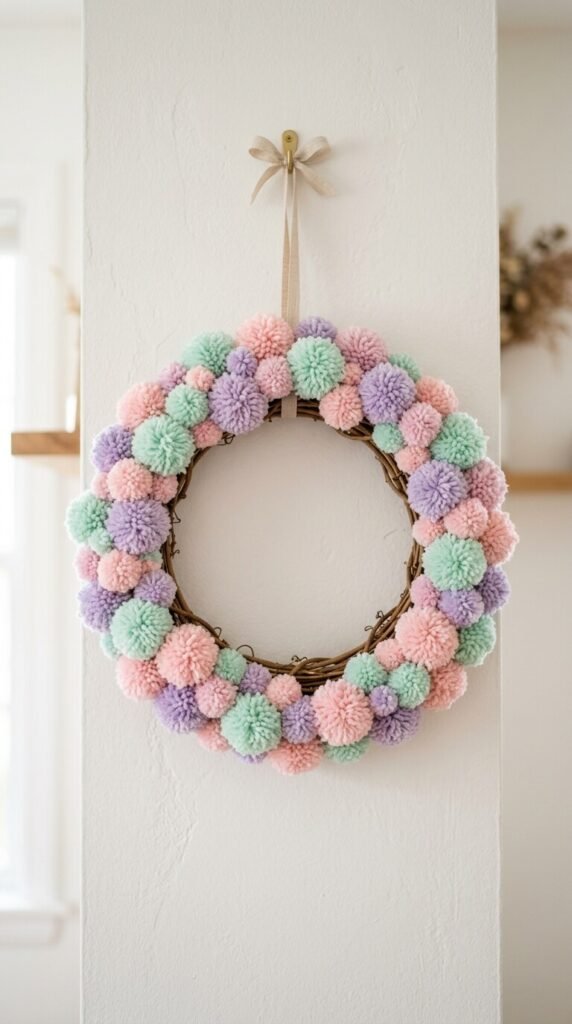
Pom-style craft flowers create a playful, candy-colored look. Mix pink, mint, and lavender poms across the base in a random pattern. This design feels fun without being overly busy. Poms are inexpensive and easy to glue directly onto a foam base. This project works well for a spring party or bridal shower entrance. Kids can help with this one since there’s no delicate floral wire involved. Keep the poms close together so the base doesn’t peek through.
20. Whitewashed Grapevine and Blush Bow
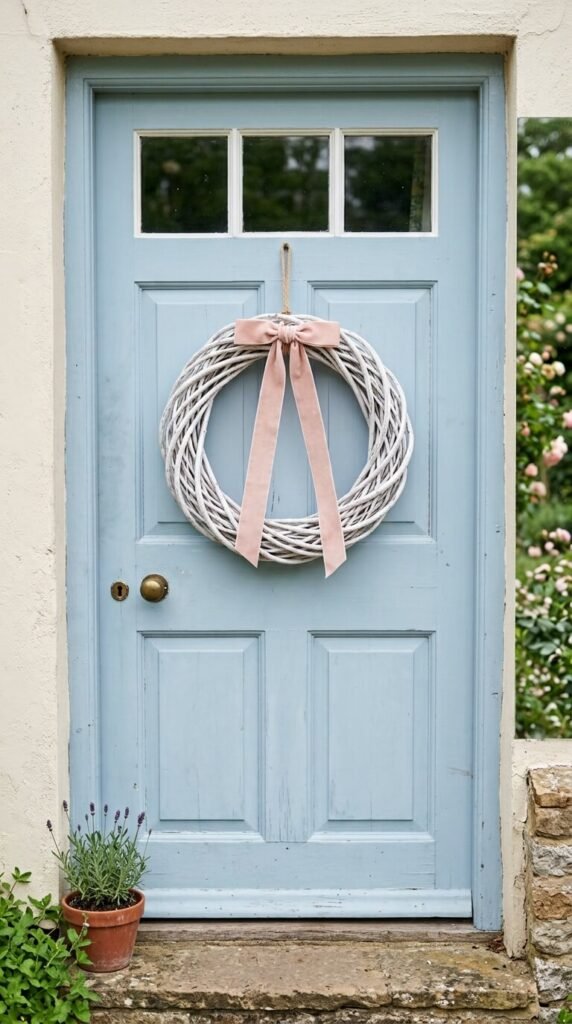
Sometimes less really does more. Start with a plain grapevine base and lightly whitewash it with diluted white paint. Let it dry completely. Skip flowers entirely and add just one large blush ribbon bow at the top. This minimal design takes very little time or materials. It works well for anyone short on crafting time but still wanting a seasonal touch. This style also transitions easily into other seasons with a simple ribbon swap.
21. Butter Yellow Ranunculus and Twine Wreath
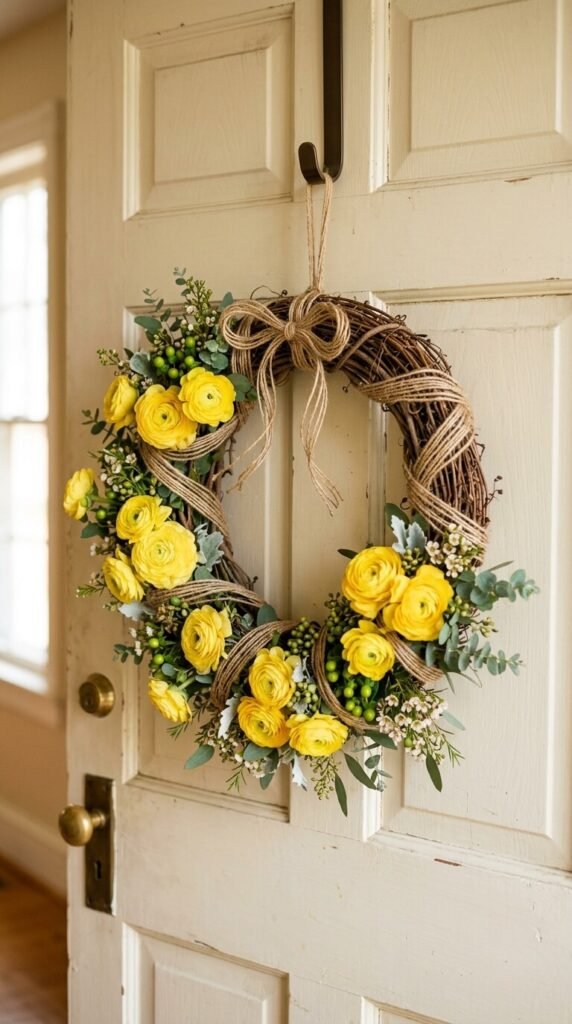
Twine adds a handmade texture that pairs nicely with soft yellow blooms. Wrap natural twine around the base first, covering it fully. Then attach 4 to 5 butter yellow ranunculus stems in one cluster. This keeps the design simple but still textured. Twine is one of the cheapest materials available for wreath-making. This wreath suits farmhouse kitchens or covered patios especially well. It also pairs nicely with woven baskets or other natural-fiber decor nearby.
22. Pastel Anemone Cluster Wreath
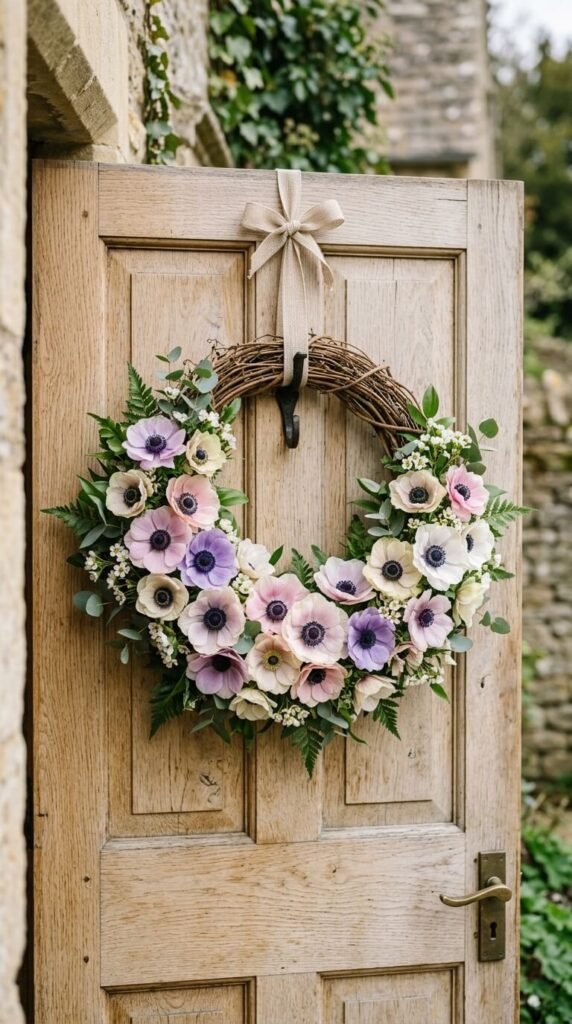
Anemones bring a striking center detail that stands out against pastel petals. Choose stems in soft pink, lavender, or white with dark centers. Cluster them together in one section of the base. Leave the rest of the base covered in simple greenery. The contrast between the dark centers and pale petals gives this wreath a bit more visual interest. Anemone stems are often sold individually, so buy just what you need to stay on budget.
23. Soft Mint Succulent and Bloom Mix
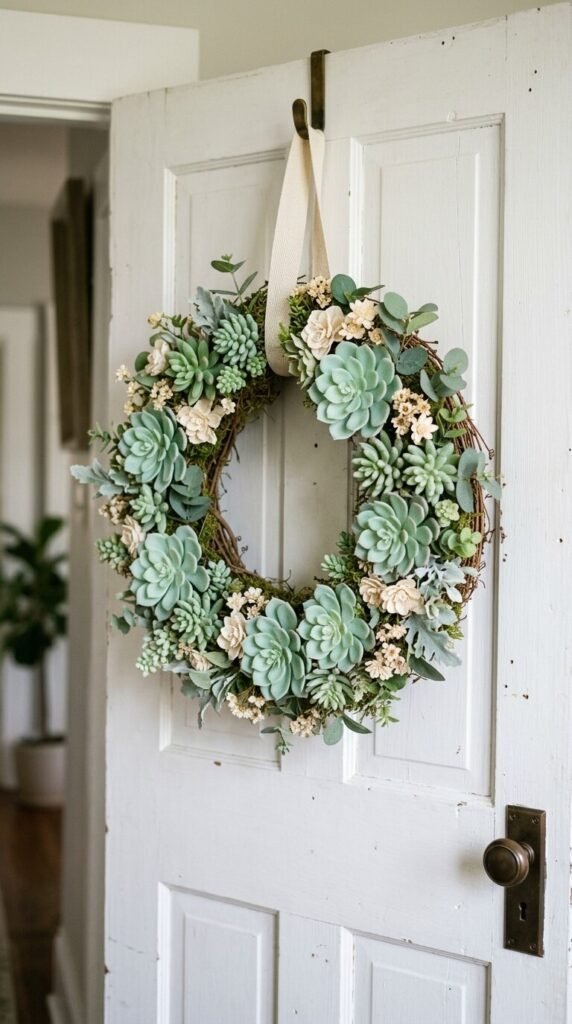
Succulents add texture that lasts far beyond spring. Mix small faux succulent picks with pale pink or lavender flowers around the base. This combination feels fresh without leaning too floral. Succulent picks are reusable, so this wreath can be reworked for other seasons later. Space the succulents evenly, then fill gaps with flowers. This design works well for modern or desert-inspired homes. It’s also a sturdy option since succulents don’t wilt or fade easily.
24. Pale Blush and Gold Accent Wreath
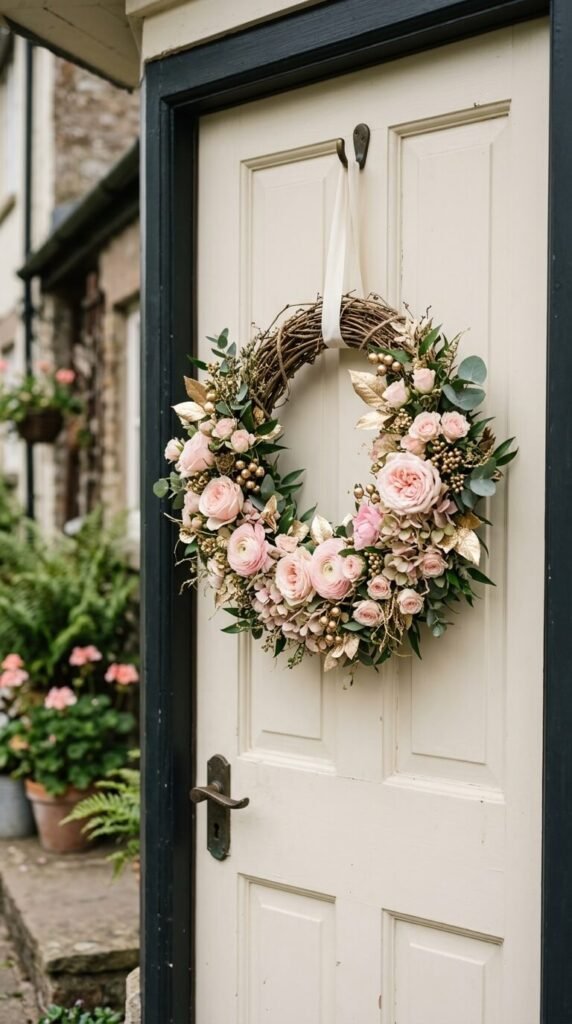
A touch of gold adds shine without overwhelming the soft palette. Attach blush flowers around the base as the main layer. Then tuck in a few small gold leaf picks between the blooms. This gives the wreath a slightly dressed-up feel for spring gatherings. Gold accent stems are usually inexpensive and sold at most craft stores. Keep the gold minimal so it stays a supporting detail, not the main focus. This style suits both indoor and outdoor display.
25. Cottage Cornflower and Herb Wreath
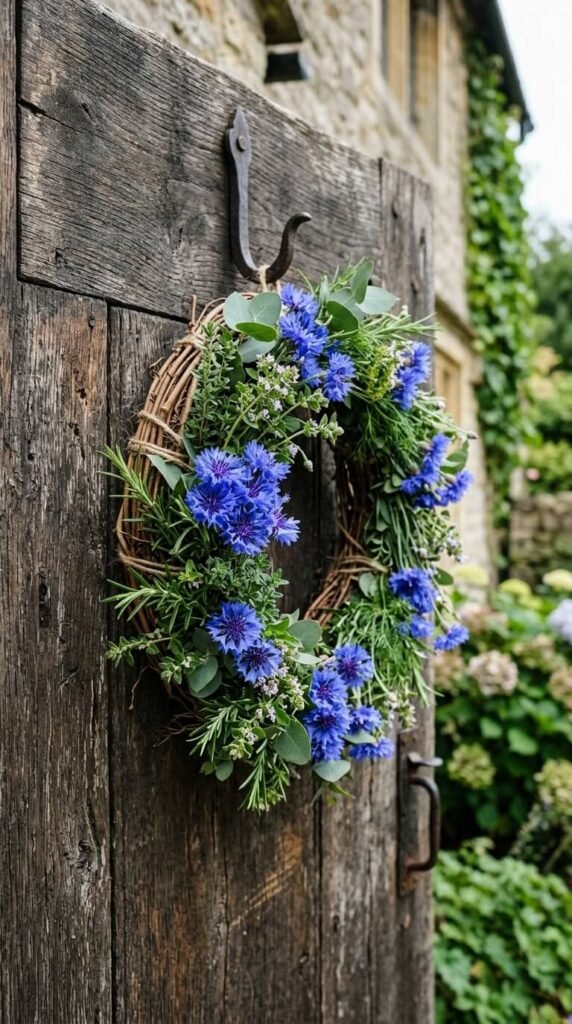
Herbs bring a nice scent along with visual texture. Mix small blue cornflower stems with sprigs of dried rosemary or thyme. Attach them together in small bundles around the base. This gives a cottage-garden feel that’s a little different from typical floral wreaths. Dried herbs are often cheap, especially if you already grow them at home. This wreath suits kitchen doors particularly well. The scent fades gently over time, but the visual texture holds up for weeks.
26. Layered Pastel Ombré Wreath
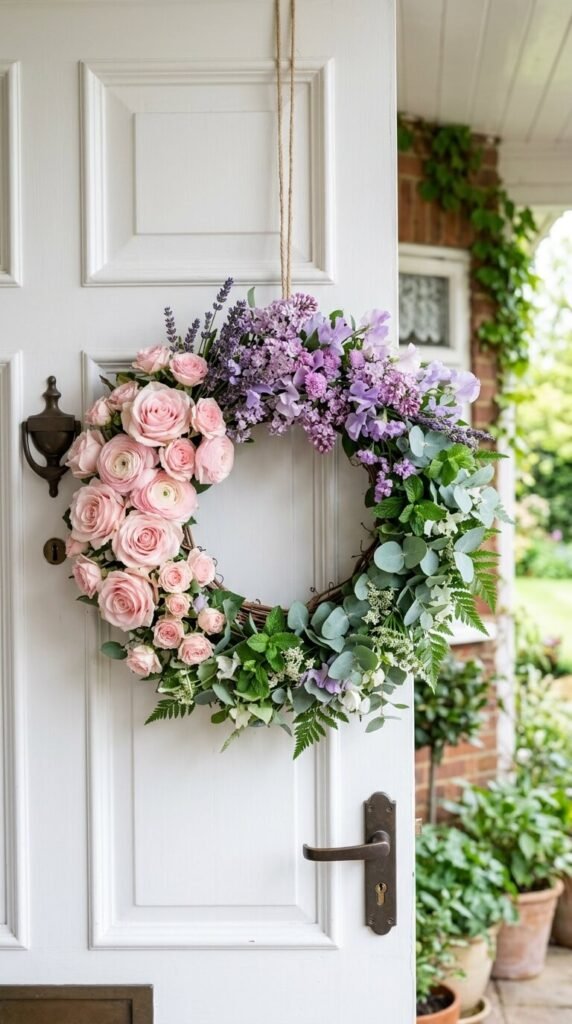
For a more advanced project, try a full ombré color gradient. Start with pink flowers on one end, blend into lavender in the middle, then finish with mint on the other end. Use similar-sized blooms throughout so the transition looks smooth. This takes more planning but uses common, affordable stems. Lay everything out on a table first before gluing anything down. This wreath makes a nice statement piece for a spring open house or gathering. It’s one of the more eye-catching designs on this list.
Conclusion
A pastel spring wreath doesn’t need a big budget or advanced skills. Simple materials like grapevine bases, ribbon, and a few flower stems go a long way. Mixing textures like twigs, herbs, or dried greenery keeps things interesting without added cost. Pick one or two designs from this list that match your door color and personal style. Start small, gather a few supplies, and give one of these ideas a try this weekend.