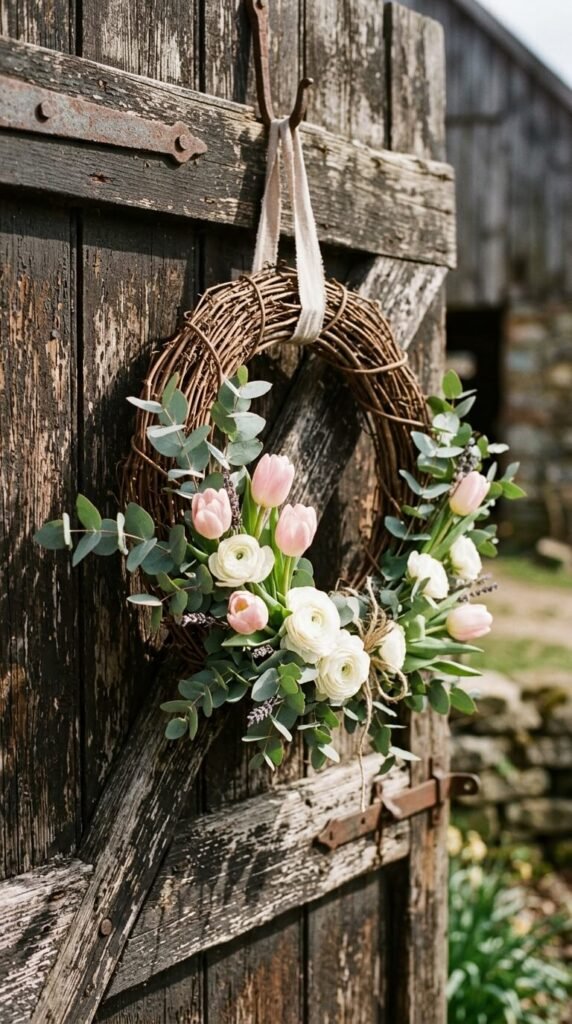
Spring wreaths are having a moment, and farmhouse style leads the pack. This look mixes worn wood, cotton stems, and soft florals into something that feels lived-in and warm. Whether you’re hanging one on a front door or dressing up a mantel, these designs bring texture and charm without costing a fortune. Below you’ll find 29 ideas that mix DIY grit with real style, plus tips to help you build your own on a budget.
1. Cotton Boll and Burlap Wreath
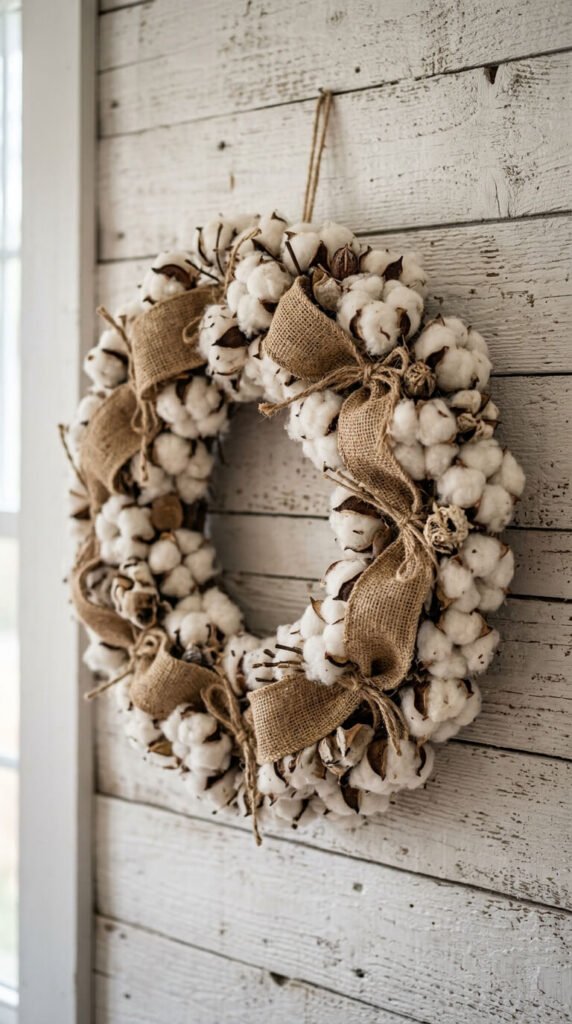
Cotton bolls give any wreath instant farmhouse texture. Buy stems in bulk online or at craft stores for a few dollars each. Wrap a wire frame with burlap ribbon first. Then hot-glue cotton stems around the base. Leave gaps for a relaxed, natural look. Add a few dried wheat stalks for height. This one holds up well outdoors since cotton doesn’t wilt. Skip the florist foam entirely. A hot glue gun and wire cutters are all you need. Total cost can stay under fifteen dollars if you shop clearance bins.
2. Dried Lavender Bundle Wreath
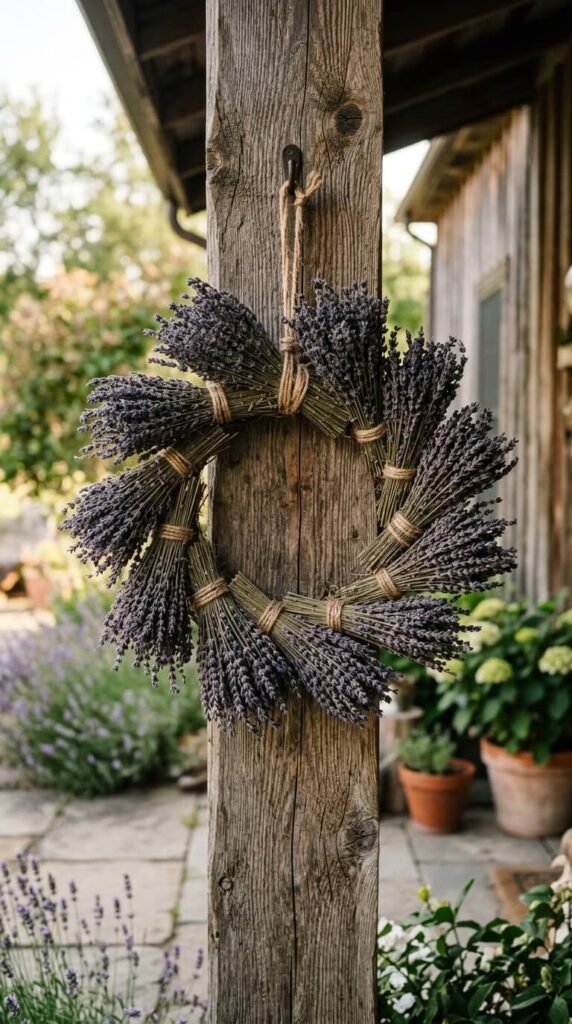
Dried lavender smells wonderful and looks even better. Tie small bundles with jute twine before attaching them to your frame. Overlap each bundle so the wire disappears. Work in one direction for a tidy, swept look. Lavender holds its color for months if kept out of direct sun. Buy dried stems from a local farm stand to save money. This wreath works well indoors too, especially near an entryway. The scent fades slowly, giving you a little aromatherapy every time you walk by.
3. Vintage Milk Can Lid Wreath
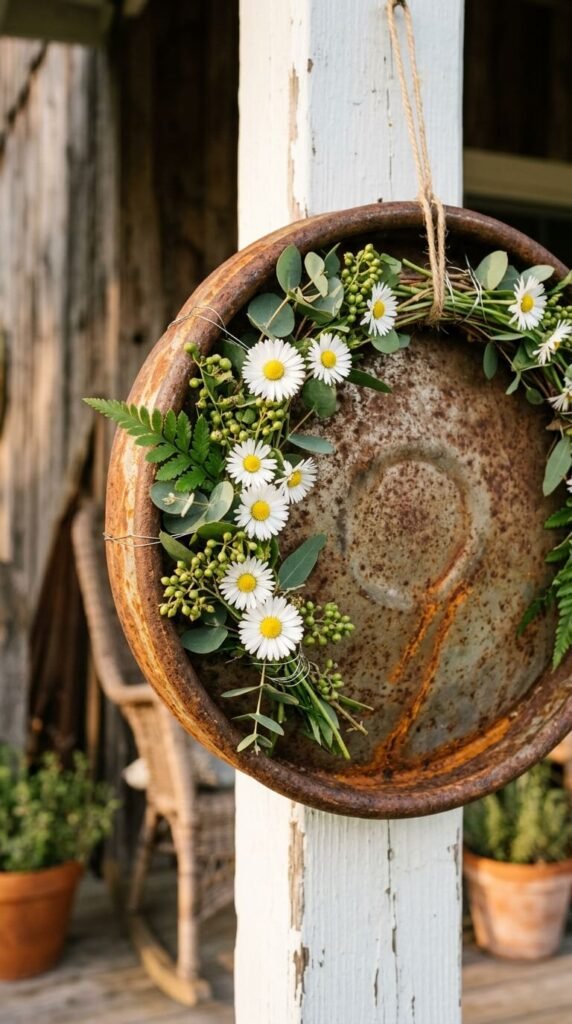
Old metal lids make surprisingly good wreath bases. Check flea markets or your grandparents’ shed for rusted lids. Drill two small holes for wire, then attach faux florals around the rim. The rust adds character you can’t fake with new materials. Keep the flower placement loose and asymmetrical. This design costs almost nothing if you already own the lid. It also holds up in humid weather better than straw or grapevine bases. Hang it with simple wire, no fancy hardware needed.
4. Faux Olive Branch Wreath
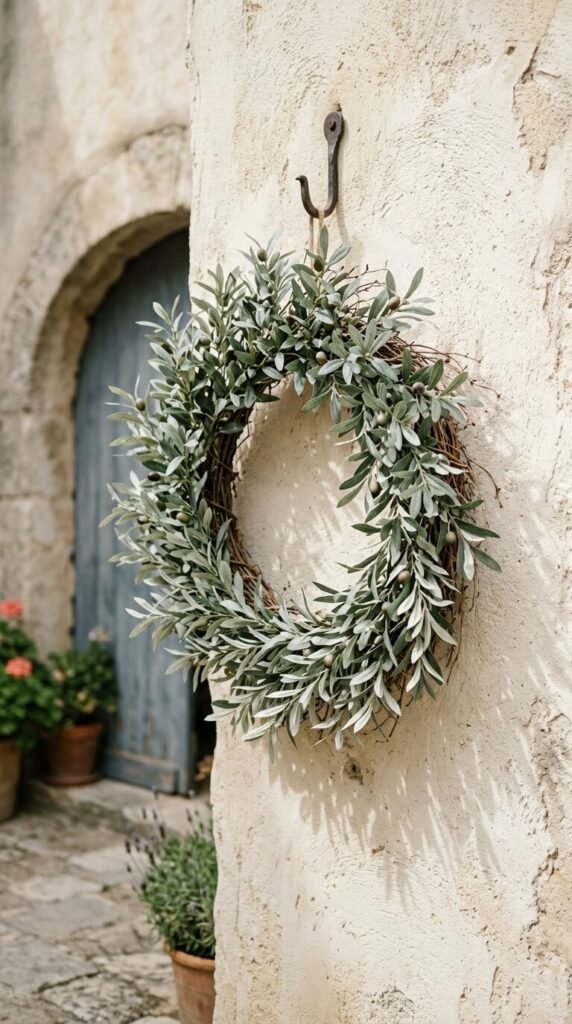
Olive branches bring a quiet, understated look to farmhouse decor. Layer several stems around a wire or straw frame until it looks full. Twist the branches instead of gluing them for a more natural shape. This style works year-round, not just spring, so it’s a smart investment. Buy stems from a craft store during seasonal sales. Trim any branches that stick out awkwardly. Pair it with a simple linen ribbon for a soft finishing touch. No florals needed here.
5. Tulip and Twig Wreath
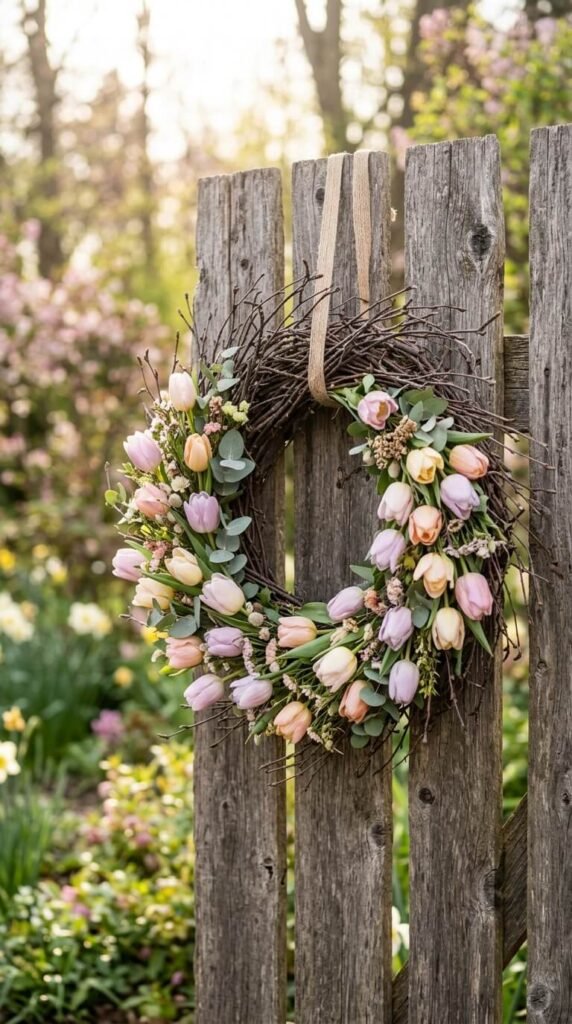
Twigs give this wreath its farmhouse bones. Gather fallen branches from your yard and bend them into a rough circle. Secure with floral wire at a few points. Add faux tulip stems in clusters of three. Odd numbers look more natural than even ones. Leave some twig visible between flower clusters. This wreath costs almost nothing since the base is free. It also weathers well outdoors since twigs are already weatherproof. Simple, earthy, and easy to make in an afternoon.
6. White Ranunculus and Greenery Wreath
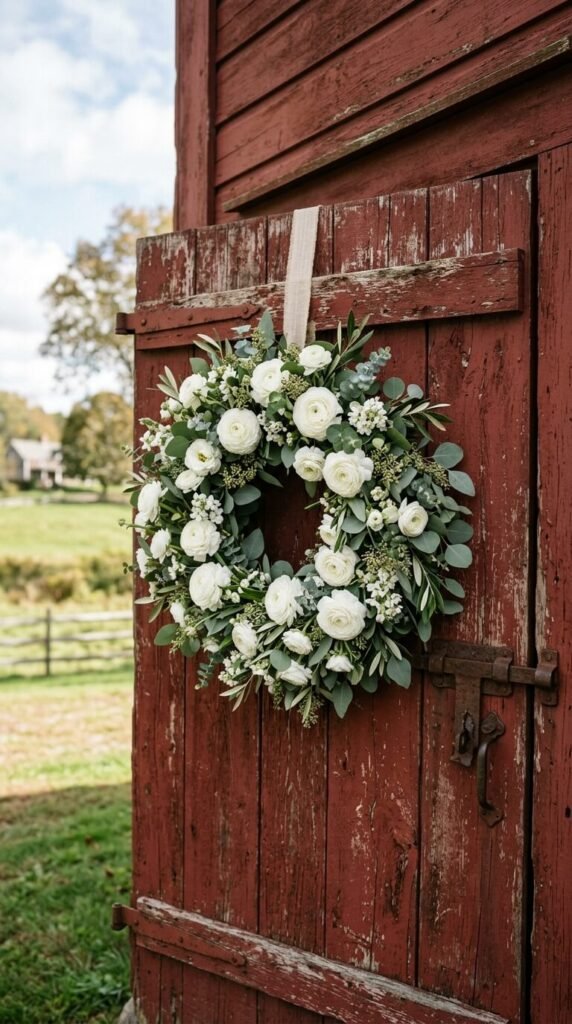
White ranunculus adds softness without looking fussy. Cluster the blooms in groups of two or three around a grapevine base. Fill gaps with eucalyptus stems for texture and color contrast. This combination photographs beautifully, which makes it a popular front door choice. Buy faux stems in bulk packs to save per-stem cost. Trim stems short before gluing so they sit close to the frame. The white and green combo pairs with almost any door color, from navy to weathered wood.
7. Dried Wheat and Wildflower Wreath
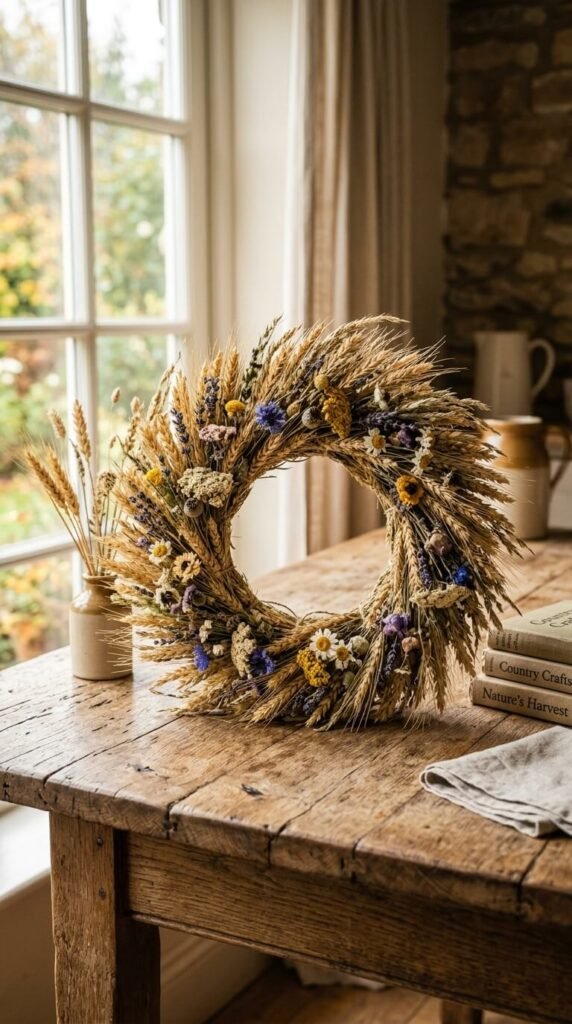
Wheat stalks bring a golden, harvest-meets-spring feel. Bundle small handfuls and tie them with raffia before attaching to the frame. Tuck in dried wildflowers like baby’s breath or strawflower for color pops. This wreath works well through both spring and early summer. Buy dried wheat at craft stores or farm supply shops for cheap. Keep the bundles loose so the wreath doesn’t look too stiff. Spray with a light sealant if you plan to hang it outdoors for months.
8. Painted Wood Slice Wreath

Wood slices turn scrap material into a budget-friendly centerpiece. Cut thin rounds from fallen branches, or buy pre-cut slices online. Paint each one a different pastel shade. Let them dry fully before gluing to a wire frame. Arrange by color for a gradient effect, or mix randomly for a playful look. This wreath works great as a kid-friendly craft project too. Seal with a matte spray to protect the paint. It’s sturdy enough to reuse year after year.
9. Farmhouse Cross and Floral Wreath
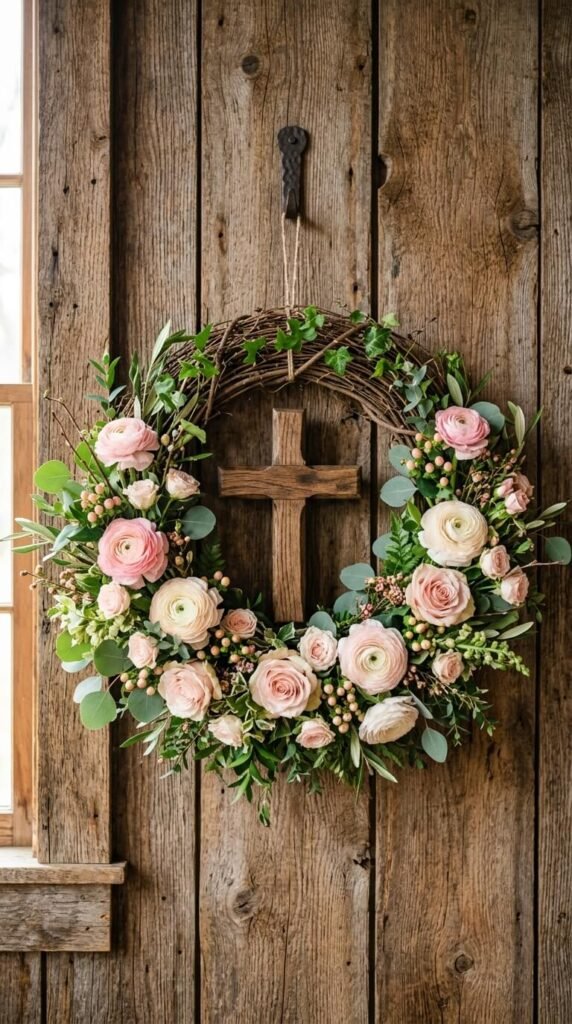
A small wooden cross adds a focal point to any wreath. Attach the cross first, then build florals around it in a loose arc. Use faux peonies or roses for softness against the rigid wood shape. This design works especially well for entryways with a rustic or cottage feel. Buy an unfinished cross at a craft store and stain it yourself for a custom look. Keep the floral arrangement asymmetrical so the eye moves naturally around the piece.
10. Eucalyptus and Baby’s Breath Wreath
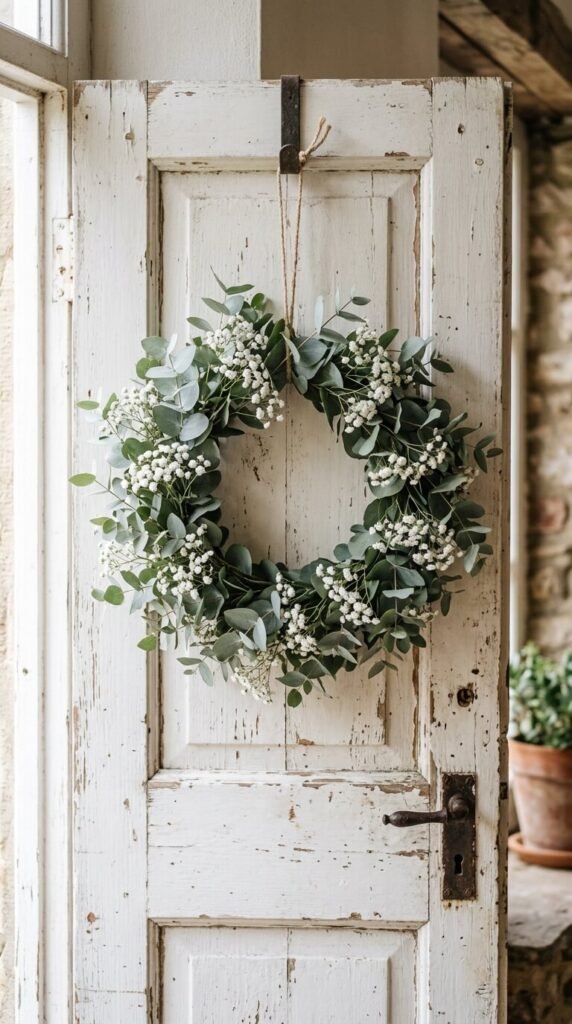
This combo feels light, airy, and effortless. Layer eucalyptus stems first to build the base shape. Then tuck baby’s breath clusters into the gaps. The contrast between structured leaves and delicate blooms gives the wreath depth. Buy faux eucalyptus garland and cut it into shorter pieces to stretch your budget further. This design suits both spring and wedding-adjacent decor. Hang it somewhere shaded if using real dried baby’s breath, since it can yellow in direct sun over time.
11. Burlap Bow Statement Wreath
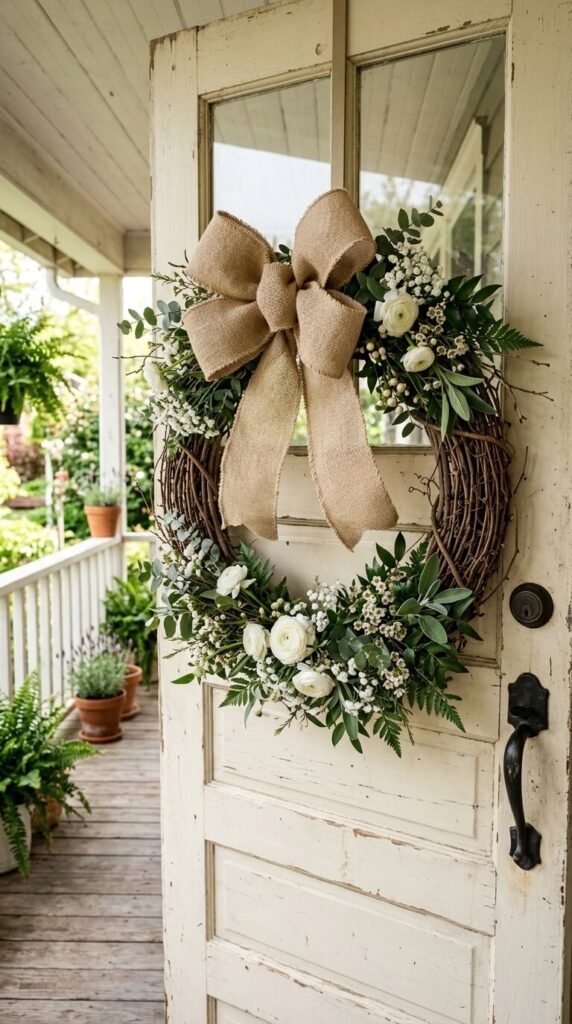
Sometimes the bow is the whole point. Cut a long strip of burlap ribbon and fold it into loops to form a large bow. Wire it to the top of a plain grapevine wreath. Add just a few small blooms so the bow stays the star. This is one of the cheapest wreaths to make since burlap ribbon costs very little per yard. It also holds up well outdoors in most weather. Reuse the same base for different seasons by swapping the bow.
12. Pastel Egg and Twig Wreath
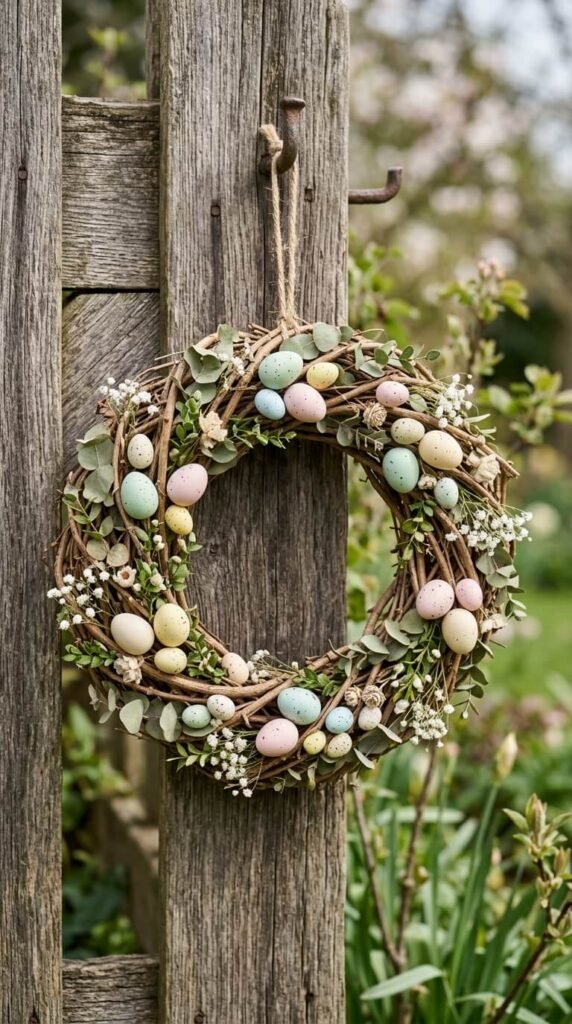
Small decorative eggs make this wreath feel playful without going overboard. Nestle eggs into the twig base using hot glue or thin wire. Space them unevenly for a natural, scattered look. Paint plain wooden eggs yourself to save money over pre-dyed craft store versions. This wreath works great for households with kids since it doubles as a fun Easter decoration. Keep the twig base loose and airy so the eggs have room to sit without looking crowded.
13. Rustic Grain Sack Wreath

Grain sack fabric brings instant farmhouse texture. Cut strips from an old grain sack or similar striped fabric. Wrap them tightly around a foam or straw wreath form. Tuck the ends underneath to hide seams. Add one small floral cluster at the bottom for contrast. This project reuses fabric scraps, so it’s nearly free if you already have the material. The stripes add visual interest without needing any additional embellishment. Great for a minimalist farmhouse look.
14. Moss-Covered Base Wreath
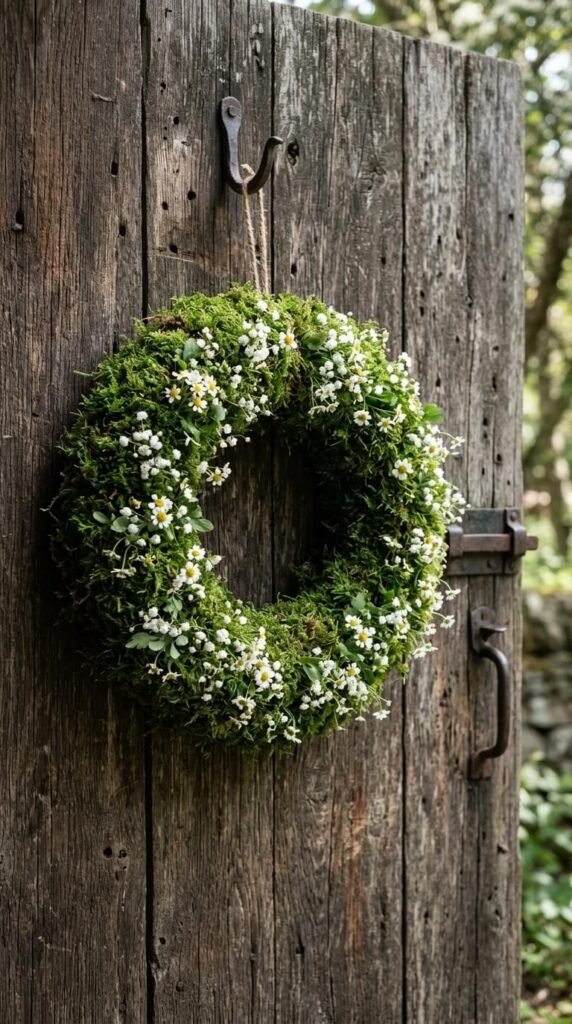
Moss gives a wreath an earthy, just-picked-from-the-garden feel. Glue sheet moss around a straw form until fully covered. Tuck small faux blooms into the moss at random intervals. This texture pairs beautifully with metal or wood accents. Buy moss sheets in bulk from a craft store for the best price per square inch. This wreath works well in shaded entryways since moss can fade with too much direct sun. It also makes a great base for adding seasonal picks later.
15. Layered Ribbon Wreath
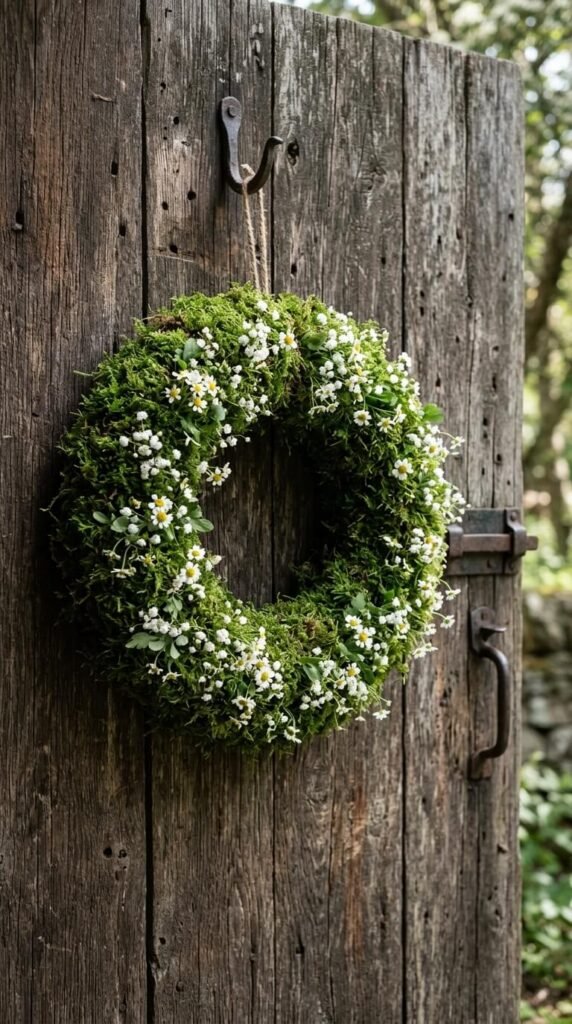
Ribbon wreaths are quick, cheap, and endlessly customizable. Cut ribbon into equal lengths and tie each piece around a metal ring. Mix gingham, linen, and solid colors for texture variety. Push the knots together tightly so no metal shows through. This project takes under an hour and costs very little if you buy ribbon on sale. It’s also a great beginner project since there’s no gluing involved. Swap ribbons each season to reuse the same base wreath.
16. Dried Hydrangea Wreath
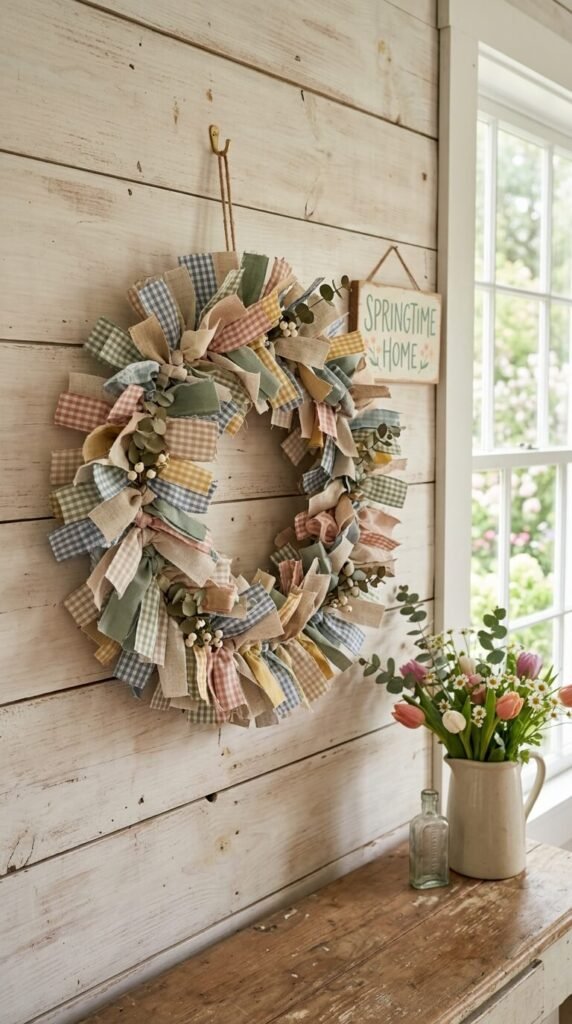
Dried hydrangeas add volume without much effort. Attach whole blooms directly to a straw or wire base using floral pins. The petals naturally overlap, so you don’t need many stems to fill the space. This wreath works well for late spring since hydrangeas start blooming around then. Dry your own hydrangeas from the garden to skip buying faux stems entirely. Just hang fresh blooms upside down for two weeks. The dried texture holds up outdoors for months.
17. Farmhouse Shutter and Floral Wreath
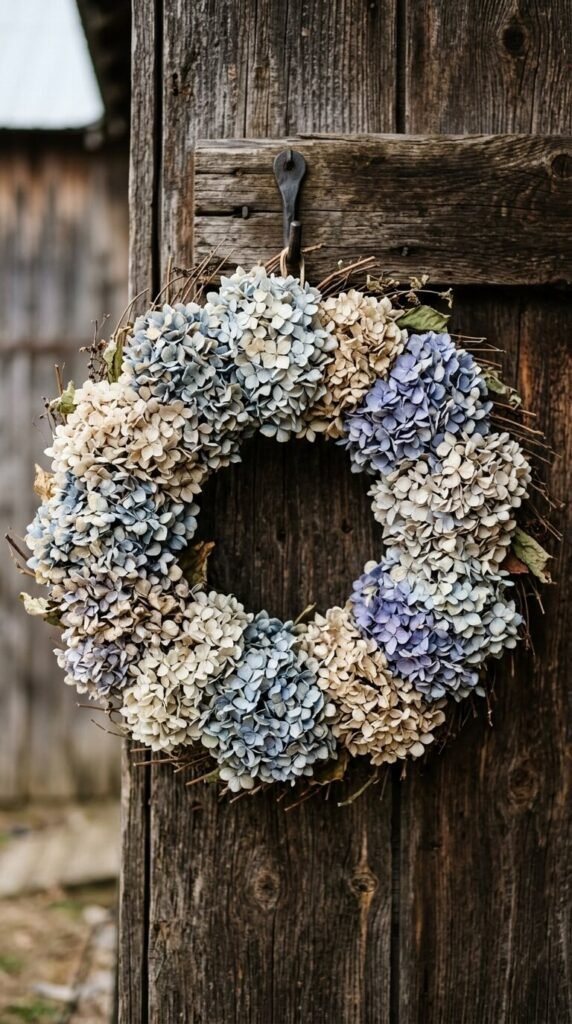
An old shutter piece makes a unique wreath backdrop. Mount the wreath directly onto a salvaged shutter fragment using wire loops. This adds instant architectural charm you can’t get from a plain circle. Check reclaimed building material stores for cheap shutter pieces. Keep the floral arrangement small so the shutter’s texture stays visible. This design works especially well on larger porches or exterior walls with extra space to fill. It’s a statement piece that doesn’t need much else around it.
18. Sweet Pea and Vine Wreath
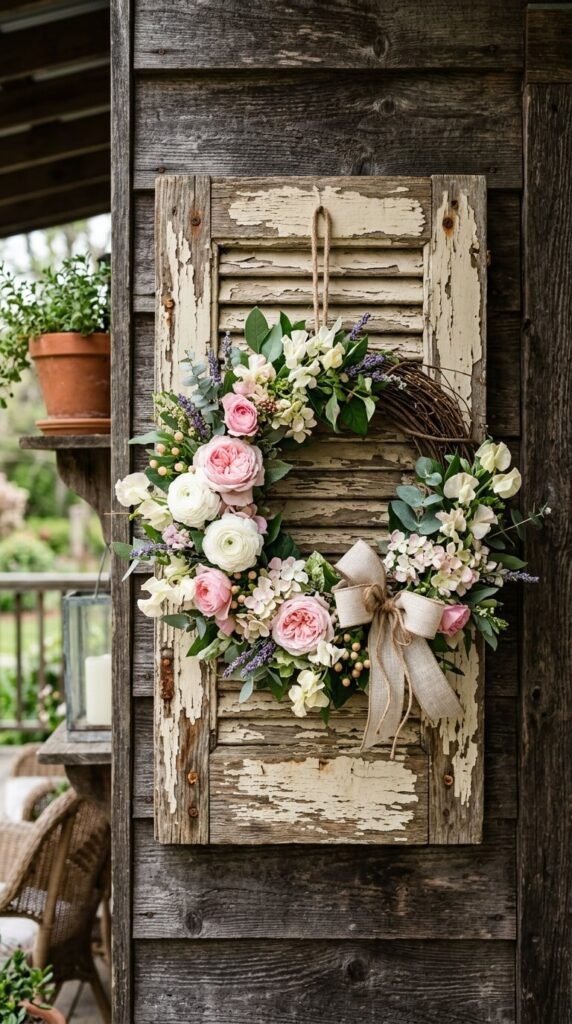
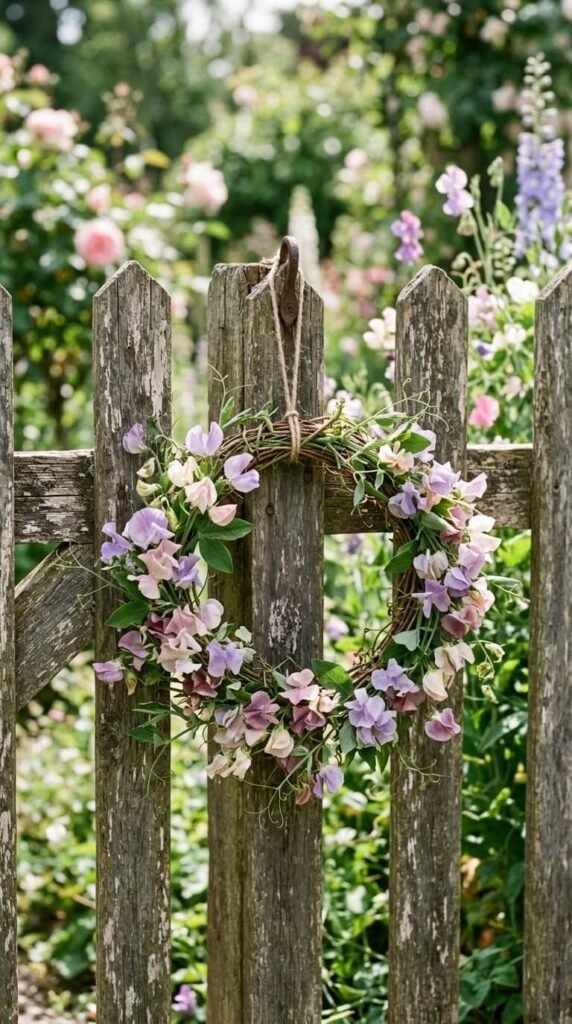
Sweet peas bring a soft, romantic touch to farmhouse style. Wrap thin vines loosely around a wire frame first. Then tuck small faux sweet pea stems throughout, letting a few trail below the wreath. This drooping detail adds movement and makes the design feel less rigid. Buy vine garland by the yard to stretch your budget across multiple projects. This wreath suits cottage-style homes especially well. Keep colors limited to two or three shades for a cohesive look.
19. Chicken Wire and Floral Wreath
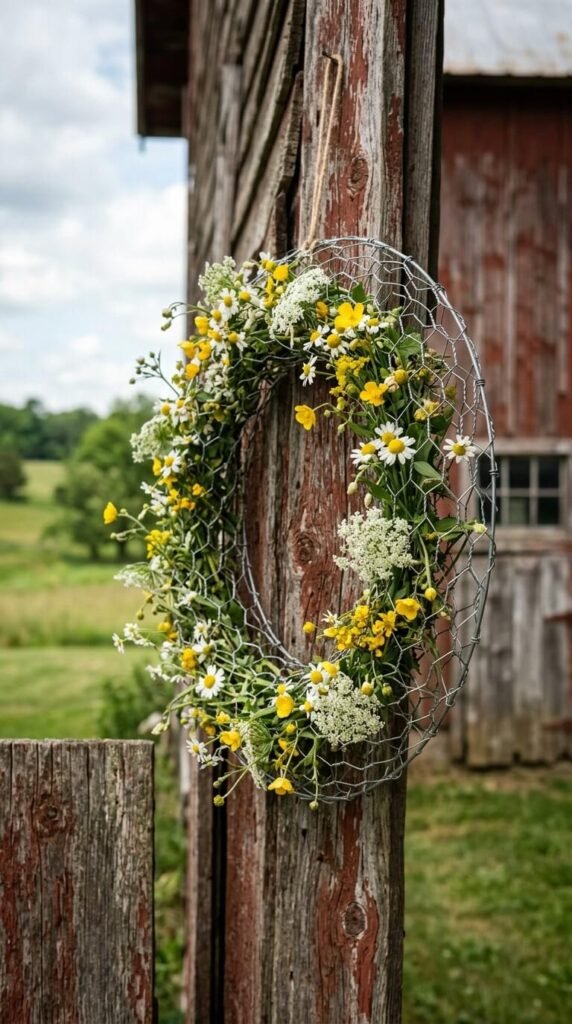
Chicken wire gives this wreath an industrial farmhouse edge. Shape the wire into a circle using pliers, then weave small florals directly through the mesh gaps. Leave some wire exposed for texture contrast. This base costs very little since chicken wire is sold cheaply by the roll. It also holds embellishments securely without much glue. This design pairs well with metal-toned hardware and darker door colors. A great option if you want something a little different from soft floral looks.
20. Herb Garden Wreath
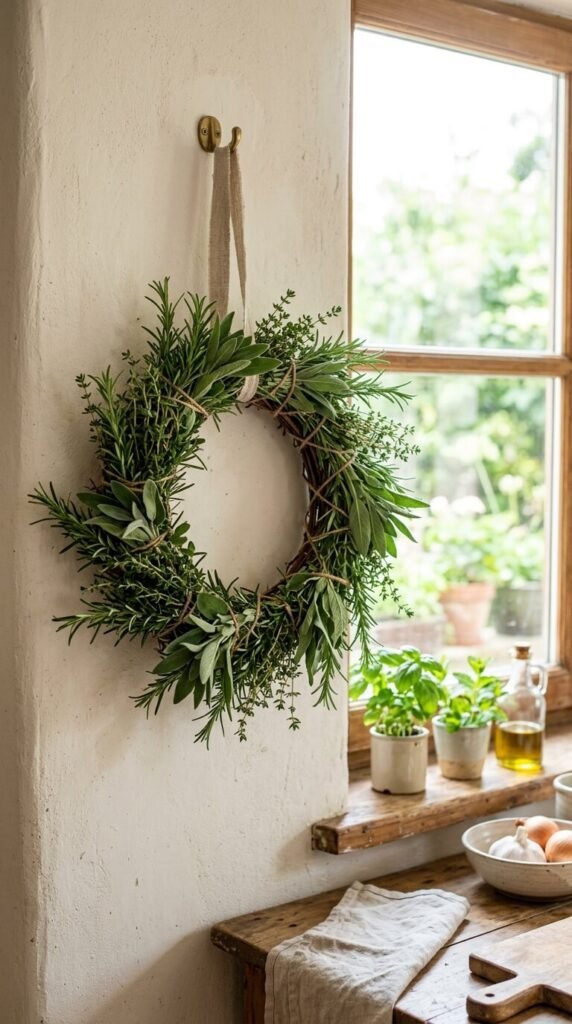
An herb wreath brings farmhouse charm right into the kitchen. Bundle fresh or dried herbs like rosemary, sage, and thyme onto a wire frame. Space bundles evenly so the shape stays balanced. This wreath smells wonderful and can even be used for cooking in a pinch. Grow your own herbs to make this an almost-free project. Hang it near a window with good airflow so fresh herbs dry naturally over time. Practical and pretty at once.
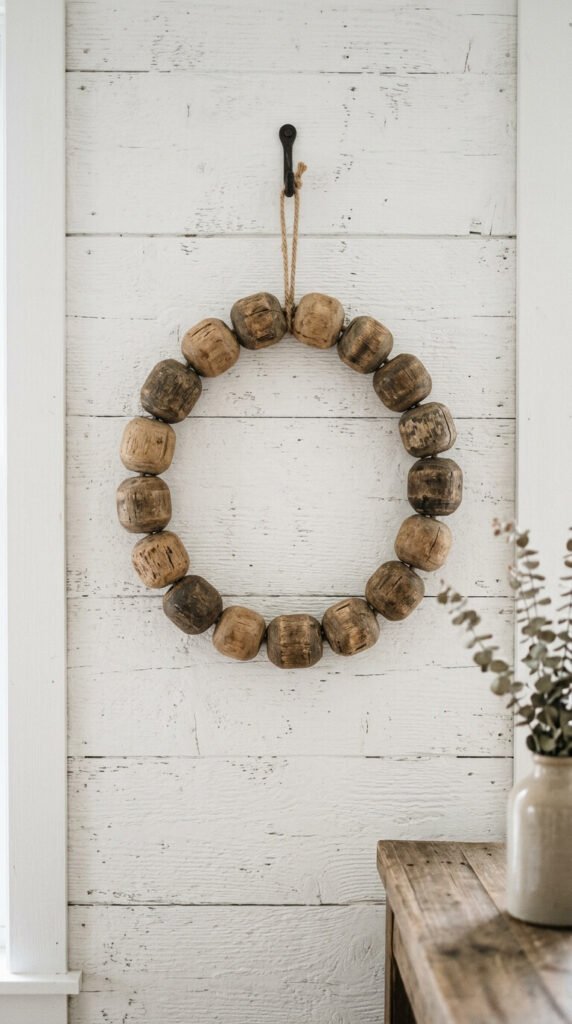
21. Distressed Wood Bead Wreath
Wood bead wreaths bring texture without any florals at all. String large beads onto sturdy wire or rope, then shape into a circle and secure the ends. Distress the beads with light sanding for an aged look. This design fits minimalist farmhouse spaces especially well. Buy unfinished wood beads in bulk for the lowest cost per piece. Add a single small floral accent at the bottom if you want a touch of color. Otherwise, let the wood speak for itself.
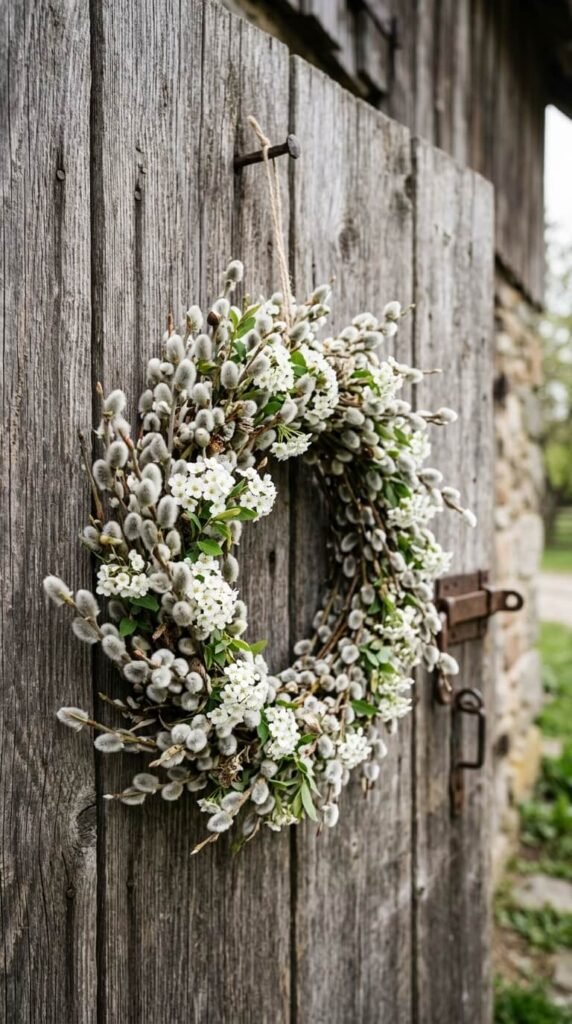
22. Pussy Willow and Blossom Wreath
Pussy willow branches add a soft, fuzzy texture that reads as pure spring. Wrap branches around a wire frame first, then tuck small blossom stems between the gaps. This combination feels light and airy compared to fuller floral wreaths. Buy pussy willow stems from a florist or craft store in bundles for better pricing. This wreath also works well left mostly bare, with just a few blossom accents. Simple, textural, and easy to put together in under an hour.
23. Farmhouse Star and Floral Wreath
A metal star adds a classic farmhouse touch. Center the star on your frame, then build florals around it in a loose crescent shape. Leave the top or bottom mostly bare so the star stays visible. Buy a small tin star at a craft or hardware store for just a few dollars. This design works well year-round since stars aren’t tied to one season. Swap the florals seasonally while keeping the same star and base for an easy refresh.
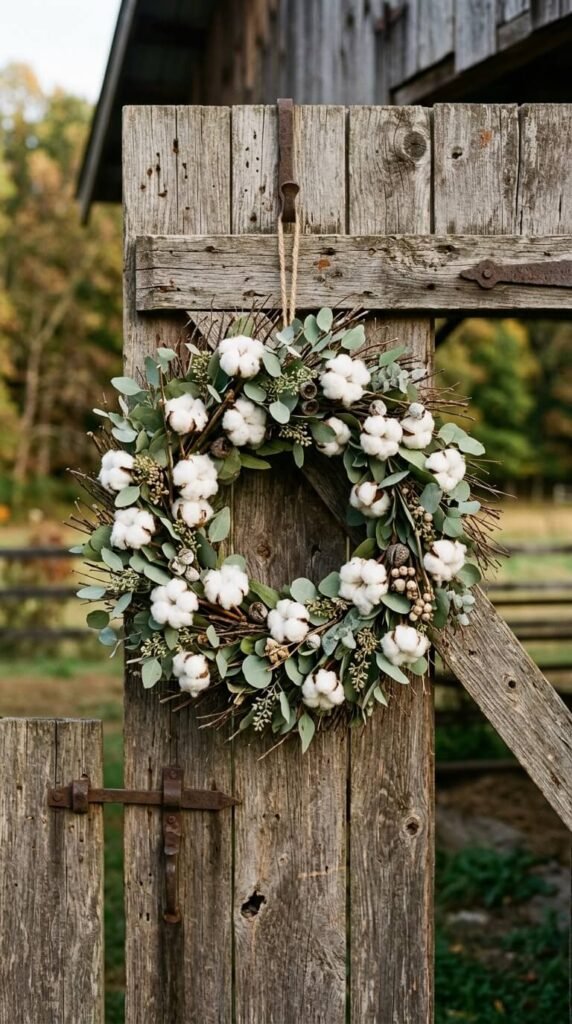
24. Layered Cotton and Eucalyptus Wreath

Layering cotton with eucalyptus balances soft and structured textures. Alternate clusters of each material as you build around the frame. This keeps the wreath from feeling one-note. Buy both materials as garland and cut into shorter sections to save money. This combination looks elegant but costs very little compared to fresh floral options. It also holds up outdoors for an entire season without wilting or fading much. A reliable, low-maintenance choice for busy households.
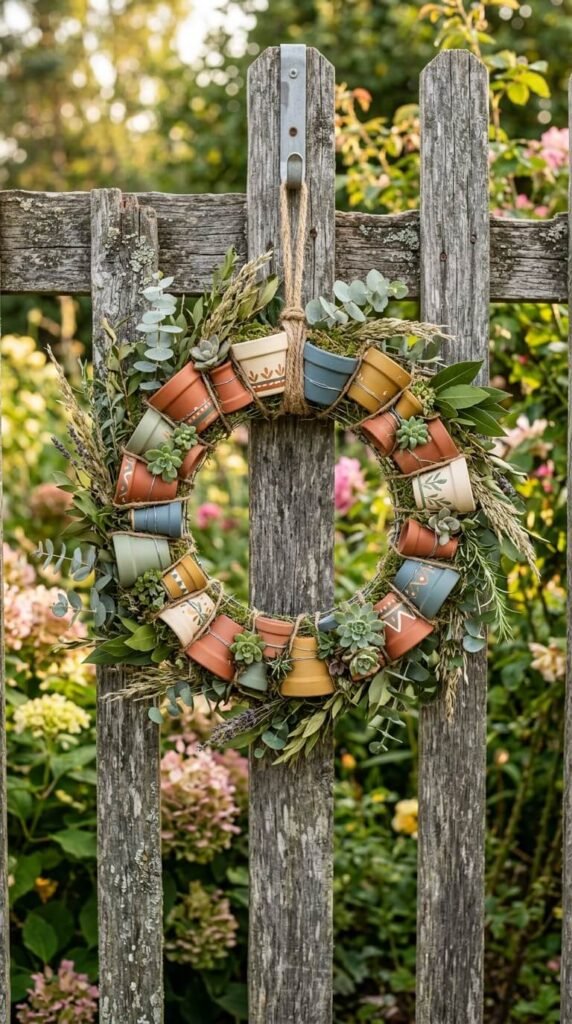
25. Painted Terracotta Pot Wreath
Broken or small terracotta pots make an unexpected wreath material. Attach pot fragments or mini pots around a wire frame using strong glue. Fill gaps with small greenery sprigs. This design suits garden-facing entrances especially well. Save cracked pots instead of tossing them, since the imperfections add character here. Paint pieces a soft white or cream for a lighter farmhouse look. This wreath pairs naturally with potted plants already sitting on your porch or steps.
26. Faux Fern and Lace Wreath
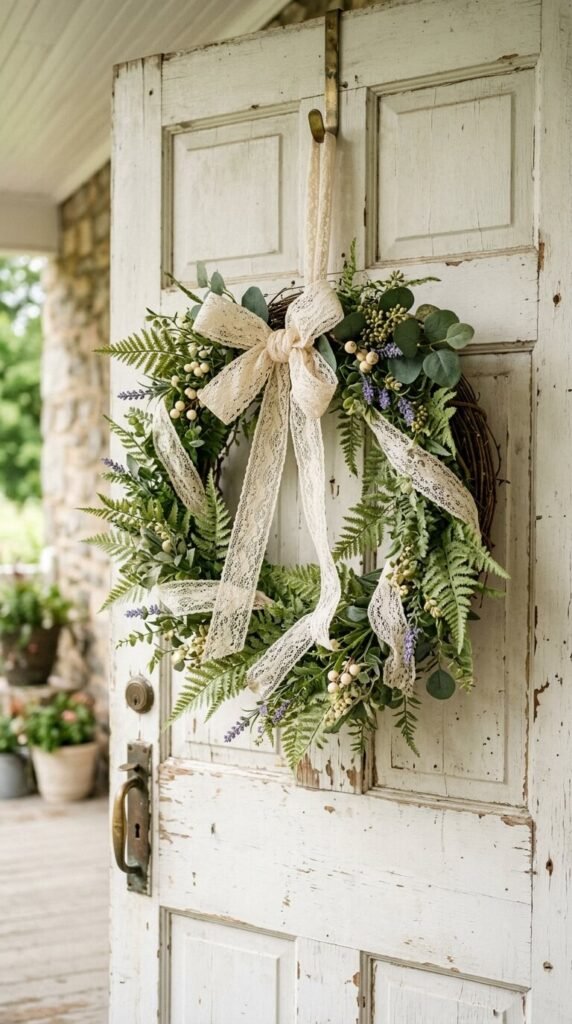
Fern adds texture while lace softens the overall look. Layer fern fronds around the base first, then weave thin lace ribbon through the greenery. This combination feels a little more delicate than typical farmhouse designs. Buy lace ribbon by the yard for just a couple dollars. This wreath suits covered porches better than full sun exposure, since lace can fade quickly outdoors. A great choice if you want something softer and more feminine.
27. Rope and Floral Wreath
Rope brings a slightly nautical twist to farmhouse style. Coil thick rope into a circle and secure with hot glue at a few points. Add a small cluster of florals along one edge instead of spacing them evenly. This asymmetrical placement keeps the design from feeling too formal. Buy rope by the foot at a hardware store for a cheap, sturdy base. This wreath holds up especially well outdoors since rope resists weather damage better than fabric.
28. Antique Frame Wreath

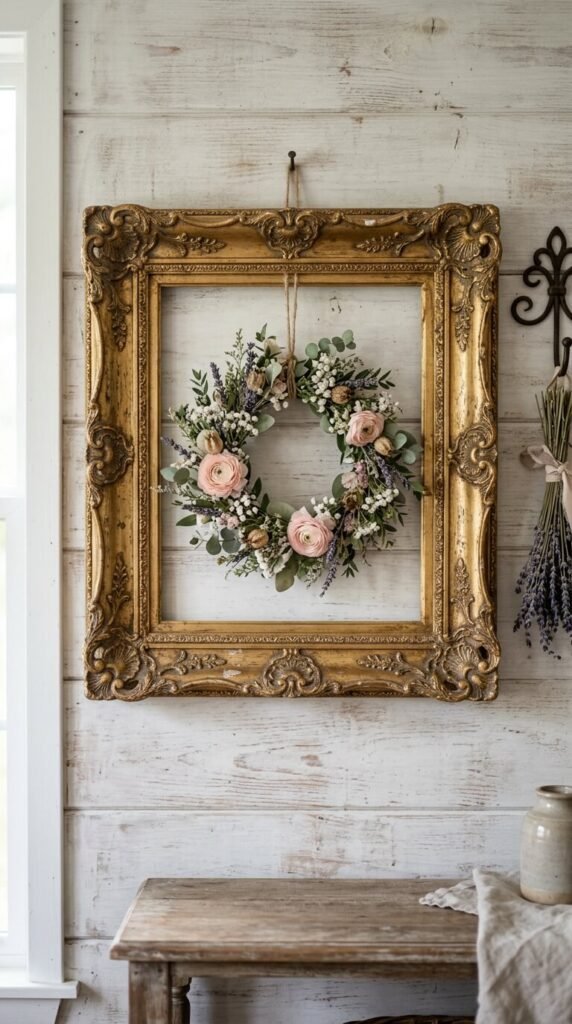
An old frame turns a simple wreath into wall art. Remove the glass and backing, then wire a small wreath into the center opening. This works great with thrifted frames that have interesting texture or chipped paint. Keep the floral wreath itself simple so the frame gets equal attention. This project costs little if you already own an unused frame. It also makes a great gift idea for someone who loves mixing vintage pieces with fresh florals.
29. Scrap Fabric Flower Wreath
Fabric flowers use up scraps while adding real texture. Cut small fabric circles, layer them, and cinch the center to form a flower shape. Glue a button or bead in the middle for detail. Attach a handful of these flowers around a plain wreath base. This project works well for using leftover fabric from other crafts. It’s also a fun one to make with kids since the folding technique is simple. Budget-friendly and completely one-of-a-kind every time.
Conclusion
Farmhouse spring wreaths don’t need a big budget or fancy supplies. A few twigs, some ribbon, or leftover fabric can turn into something worth hanging on your front door. Pick two or three ideas from this list, gather what you already have around the house, and build from there. The best part of farmhouse style is that imperfection works in your favor. Grab a hot glue gun, a wire frame, and start with whatever feels most doable this weekend.